How Can Businesses Scrape Viator Pricing by Date & Timeslot Data for Smarter Travel Intelligence?
Introduction
The travel activity industry has become highly dynamic, with pricing, slot availability, and customer demand changing continuously across destinations and booking windows. Tour operators, OTAs, travel aggregators, destination management companies, and market analysts increasingly rely on method to Scrape Viator Pricing by Date & Timeslot data to understand how experiences are priced throughout the day, week, and season.
Modern travel businesses use Viator Data Scraping to capture activity-level information such as booking prices, departure times, availability status, discounts, ratings, and package inclusions. This structured intelligence enables organizations to compare competitor pricing strategies, monitor inventory fluctuations, and optimize revenue opportunities across multiple regions.
At the same time, brands are investing in Viator Real-Time activites Price Intelligence to identify pricing spikes during holidays, weekends, festivals, and peak tourism periods. Access to live activity pricing data helps companies make faster operational decisions, improve promotional timing, and align inventory planning with actual market demand.
Why Date & Timeslot-Level Pricing Matters?
Unlike static hotel pricing or fixed airline fares, travel experiences often vary significantly depending on departure timing. Morning tours may carry different prices than sunset experiences, while weekday availability can differ greatly from weekend demand.
For example:
- A city sightseeing tour may cost less during morning slots.
- Adventure activities may surge during peak vacation periods.
- Evening dinner cruises may carry premium rates.
- Seasonal attractions may introduce dynamic pricing during holidays.
- Limited-capacity activities may fluctuate hourly.
Capturing pricing at the date-and-timeslot level allows travel companies to build more precise forecasting models and improve revenue management decisions.
Growing Importance of Activity Price Intelligence
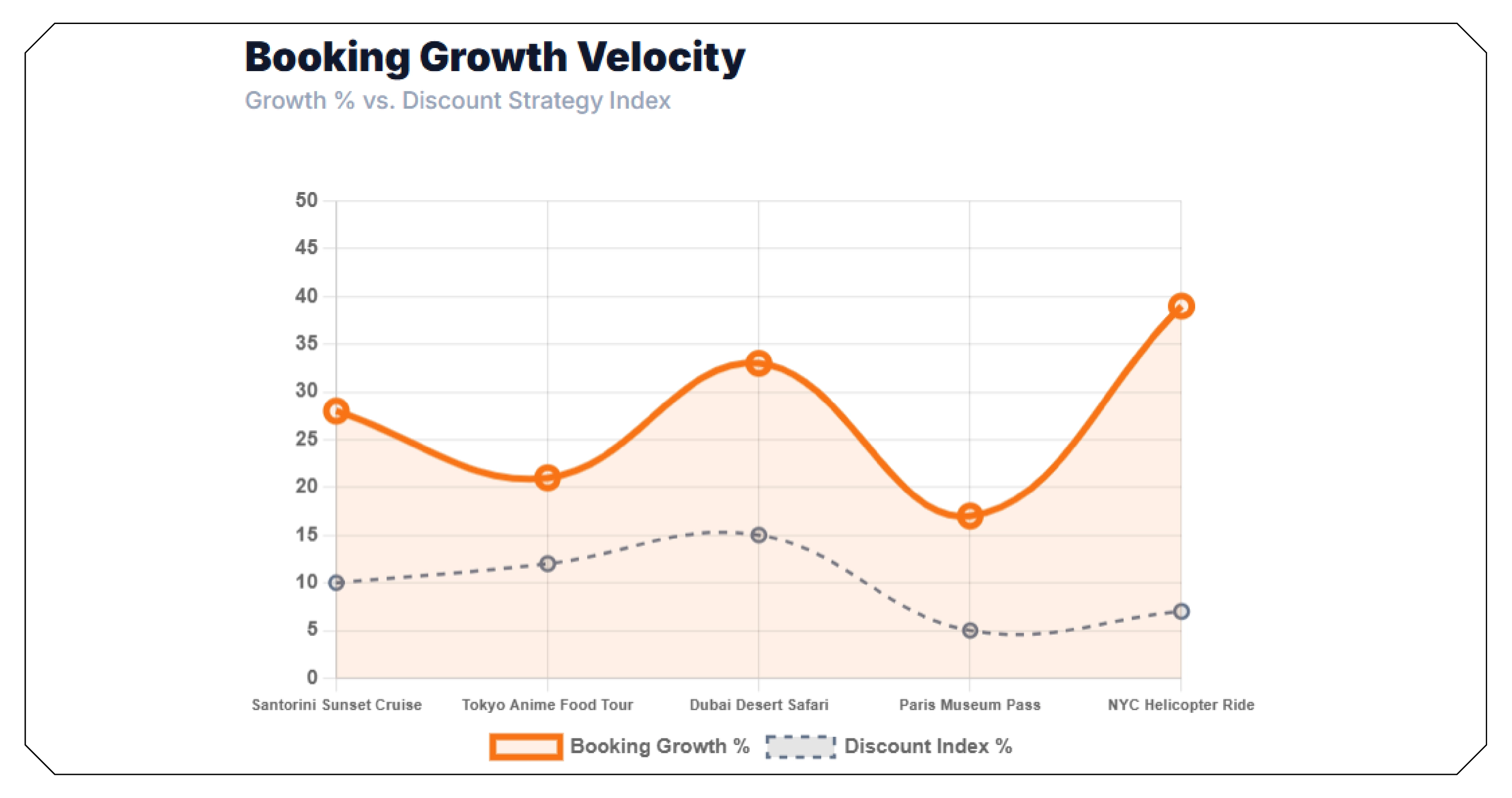
The experiences market has become one of the fastest-growing segments within tourism. Travelers now prioritize local experiences, guided tours, adventure sports, museum access, cruises, culinary workshops, and cultural events over traditional sightseeing alone.
This demand surge has created a competitive pricing environment where operators frequently adjust:
- Time-slot rates
- Availability quotas
- Early booking discounts
- Last-minute offers
- Seasonal promotions
- Dynamic bundle pricing
Businesses tracking these variations gain better visibility into competitor behavior and customer booking trends.
Key Data Points Captured from Viator
When scraping activity pricing data, businesses commonly extract the following attributes:
| Activity Name | Destination | Category | Timeslot | Current ($) | Disc. ($) | Status |
|---|---|---|---|---|---|---|
| Bernina Red Train: Alps & St. Moritz | Swiss Alps | Adventure/Scenic | Full Day | 189 | 175 | Available |
| Louvre Museum: Fast-Track Guided | Paris | Cultural | Morning | 75 | 63 | Limited |
| Seine River 3-Course Dinner Cruise | Paris | Food/Cruise | Evening | 110 | 98 | Available |
| Tokyo Night Foodie Discovery | Tokyo | Food/Culture | Evening | 125 | 112 | Limited |
| Versailles Palace & Gardens Tour | Versailles | Historical | Afternoon | 115 | 105 | Sold Out |
| Desert Safari & Al Khayma Dinner | Dubai | Adventure | Afternoon | 95 | 80 | Available |
| Carnaval Experience: Samba City | Rio de Janeiro | Cultural | Morning | 35 | 32 | Available |
| Manhattan Sky: Helicopter Tour | New York | Adventure | Custom | 260 | 245 | Limited |
This information supports comprehensive activity intelligence systems for travel enterprises.
Benefits of Date & Timeslot Price Monitoring
Better Revenue Optimization
By analyzing historical pricing trends, businesses can determine how operators maximize revenue throughout different times of the day. This helps competitors align their own pricing models accordingly.
Improved Demand Forecasting
Travel demand often varies based on seasonality, weather, weekends, and holidays. Tracking date-wise fare changes helps companies anticipate booking surges earlier.
Competitor Benchmarking
Monitoring pricing strategies across multiple providers allows businesses to identify which experiences command premium pricing and why.
Enhanced Market Visibility
Companies gain insight into how destinations behave across varying demand conditions and customer segments.
Faster Decision-Making
Live pricing intelligence enables revenue managers to respond quickly to sudden market shifts and promotional opportunities.
Role of Dynamic Travel Pricing
Travel activity platforms increasingly use AI-driven and demand-sensitive pricing models. Operators modify rates based on:
- Booking velocity
- Remaining inventory
- Event-based demand
- Traveler behavior
- Competitor pricing
- Seasonal occupancy
This creates the need for continuous Dynamic Pricing Intelligence that can monitor fluctuations automatically and generate structured datasets for analysis.
Organizations using automated scraping systems can identify pricing anomalies and optimize promotional strategies much faster than manual research methods.
Understanding Time-Based Fare Behavior
Tour pricing can vary significantly within the same day. For instance:
- Sunrise tours often attract premium pricing.
- Midday activities may offer discounted slots.
- Evening cruises typically command higher margins.
- Weekend experiences usually experience stronger demand.
Analyzing Viator activity fare monitoring by date and timeslot allows travel companies to uncover hidden revenue patterns and customer preferences across booking windows.
This level of granularity becomes extremely valuable for tourism boards, hotel chains, travel startups, and online booking engines.
Real-Time Availability Monitoring
Availability data is equally important as pricing information. Popular experiences often sell out rapidly during high-demand periods, affecting customer acquisition and booking conversions.
Through automated systems, businesses can track:
- Remaining slots
- Sold-out schedules
- Last-minute availability
- Seasonal closures
- Temporary inventory reductions
Such insights support smarter operational planning and better customer engagement strategies.
Modern travel intelligence platforms increasingly depend on Real-Time Availability Tracking to improve booking accuracy and enhance traveler satisfaction.
Importance for Travel Aggregators
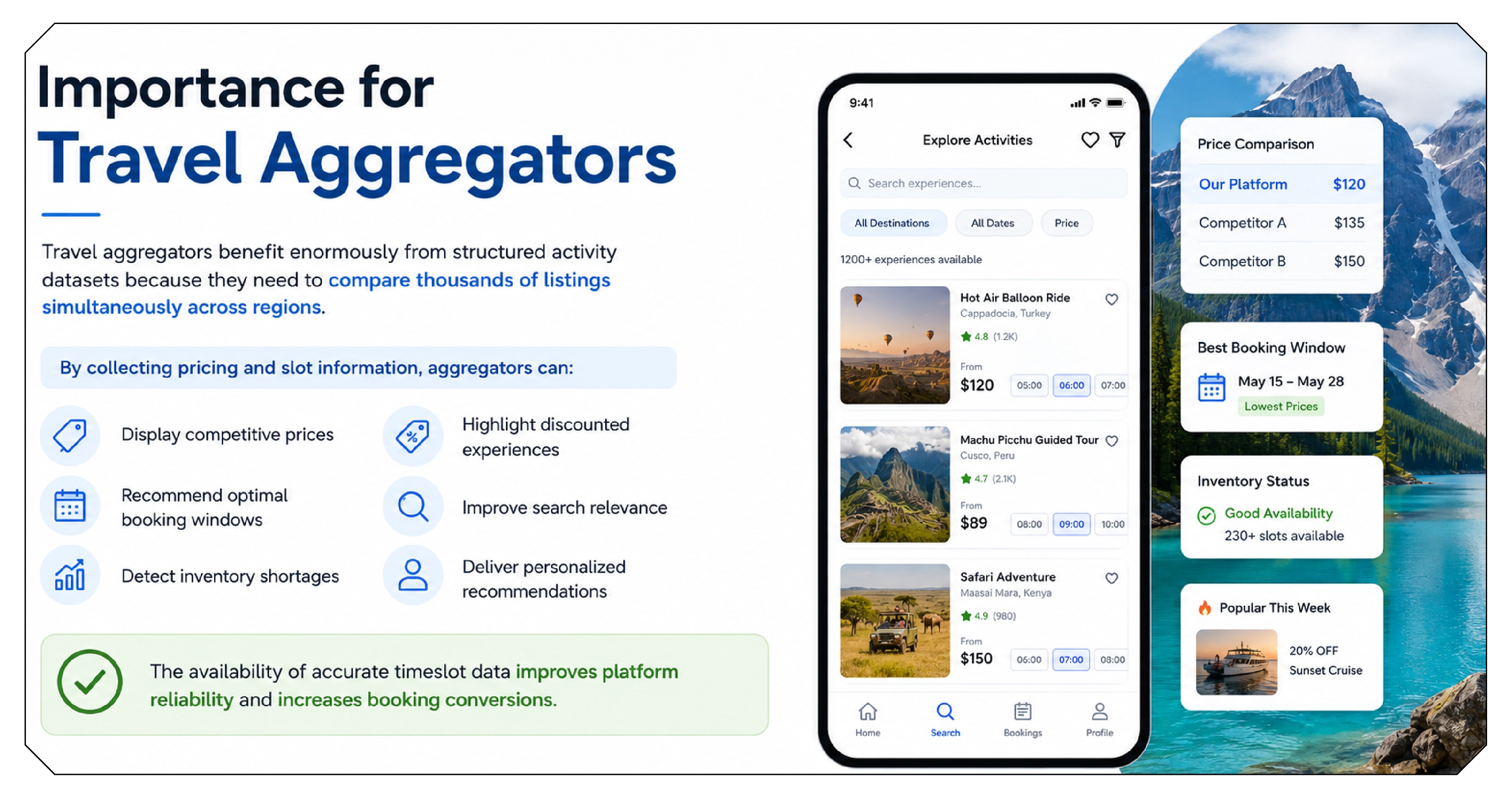
Travel aggregators benefit enormously from structured activity datasets because they need to compare thousands of listings simultaneously across regions.
By collecting pricing and slot information, aggregators can:
- Display competitive prices
- Recommend optimal booking windows
- Detect inventory shortages
- Highlight discounted experiences
- Improve search relevance
- Deliver personalized recommendations
The availability of accurate timeslot data improves platform reliability and increases booking conversions.
Monitoring Booking Price Volatility
Tour and activity pricing is becoming increasingly volatile due to changing travel demand patterns. Prices may fluctuate within hours during peak tourism periods.
Tracking Viator booking price fluctuation analytics helps businesses identify:
- Rapid fare increases
- Flash discount campaigns
- Weekend surge pricing
- Seasonal inflation
- High-demand time windows
- Competitive underpricing strategies
These analytics enable travel companies to build stronger pricing intelligence dashboards and forecasting models.
How Automated Scraping Systems Work?
Travel intelligence platforms generally use automated extraction pipelines to capture and process activity data at scale.
The workflow typically includes:
- Discovering activity listings
- Capturing date-wise schedules
- Extracting timeslot information
- Monitoring price changes
- Tracking availability updates
- Standardizing structured datasets
- Feeding analytics dashboards
Advanced scraping systems often include scheduling automation, proxy rotation, anti-block management, and real-time synchronization capabilities.
Role of APIs in Travel Intelligence
Modern travel analytics systems increasingly rely on APIs to process large-scale tourism datasets efficiently. Automated solutions help businesses consolidate pricing and inventory insights across destinations.
Many organizations integrate a Travel Scraping API into their analytics workflows to streamline activity tracking and automate large-scale data collection operations.
These APIs help eliminate manual monitoring while enabling continuous synchronization of travel activity intelligence.
Applications Across the Travel Industry
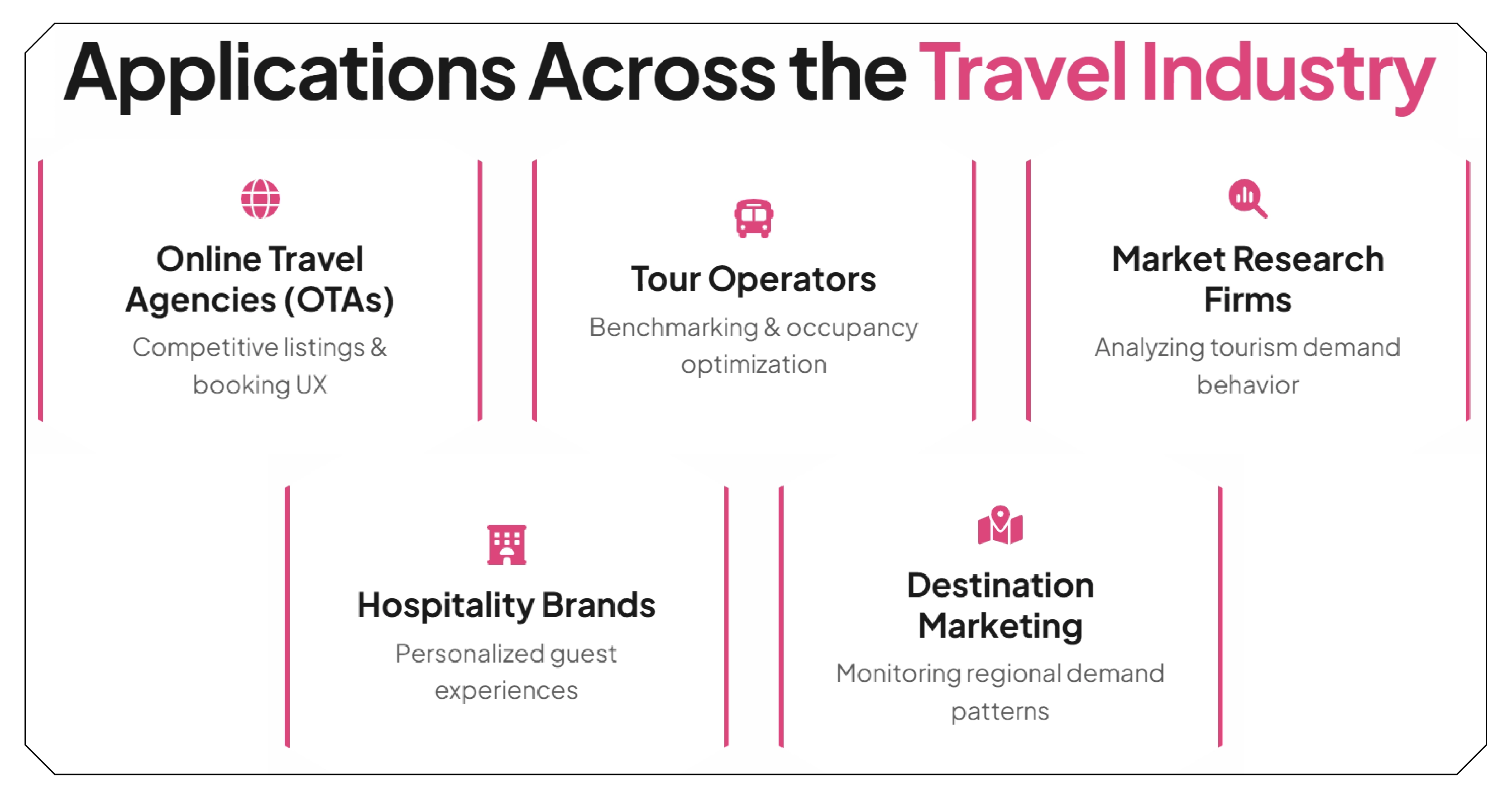
Online Travel Agencies
OTAs use scraped pricing datasets to maintain competitive listings and improve customer booking experiences.
Tour Operators
Operators benchmark their pricing against local competitors to optimize occupancy and profitability.
Market Research Firms
Research agencies analyze pricing trends to understand tourism demand behavior across destinations.
Hospitality Brands
Hotels and resorts use activity intelligence to build personalized guest packages and upsell experiences.
Destination Marketing Organizations
Tourism boards monitor traveler demand patterns and popular experiences in specific regions.
Building Competitive Travel Dashboards
Travel intelligence dashboards powered by scraped datasets can provide:
- Real-time fare updates
- Availability heatmaps
- Seasonal demand charts
- Destination comparisons
- Price volatility alerts
- Occupancy forecasting
- Competitor benchmarking reports
These dashboards help businesses respond faster to market shifts and changing traveler preferences.
Importance of Historical Activity Datasets
Historical activity data enables deeper analytical insights beyond real-time monitoring.
Businesses can study:
- Seasonal pricing cycles
- Holiday demand surges
- Long-term market trends
- Destination popularity growth
- Timeslot profitability
- Customer booking behavior
Companies increasingly rely on date-based activity fare comparison datasets to build predictive travel analytics systems and long-term revenue strategies.
Challenges in Travel Activity Data Collection
Scraping travel pricing data involves several technical challenges:
- Frequent Price Updates: Tour pricing changes rapidly, requiring continuous monitoring systems.
- Dynamic Page Structures: Activity listings often load content dynamically through scripts and APIs.
- Geographic Variations: Pricing may vary by region, traveler location, or currency.
- Availability Volatility: Inventory changes frequently during peak seasons.
- Data Standardization: Different activity providers use inconsistent formatting structures.
Addressing these challenges requires scalable scraping infrastructure and intelligent parsing systems.
Future of Travel Pricing Intelligence
The future of travel analytics will rely heavily on real-time activity intelligence powered by automation and AI-driven forecasting.
Emerging trends include:
- Predictive pricing algorithms
- AI-powered demand forecasting
- Personalized travel recommendations
- Real-time inventory optimization
- Automated competitor benchmarking
- Dynamic packaging systems
As traveler expectations continue evolving, access to accurate activity pricing and availability intelligence will become essential for maintaining competitiveness.
How Travel Scrape Can Help You?
Real-Time Pricing Intelligence
Our data scraping services continuously monitor travel activity prices across dates and timeslots, helping businesses detect fare fluctuations instantly. This enables smarter pricing decisions, faster competitor benchmarking, improved promotional planning, and stronger revenue optimization strategies across multiple destinations, booking categories, and seasonal travel periods globally.
Availability & Inventory Monitoring
We track live activity availability, sold-out schedules, and remaining booking slots across tourism platforms in real time. This helps travel brands improve inventory forecasting, avoid missed opportunities, optimize customer experiences, and respond quickly to changing traveler demand patterns during holidays, weekends, and peak booking periods.
Structured Travel Data Collection
Our scraping solutions extract structured datasets including activity names, pricing, departure schedules, discounts, ratings, and booking conditions. Organized data delivery helps businesses simplify analytics workflows, power internal dashboards, automate reporting systems, and generate meaningful travel market insights for smarter operational and strategic planning decisions.
Competitor Benchmarking Support
We help travel businesses compare pricing strategies, activity popularity, and availability trends against competitors across various destinations. Access to accurate market intelligence enables companies to identify profitable opportunities, adjust pricing models efficiently, improve customer targeting, and strengthen their overall positioning within highly competitive tourism markets globally.
Scalable API-Driven Solutions
Our scalable scraping infrastructure supports automated data extraction through flexible APIs and real-time delivery systems. Businesses can integrate live travel datasets directly into analytics platforms, booking engines, forecasting tools, and revenue management systems for faster decision-making, operational efficiency, and enhanced travel intelligence capabilities across regions.
Conclusion
Travel experiences are increasingly shaped by dynamic pricing, changing traveler behavior, and fluctuating inventory availability. Businesses that capture structured pricing intelligence at the date and timeslot level gain stronger visibility into market demand, customer preferences, and competitive positioning.
Organizations leveraging automated travel data extraction systems can better forecast demand, optimize promotional strategies, and improve booking conversions across destinations. As pricing volatility continues growing within the experiences economy, access to granular datasets becomes a major competitive advantage.
Advanced analytics powered by time-based travel activity pricing trends scraping allow companies to uncover hidden pricing opportunities and improve revenue optimization models. At the same time, detailed Viator booking slot availability insights help businesses monitor inventory shortages and identify high-demand booking windows faster.
With scalable automation frameworks and modern Real-Time Data API integrations, travel brands can build intelligent monitoring systems that support faster, smarter, and more profitable operational decisions across the global tourism ecosystem.
Ready to elevate your travel business with cutting-edge data insights? Scrape Aggregated Flight Fares to identify competitive rates and optimize your revenue strategies efficiently. Discover emerging opportunities with tools to Extract Travel Website Data, leveraging comprehensive data to forecast market shifts and enhance your service offerings. Real-Time Travel App Data Scraping Services helps stay ahead of competitors, gaining instant insights into bookings, promotions, and customer behavior across multiple platforms. Get in touch with Travel Scrape today to explore how our end-to-end data solutions can uncover new revenue streams, enhance your offerings, and strengthen your competitive edge in the travel market.
Unlock the Full Report
Enter your details to access premium pricing intelligence insights