How to Scrape Train Fare Data Across Europe: Rail OTAs, Booking Windows & Dynamic Pricing
Introduction
The European railway ecosystem is one of the most advanced yet fragmented transport networks in the world. With multiple national operators, private rail companies, and cross-border high-speed connections, pricing varies constantly across routes and time periods. For travel platforms, analysts, and mobility intelligence providers, accessing structured rail fare data has become essential to understand market behavior and optimize pricing strategies.
Scrape Train Fare Data Across Europe is now a critical capability for travel technology companies that want to track fare fluctuations, improve booking conversions, and stay competitive in a fast-changing environment.
At the core of this transformation is Train Data Scraping, which enables automated extraction of structured railway data such as ticket prices, seat availability, schedules, and route-level variations across European rail networks.
Modern travel intelligence systems also rely heavily on rail OTA pricing intelligence Europe, which helps decode how Online Travel Agencies (OTAs) and rail aggregators adjust fares in response to demand, seasonality, and competitor pricing strategies.
Why European Rail Fare Data Matters?
Europe's rail system is unique because pricing is not centralized. Instead, each country and operator follows different pricing logic. For example:
- Deutsche Bahn uses flexible pricing based on demand and booking time
- SNCF offers early-bird discounts and dynamic high-speed pricing
- Trenitalia adjusts fares based on occupancy and travel class
- Eurostar uses demand-based pricing for cross-border routes
This complexity makes it difficult to track fares manually. As a result, automated data systems are used to continuously Scrape Europe train ticket pricing across multiple platforms.
Fare intelligence helps businesses understand not just "how much a ticket costs," but also why prices change and when the best booking opportunities occur.
Booking Behavior and Market Patterns
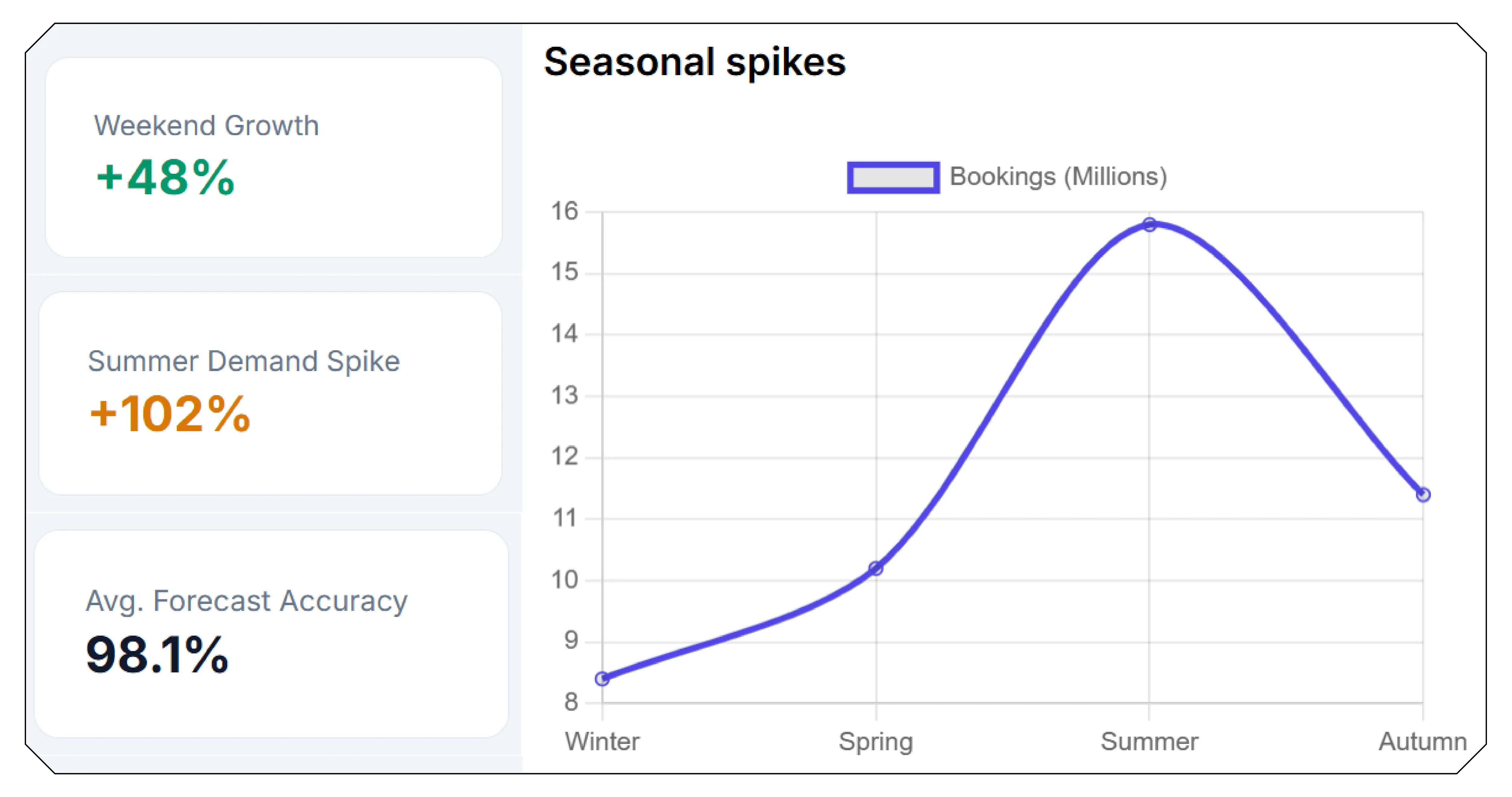
One of the most valuable outputs of rail data intelligence is identifying consumer behavior trends. These are captured through Booking Trend Insights, which analyze how users book train tickets across different routes and timeframes.
Key patterns include:
- Higher bookings during weekends and holidays
- Increased last-minute purchases on business routes
- Early booking advantage on high-speed rail corridors
- Seasonal spikes during summer tourism months
- Price sensitivity differences between domestic and international travelers
By analyzing these patterns, companies can better forecast demand and optimize fare strategies.
Continuous Rail Price Monitoring Systems
A major requirement for accurate rail analytics is real-time tracking. European railway fare monitoring enables businesses to observe price changes across multiple operators simultaneously.
This includes tracking:
- Fare increases and drops in real time
- Promotional pricing windows
- Competitor pricing adjustments
- Route-specific demand fluctuations
- Cross-border pricing variations
Such monitoring systems ensure that travel platforms always present updated and competitive pricing to users.
Booking Window Intelligence and Pricing Cycles
Timing plays a crucial role in train ticket pricing. European rail operators use advanced algorithms that adjust fares based on how early or late a booking is made.
Train booking window analytics Europe helps businesses understand:
- Optimal days to book cheaper tickets
- Price escalation patterns closer to departure
- Early-bird discount windows
- Last-minute surge pricing behavior
For example, a Paris–Amsterdam route may be significantly cheaper if booked 30 days in advance compared to 3 days before departure. Understanding these patterns helps travelers save money and helps OTAs improve conversion rates.
Dynamic Pricing in European Rail Networks
One of the most powerful innovations in rail transport is Dynamic Pricing Intelligence. This system allows operators to continuously adjust fares based on:
- Demand levels
- Seat occupancy
- Route popularity
- Competitor pricing
- Historical booking data
Dynamic pricing ensures maximum revenue per seat while maintaining occupancy balance across trains.
For analysts, tracking dynamic pricing provides valuable insights into how rail operators manage demand and revenue optimization strategies.
Building European Railway Pricing Datasets
Structured datasets play a key role in modern travel analytics. A European railway pricing trends dataset includes historical and real-time fare information across multiple routes, operators, and timeframes.
Such datasets typically include:
- Origin and destination stations
- Travel date and time
- Fare classes (standard, premium, first class)
- Ticket availability status
- Price fluctuations over time
- Booking time vs price relationship
These datasets are widely used for machine learning models, forecasting systems, and competitive benchmarking tools.
Applications of Rail Fare Intelligence
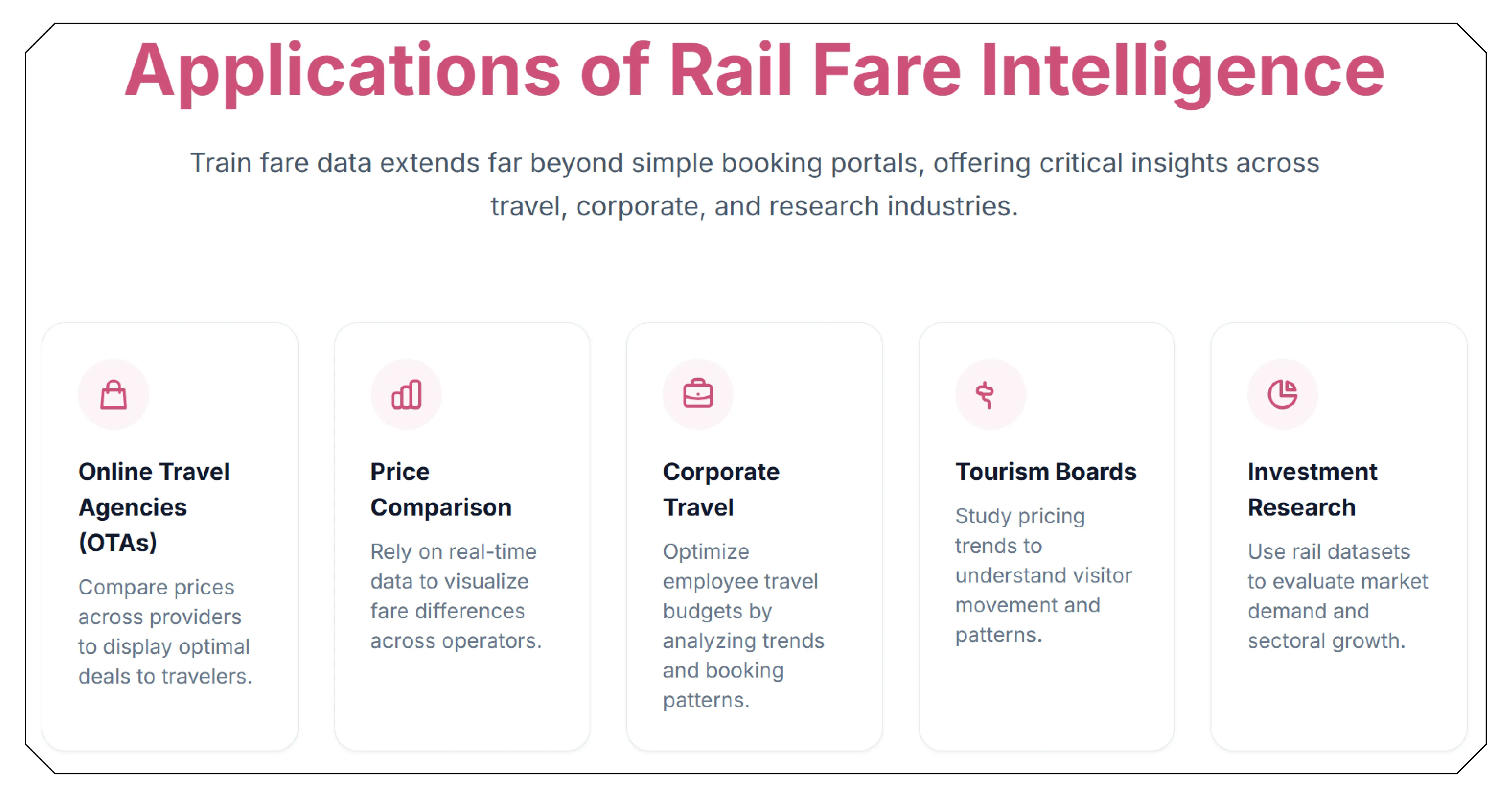
Train fare data is not just useful for travel booking platforms. It has multiple real-world applications across industries.
1. Online Travel Agencies (OTAs)
OTAs use rail data to compare prices across providers and display the best deals to users.
2. Travel Price Comparison Platforms
These platforms rely on real-time data to show fare differences across operators and routes.
3. Corporate Travel Management
Companies optimize employee travel budgets by analyzing fare trends and booking patterns.
4. Tourism Boards and Analysts
Government and tourism agencies study rail pricing trends to understand visitor movement patterns.
5. Investment and Market Research Firms
Investors use rail pricing datasets to evaluate market demand and transportation sector growth.
Challenges in European Rail Data Extraction
While rail data is highly valuable, extracting it is not simple. Several challenges exist:
- Multiple languages across booking platforms
- Frequent fare updates and dynamic changes
- Anti-bot protection systems on rail websites
- Different pricing structures per country
- Real-time inventory fluctuations
To overcome these issues, advanced scraping systems use adaptive parsing, rotating proxies, and structured data normalization techniques.
Importance of Fare Intelligence in Modern Travel Systems
Fare intelligence transforms raw data into actionable insights. Instead of just collecting prices, businesses analyze patterns such as:
- Price volatility across routes
- Demand elasticity based on price changes
- Peak vs off-peak fare distribution
- Seasonal pricing behavior
This helps companies design better pricing strategies and improve customer satisfaction.
Future of European Rail Data Analytics
The future of rail pricing intelligence is being shaped by automation, AI, and predictive modeling. Key trends include:
- AI-driven fare forecasting systems
- Personalized dynamic pricing models
- Real-time multi-operator comparison engines
- Integration of rail with air and bus travel datasets
- Predictive demand-based pricing optimization
As European mobility continues to digitalize, structured rail data will become even more critical for decision-making.
How Travel Scrape Can Help You?
1. Real-Time Fare Intelligence Collection
Our data scraping services continuously capture live European train fare updates, enabling businesses to track price fluctuations instantly, monitor competitor pricing, and respond quickly to changing market conditions across multiple rail operators.
2. Comprehensive Multi-Operator Data Aggregation
We aggregate structured data from multiple European railway operators and OTAs into a unified format, helping businesses eliminate data silos and gain a complete view of cross-border and domestic rail pricing ecosystems.
3. Advanced Pricing Trend Analysis
Our services transform raw fare data into actionable insights, identifying seasonal trends, booking patterns, and pricing behaviors, enabling companies to build accurate forecasting models and optimize travel pricing strategies effectively.
4. Booking Behavior and Demand Insights
We extract and structure booking data to reveal customer behavior patterns, including peak travel times, advance booking preferences, and route demand fluctuations, helping businesses improve targeting and conversion strategies.
5. Scalable and Automated Data Infrastructure
Our scraping solutions provide scalable pipelines that automatically handle large volumes of rail data across Europe, ensuring consistent updates, reduced manual effort, and high-quality datasets for analytics and decision-making systems.
Conclusion
The European rail industry is evolving rapidly, and data-driven insights are now at the center of its transformation. Companies that invest in structured rail intelligence gain a significant advantage in pricing strategy, customer engagement, and market forecasting.
OTAs & Metasearch Data Scraping enables platforms to unify rail pricing data with broader travel ecosystems, offering users the most competitive fares across channels.
Understanding Europe train route demand analysis helps businesses identify high-traffic corridors, optimize route pricing, and improve service planning.
Finally, OTA Price Intelligence plays a crucial role in helping travel platforms dynamically adjust fares, increase conversions, and maintain competitiveness in an increasingly complex European rail market.
Ready to elevate your travel business with cutting-edge data insights? Scrape Aggregated Flight Fares to identify competitive rates and optimize your revenue strategies efficiently. Discover emerging opportunities with tools to Extract Travel Website Data, leveraging comprehensive data to forecast market shifts and enhance your service offerings. Real-Time Travel App Data Scraping Services helps stay ahead of competitors, gaining instant insights into bookings, promotions, and customer behavior across multiple platforms. Get in touch with Travel Scrape today to explore how our end-to-end data solutions can uncover new revenue streams, enhance your offerings, and strengthen your competitive edge in the travel market.
Unlock the Full Report
Enter your details to access premium pricing intelligence insights