How Can Charter & Transfer Price Monitoring Help You Analyze Base Fare Trends Accurately?
Introduction
In today’s highly dynamic aviation and ground transfer ecosystem, pricing transparency and competitiveness are critical for success. Businesses operating in private aviation, charter services, and airport transfer networks must constantly adapt to fluctuating fare structures, fuel costs, seasonal demand, and competitor pricing. This is where Charter & Transfer Price Monitoring becomes an essential capability for companies aiming to maintain profitability while offering competitive rates.
With the advancement of digital technologies, Airline Data Scraping has emerged as a powerful solution to capture real-time fare insights across airlines, charter operators, and transfer service providers. By leveraging Transfer and Charter Fare Data Scraping, businesses can systematically gather and analyze pricing data, enabling them to make informed decisions and optimize their offerings effectively.
Understanding Charter & Transfer Price Monitoring
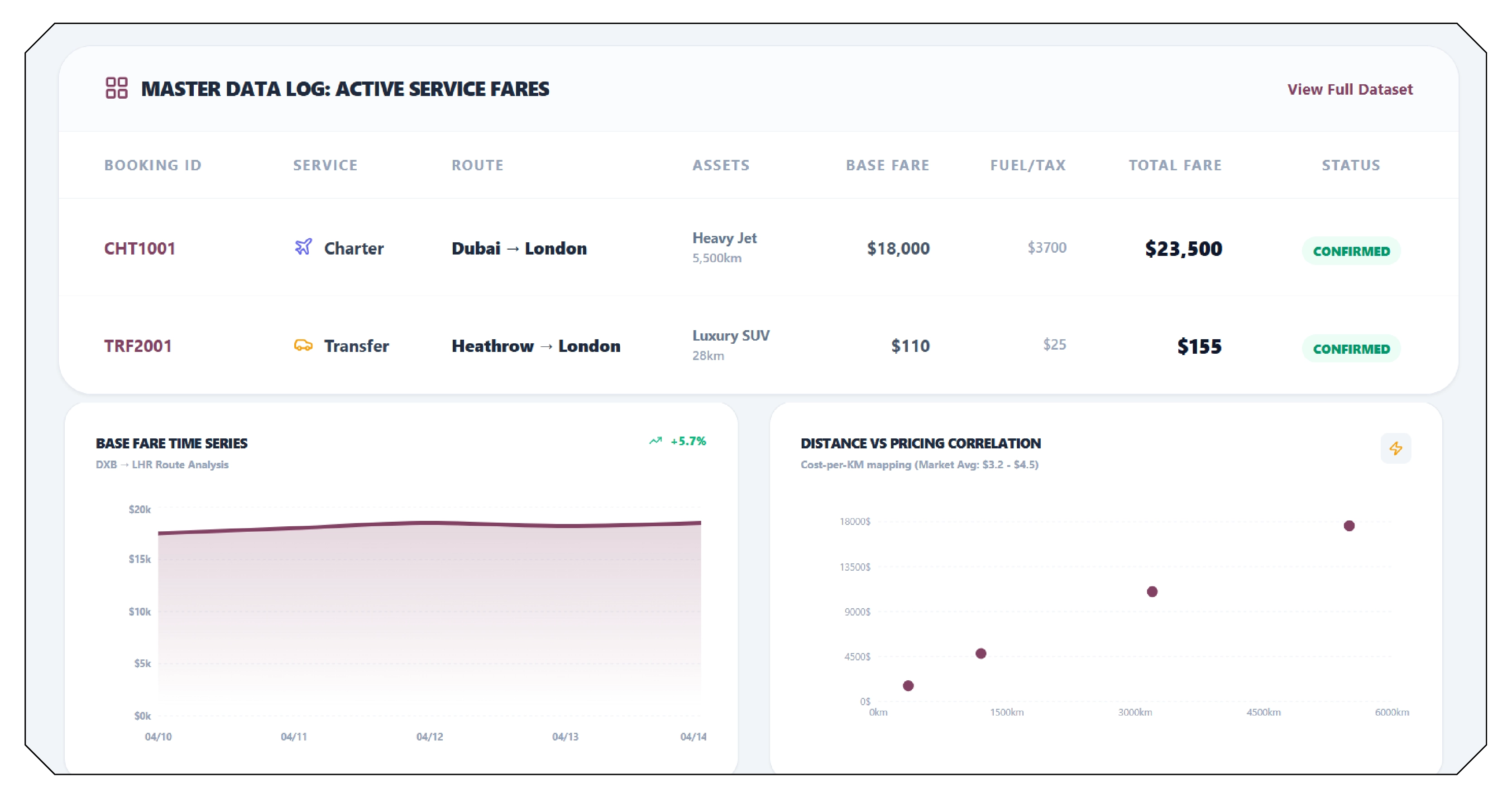
Charter and transfer price monitoring involves tracking, analyzing, and comparing pricing data for private flights, shared charters, airport transfers, and related services. Unlike commercial airline pricing, charter and transfer fares are often less standardized, making monitoring more complex yet more valuable.
These pricing structures include multiple components such as:
- Base fares
- Distance-based pricing
- Aircraft type or vehicle category
- Fuel surcharges
- Taxes and regulatory fees
- Seasonal and demand-based adjustments
Using tools like Real-Time Flight Data Scraping API, businesses can continuously collect and process this data, ensuring they remain competitive in a fast-changing market.
Why Price Monitoring Matters in Charter & Transfer Services?
The aviation and mobility sectors are increasingly driven by data. Charter operators, travel aggregators, and logistics companies rely heavily on accurate pricing intelligence to:
- Benchmark against competitors
- Optimize pricing strategies
- Identify demand patterns
- Enhance customer satisfaction
- Maximize revenue opportunities
With access to a transfer fare breakdown data scraping API, organizations can gain granular insights into fare structures, allowing them to fine-tune pricing models and improve transparency.
Key Components of Charter & Transfer Pricing Data
Effective price monitoring requires extracting and analyzing multiple layers of data. These include:
1. Base Fare Analysis
The foundation of any pricing strategy lies in understanding the core fare. Using base fare data extraction for transfers, companies can isolate the primary cost component and compare it across providers.
2. Taxes and Fees
Taxes, airport charges, and regulatory fees vary significantly by region and service type. Accurate Charter tax and fee data extraction helps businesses understand the true cost structure and avoid underpricing.
3. Dynamic Pricing Factors
Prices fluctuate based on demand, availability, and timing. Monitoring these changes enables businesses to respond proactively to market shifts.
4. Ancillary Services
Upsell services such as in-flight catering, premium seating, baggage handling, and luxury add-ons contribute significantly to revenue. Through Charter & Transfer ancillary upsell pricing data scraping, companies can evaluate additional revenue streams.
Leveraging Data for Competitive Advantage
Access to comprehensive datasets such as the Global Flight Price Trends Dataset allows organizations to identify long-term pricing patterns and market behaviors. These insights can be used to:
- Forecast demand
- Adjust pricing strategies
- Identify high-demand routes
- Optimize fleet utilization
Similarly, the Airline Price Change Dataset enables businesses to track how competitors adjust their fares over time, providing a clear view of market dynamics.
Benefits of Real-Time Price Monitoring
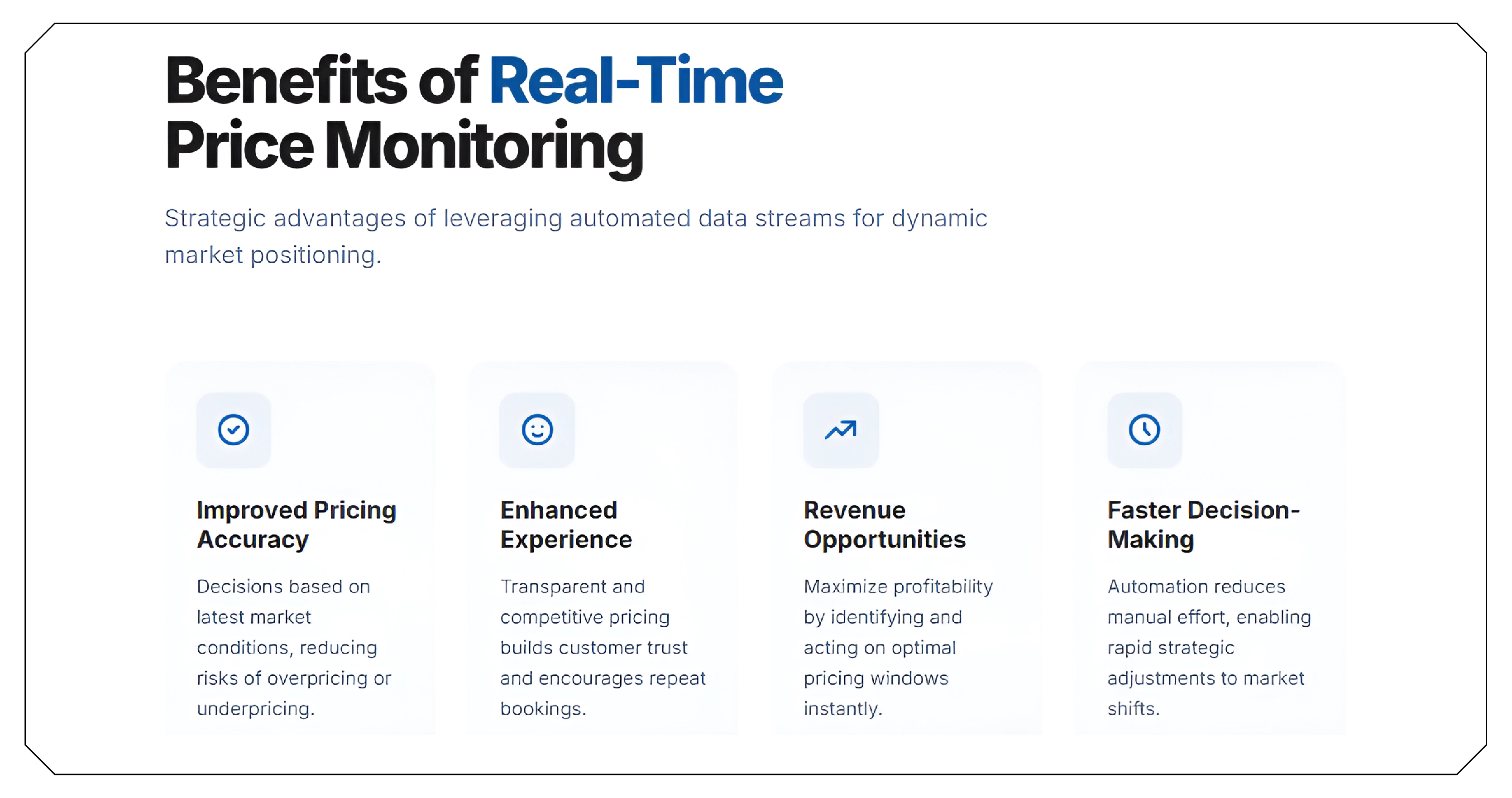
Improved Pricing Accuracy
data ensures that pricing decisions are based on the latest market conditions, reducing the risk of overpricing or underpricing.
Enhanced Customer Experience
Transparent and competitive pricing builds trust and encourages repeat bookings.
Increased Revenue Opportunities
By identifying optimal pricing windows, businesses can maximize profitability.
Faster Decision-Making
Automated data collection and analysis reduce manual effort and enable quick strategic adjustments.
Use Cases Across Industries
1. Private Jet Charter Companies
These companies use price monitoring to benchmark their offerings and adjust rates based on competitor activity and demand fluctuations.
2. Travel Aggregators
Platforms aggregating multiple service providers rely on real-time data to display the most competitive prices to customers.
3. Airport Transfer Services
Transfer companies monitor pricing across taxis, ride-sharing services, and luxury transport providers to stay competitive.
4. Corporate Travel Management
Organizations managing business travel use pricing intelligence to optimize budgets and ensure cost efficiency.
Challenges in Charter & Transfer Price Monitoring
Despite its advantages, price monitoring comes with challenges:
- Data Fragmentation: Pricing data is often scattered across multiple platforms, making it difficult to consolidate.
- Dynamic Pricing Complexity: Frequent price changes require continuous monitoring and updates.
- Data Accuracy: Ensuring the accuracy and consistency of scraped data is critical for reliable insights.
- Compliance and Ethics: Businesses must adhere to legal and ethical standards when collecting and using data.
Role of Advanced Data Scraping Technologies
Modern data scraping technologies have transformed how businesses collect and analyze pricing data. Advanced tools can:
- Extract structured and unstructured data
- Handle large-scale data collection
- Provide real-time updates
- Integrate with analytics platforms
These technologies enable seamless data flow, ensuring businesses always have access to the latest insights.
Building a Robust Price Monitoring Strategy
To implement an effective charter and transfer price monitoring system, businesses should:
Define Objectives: Clearly outline what data needs to be collected and how it will be used.
Choose the Right Tools: Select reliable data scraping solutions capable of handling complex datasets.
Ensure Data Quality: Implement validation processes to maintain accuracy.
Integrate Analytics: Use data visualization and analytics tools to derive actionable insights.
Monitor Continuously: Establish automated systems for ongoing data collection and analysis.
Future Trends in Charter & Transfer Pricing
The future of charter and transfer pricing is being shaped by several emerging trends:
AI-Driven Pricing Models:
Artificial intelligence is enabling predictive pricing strategies based on historical and real-time data.
Personalization:
Pricing is becoming more tailored to individual customer preferences and behavior.
Integration with Mobility Platforms:
Seamless integration with ride-sharing and multimodal transport systems is enhancing user experience.
Sustainability Considerations:
Environmental factors are increasingly influencing pricing strategies.
How Travel Scrape Can Help You?
1. Real-Time Competitive Pricing Intelligence
Our data scraping services continuously monitor charter and transfer pricing across multiple platforms, enabling you to track competitor rates in real time. This helps you adjust your pricing strategies dynamically, ensuring you stay competitive while maximizing revenue opportunities in fluctuating market conditions.
2. Comprehensive Fare Breakdown Analysis
We extract detailed pricing components, including base fares, taxes, surcharges, and ancillary costs. This granular visibility allows you to understand complete fare structures, optimize pricing models, and improve transparency for customers, ultimately enhancing trust and conversion rates.
3. Demand and Trend Forecasting
By collecting historical and real-time pricing data, our solutions help identify seasonal trends, peak demand periods, and route-based pricing patterns. These insights empower your business to forecast demand accurately and make proactive pricing and operational decisions.
4. Automation and Scalability
Our automated data scraping systems eliminate manual data collection, saving time and resources. Whether you need data from a few routes or thousands of global sources, our scalable infrastructure ensures consistent, high-quality data delivery without interruptions.
5. Actionable Data Integration
We provide structured, ready-to-use datasets that seamlessly integrate with your analytics tools and dashboards. This enables faster decision-making, supports strategic planning, and helps you unlock valuable insights to drive growth and operational efficiency.
Conclusion
In an increasingly competitive and data-driven market, charter and transfer service providers cannot rely on static pricing models. The ability to monitor, analyze, and respond to pricing changes in real time is essential for staying ahead.
By leveraging advanced data scraping solutions and datasets, businesses can gain a comprehensive understanding of market dynamics and customer behavior. Incorporating insights from Transfer discount and promo fare data extraction allows companies to design attractive offers and improve customer acquisition. Additionally, utilizing Charter member pricing and loyalty fare scraping helps in building long-term customer relationships through personalized pricing strategies.
Ultimately, the integration of Flight Price Data Intelligence empowers organizations to make smarter decisions, optimize pricing, and achieve sustainable growth in the evolving aviation and mobility landscape.
Ready to elevate your travel business with cutting-edge data insights? Scrape Aggregated Flight Fares to identify competitive rates and optimize your revenue strategies efficiently. Discover emerging opportunities with tools to Extract Travel Website Data, leveraging comprehensive data to forecast market shifts and enhance your service offerings. Real-Time Travel App Data Scraping Services helps stay ahead of competitors, gaining instant insights into bookings, promotions, and customer behavior across multiple platforms. Get in touch with Travel Scrape today to explore how our end-to-end data solutions can uncover new revenue streams, enhance your offerings, and strengthen your competitive edge in the travel market.
Unlock the Full Report
Enter your details to access premium pricing intelligence insights