How Does Air & Hotel Price Benchmarking for Corporate Travel Enable Real-Time Governance and Cost Control?
Introduction
In today’s competitive business environment, organizations are constantly seeking ways to reduce operational costs while maintaining efficiency and employee satisfaction. One of the most impactful areas for cost control is corporate travel. With rising airfare and hotel prices, companies are increasingly adopting Air & Hotel Price Benchmarking for Corporate Travel to gain visibility into spending patterns and optimize travel budgets. Leveraging Web Scraping For Business Travel Trends allows organizations to collect large-scale, real-time market data, enabling smarter decisions. By using advanced airfare and hotel pricing intelligence for business travel, companies can ensure they are always securing the best possible rates without compromising on quality or convenience.
Understanding Air & Hotel Price Benchmarking
Air and hotel price benchmarking refers to the process of comparing travel costs against industry standards, competitors, and historical data. This enables organizations to evaluate whether they are paying fair market prices for flights and accommodations. Benchmarking provides a data-driven foundation for negotiating better deals with vendors and identifying inefficiencies in travel spending.
Instead of relying on static pricing or manual comparisons, modern benchmarking uses automated tools and analytics to track fluctuations in airfare and hotel rates across multiple regions and timeframes. This ensures that travel managers always have up-to-date insights to guide decision-making.
Comparison Table: Air & Hotel Price Benchmarking for Corporate Travel (Data-Driven View)
| Metric / KPI | Without Benchmarking | With Air & Hotel Price Benchmarking | Business Impact (%) |
|---|---|---|---|
| Average Airfare Cost per Trip | ₹18,000 – ₹28,000 | ₹14,000 – ₹22,000 | ↓ 15% – 25% savings |
| Average Hotel Cost per Night | ₹6,000 – ₹12,000 | ₹4,500 – ₹9,000 | ↓ 20% – 30% savings |
| Booking Timing Efficiency | 40% optimal bookings | 75%–90% optimal bookings | ↑ 2X improvement |
| Policy Compliance Rate | 55% – 70% | 85% – 98% | ↑ 30% – 40% |
| Last-Minute Bookings | 25% – 35% | 10% – 15% | ↓ 50% reduction |
| Visibility into Travel Spend | Partial (monthly reports) | Real-time dashboards | 100% real-time visibility |
| Vendor Negotiation Power | Low (limited data) | High (market-backed insights) | ↑ 20% – 35% better deals |
| Price Variance Across Routes | ±30% fluctuation | ±10% – 15% controlled variance | ↓ 50% stabilization |
| Travel Budget Overruns | 20% – 30% over budget | 5% – 10% over budget | ↓ 60% reduction |
| Employee Satisfaction Score | 6.5 / 10 | 8.5 / 10 | ↑ 25% improvement |
| Data Processing Time | 2–5 days (manual) | Real-time / <1 hour | ↑ 90% faster insights |
| ROI on Travel Program | 1.2X – 1.5X | 2X – 3.5X | ↑ up to 120% ROI |
Key Takeaways from the Data Table
- Companies leveraging benchmarking can reduce overall travel costs by 20–30% annually.
- Real-time data access improves decision-making speed by up to 90%.
- Predictive insights significantly reduce last-minute expensive bookings.
- Organizations gain stronger negotiation leverage with airlines and hotels.
- Travel programs become more compliant, transparent, and scalable.
The Role of Data in Corporate Travel Benchmarking
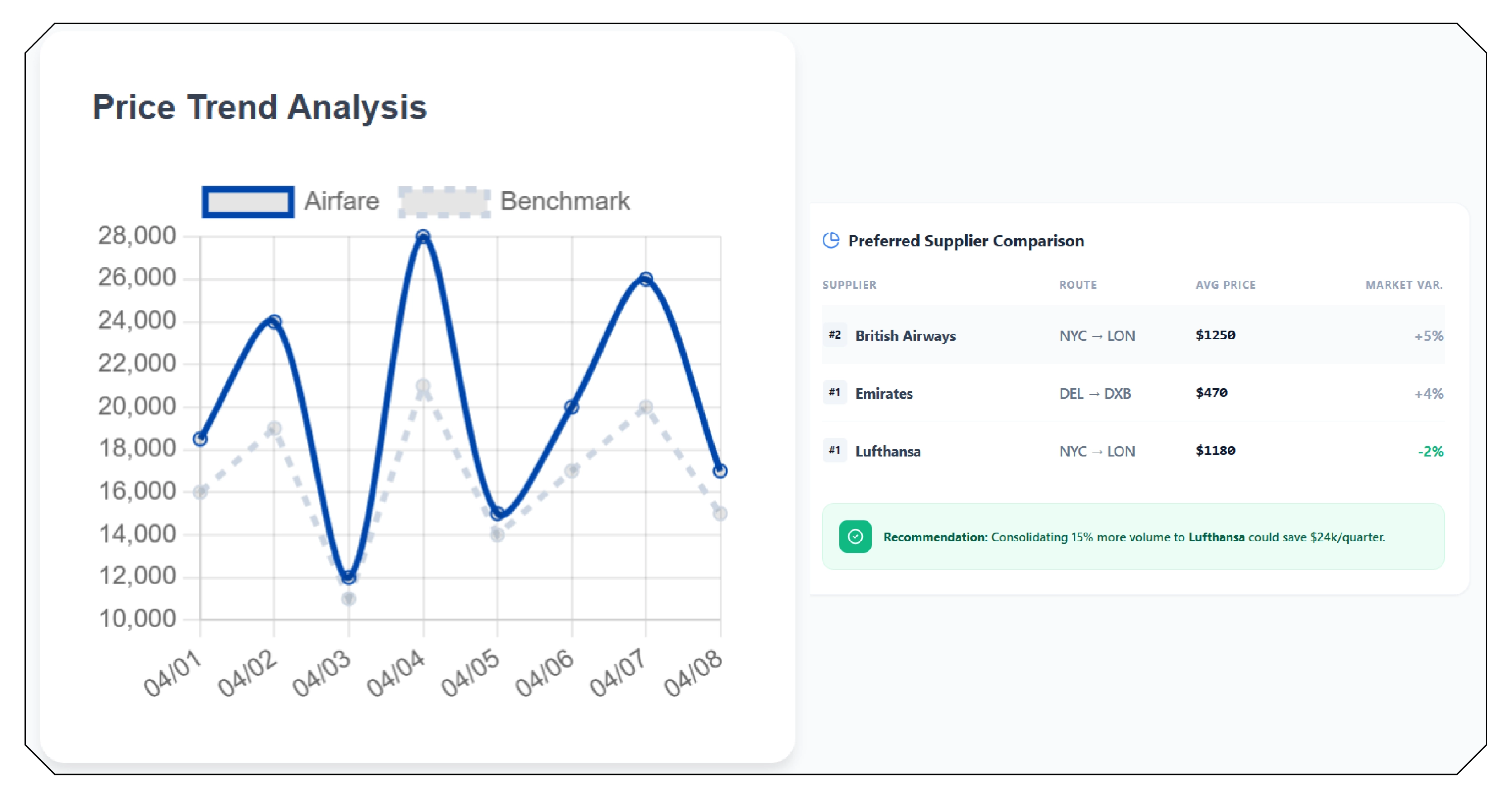
Data is at the core of effective benchmarking strategies. Companies collect vast amounts of travel-related data, including booking patterns, seasonal trends, supplier pricing, and employee preferences. By analyzing this data, organizations can identify cost-saving opportunities and improve travel planning processes.
Advanced systems integrate multiple data sources, including airline websites, hotel booking platforms, and travel aggregators. This data is then standardized and analyzed to generate actionable insights. With the help of predictive analytics, businesses can even forecast future price trends and adjust their travel policies accordingly.
Leveraging Technology for Smarter Travel Decisions
Modern enterprises rely on sophisticated tools like Corporate Flight Search Systems to streamline travel planning and benchmarking. These systems aggregate flight data from multiple sources, enabling travel managers to compare prices, routes, and booking options in real time.
Such platforms not only enhance visibility but also improve efficiency by automating repetitive tasks. Travel managers can quickly identify the most cost-effective options while ensuring compliance with company policies. Integration with expense management systems further simplifies tracking and reporting.
Real-Time Insights for Better Governance
One of the key advantages of benchmarking is access to real-time travel governance analytics data. This allows organizations to monitor travel expenses as they occur, rather than relying on delayed reports. Real-time insights help identify anomalies, such as unusually high ticket prices or unauthorized bookings, enabling immediate corrective action.
With real-time analytics, companies can enforce travel policies more effectively and ensure that employees adhere to approved guidelines. This not only reduces costs but also enhances transparency and accountability across the organization.
Optimizing Flight Data for Cost Savings
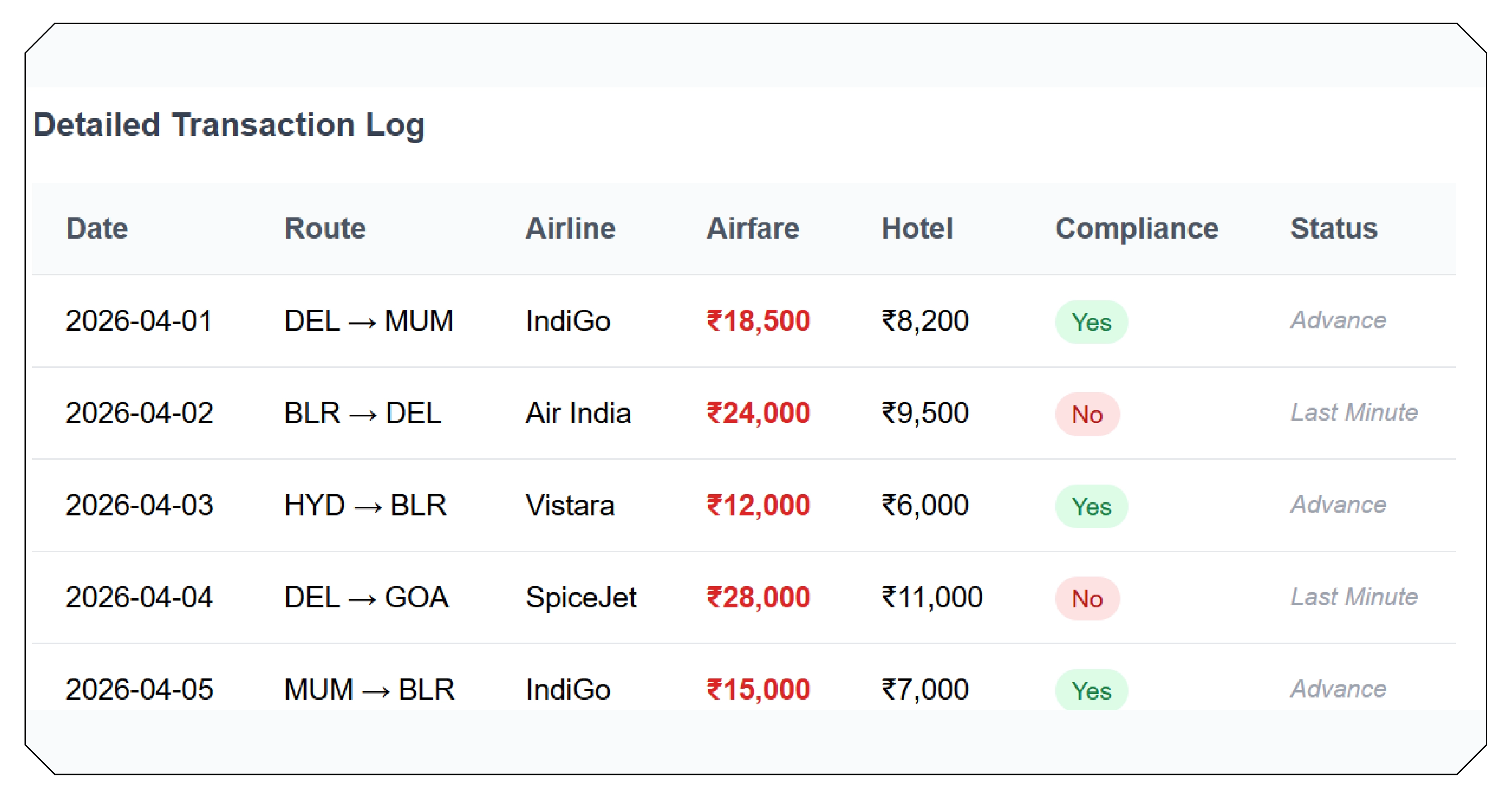
Efficient travel management requires continuous improvement, and Corporate Flight Data Optimization plays a crucial role in achieving this. By analyzing historical flight data, companies can identify patterns such as peak booking times, preferred routes, and frequent travel destinations.
This information helps organizations optimize booking strategies, such as choosing the best time to purchase tickets or selecting alternative routes to reduce costs. Data optimization also supports better vendor negotiations, as companies can leverage insights to secure favorable contracts with airlines.
Building a Centralized Benchmarking Platform
To fully realize the benefits of benchmarking, organizations often invest in a corporate travel benchmarking platform. These platforms provide a unified view of travel data, enabling seamless analysis and reporting.
A centralized platform consolidates data from multiple sources, ensuring consistency and accuracy. It also allows for customizable dashboards, where travel managers can track key performance indicators such as average ticket prices, hotel rates, and overall travel spend.
By using a dedicated platform, companies can streamline their benchmarking processes and make more informed decisions.
Enhancing Cost Efficiency Through Analytics
Cost control is a primary objective of corporate travel management, and benchmarking plays a vital role in achieving corporate travel cost efficiency analytics. By comparing internal data with market benchmarks, organizations can identify areas where they are overspending and implement corrective measures.
For example, if a company consistently pays higher-than-average hotel rates in a specific city, it can renegotiate contracts or explore alternative accommodations. Similarly, analyzing flight data can reveal opportunities to switch to more cost-effective airlines or booking channels.
Driving Strategic Insights for Optimization
Benchmarking goes beyond cost comparison; it also provides valuable corporate travel pricing insights and cost optimization strategies. These insights help organizations align their travel programs with broader business goals.
For instance, companies can use benchmarking data to design travel policies that balance cost savings with employee comfort. They can also identify trends such as increasing demand for certain destinations and adjust budgets accordingly.
Strategic insights enable organizations to move from reactive cost management to proactive optimization, ensuring long-term sustainability.
The Impact of Automation and AI

Automation and artificial intelligence are transforming corporate travel benchmarking. AI-powered tools can analyze vast datasets بسرعة and identify patterns that would be impossible to detect manually. These tools can also provide personalized recommendations based on historical data and user preferences.
For example, AI can suggest the best time to book flights or recommend hotels that offer the best value for money. Automation reduces manual effort and ensures consistency in data collection and analysis, making benchmarking more efficient and reliable.
Benefits of Air & Hotel Price Benchmarking
Implementing a robust benchmarking strategy offers numerous benefits:
- Cost Reduction: Identifying overpriced bookings and securing better deals
- Improved Compliance: Ensuring adherence to travel policies
- Enhanced Transparency: Providing clear visibility into travel expenses
- Better Decision-Makin: Leveraging data-driven insights
- ency: Automating travel management processes
These benefits collectively contribute to a more streamlined and effective corporate travel program.
Challenges and Considerations
While benchmarking offers significant advantages, it also comes with challenges. Data accuracy is a critical concern, as inaccurate or outdated information can lead to wrong decisions. Organizations must ensure that their data sources are reliable and regularly updated.
Integration with existing systems can also be complex, requiring careful planning and execution. Additionally, companies must balance cost optimization with employee satisfaction, ensuring that travel policies do not negatively impact productivity or morale.
Future Trends in Corporate Travel Benchmarking
The future of corporate travel benchmarking is driven by innovation and digital transformation. Emerging technologies such as machine learning, predictive analytics, and blockchain are expected to further enhance data accuracy and transparency.
Companies are also increasingly focusing on sustainability, using benchmarking data to reduce their carbon footprint by optimizing travel routes and choosing eco-friendly accommodations.
As the travel industry continues to evolve, benchmarking will play an even more critical role in helping organizations adapt to changing market conditions.
How Travel Scrape Can Help You?
1. Comprehensive Market Data Collection
Our data scraping services gather large-scale airfare and hotel pricing data from multiple platforms in real time. This ensures businesses access accurate, up-to-date information, enabling better benchmarking, competitive comparisons, and smarter corporate travel planning across regions, seasons, and booking channels.
2. Real-Time Price Monitoring
We continuously track fluctuations in flight and hotel prices, helping organizations respond quickly to market changes. Real-time monitoring empowers travel managers to book at optimal times, avoid price surges, and maintain cost control while ensuring seamless travel experiences for employees.
3. Competitor Benchmarking Insights
Our solutions provide deep insights into competitor pricing strategies by analyzing industry trends and market standards. Businesses can compare their travel expenses with competitors, identify gaps, and implement data-driven strategies to optimize travel budgets and improve overall financial performance effectively.
4. Custom Data Integration & Analytics
We deliver structured datasets that seamlessly integrate with your existing systems and dashboards. This enables advanced analytics, automated reporting, and actionable insights, allowing organizations to streamline travel management processes, improve forecasting accuracy, and enhance decision-making capabilities across corporate travel operations.
5. Policy Compliance & Cost Optimization
Our services help enforce corporate travel policies by identifying non-compliant bookings and unnecessary expenses. With detailed insights and automated alerts, businesses can improve compliance, reduce travel costs, and implement efficient strategies that align with organizational goals and long-term financial planning.
Conclusion
In an era where cost control and efficiency are paramount, air and hotel price benchmarking has become an indispensable tool for corporate travel management. By leveraging advanced analytics and technology, organizations can gain deeper insights into their travel spending and identify opportunities for improvement.
The integration of benchmarking with modern tools enables companies to achieve better corporate travel policy compliance monitoring, ensuring that all travel activities align with organizational guidelines. Additionally, adopting effective Price Optimization strategies allows businesses to secure the best possible rates while maintaining quality standards.
Finally, the power of Travel Data Intelligence cannot be overstated. It empowers organizations to make informed decisions, enhance operational efficiency, and stay ahead in a competitive landscape. As corporate travel continues to evolve, benchmarking will remain a key driver of success, helping businesses achieve sustainable growth and long-term value.
Ready to elevate your travel business with cutting-edge data insights? Scrape Aggregated Flight Fares to identify competitive rates and optimize your revenue strategies efficiently. Discover emerging opportunities with tools to Extract Travel Website Data, leveraging comprehensive data to forecast market shifts and enhance your service offerings. Real-Time Travel App Data Scraping Services helps stay ahead of competitors, gaining instant insights into bookings, promotions, and customer behavior across multiple platforms. Get in touch with Travel Scrape today to explore how our end-to-end data solutions can uncover new revenue streams, enhance your offerings, and strengthen your competitive edge in the travel market.
Unlock the Full Report
Enter your details to access premium pricing intelligence insights