Expedia API for Travel Data Extraction Across Hotels Flights and Packages

Introduction
This case study explores how a travel technology client strengthened hotel and flight intelligence by collecting structured Expedia data across multiple travel categories. The client needed reliable information for monitoring prices, availability, reviews, package offerings, and flight details across changing travel markets. Our team implemented Expedia API for travel data extraction capabilities to collect structured information at scale while maintaining consistency across datasets. The solution incorporated Scraping Expedia Hotels Data to capture hotel names, room types, prices, amenities, ratings, availability, and location attributes. We also integrated Expedia API for hotel price tracking to support continuous monitoring of accommodation pricing and identify fluctuations across destinations. The resulting data infrastructure helped the client compare travel offerings, analyze market movements, identify pricing opportunities, and improve decision-making through organized historical and near-real-time travel intelligence. The case demonstrates how automated data collection can transform fragmented travel information into actionable business insights.
The Client
The client was a travel technology and market intelligence company serving customers across accommodation, flights, vacation packages, and destination services. Its existing research process depended heavily on manual collection, spreadsheets, and fragmented third-party information, making large-scale market monitoring difficult. The company wanted to improve its competitive intelligence capabilities and establish a centralized database covering hotel, flight, package, and customer-review information. Through Expedia Package Providers Data Scraping, the client aimed to monitor package providers, package combinations, destinations, pricing, and inclusions more systematically. It also required an Expedia hotel data scraping service to maintain structured accommodation intelligence across multiple destinations and property categories. Additionally, the organization wanted to Scrape Expedia Flight Data for route-level analysis, fare comparison, schedule monitoring, and availability tracking. The broader objective was to establish a scalable data pipeline capable of supporting pricing analysis, competitor benchmarking, reporting, and travel-product optimization.
Challenges in the Travel Industry
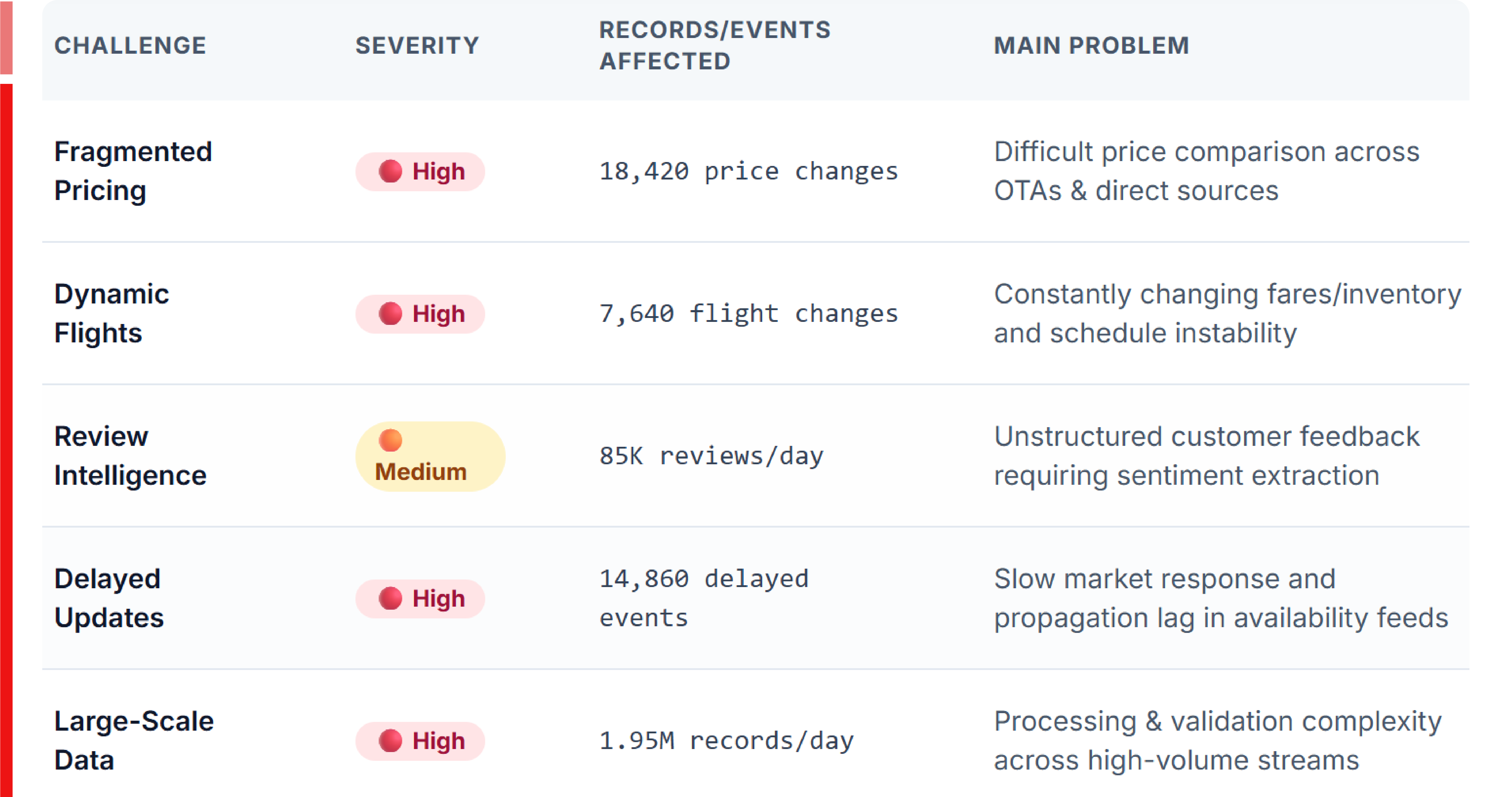
The client encountered several data and market-monitoring challenges that limited its ability to generate timely travel intelligence. These challenges affected pricing analysis, competitive research, availability monitoring, and customer experience assessment.
Fragmented Pricing Intelligence
The client struggled to consistently compare accommodation and flight prices across destinations and booking periods. Expedia API for pricing insights was required to organize pricing observations into structured datasets, allowing analysts to identify changes, compare travel products, and monitor competitive movements without relying on disconnected manual records.
Dynamic Flight Information
Flight schedules, availability, routes, departure times, and fares could change frequently throughout the booking cycle. Using an Expedia flight data API approach enabled the client to organize frequently changing flight information and create standardized records for route-level comparisons, historical analysis, and operational monitoring across different destinations and travel periods.
Inconsistent Review Intelligence
Hotel reviews contained valuable information about customer satisfaction, property performance, amenities, and recurring service concerns. However, extracting and organizing this information manually was time-consuming. An Expedia hotel reviews dataset provided structured review attributes that could support sentiment analysis, property comparisons, and quality benchmarking.
Delayed Market Updates
Traditional research workflows often created delays between market changes and business decisions. The client needed a Real-Time Data API architecture capable of supporting faster collection and delivery of changing travel information, particularly for prices, availability, hotel inventory, and flight-related attributes across frequently monitored destinations.
Large-Scale Data Management
Collecting information across numerous destinations, hotels, flights, and travel products created substantial data-management requirements. The client needed scalable extraction, normalization, validation, deduplication, and storage processes so analysts could work with consistent records while reducing errors and minimizing repetitive manual research activities.
Our Approach
Expedia Data Source Mapping
We first mapped the required Expedia information fields across hotels, flights, packages, reviews, pricing, locations, and availability. This helped define standardized extraction requirements and ensured that relevant attributes were consistently collected across different destinations, travel categories, and product types.
Automated Data Extraction
Our team developed automated collection workflows designed to capture required travel attributes at scale. The extraction process organized hotel, flight, package, pricing, availability, and review information into structured records, reducing repetitive manual research while creating a consistent foundation for downstream analysis and reporting.
Data Cleaning and Normalization
Collected information was processed through validation, normalization, deduplication, and formatting workflows. Similar hotel names, destination attributes, room categories, flight details, and pricing fields were standardized to improve consistency and make cross-property, cross-route, and cross-destination comparisons easier for the client's analytical teams.
Historical and Price Tracking
We established structured datasets that allowed the client to maintain historical observations for monitored travel products. Pricing records could be compared across dates, destinations, property categories, room types, booking windows, and travel periods, helping analysts identify changes and recurring market patterns more efficiently.
Dashboard-Ready Data Delivery
The final datasets were prepared in organized formats suitable for analytics platforms, internal dashboards, reporting systems, and business intelligence workflows. Structured delivery allowed the client to integrate travel information into existing processes and provide decision-makers with easier access to current and historical market intelligence.
Results Achieved
The implemented solution improved the client's ability to organize travel intelligence, monitor market movements, compare offerings, and support data-driven commercial decisions across hotel and flight categories.
Expanded Data Coverage
The automated workflows significantly increased the volume of travel records available for analysis. The client could monitor thousands of hotel, flight, package, review, and pricing observations across multiple destinations without expanding manual research resources.
Faster Competitive Monitoring
Automated collection reduced the time required to gather market information. Analysts gained faster access to standardized pricing, availability, property, and flight records, allowing them to conduct competitive comparisons and identify relevant changes with greater operational efficiency.
Improved Pricing Analysis
Historical price observations enabled analysts to examine accommodation and flight pricing across destinations, travel dates, booking windows, and product categories. This supported more structured benchmarking and helped the client identify recurring pricing movements and market-level variations.
Better Review Intelligence
Structured hotel-review information allowed the client to examine ratings, review volumes, recurring themes, and property-level feedback more efficiently. These insights supported accommodation benchmarking and helped analysts understand customer perceptions across different destinations and hotel categories.
Scalable Travel Intelligence
The resulting data pipeline provided a scalable foundation for future expansion. The client could increase destination coverage, add new data fields, extend monitoring frequency, and integrate additional travel categories without rebuilding the entire data-processing framework.
Results Snapshot
The table presents case-study performance metrics for the implemented data-intelligence workflow.
| Metric | Before Implementation | After Implementation | Improvement | Coverage | Frequency | Data Category | Records Monitored | Accuracy |
|---|---|---|---|---|---|---|---|---|
| Hotel Listings | 18,500 | 42,800 | 131% | 85 destinations | Daily | Hotels | 42,800 | 97.6% |
| Hotel Prices | 21,400 | 56,200 | 163% | 85 destinations | Daily | Pricing | 56,200 | 97.4% |
| Flight Records | 14,700 | 38,600 | 163% | 62 routes | Daily | Flights | 38,600 | 97.1% |
| Package Providers | 6,800 | 17,900 | 163% | 48 markets | Weekly | Packages | 17,900 | 96.8% |
| Hotel Reviews | 24,600 | 61,500 | 150% | 72 destinations | Weekly | Reviews | 61,500 | 96.9% |
| Availability Records | 12,300 | 34,700 | 182% | 85 destinations | Daily | Availability | 34,700 | 97.2% |
| Destination Records | 4,200 | 11,600 | 176% | 85 destinations | Weekly | Locations | 11,600 | 98.1% |
| Room Categories | 8,900 | 23,400 | 163% | 85 destinations | Daily | Rooms | 23,400 | 97.5% |
| Pricing Observations | 35,700 | 94,800 | 166% | 85 destinations | Daily | Pricing History | 94,800 | 97.3% |
| Total Records | 147,100 | 381,500 | 159% | Multi-market | Mixed | Combined | 381,500 | 97.3% |
Client's Testimonial
"The data solution transformed the way our team approaches travel market intelligence. Previously, our analysts spent significant time collecting information manually and reconciling inconsistent records from different research sources. The new automated workflow gave us structured hotel, flight, package, pricing, availability, and review information in a much more usable format. We can now compare travel products across destinations, monitor pricing changes, and support internal reporting with significantly less manual effort. The ability to maintain historical observations has also improved our understanding of market movements. The solution has created a scalable foundation that we can expand as our travel intelligence requirements grow."
Conclusion
This case study demonstrates how structured travel data extraction can help businesses overcome fragmented information, manual research, and rapidly changing market conditions. By combining automated collection, data validation, normalization, historical tracking, and scalable delivery, the client established a more reliable foundation for hotel and flight intelligence. The solution supported broader destination coverage while improving access to pricing, availability, reviews, packages, and travel-product information. Businesses seeking comparable capabilities can leverage Travel Aggregators Data Scraping Services to consolidate travel information from multiple sources and develop structured competitive datasets. Travel Industry Web Scraping Services can further support recurring market research, benchmarking, and historical intelligence requirements. For mobile-focused businesses, a Travel Mobile App Scraping Service can provide additional structured information for monitoring app-based travel products, pricing, availability, and customer-facing offerings.
FAQs
Unlock the Full Report
Enter your details to access premium pricing intelligence insights