Shoulder Season Peaks: Scraping Off-Peak Demand Shifts
Introduction: The Shoulder Season Opportunity
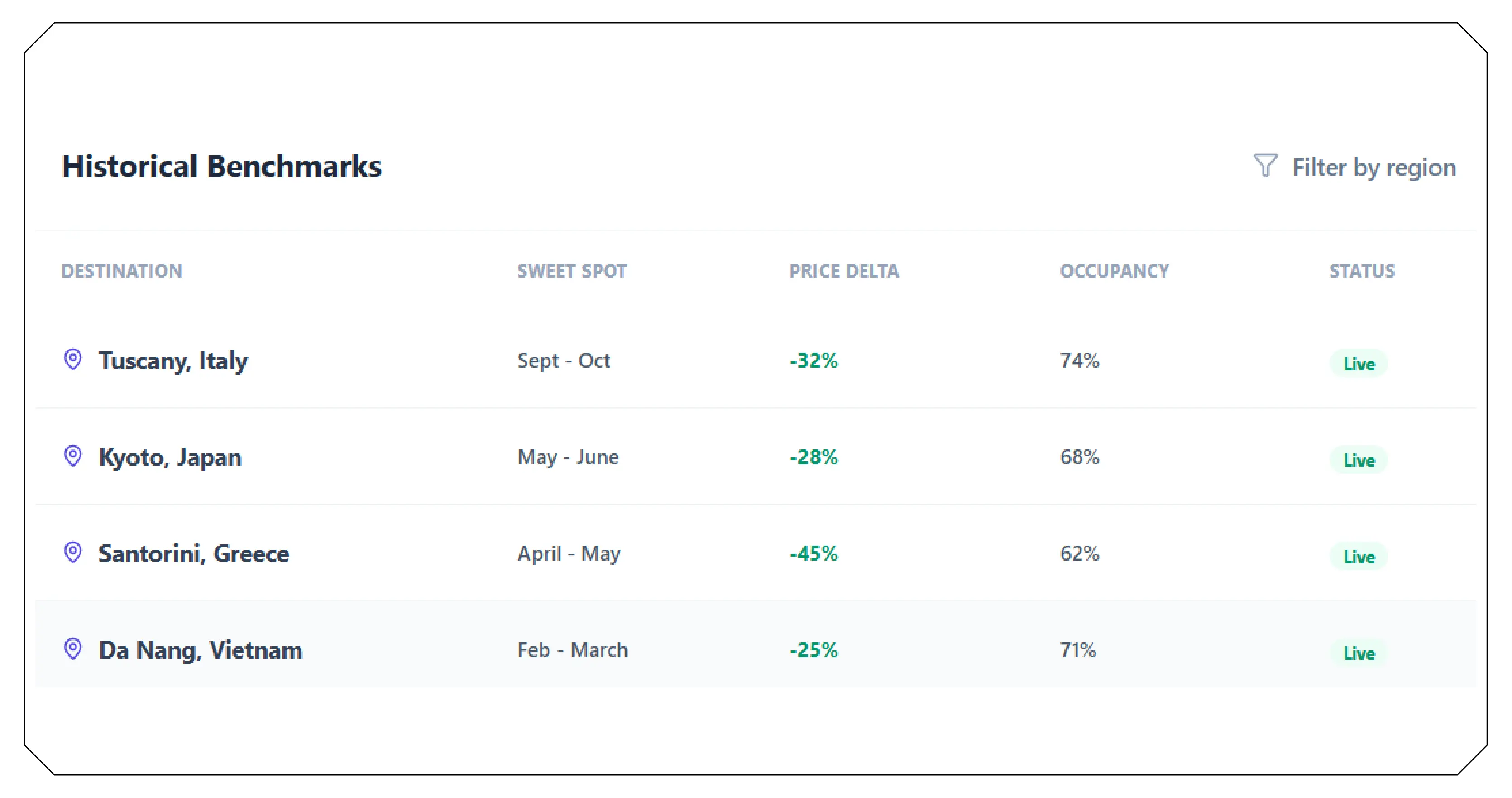
Shoulder seasons, the periods between peak and off-peak travel times, have become the savviest travelers best-kept secret and the travel industrys greatest untapped revenue opportunity. In 2026, shoulder season travel demand is growing 3 times faster than peak season demand. Travelers are discovering that destinations offer better weather, fewer crowds, lower prices, and more authentic experiences during these transitional periods.
For travel brands, understanding shoulder season dynamics requires granular data that traditional seasonal analysis cannot provide. The boundaries between peak and shoulder seasons are shifting, creating new demand patterns that vary by destination, traveler type, and year. Travel Scrape extracts real-time pricing, occupancy, and demand data that reveals exactly when shoulder season sweet spots occur for every major destination.
Why Shoulder Seasons Are Shifting
Several factors are reshaping seasonal travel patterns. Remote work enables travel outside traditional vacation windows. Climate change is extending pleasant weather seasons at many destinations. School calendar flexibility in some regions allows family travel beyond summer holidays. Social media promotes off-season destinations when they trend. Event calendars create micro-peaks within traditional shoulder periods.
These shifts mean that static seasonal calendars are no longer reliable. A destination shoulder season may start two weeks earlier or later than historical patterns suggest. Demand can spike mid-shoulder due to a viral social media post or local event. Only real-time data captures these dynamic patterns accurately.
What Travel Scrape Extracts
Our seasonal intelligence pipeline monitors pricing and demand signals continuously across major booking platforms. Travel Scrape extracts daily rate fluctuations showing exact shoulder season boundaries, occupancy data revealing demand building and declining periods, booking pace data showing how far in advance shoulder season travelers book, price elasticity measurements during transitional periods, weather correlation data linking conditions to demand shifts, and event calendar impacts on shoulder season demand spikes.
Sample Data: Shoulder Season Pricing Analysis
| Destination | Peak Rate | Shoulder Rate | Savings | Best Shoulder Window | Demand Trend |
|---|---|---|---|---|---|
| Barcelona, Spain | $285/night | $155/night | 46% | Sep 15-Oct 31 | +35% YoY |
| Bali, Indonesia | $180/night | $95/night | 47% | Apr 1-May 15 | +28% YoY |
| NYC, USA | $350/night | $210/night | 40% | Jan 15-Mar 15 | +22% YoY |
| Kyoto, Japan | $250/night | $140/night | 44% | Nov 15-Dec 15 | +40% YoY |
| Santorini, Greece | $420/night | $195/night | 54% | May 1-Jun 10 | +32% YoY |
| Cape Town, SA | $200/night | $120/night | 40% | Mar 15-May 15 | +25% YoY |
Revenue Strategies for Shoulder Season Data
1. Dynamic Shoulder Season Marketing
Travel Scrape data enables precise marketing timing. Instead of generic off-season promotions, brands can launch campaigns exactly when shoulder season sweet spots begin for each destination. Our data shows that campaigns launched within the first week of shoulder season opening capture 40% more bookings than early-bird promotions.
2. Micro-Season Package Development
Within shoulder seasons exist micro-seasons of exceptional value. A two-week window in early October when Barcelona weather is perfect, crowds are minimal, and rates have dropped 46% represents a micro-season worth highlighting. Our data identifies these optimal windows at the daily level for precision packaging.
3. Shoulder Season Price Alerts
Price alert features targeting shoulder season dates drive high-intent engagement. When rates at a desired destination drop below a threshold as peak season ends, automated alerts capture travelers who want peak-season experiences at shoulder-season prices. Alert users convert at 4 times the standard rate.
4. Content Calendar Optimization
Our data informs content publication timing. Blog posts and social media about shoulder season travel should publish 6-8 weeks before the shoulder window opens. Our destination-specific timing data ensures content reaches travelers during their planning window, maximizing organic traffic and conversion.
Sample API Output: Shoulder Season Intelligence
{
  "destination": "Barcelona",
  "shoulder_window": {
    "start": "2026-09-15",
    "end": "2026-10-31",
    "optimal_week": "Oct 6-12"
  },
  "avg_rate_shoulder": 155,
  "avg_rate_peak": 285,
  "savings_pct": 46,
  "weather_score": 8.8,
  "crowd_index": 3.5,
  "booking_lead_time": "28 days",
  "extracted_at": "2026-03-03T05:30:00Z"

}
The Climate Change Factor
Climate change is measurably extending shoulder seasons at many destinations. Mediterranean destinations now enjoy pleasant weather two to three weeks longer than a decade ago. Northern European destinations are experiencing milder autumns. Our year-over-year data tracks these climate-driven shifts, helping brands anticipate evolving shoulder season windows and adjust strategies proactively.
Shoulder Season Traveler Profiles
Our data reveals distinct shoulder season traveler profiles. Digital nomads and remote workers represent 35% of shoulder season demand with flexible schedules. Retired couples seeking uncrowded experiences account for 25%. Young couples without children taking advantage of lower prices represent 20%. The remaining 20% includes diverse groups from solo travelers to small friend groups. Each profile has different booking behaviors and spending patterns.
Conclusion
Shoulder seasons represent the highest-growth, highest-margin opportunity in travel. Travel Scrape provides the real-time pricing and demand intelligence that brands need to identify, market, and monetize shoulder season sweet spots across every major destination.
Unlock shoulder season revenue. Contact Travel Scrape for seasonal demand intelligence.
Ready to elevate your travel business with cutting-edge data insights? Scrape Aggregated Flight Fares to identify competitive rates and optimize your revenue strategies efficiently. Discover emerging opportunities with tools to Extract Travel Website Data, leveraging comprehensive data to forecast market shifts and enhance your service offerings. Real-Time Travel App Data Scraping Services helps stay ahead of competitors, gaining instant insights into bookings, promotions, and customer behavior across multiple platforms. Get in touch with Travel Scrape today to explore how our end-to-end data solutions can uncover new revenue streams, enhance your offerings, and strengthen your competitive edge in the travel market.
Unlock the Full Report
Enter your details to access premium pricing intelligence insights