Hotel Price Monitoring & Rate Parity Data for Competitive OTA Benchmarking and Seasonal Revenue Intelligence
Introduction
The hospitality industry has become increasingly dependent on dynamic pricing intelligence to maintain profitability and improve market competitiveness across digital booking channels. Hotels today operate across dozens of online travel agencies (OTAs), metasearch platforms, and direct booking systems where even minor price inconsistencies can significantly impact bookings, brand reputation, and customer trust. As hotels expand across multiple markets, continuous tracking of room rates, promotions, and seasonal demand fluctuations becomes critical for operational efficiency and revenue optimization. Hotel Price Monitoring & Rate Parity Data enables hospitality businesses to track pricing variations in real time and ensure consistent room pricing across all online distribution platforms.
Modern hospitality brands rely heavily on automated Price Monitoring systems to capture competitor rates, promotional discounts, occupancy-driven pricing, and parity compliance across channels like Trivago and Hotels.com. Hotels increasingly scrape hotel price differences across OTAs to identify undercutting, unauthorized discounts, and regional pricing inconsistencies that may negatively affect direct bookings.
Advanced hotel analytics systems now integrate machine learning models, booking behavior analysis, and demand forecasting to improve pricing accuracy and maximize occupancy. With the rapid growth of online travel marketplaces, maintaining rate consistency has evolved into a critical component of hotel revenue management strategies.
Understanding Hotel Rate Parity in Modern Hospitality
Rate parity refers to maintaining identical room pricing and booking conditions across all OTAs and direct booking channels. Hotels often sign agreements with OTAs to ensure consistent pricing visibility across platforms. However, several factors create pricing mismatches, including mobile-only discounts, geo-targeted offers, loyalty programs, and last-minute promotions.
Without proper Rate Parity Monitoring, hotels may lose direct bookings to lower-priced OTA listings while also damaging customer confidence. Travelers frequently compare rates across platforms before booking, and even a small discrepancy can influence booking decisions.
Major hospitality groups now deploy automated monitoring systems that continuously scan hotel listings across multiple channels, comparing:
- Base room prices
- Tax-inclusive pricing
- Mobile app discounts
- Coupon-based offers
- Flash sale pricing
- Weekend promotional rates
- Loyalty member pricing
- Package-based discounts
These insights allow hotel operators to identify unauthorized pricing activities quickly and take corrective action before revenue leakage occurs.
Importance of OTA-Based Price Monitoring
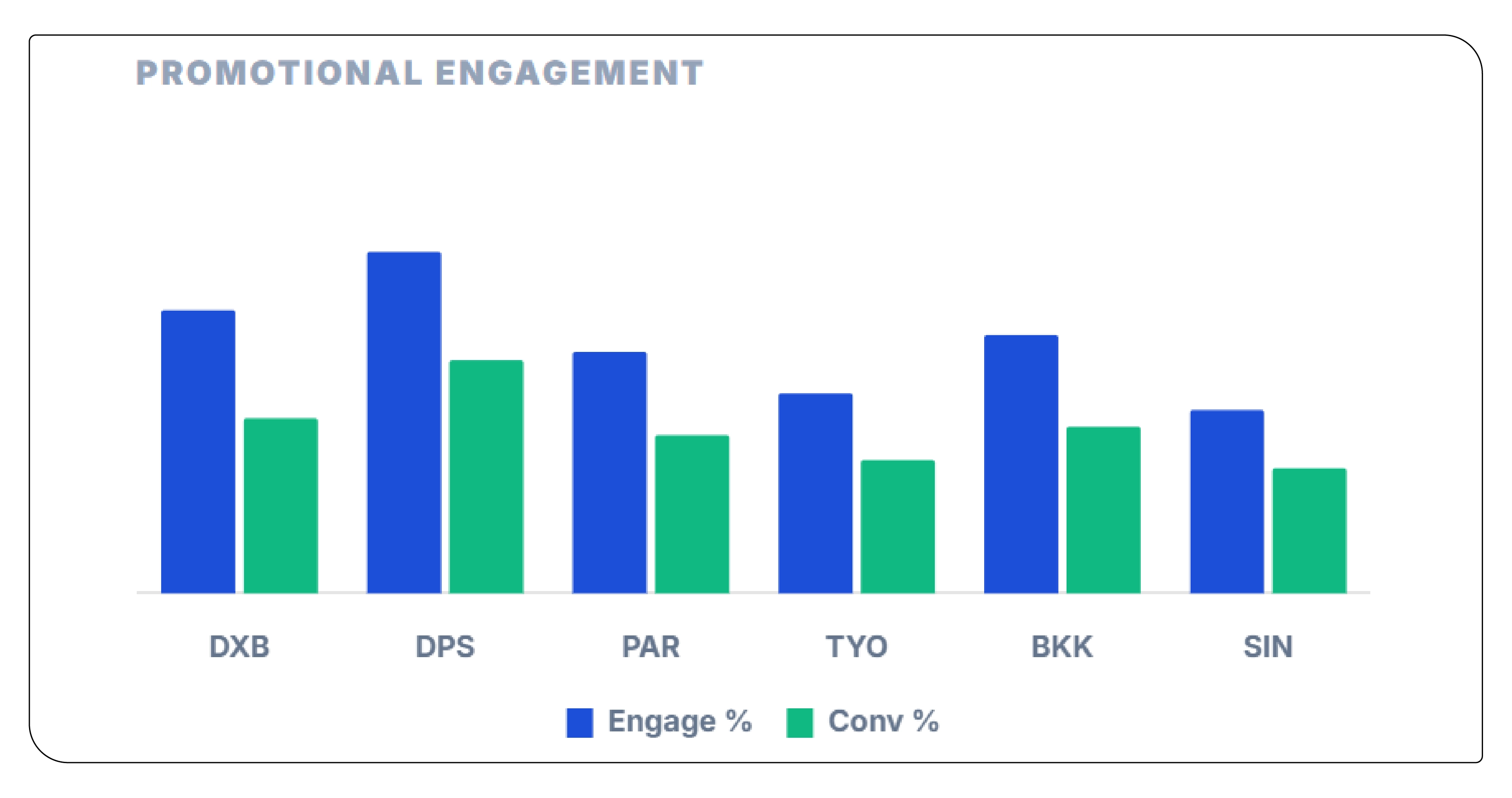
Online travel agencies have transformed how travelers compare and book accommodations. Platforms such as Trivago and Hotels.com aggregate rates from multiple hotel providers, making pricing transparency a major competitive factor.
Hotels leverage OTA intelligence for several objectives:
- Competitive Benchmarking: Hotels monitor competitor pricing strategies within similar star categories, locations, and occupancy levels.
- Revenue Optimization: Dynamic rate adjustments help maximize occupancy during low-demand periods while increasing profitability during high-demand seasons.
- Promotional Intelligence: Hotels analyze competitor discount campaigns and bundled offers to improve customer acquisition strategies.
- Market Positioning: Continuous monitoring helps hotels maintain strategic price positioning without overpricing or underpricing rooms.
The growing demand to scrape hotel promotions and discount trends solutions reflects the hospitality industry’s increasing dependence on automated pricing intelligence.
OTA Platforms Used for Hotel Price Intelligence
Trivago
Trivago aggregates hotel listings and rates from hundreds of OTAs globally. Hotels use Trivago monitoring systems to identify:
- Meta-search price discrepancies
- Ranking changes based on pricing
- Regional promotional pricing
- Seasonal booking demand spikes
- Competitor visibility shifts
Hotels.com
Hotels.com provides detailed hotel pricing intelligence across multiple room categories and promotional campaigns. Hospitality analysts monitor:
- Loyalty member discounts
- Mobile-exclusive rates
- Flash sales
- Weekend promotions
- Last-minute inventory pricing
Price Differences Across OTAs for Premium Urban Hotels
| Hotel | City | OTA Platform | Direct Website Rate (USD) | OTA Listed Rate (USD) | Discount % | Rate Difference | Mobile Discount | Loyalty Discount | Parity Status |
|---|---|---|---|---|---|---|---|---|---|
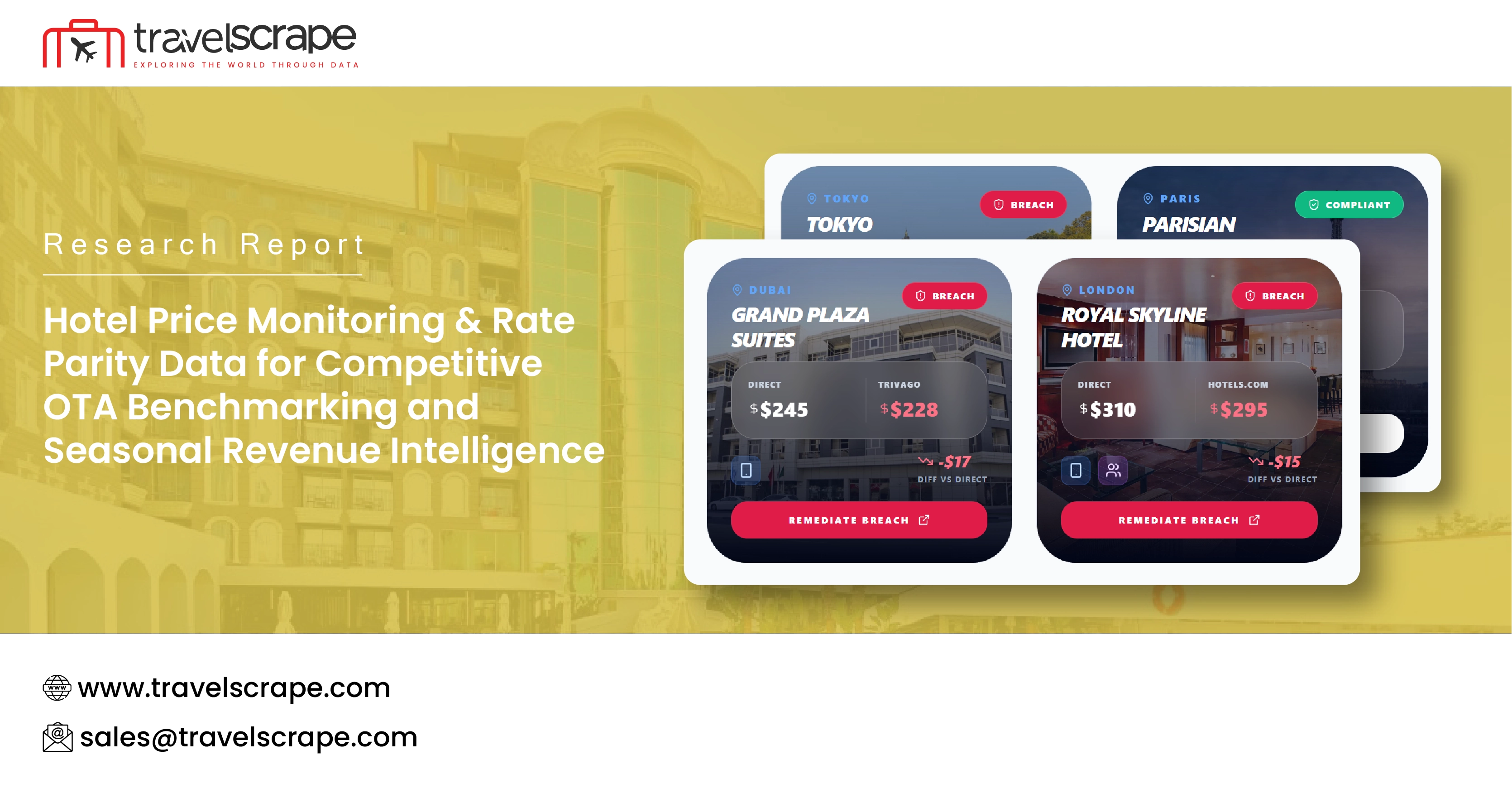
| Grand Plaza Suites | Dubai | Trivago | 245 | 228 | 6.9% | -17 | Yes | No | Breach |
| Royal Skyline Hotel | London | Hotels.com | 310 | 295 | 4.8% | -15 | Yes | Yes | Breach |
| Ocean Crest Resort | Bali | Trivago | 185 | 189 | +2.1% | +4 | No | No | Compliant |
| Metropolitan Luxe | Singapore | Hotels.com | 275 | 260 | 5.5% | -15 | Yes | No | Breach |
| Palm Bay Residency | Miami | Trivago | 215 | 209 | 2.8% | -6 | No | Yes | Breach |
| Central Elite Stay | Paris | Hotels.com | 340 | 340 | 0% | 0 | No | No | Compliant |
| Sapphire Inn | Bangkok | Trivago | 140 | 132 | 5.7% | -8 | Yes | No | Breach |
| Aurora Heights | Tokyo | Hotels.com | 298 | 305 | +2.3% | +7 | No | No | Compliant |
| Alpine Heritage Hotel | Zurich | Trivago | 410 | 390 | 4.9% | -20 | Yes | Yes | Breach |
| Marina View Palace | Abu Dhabi | Hotels.com | 255 | 247 | 3.1% | -8 | Yes | No | Breach |
| Emerald Crown Suites | Sydney | Trivago | 220 | 223 | +1.4% | +3 | No | No | Compliant |
| Vista Continental | New York | Hotels.com | 365 | 348 | 4.7% | -17 | Yes | Yes | Breach |
The table above demonstrates how OTA pricing inconsistencies can directly impact hotel revenue performance. Even small discounts applied by third-party platforms may divert customers away from direct booking channels.
Detecting Rate Parity Breaches
Rate parity breaches occur when OTAs list room prices below agreed contractual rates. Automated monitoring systems identify such breaches through continuous data extraction and price comparison algorithms.
Hotels detect parity violations through:
- Hourly OTA scraping
- Geo-location price comparisons
- Device-specific rate tracking
- Currency conversion normalization
- Tax-inclusive pricing validation
- Member-only discount detection
Hotels increasingly deploy AI-driven pricing engines capable of identifying hidden discounts and unauthorized reseller pricing activities.
Continuous monitoring also enables hotels to enforce supplier agreements more effectively while reducing customer migration toward cheaper third-party channels.
Seasonal Pricing Intelligence in Hospitality
Seasonality significantly impacts hotel pricing strategies. Room rates fluctuate based on tourism demand, weather conditions, festivals, business conferences, and school vacation periods.
Advanced Hotel Price Optimization systems analyze historical booking trends and competitor pricing behaviors to forecast future demand.
Key drivers of seasonal pricing include:
- Summer tourism peaks
- Holiday travel periods
- Local events and festivals
- Airline demand surges
- Business travel seasons
- Regional occupancy trends
Hotels using hotel seasonal pricing trend analysis can identify upcoming pricing surges earlier and strategically adjust room inventory distribution.
Seasonal Price Surge Monitoring — May vs June Trend Shift
| Hotel Category | Region | Average May ADR (USD) | Average June ADR (USD) | Occupancy Increase | Price Surge % | Weekend Premium | OTA Discount Activity | Booking Lead Time | Seasonal Trend |
|---|---|---|---|---|---|---|---|---|---|
| Luxury Resorts | Bali | 240 | 315 | 18% | 31.2% | High | Moderate | 28 Days | Strong Surge |
| Urban Business Hotels | Singapore | 210 | 248 | 11% | 18.1% | Medium | Low | 16 Days | Moderate Surge |
| Beachfront Hotels | Phuket | 180 | 242 | 22% | 34.4% | High | High | 32 Days | Strong Surge |
| Airport Hotels | Dubai | 145 | 152 | 4% | 4.8% | Low | Moderate | 8 Days | Stable |
| Boutique Hotels | Paris | 260 | 302 | 14% | 16.1% | Medium | Low | 19 Days | Moderate Surge |
| Family Resorts | Orlando | 230 | 320 | 27% | 39.1% | High | High | 35 Days | Peak Surge |
| Mountain Resorts | Switzerland | 285 | 295 | 3% | 3.5% | Low | Low | 14 Days | Stable |
| Budget Hotels | Bangkok | 88 | 102 | 10% | 15.9% | Medium | Moderate | 9 Days | Moderate Surge |
| Casino Hotels | Las Vegas | 195 | 270 | 24% | 38.4% | Very High | High | 25 Days | Strong Surge |
| Heritage Hotels | Rome | 250 | 286 | 13% | 14.4% | Medium | Moderate | 18 Days | Moderate Surge |
| Coastal Resorts | Maldives | 410 | 540 | 29% | 31.7% | High | Low | 42 Days | Strong Surge |
| Business Suites | Frankfurt | 175 | 185 | 5% | 5.7% | Low | Low | 11 Days | Stable |
The May-versus-June trend shift highlights how seasonal travel demand directly impacts ADR (Average Daily Rate), occupancy, and OTA promotional activity.
Role of Data Scraping in Hotel Pricing Intelligence
Modern hospitality analytics relies heavily on automated Hotel Data Scraping technologies to collect massive pricing datasets from travel platforms in real time.
These systems capture:
- Room-level pricing
- Dynamic promotions
- Cancellation policies
- Package pricing
- Tax structures
- Occupancy indicators
- User review signals
- Competitor ranking data
Advanced scraping infrastructures use rotating proxies, geo-targeted requests, and anti-blocking frameworks to ensure reliable data extraction at scale.
The adoption of real time hotel pricing and parity monitoring systems has accelerated significantly among global hotel chains and revenue management firms.
Business Benefits of Hotel Price Monitoring
- Revenue Protection: Hotels can prevent unauthorized discounting that erodes direct booking revenue.
- Competitive Intelligence: Hotels gain visibility into market-wide pricing strategies and competitor promotions.
- Demand Forecasting: Seasonal trend analysis improves inventory allocation and occupancy planning.
- Improved Distribution Strategy: Hotels identify which OTAs deliver the highest profitability and booking conversions.
- Better Customer Trust: Consistent pricing across channels improves customer confidence and brand credibility.
Challenges in OTA Price Monitoring

Despite technological advancements, hotel price monitoring presents several operational challenges:
- Rapidly changing OTA interfaces
- CAPTCHA protections
- Geo-specific pricing visibility
- Currency fluctuations
- Hidden mobile app discounts
- Real-time inventory updates
- Regional tax variations
Hotels therefore require scalable monitoring architectures capable of handling large volumes of dynamic travel data efficiently.
Future of Hotel Pricing Intelligence
The future of hospitality pricing intelligence will increasingly depend on AI-driven automation and predictive analytics. Emerging systems will integrate:
- Machine learning demand forecasting
- Real-time occupancy prediction
- Behavioral pricing models
- Personalized room pricing
- Automated parity breach alerts
- Dynamic competitor benchmarking
As hospitality markets become more competitive, pricing accuracy and OTA consistency will become even more critical for profitability.
Conclusion
Hotel pricing intelligence has become a foundational component of modern hospitality revenue management. Continuous monitoring of OTA pricing, promotional discounts, and seasonal demand shifts enables hotels to improve profitability while protecting brand integrity across booking platforms.
Hotels increasingly rely on automated analytics platforms to detect pricing inconsistencies, benchmark competitors, and optimize room pricing strategies in real time. Advanced pricing intelligence systems also support stronger supplier compliance, improved customer retention, and more effective inventory planning.
The adoption of hotel revenue optimization using parity analytics continues to grow as hospitality brands seek greater pricing transparency and operational efficiency. Similarly, hotel competitor pricing and parity monitoring solutions are helping hotels maintain stronger market positioning amid increasingly dynamic OTA ecosystems.
As the hospitality industry embraces data-driven decision-making, continuously updated Hotel Room Price Trends Dataset infrastructures will remain essential for long-term pricing optimization, occupancy forecasting, and sustainable revenue growth.
Ready to elevate your travel business with cutting-edge data insights? Scrape Aggregated Flight Fares to identify competitive rates and optimize your revenue strategies efficiently. Discover emerging opportunities with tools to Extract Travel Website Data, leveraging comprehensive data to forecast market shifts and enhance your service offerings. Real-Time Travel App Data Scraping Services helps stay ahead of competitors, gaining instant insights into bookings, promotions, and customer behavior across multiple platforms. Get in touch with Travel Scrape today to explore how our end-to-end data solutions can uncover new revenue streams, enhance your offerings, and strengthen your competitive edge in the travel market.
Unlock the Full Report
Enter your details to access premium pricing intelligence insights