Romance Tourism Booking Trends Data Analytics 2026 Driving Predictive Travel Intelligence
Introduction
A global case study highlights how travel platforms refined demand forecasting through romance tourism booking trends data analytics 2026, revealing evolving couple travel behaviors across destinations. It examines booking patterns from honeymoon travelers, anniversary trips, and short luxury escapes across multiple regions. Travel companies rely on romance travel demand analytics to understand seasonal spikes and destination preference shifts among couples. Machine learning models process search queries, booking windows, and pricing sensitivity to predict high-value romantic tourism segments. The study’s Booking Trend Insights show increased conversions during Valentine’s weeks and festival holiday periods.
Couples typically book premium resorts three to six months in advance for better availability and pricing. This analysis helps airlines and hotels optimize promotions and improve revenue management strategies globally. Platforms integrate airline, hotel, and search data streams to build more accurate predictive tourism models for romantic travel demand planning. Such insights enable better customer targeting, personalized offers, and strategic growth in global romance travel markets efficiency gains.
The Client
The client is a global travel analytics firm specializing in understanding evolving tourism demand patterns across premium and leisure segments. They focus on extracting actionable insights from booking platforms, airline systems, and online travel agencies to improve forecasting accuracy and customer targeting strategies.
Their recent engagement centered on optimizing honeymoon and couple travel intelligence across high-demand destinations, helping them refine segmentation models and pricing strategies. Through advanced data pipelines, they were able to track seasonal spikes, destination preferences, and booking behavior shifts among romantic travelers.
The solution integrated honeymoon tourism data scraping to capture structured datasets from multiple travel portals for deeper market understanding.
It further enhanced decision-making by applying couples travel booking trends analytics to identify early demand signals and conversion patterns.
Additionally, Tour & Travel Package Data Scraping enabled the client to compare package pricing, inclusions, and availability across platforms.
As a result, the client improved forecasting precision, increased campaign efficiency, and strengthened its position in the competitive global travel intelligence market.
Challenges in the Travel Industry
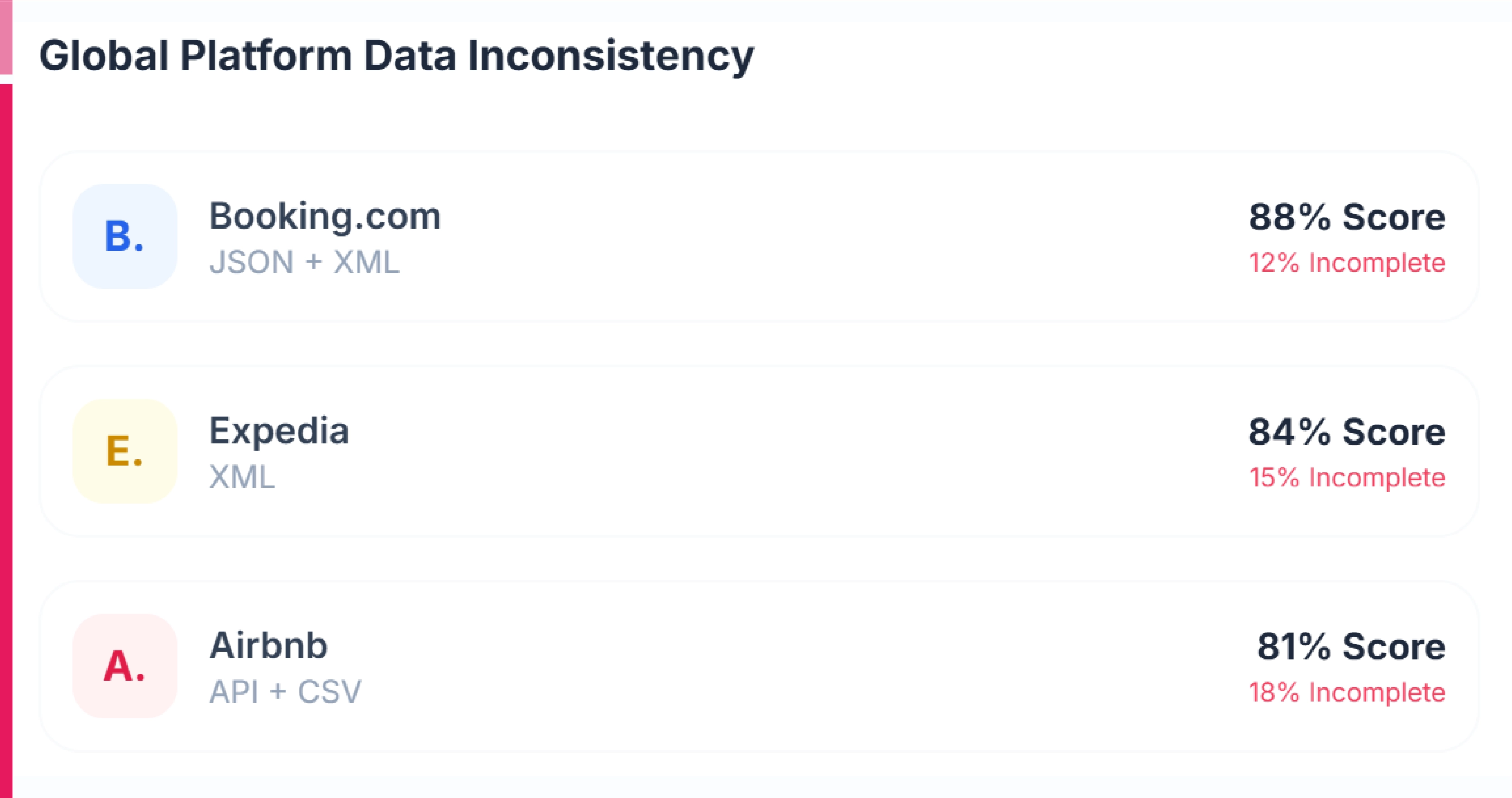
The client operates in the global travel analytics domain, where understanding romantic and couple-based travel behavior requires highly accurate, real-time, and structured data inputs. While working on advanced forecasting models, they encountered several operational and data integration challenges that affected insight accuracy and speed of decision-making.
Data Inconsistency Across Global Sources
The client struggled with mismatched formats and incomplete records from multiple travel platforms, which reduced reliability of Travel Data Intelligence systems and made cross-platform comparison difficult.
Weak Destination Preference Mapping
It was challenging to accurately identify which locations were gaining popularity among couples due to limited structured Romance travel destination popularity dataset coverage across regions.
Slow Market Signal Detection
Delayed visibility into sudden spikes in romantic travel demand impacted forecasting accuracy, especially for seasonal peaks and special occasions, limiting effectiveness of real-time Romance Tourism booking trend analysis.
Pricing Transparency Issues
Fluctuating fares and hidden price variations across platforms made it difficult to build reliable romance tourism pricing data intelligence models for consistent benchmarking and prediction.
Fragmented Travel Behavior Insights
The client lacked unified tracking of couple travel journeys across devices and platforms, making it harder to connect intent signals with actual bookings using Travel & Tourism Datasets, reducing personalization accuracy.
Our Approach
Unified Data Integration Layer
We built a centralized system to combine travel data from multiple booking platforms. This eliminated inconsistencies, standardized formats, and ensured a single source of truth for analytics, enabling smoother downstream processing and more accurate forecasting across all travel segments.
Real-Time Signal Processing Engine
A streaming architecture was developed to capture booking activities as they happened. This allowed instant detection of demand spikes, seasonal surges, and user intent shifts, significantly improving responsiveness and enabling faster strategic and operational decisions.
Advanced Behavioral Segmentation
We created detailed traveler segments based on booking patterns, travel frequency, and destination preferences. This helped identify high-value customer groups and enabled the client to design more targeted marketing and personalized travel recommendations.
Predictive Demand Modeling System
Machine learning models were deployed to forecast future travel demand using historical and real-time signals. These models improved accuracy in anticipating peak seasons, enabling better pricing strategies, inventory planning, and promotional campaign timing.
Visualization and Insight Delivery
Interactive dashboards were developed to present complex travel data in an easy-to-understand format. Decision-makers could track trends, monitor performance, and quickly act on insights without relying on manual analysis or delayed reporting cycles.
Results Achieved
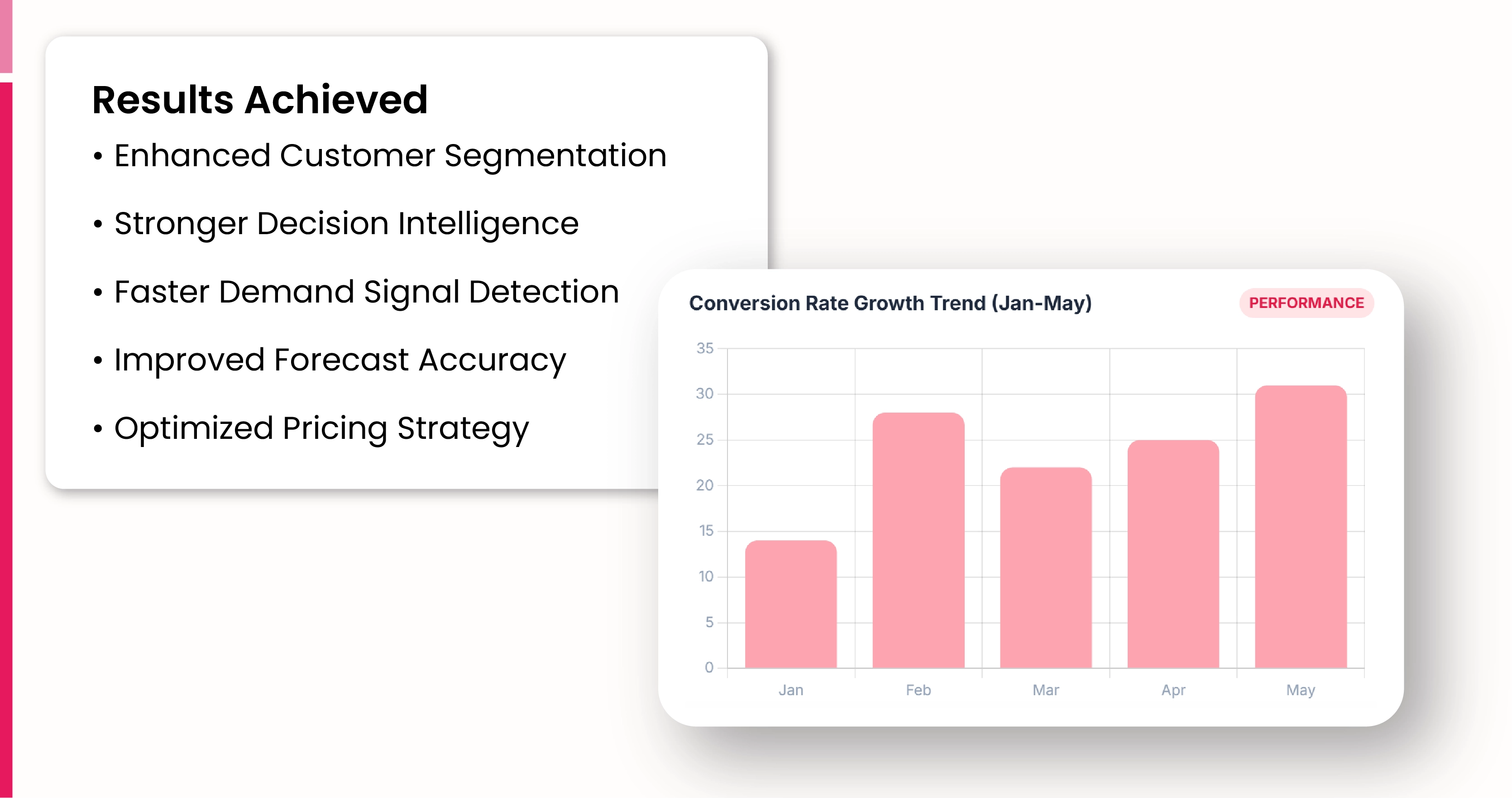
We successfully transformed fragmented travel data into actionable intelligence, improving forecasting accuracy, speed of insights, and overall decision-making efficiency for the client’s tourism analytics operations.
Improved Forecast Accuracy
Our solution significantly enhanced demand forecasting precision by integrating real-time and historical signals. This allowed the client to anticipate booking surges earlier, optimize pricing strategies effectively, and reduce uncertainty in seasonal travel demand planning across key romantic tourism markets.
Faster Demand Signal Detection
The system enabled near real-time identification of emerging travel trends and booking spikes. This improved responsiveness to market changes, helping the client adjust campaigns quickly, capture high-intent users early, and increase conversion rates during peak travel windows.
Enhanced Customer Segmentation
We refined traveler segmentation models to better distinguish high-value couple travel groups. This allowed more personalized targeting strategies, improved engagement rates, and stronger alignment between marketing campaigns and actual customer preferences across multiple destinations.
Optimized Pricing Strategy
By analyzing booking behavior and demand fluctuations, the client was able to refine pricing models. This resulted in better revenue optimization, reduced underpricing risks, and improved competitiveness across dynamic travel markets with fluctuating seasonal demand patterns.
Stronger Decision Intelligence
We delivered structured dashboards and insights that improved executive-level decision-making. Stakeholders gained clearer visibility into demand patterns, enabling faster strategic actions, improved resource allocation, and more confident long-term planning for tourism growth initiatives.
Sample Scraped Travel Dataset Snapshot
| Booking ID | Platform | Destination | Travel Type | Booking Date | Check-in Date | Nights | Couple Type | Price (USD) | Demand Signal |
|---|---|---|---|---|---|---|---|---|---|
| T1001 | Expedia | Bali | Honeymoon | 2026-01-10 | 2026-02-14 | 5 | Newly Married | 1850 | High |
| T1002 | Booking.com | Paris | Romantic Trip | 2026-01-12 | 2026-02-10 | 3 | Couple | 2100 | Very High |
| T1003 | Agoda | Maldives | Anniversary | 2026-01-15 | 2026-03-01 | 6 | Married Couple | 3200 | High |
| T1004 | Airbnb | Santorini | Honeymoon | 2026-01-18 | 2026-02-20 | 4 | Newly Married | 2400 | Medium |
| T1005 | Trip.com | Kyoto | Romantic Trip | 2026-01-20 | 2026-02-25 | 5 | Couple | 1700 | High |
| T1006 | Expedia | Venice | Anniversary | 2026-01-22 | 2026-03-05 | 3 | Married Couple | 2600 | Very High |
| T1007 | Agoda | Phuket | Honeymoon | 2026-01-25 | 2026-02-18 | 5 | Newly Married | 1500 | Medium |
| T1008 | Booking.com | Rome | Romantic Trip | 2026-01-28 | 2026-03-10 | 4 | Couple | 2000 | High |
Client’s Testimonial
“Working with the analytics team completely transformed how we understand romantic travel demand patterns. Their ability to structure fragmented data from multiple platforms into clear, actionable insights helped us improve forecasting accuracy and campaign performance significantly. We were able to identify high-value couple segments, optimize pricing strategies, and respond faster to emerging booking trends. The dashboards and real-time insights have become an essential part of our decision-making process. The depth of analysis and clarity of reporting exceeded our expectations and delivered measurable business impact across our global travel operations.”
Conclusion
In conclusion, the project successfully demonstrated how structured travel intelligence can transform fragmented booking signals into meaningful business outcomes. By consolidating multiple data sources, we enabled the client to gain clearer visibility into demand patterns, improve forecasting accuracy, and strengthen strategic planning for romantic travel markets. The solution also enhanced real-time responsiveness, allowing faster identification of seasonal spikes and customer preferences across destinations. Overall, the engagement delivered scalable analytics capabilities that support long-term growth, improved customer targeting, and more efficient revenue optimization across global tourism operations. Tour & Travel Package Data Intelligence enabled deeper understanding of package-level demand shifts and customer preferences across multiple regions and seasons. The strategy to Scrape Aggregated Travel Deals helped consolidate pricing and offers from various platforms to identify competitive opportunities and optimize marketing strategies. Scrape Travel Website Data to improve visibility into booking behavior, availability trends, and destination popularity across major online travel platforms. Scrape Travel Mobile App to provide real-time insights from app-based bookings, enhancing accuracy in detecting immediate demand fluctuations and user intent signals.
FAQs
Unlock the Full Report
Enter your details to access premium pricing intelligence insights