Last Minute vs Early Booking Trend Analytics for Smarter Travel Pricing and Consumer Demand Forecasting
Introduction
The travel industry is undergoing rapid transformation as consumer booking behavior continues to shift between planned vacations and spontaneous travel decisions. Modern travel platforms increasingly rely on last minute vs early booking trend analytics to understand how travelers respond to dynamic pricing, seasonal demand, and OTA promotions. These insights help hotels, airlines, and travel companies forecast occupancy trends more accurately and optimize customer targeting strategies.
Travel brands are using advanced datasets and Booking Trend Insights to analyze how consumers search, compare, and reserve travel services across multiple booking windows. By evaluating traveler intent signals and booking lead times, companies can identify whether users prefer advance planning or last-minute deals.
Many travel intelligence providers now scrape booking timing behavior and pricing trends from OTAs, hotel platforms, and airline websites to monitor booking pace fluctuations in real time. This data enables businesses to track demand spikes, optimize inventory allocation, and improve conversion rates during peak and off-peak travel periods.
Industry reports indicate that travelers booking 30–90 days before departure generally secure lower prices and better inventory options, while late bookers often face price surges during high-demand periods. However, mobile-first consumers are also contributing to the rapid rise of spontaneous travel bookings, especially for domestic trips and weekend travel.
Evolution of Booking Window Behavior

Travel booking windows have become increasingly fragmented due to flexible work arrangements, mobile applications, and flash-sale marketing strategies. Historically, travelers preferred booking months in advance, particularly for international vacations and family holidays. Today, however, a growing percentage of consumers wait until the final days before departure.
Early bookings remain dominant for:
- International vacations
- Luxury resorts
- Festival tourism
- Holiday travel seasons
- Group travel packages
Meanwhile, last-minute bookings are growing for:
- Domestic city breaks
- Airport hotel stays
- Business travel
- Weekend trips
- Short leisure vacations
This shift is forcing travel providers to redesign pricing strategies and customer segmentation models.
Price Differences Between Early and Last-Minute Bookings
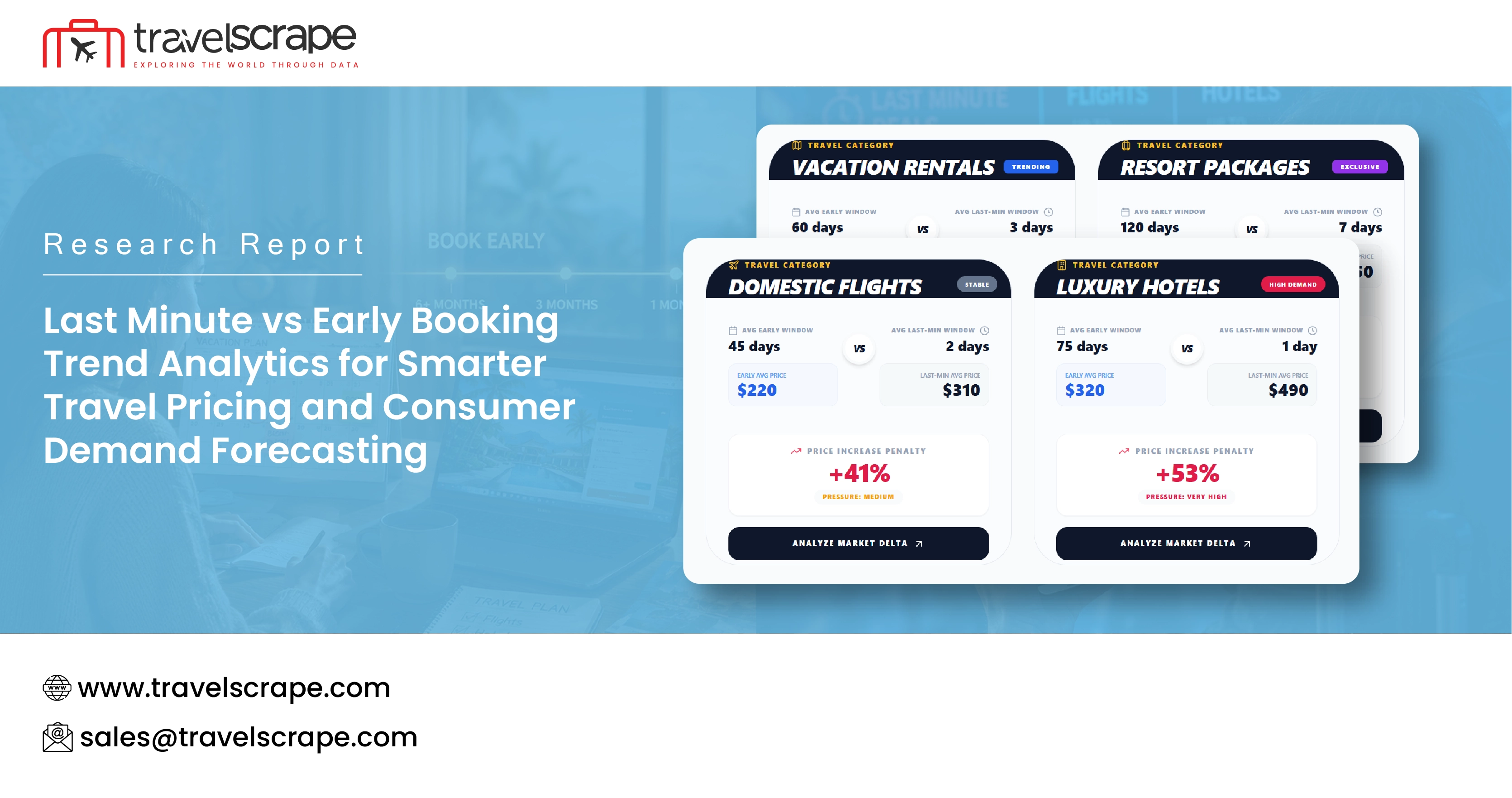
Travel pricing fluctuates significantly based on booking lead time, destination popularity, occupancy rates, and competitor pricing. Data collected from major OTAs shows that booking earlier generally results in lower average prices, particularly during peak travel seasons.
Data Table: Price Differences Across Booking Windows
| Travel Category | Avg Early Booking Window | Avg Last-Minute Window | Early Booking Avg Price | Last-Minute Avg Price | Price Increase | Occupancy Pressure |
|---|---|---|---|---|---|---|
| Domestic Flights | 45 days | 2 days | $220 | $310 | +41% | Medium |
| International Flights | 90 days | 5 days | $680 | $970 | +43% | High |
| Luxury Hotels | 75 days | 1 day | $320 | $490 | +53% | Very High |
| Budget Hotels | 21 days | Same day | $82 | $110 | +34% | Medium |
| Vacation Rentals | 60 days | 3 days | $210 | $295 | +40% | High |
| Resort Packages | 120 days | 7 days | $1,500 | $2,050 | +37% | Very High |
| Business Hotels | 14 days | Same day | $170 | $250 | +47% | Medium |
| Festival Tourism | 150 days | 2 days | $390 | $710 | +82% | Extreme |
| Airport Hotels | 7 days | Same day | $120 | $185 | +54% | High |
| Cruise Packages | 180 days | 10 days | $2,200 | $3,050 | +39% | Very High |
Travel providers increasingly use compare last minute vs advance booking prices data scrape methodologies to evaluate how pricing behaves across different booking windows. These insights help revenue management teams identify the most profitable pricing thresholds while minimizing inventory loss.
Booking Timing Behavior Analysis
Consumer booking behavior varies significantly based on age group, destination type, travel purpose, and seasonality. Younger travelers increasingly rely on mobile apps and flexible booking models, while families and premium travelers continue planning further in advance.
Key Traveler Booking Patterns
| Behavioral Metric | Early Planners | Last-Minute Travelers |
|---|---|---|
| Average Booking Window | 45–90 days | 0–7 days |
| Device Preference | Desktop + mobile | Mobile-first |
| Price Sensitivity | High | Medium |
| Loyalty Program Usage | Strong | Moderate |
| Flash Sale Response | Medium | Very High |
| Cancellation Frequency | Low | High |
| Weekend Travel Share | Moderate | High |
| Trip Duration | Longer stays | Short stays |
| OTA App Usage | Medium | Very High |
| Fare Alert Usage | Frequent | Rare |
| Booking Session Length | 20 mins | 7 mins |
| Search Frequency | Multiple sessions | Immediate booking |
| Preferred Accommodation | Resorts & premium hotels | Budget & city hotels |
| Preferred Travel Type | International vacations | Domestic getaways |
| Discount Dependency | Moderate | Very High |
Travel analysts use booking intelligence platforms to monitor how customers behave before making reservations. By combining OTA search trends, occupancy data, and cancellation patterns, companies can forecast future booking demand more accurately.
Sold-Out and Inventory Monitoring Trends
Hotels and airlines closely monitor inventory depletion patterns to maximize profitability. Through Sold-Out Pattern Analysis, travel brands can identify periods where rooms or flight seats are likely to become unavailable due to surging demand.
For example:
- Holiday destinations sell out earlier during Christmas and New Year.
- Airport hotels experience sudden last-minute demand spikes.
- Festival tourism markets show aggressive occupancy growth weeks before events.
By identifying sell-out acceleration early, travel companies can raise prices strategically while preserving inventory availability for premium travelers.
Many OTAs now deploy AI-driven forecasting systems to predict:
- Inventory shortages
- Demand surges
- Cancellation probability
- Occupancy compression
- Revenue optimization opportunities
Real-Time Availability and Pricing Intelligence
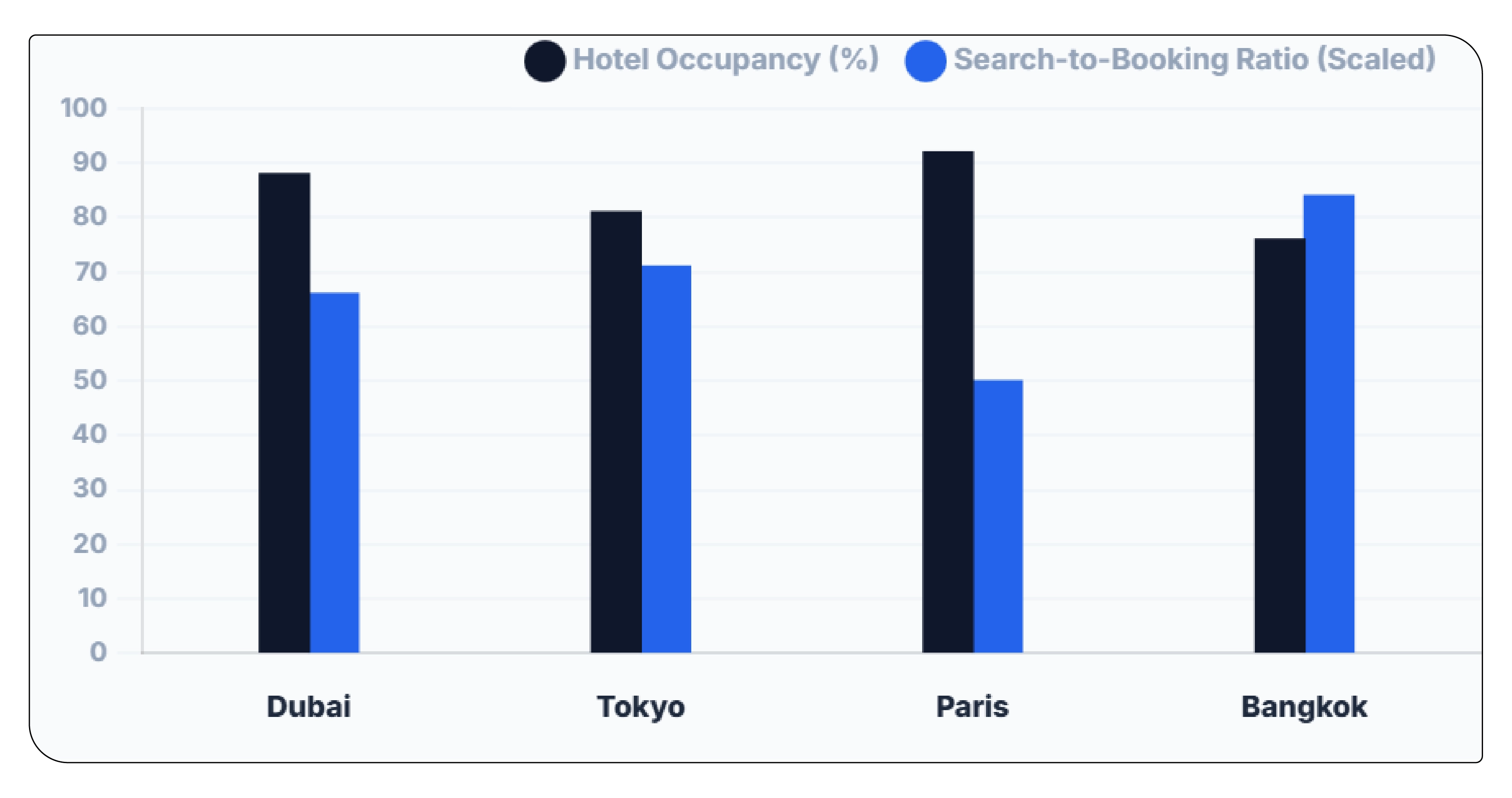
The travel sector increasingly depends on live data monitoring to respond instantly to market changes. Through Real-Time Availability Tracking, OTAs and travel brands continuously monitor hotel inventory, seat availability, competitor pricing, and booking pace fluctuations.
Real-time systems help companies:
- Detect flash demand spikes
- Launch immediate promotions
- Optimize ad campaigns
- Adjust dynamic pricing
- Prevent inventory shortages
Travel intelligence platforms also provide travel booking window intelligence that helps analysts determine whether consumers are booking earlier or later compared to historical benchmarks.
These systems monitor:
- Search-to-booking ratios
- Price volatility
- Destination demand
- Booking lead times
- Mobile booking growth
- Regional occupancy changes
As competition intensifies, real-time analytics are becoming essential for travel companies aiming to improve customer acquisition and maximize revenue.
Seasonal Booking Trends and Market Variations
Seasonality remains one of the biggest drivers of booking behavior. Travelers generally plan earlier during high-demand periods while booking later during off-peak seasons.
Seasonal Booking Window Comparison
| Season/Event | Avg Early Booking Window | Last-Minute Booking Share | Avg Price Increase | Inventory Sell-Out Speed |
|---|---|---|---|---|
| Summer Holidays | 80 days | 18% | +36% | Fast |
| Christmas & New Year | 130 days | 9% | +58% | Very Fast |
| Eid Travel | 60 days | 28% | +41% | Fast |
| Weekend Getaways | 12 days | 45% | +18% | Medium |
| Spring Break | 40 days | 24% | +30% | Medium |
| Sports Events | 90 days | 16% | +54% | High |
| Music Festivals | 150 days | 8% | +75% | Extreme |
| Business Conferences | 21 days | 38% | +29% | Medium |
| Monsoon Off-Season | 7 days | 50% | +10% | Slow |
| Shoulder Tourism Season | 18 days | 42% | +16% | Medium |
Travel analysts increasingly perform Seasonal Trend Analysis to identify how booking windows shift during different travel cycles. These insights help brands allocate marketing budgets more efficiently and optimize promotional timing.
Many OTA platforms also conduct seasonal last minute booking trend analysis to understand how weather conditions, public holidays, and regional events impact spontaneous travel demand.
Marketing Optimization Through Booking Intelligence
Travel brands use booking analytics to improve customer targeting and campaign effectiveness. By understanding booking window behavior, companies can segment audiences into planners and spontaneous travelers.
Optimize Marketing Campaigns
Travel marketers leverage booking intelligence to:
- Launch early-bird offers
- Create flash-sale campaigns
- Personalize destination recommendations
- Improve retargeting performance
- Increase OTA conversion rates
Target Last-Minute Travelers vs Planners
Planners typically respond well to:
- Discount bundles
- Flexible cancellation policies
- Loyalty rewards
- Vacation packages
Last-minute travelers respond more effectively to:
- Mobile push notifications
- Same-day discounts
- Weekend flash deals
- Dynamic pricing alerts
Travel providers can therefore improve customer acquisition by aligning promotional timing with traveler intent signals.
Conclusion
Booking behavior analytics has become one of the most valuable intelligence assets in the travel industry. As consumer preferences continue shifting between planned and spontaneous travel, OTAs and travel companies increasingly depend on predictive analytics to understand evolving booking patterns.
Modern platforms now support real time booking trend monitoring OTA systems that provide continuous visibility into inventory changes, booking pace, and traveler demand fluctuations. These capabilities allow travel brands to react instantly to market movements and maximize pricing efficiency.
Travel providers can also optimize travel marketing using booking intelligence by segmenting audiences based on booking lead times, price sensitivity, and seasonal demand behavior. This enables more personalized campaigns and higher conversion performance.
Finally, advanced travel intelligence ecosystems increasingly rely on Real-Time Data API integrations to deliver live pricing updates, occupancy tracking, demand forecasting, and booking window analytics across global travel platforms.
Ready to elevate your travel business with cutting-edge data insights? Scrape Aggregated Flight Fares to identify competitive rates and optimize your revenue strategies efficiently. Discover emerging opportunities with tools to Extract Travel Website Data, leveraging comprehensive data to forecast market shifts and enhance your service offerings. Real-Time Travel App Data Scraping Services helps stay ahead of competitors, gaining instant insights into bookings, promotions, and customer behavior across multiple platforms. Get in touch with Travel Scrape today to explore how our end-to-end data solutions can uncover new revenue streams, enhance your offerings, and strengthen your competitive edge in the travel market.
Unlock the Full Report
Enter your details to access premium pricing intelligence insights