How Does Wizz Air Flight Price Prediction Analytics Help Predict Future Airfare Trends?
Introduction
The airline industry has evolved into one of the most data-driven sectors, where ticket prices change within minutes based on demand, booking behavior, route popularity, seat inventory, competitor pricing, and seasonal travel patterns. Businesses that rely on accurate airfare insights can no longer depend solely on historical reports or manual monitoring. Instead, they require intelligent forecasting systems capable of predicting future fare movements with precision. This is where Wizz Air flight price prediction analytics delivers exceptional value by enabling travel companies to anticipate pricing changes before they occur. By leveraging a comprehensive Wizzair Global Flight Prices Dataset, organizations gain access to extensive historical and real-time airfare information that strengthens forecasting accuracy. Advanced Wizz Air fare trend forecasting further helps airlines, online travel agencies, travel aggregators, and market intelligence firms optimize pricing strategies, improve customer experiences, and maximize revenue opportunities.
Why Flight Price Prediction Matters?
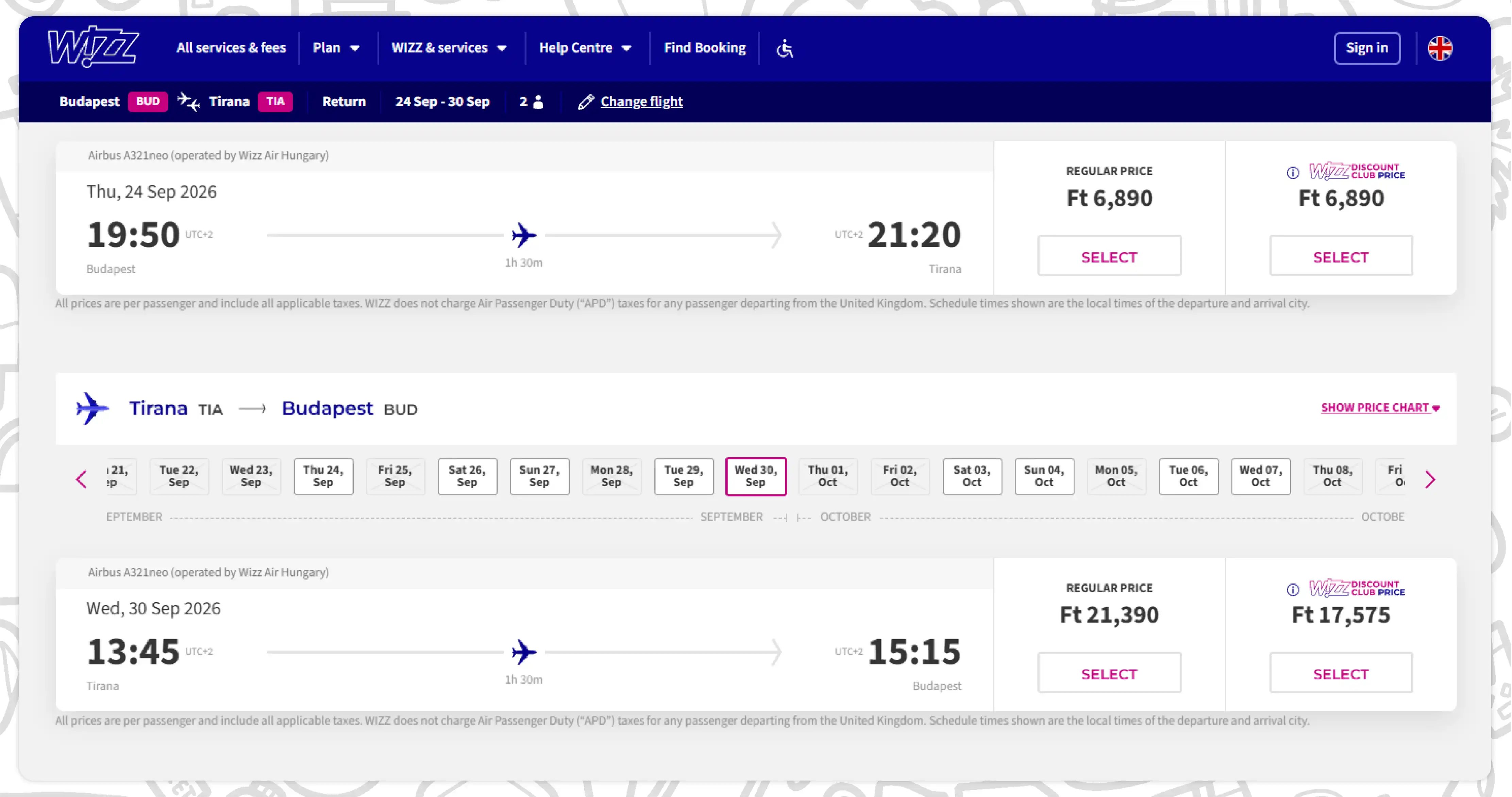
Airfare pricing is one of the most volatile aspects of the travel industry. Unlike traditional retail products, airline tickets are priced dynamically using sophisticated revenue management systems that constantly evaluate market conditions. Factors such as booking demand, remaining seats, competitor promotions, holidays, weather conditions, airport congestion, and customer search activity all contribute to frequent fare adjustments.
For travel businesses, waiting until prices change often means losing valuable opportunities. Predictive analytics shifts this approach from reactive monitoring to proactive forecasting. Instead of simply tracking current fares, organizations can estimate future price movements, identify favorable booking windows, and make informed business decisions supported by data rather than assumptions.
How Artificial Intelligence Improves Airfare Forecasting?
Artificial intelligence has significantly improved the accuracy of airfare prediction models. Machine learning algorithms continuously analyze millions of pricing records, booking patterns, and market signals to identify relationships that influence ticket prices. Every new booking, cancellation, promotional campaign, and inventory update becomes additional training data that helps improve forecasting performance.
As algorithms learn from expanding datasets, they become increasingly capable of recognizing hidden pricing patterns across different routes, seasons, customer segments, and competitive environments. Businesses can also Extract Wizzair Flight API Data to continuously feed forecasting models with fresh information, ensuring more reliable predictions and faster responses to market fluctuations.
Building Reliable Flight Data Pipelines
Accurate forecasting begins with collecting comprehensive flight information from reliable data sources. Automated API integration and intelligent data collection allow organizations to gather structured, real-time aviation information without manual intervention.
The collected datasets generally include:
- Flight number, airline code, departure and arrival airports
- Departure dates, return dates, travel duration, and schedules
- Fare classes, ticket categories, and baggage fees
- Base fare, taxes, ancillary charges, and promotional prices
- Seat availability and remaining inventory
- Booking restrictions, cancellation policies, and fare rules
- Timestamped pricing updates for historical analysis
- Route availability and schedule modifications
With continuously refreshed datasets, businesses can build highly reliable forecasting models that accurately predict pricing behavior across multiple travel markets.
Understanding Airline Pricing Strategies
Modern airlines rely on automated pricing engines that adjust ticket prices throughout the booking lifecycle. Instead of maintaining fixed fares, these systems continuously evaluate supply and demand while responding to changing market conditions.
When bookings increase rapidly, prices often rise to maximize revenue. Conversely, airlines may introduce promotional discounts to stimulate demand when seat occupancy remains low. Competitor pricing, airport traffic, fuel costs, seasonal events, and route popularity further influence these automated pricing decisions.
Performing comprehensive Wizz Air seasonal demand analysis allows organizations to better understand these pricing behaviors and anticipate demand spikes before they significantly impact ticket prices.
Turning Raw Data into Business Intelligence
Raw airfare information becomes significantly more valuable when transformed into actionable business intelligence. Rather than simply displaying ticket prices, predictive analytics identifies trends, volatility, booking opportunities, and competitive positioning that support strategic decision-making.
Organizations that leverage Flight Price Data Intelligence can understand how quickly fares change, which routes experience the greatest volatility, and how customer demand influences pricing throughout the booking cycle. These insights help improve revenue management, strengthen competitive positioning, and personalize travel recommendations.
Understanding Customer Booking Behavior
Booking behavior provides valuable insights into how travelers make purchasing decisions. Every search query, booking confirmation, itinerary comparison, and abandoned reservation contributes meaningful information that enhances forecasting accuracy.
Developing strong Wizz Air booking intelligence enables businesses to identify preferred booking windows, high-conversion travel dates, popular destinations, customer segments, and seasonal purchasing habits. This deeper understanding supports personalized marketing campaigns and higher booking conversion rates.
Collecting Large-Scale Aviation Data
Reliable forecasting depends on accurate and continuous data collection. Modern aviation analytics relies heavily on Airline Data Scraping to gather structured information regarding ticket prices, schedules, route availability, promotional campaigns, ancillary services, and competitive pricing.
By continuously updating flight datasets, organizations maintain fresh market intelligence that strengthens predictive models while improving overall forecasting accuracy. Automated data extraction also reduces manual effort and enables businesses to monitor thousands of routes simultaneously.
Delivering Smarter Travel Recommendations
Today's travelers expect intelligent booking experiences rather than static fare listings. Predictive analytics enables booking platforms to estimate future price movements while recommending the most suitable booking windows.
Businesses that leverage Wizz Air travel booking insights can offer personalized travel suggestions, alternative airports, flexible travel dates, and proactive fare alerts. These capabilities increase customer satisfaction while encouraging higher booking conversions through data-driven recommendations.
Improving Forecast Accuracy with Live Inventory
Seat availability plays a critical role in airfare prediction because inventory directly affects airline pricing strategies. As flights approach full capacity, pricing algorithms generally increase fares to maximize revenue. Slower booking activity may trigger discounts designed to stimulate demand.
Combining predictive models with Real-Time Availability Tracking allows businesses to continuously monitor inventory changes and anticipate rapid fare adjustments before they occur.
Real-Time Prediction for Competitive Advantage
Organizations seeking a competitive advantage increasingly rely on live prediction systems that process airfare updates the moment they become available. These systems forecast price increases, detect promotional opportunities, estimate demand spikes, and improve booking recommendations before market conditions change.
Businesses that Extract Wizz Air real-time airfare data prediction capabilities into their analytics platforms gain faster decision-making, stronger revenue optimization, and improved customer engagement through proactive pricing intelligence.
Monitoring Pricing Changes Continuously
Dynamic pricing has become one of the defining characteristics of today's aviation industry. Airlines continuously adjust fares based on customer demand, booking pace, remaining inventory, route competition, and numerous external variables.
Continuous Wizz Air dynamic pricing monitoring helps organizations better understand pricing behavior across multiple routes and destinations.
Key insights generated through continuous monitoring include:
- Hourly and daily fare fluctuations
- Competitor pricing responses
- Peak booking periods
- Last-minute pricing changes
- Route-specific price volatility
- Seasonal pricing trends
- Inventory-driven discounts
- Revenue optimization opportunities
These insights enable businesses to refine forecasting models while responding quickly to changing market conditions.
The Future of AI-Driven Flight Analytics
The future of airfare forecasting lies in increasingly sophisticated artificial intelligence capable of integrating weather forecasts, tourism demand, economic indicators, airport congestion, social media activity, and global travel patterns into highly accurate prediction models.
Predictive analytics will continue evolving beyond traditional fare monitoring into comprehensive decision-support platforms that provide personalized travel recommendations, automated revenue optimization, and intelligent booking assistance. Organizations investing in these technologies today will be better positioned to compete in an increasingly data-driven aviation marketplace.
How Travel Scrape Can Help You?
Comprehensive Flight Data Collection
Our data scraping services collect real-time Wizz Air flight prices, schedules, routes, seat availability, and fare updates, delivering structured datasets that support accurate market analysis, forecasting, and informed business decisions.
Real-Time Pricing Intelligence
We continuously monitor airfare fluctuations, promotional offers, and dynamic pricing changes, enabling businesses to identify competitive opportunities, optimize pricing strategies, and respond quickly to evolving market conditions with confidence.
Demand and Trend Forecasting
Our advanced data extraction solutions provide historical and live airfare datasets that help forecast seasonal demand, booking behavior, fare trends, and customer preferences, supporting smarter planning and revenue optimization.
Customized Aviation Data Solutions
We deliver tailored flight data feeds in CSV, JSON, API, or cloud-ready formats, seamlessly integrating with your analytics platforms, dashboards, machine learning models, and business intelligence systems for maximum efficiency.
Scalable Competitive Intelligence
Our scalable scraping infrastructure tracks multiple routes, destinations, and competitors simultaneously, providing comprehensive aviation intelligence that helps airlines, OTAs, and travel businesses make faster, data-driven strategic decisions.
Conclusion
Flight pricing has become an intricate ecosystem driven by artificial intelligence, customer demand, market competition, inventory management, and continuously changing travel behavior. Businesses that invest in predictive analytics gain the ability to anticipate fare movements, optimize pricing strategies, improve customer experiences, and make faster, data-driven decisions. By combining historical pricing records, live booking behavior, inventory intelligence, and advanced forecasting algorithms, organizations can transform airline data into measurable business value. As the aviation sector continues embracing intelligent revenue management, integrating predictive models with a Global Flight Price Trends Dataset will enable airlines, travel platforms, and market intelligence providers to deliver smarter forecasting, stronger competitive positioning, and sustainable long-term growth in an increasingly dynamic global travel marketplace.
Ready to elevate your travel business with cutting-edge data insights? Scrape Aggregated Flight Fares to identify competitive rates and optimize your revenue strategies efficiently. Discover emerging opportunities with tools to Extract Travel Website Data, leveraging comprehensive data to forecast market shifts and enhance your service offerings. Real-Time Travel App Data Scraping Services helps stay ahead of competitors, gaining instant insights into bookings, promotions, and customer behavior across multiple platforms. Get in touch with Travel Scrape today to explore how our end-to-end data solutions can uncover new revenue streams, enhance your offerings, and strengthen your competitive edge in the travel market.
Unlock the Full Report
Enter your details to access premium pricing intelligence insights