How Can the Rapido vs Uber Ride-Hailing Price Difference Dataset Help in Comparing Fares Between Rapido and Uber Across Routes and Time?
Introduction
In today’s fast-paced urban mobility ecosystem, understanding fare differences between ride-hailing platforms has become crucial for both commuters and fleet operators. Platforms like Rapido and Uber continue to dominate the shared mobility space, making data-driven insights essential. The Rapido vs Uber ride-hailing price difference dataset offers an in-depth view of fare variations across cities, times, and vehicle types, empowering businesses and analysts to make informed decisions. Coupled with Car Rental Data Scraping, this dataset provides a robust foundation for analyzing competitive pricing strategies in real-time.
With the rise of urban congestion and dynamic pricing models, businesses need access to precise data. Rapido vs Uber real-time fare comparison analytics allows fleet managers, aggregator platforms, and commuters to track price differences dynamically. From surge periods to off-peak hours, this information helps optimize route choices, pricing policies, and customer satisfaction.
Understanding Rapido vs Uber Pricing Dynamics
The fare structure of ride-hailing platforms is influenced by multiple factors—distance, time, route complexity, vehicle type, and demand patterns. By leveraging Car Rental Data Intelligence, analysts can parse through massive amounts of historical and live data to identify patterns that drive pricing differences between Rapido and Uber. This intelligence not only aids in competitive benchmarking but also supports forecasting and predictive modeling.
The Rapido vs Uber demand and pricing data scraping process involves gathering granular details about trip fares, booking timestamps, and location-specific price variations. This enables stakeholders to identify peak-hour surges, route-specific fare differences, and average booking costs, providing actionable insights for both operators and consumers.
The Role of Real-Time Data in Fare Management
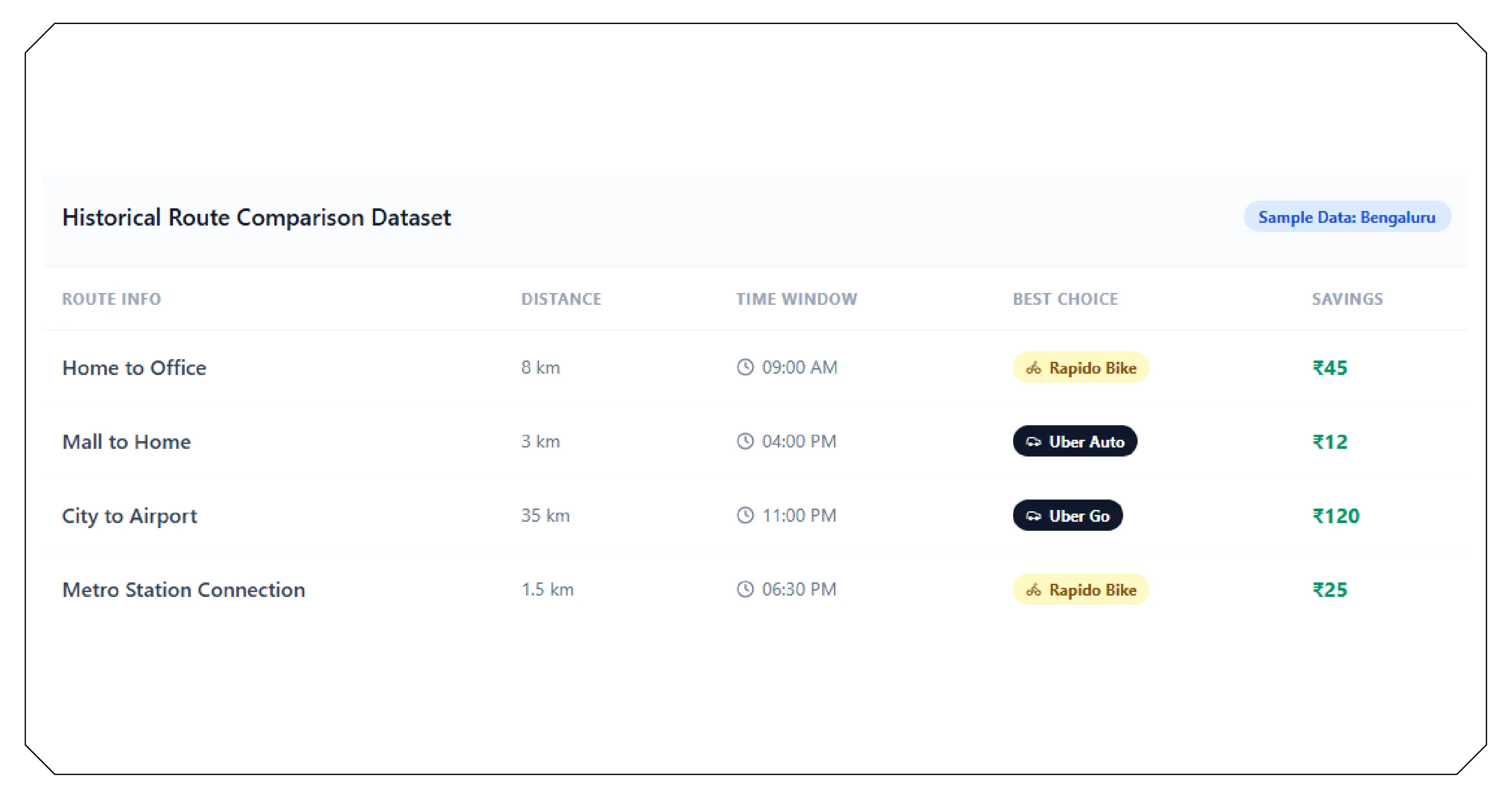
Modern commuters demand transparency and fairness in pricing. Leveraging a Real-Time Car Rental Data Scraping API ensures that businesses and consumers can access the latest fare information, thereby reducing guesswork and enhancing decision-making. Real-time data also supports algorithmic pricing models, allowing ride-hailing platforms to adjust fares dynamically based on demand fluctuations, traffic conditions, and competitor rates.
Tracking Rapido vs Uber price monitoring over time helps operators understand how fares evolve during different times of the day, across weekdays and weekends, or during special events. Continuous monitoring ensures competitive positioning and optimizes revenue generation for fleet operators.
Identifying Car Rental Price Trends
For businesses analyzing urban mobility, the Car Rental Price Trends Dataset offers invaluable insights into historical fare patterns. By studying these trends, analysts can determine which time slots or routes consistently experience higher demand, helping fleet operators adjust pricing, optimize driver allocation, and enhance service reliability.
In addition, Rapido vs Uber time-based fare comparison facilitates comparisons between early morning, daytime, and late-night rates, uncovering patterns that can be leveraged for dynamic fare adjustments. Time-based insights also help commuters plan rides more efficiently, saving money while avoiding surge pricing periods.
Leveraging Booking Data for Strategic Insights
Analyzing Rapido vs Uber booking data insights provides businesses with a deeper understanding of user preferences, popular routes, and booking behaviors. By integrating this data into predictive models, ride-hailing platforms can enhance user experience, optimize pricing, and plan marketing strategies for target customer segments.
The Uber Rentals Car Rental Prices Dataset complements Rapido data by offering a comparative perspective on car rental and ride-hailing trends. Together, these datasets empower analysts to benchmark pricing strategies, identify revenue opportunities, and evaluate the impact of promotional campaigns.
How Data Scraping Drives Competitive Advantage?
In the competitive urban mobility landscape, scraping accurate and timely data is key. Rapido vs Uber demand and pricing data scraping allows businesses to extract granular fare data efficiently. This, combined with advanced analytics, enables operators to detect pricing anomalies, track competitor strategies, and refine their service offerings.
Integrating Real-Time Car Rental Data Scraping API solutions ensures that insights are continuously updated, offering a near real-time perspective on market dynamics. For instance, operators can monitor fluctuations in surge pricing, detect route-specific fare spikes, and implement adaptive pricing strategies that balance supply and demand.
Use Cases of Rapido vs Uber Pricing Analytics
1. Dynamic Pricing Optimization: By analyzing the Rapido vs Uber price monitoring dataset, platforms can set fares that reflect real-time demand, ensuring competitiveness while maximizing revenue.
2. Route Optimization: Using Rapido vs Uber time-based fare comparison, operators can identify high-cost or high-demand routes and adjust driver availability accordingly.
3. Customer Advisory: Commuters benefit from insights derived from Rapido vs Uber booking data insights, allowing them to select cost-effective rides based on time, route, or vehicle type.
4. Promotional Strategy: Marketing teams leverage Car Rental Price Trends Dataset to design targeted promotions during off-peak hours or less competitive routes.
5. Market Benchmarking: Analysts can compare Uber and Rapido fares using the Uber Rentals Car Rental Prices Dataset, identifying competitive gaps and potential revenue growth areas.
Integrating Real-Time Fare Analytics
The success of ride-hailing platforms heavily relies on the speed and accuracy of their pricing models. Rapido vs Uber real-time fare comparison analytics allows operators to incorporate live traffic, booking trends, and competitor pricing into decision-making frameworks. This integration improves transparency for users while maintaining revenue optimization for fleet operators.
Furthermore, predictive modeling based on historical and real-time data enables the simulation of various fare scenarios. By understanding how fares change in response to demand spikes, weather conditions, or traffic congestion, platforms can implement robust pricing policies.
How Travel Scrape Can Help You?
1. Optimize Pricing Strategies
Our data scraping services deliver precise fare and booking information, enabling ride-hailing operators to adjust prices dynamically, respond to market trends, and maximize profitability across different cities and time periods.
2. Monitor Competitor Activity
By extracting competitor pricing and surge data, businesses can benchmark against platforms like Rapido and Uber, identify gaps, and make informed decisions to stay ahead in the competitive ride-hailing landscape.
3. Enhance Operational Efficiency
Scraped route and demand data allow fleet managers to allocate drivers strategically, reduce idle times, and improve service quality, ensuring that rides are available where and when users need them most.
4. Data-Driven Forecasting
With access to historical fare trends and booking patterns, companies can predict demand, anticipate surge periods, and plan marketing campaigns or promotions effectively to boost engagement and revenue.
5. Insightful Dashboards and Reports
Our services transform raw scraped data into actionable dashboards, offering visual insights, alerts, and analytics for pricing, demand, and route optimization, empowering smarter decisions in real-time.
Conclusion: The Future of Ride-Hailing Pricing Intelligence
As urban mobility continues to evolve, harnessing actionable insights from Rapido vs Uber route-based extraction becomes critical. Monitoring Rapido vs Uber surge pricing trend analytics allows operators to optimize fares effectively.
These datasets, combined with real-time monitoring, help enhance user satisfaction. Access to accurate fare data ensures platforms remain competitive in the dynamic ride-hailing market.
For businesses looking to stay ahead, Rapido Car Rental Data Scraping ensures seamless access to crucial datasets, enabling precise forecasting, strategic planning, and data-driven decision-making. By leveraging advanced analytics and continuous data collection, stakeholders can transform how urban mobility services are priced, managed, and delivered.
Ready to elevate your travel business with cutting-edge data insights? Scrape Aggregated Flight Fares to identify competitive rates and optimize your revenue strategies efficiently. Discover emerging opportunities with tools to Extract Travel Website Data, leveraging comprehensive data to forecast market shifts and enhance your service offerings. Real-Time Travel App Data Scraping Services helps stay ahead of competitors, gaining instant insights into bookings, promotions, and customer behavior across multiple platforms. Get in touch with Travel Scrape today to explore how our end-to-end data solutions can uncover new revenue streams, enhance your offerings, and strengthen your competitive edge in the travel market.
Unlock the Full Report
Enter your details to access premium pricing intelligence insights