How Does a European Hotel Brand Mapping Dataset Help in Scraping Brand Hierarchy, Amenities, and Market Data Across 120+ Leading Hotel Brands?
Introduction
The hospitality industry in Europe is highly fragmented yet deeply structured, making it a rich environment for data-driven analysis. A European hotel brand mapping dataset helps organizations decode this complexity by organizing hotel groups, sub-brands, and independent chains into a unified intelligence framework. It allows analysts to understand how global groups like Marriott, Accor, Hilton, IHG, Radisson, and Hyatt structure their portfolios across different European markets.
Alongside structural mapping, Brand Reputation Tracking plays a crucial role in identifying how customers perceive each hotel brand across platforms like Booking.com, Expedia, and Google Reviews. Reputation signals help distinguish premium luxury brands from mid-scale and budget offerings across cities such as Paris, London, Rome, Berlin, and Madrid.
Another key dimension is Europe hotel brand hierarchy analytics, which enables businesses to analyze how parent companies manage multiple sub-brands such as Marriott Bonvoy’s Ritz-Carlton, Sheraton, and Moxy or Accor’s Sofitel, Novotel, and Ibis. This hierarchical visibility supports strategic decision-making for investors, OTAs, and hospitality analysts.
Understanding Hotel Chain Structures Across Europe
The European hotel ecosystem includes over 120 major brands and thousands of properties spanning luxury, mid-scale, boutique, and budget segments. Chains such as Hilton, Marriott, Accor, IHG, Hyatt, Radisson, NH Hotels, Scandic, Melia, and Wyndham operate layered brand portfolios that vary significantly by country.
A detailed hotel chain market analytsis across Europe helps uncover how these brands expand, compete, and position themselves in key tourism hubs. For example, Accor dominates France and Southern Europe, while Marriott and Hilton have stronger penetration in business travel corridors like London, Frankfurt, and Amsterdam.
Mapping these chains also reveals gaps in secondary cities where boutique and regional brands outperform global chains, offering investment opportunities for hospitality expansion.
Competitive Positioning Through Market Share Intelligence
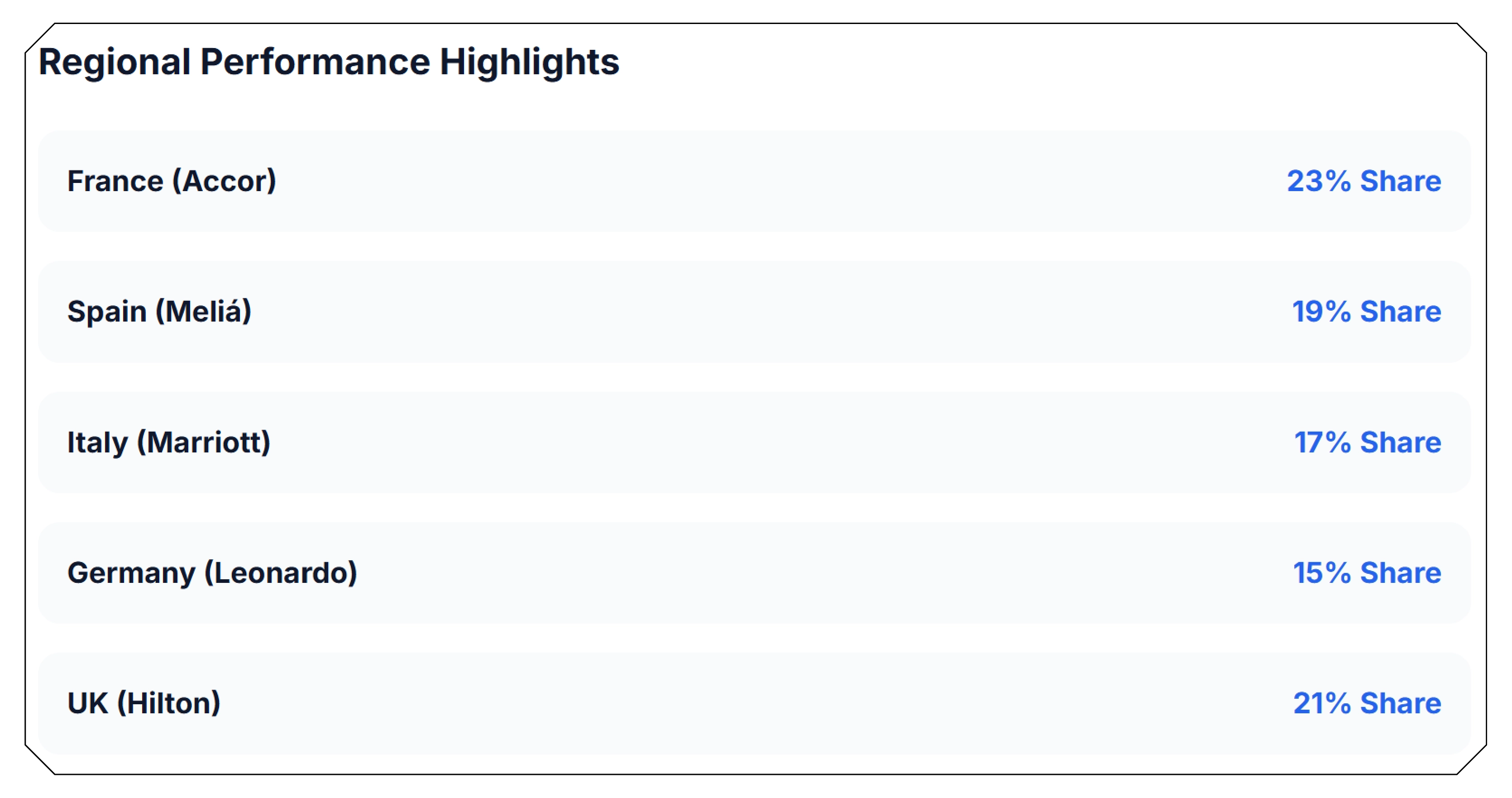
One of the most valuable aspects of hospitality analytics is understanding how brands compete for market dominance. Market Share Analysis enables stakeholders to evaluate occupancy distribution, revenue contribution, and brand penetration across Europe.
For instance, Marriott International may dominate luxury segments in cities like Paris and Milan, while Accor leads in mid-scale economy segments across France and Spain. Meanwhile, local players like Scandic Hotels dominate Nordic regions.
By comparing occupancy rates, ADR (Average Daily Rate), and RevPAR metrics, analysts can determine which brands are gaining or losing market influence in real time.
Expanding European Hotel Market Intelligence Systems
The evolution of European hotel market intelligence has transformed how travel companies, investors, and OTAs make decisions. Instead of relying on static reports, businesses now integrate dynamic datasets that capture real-time pricing, availability, and customer demand.
This intelligence helps forecast tourism trends in major destinations such as Barcelona, Rome, Vienna, and Amsterdam. It also enables predictive modeling for seasonal peaks like summer tourism in Mediterranean regions and winter travel in Alpine destinations.
By combining historical and real-time datasets, companies can develop more accurate forecasting models that improve operational efficiency and profitability.
Extracting Hotel Amenities Data at Scale
Modern travelers prioritize experience-driven stays, making amenities a key differentiator. Hotel amenities Data Scraping allows businesses to extract structured information such as Wi-Fi availability, spa services, breakfast options, gym facilities, pet policies, and room features.
This data is essential for comparison engines, OTAs, and travel platforms that want to provide detailed filtering options. For example, a traveler comparing Hilton, Marriott, and Hyatt properties in Berlin may prioritize amenities such as wellness centers or business lounges.
By standardizing amenity data across hundreds of brands, companies can improve user experience and increase booking conversions.
Structured Hotel Feature Intelligence Across Europe
The complexity of hospitality offerings requires detailed and standardized data pipelines. European hotel amenities data scraping ensures consistent extraction of hotel features across different platforms and geographies.
This enables comparison between luxury chains like Ritz-Carlton, Four Seasons, and St. Regis with mid-scale brands like Novotel, Holiday Inn, and Best Western. It also supports segmentation of boutique hotels in cities like Prague, Lisbon, and Budapest.
With consistent amenity mapping, businesses can build recommendation engines that align travelers with the most suitable accommodations.
Core Role of Hotel Data Extraction Systems
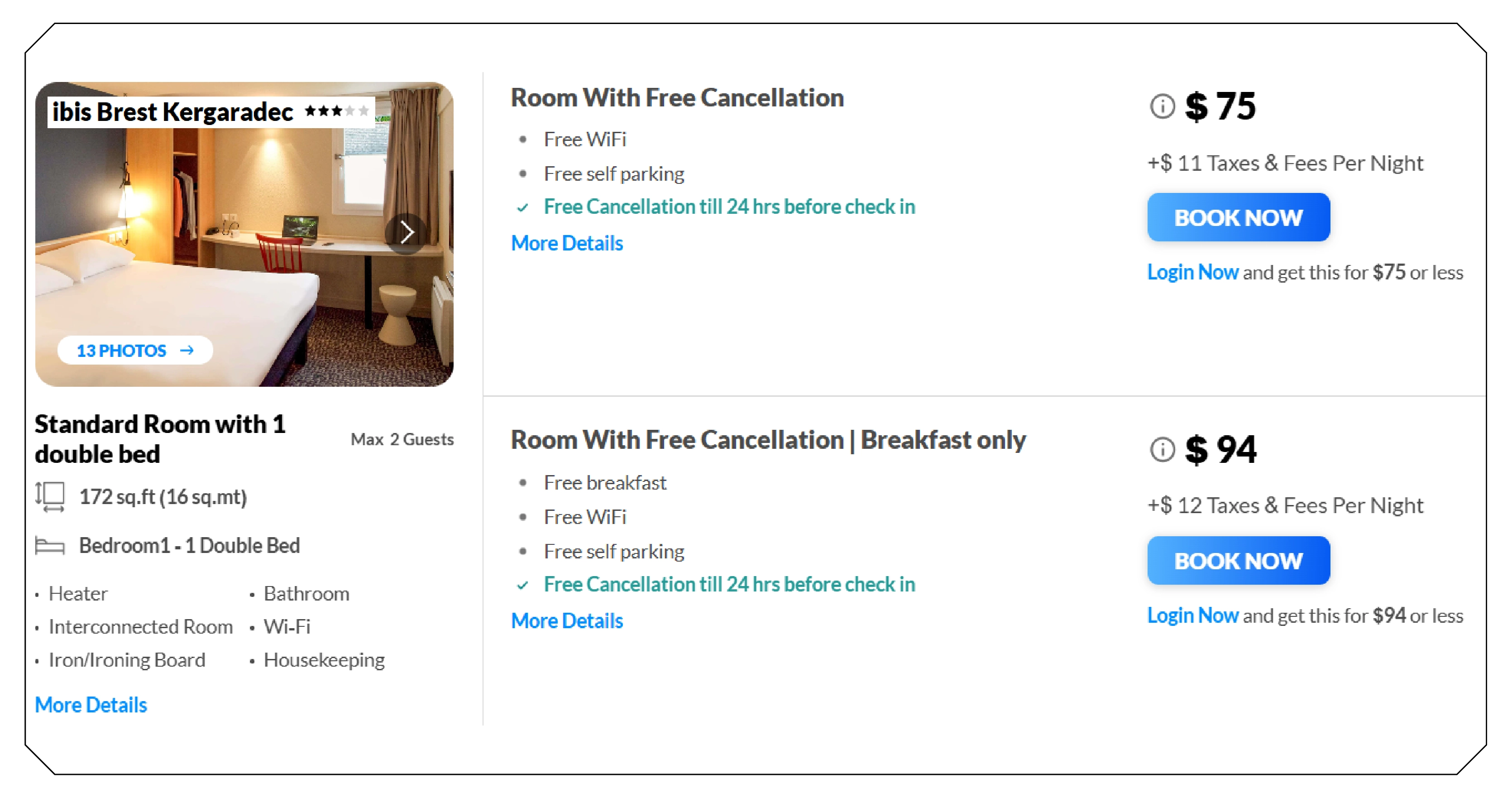
At the foundation of all hospitality intelligence lies Hotel Data Scraping, which powers the extraction of structured data from OTA platforms, hotel websites, and aggregator systems.
This includes room types, pricing, availability calendars, location metadata, and seasonal discounts. Chains like Hilton, Marriott, Accor, and Radisson generate massive volumes of daily updates that must be captured in real time for accurate analytics.
This structured data helps businesses optimize pricing, improve marketing targeting, and enhance customer segmentation models.
Understanding Market Positioning in European Hospitality
In a highly competitive industry, positioning determines long-term success. hotel market positioning Europe data extraction enables businesses to evaluate how brands are perceived based on pricing, amenities, and customer feedback.
Luxury brands like Mandarin Oriental, Four Seasons, and Ritz-Carlton position themselves at the premium end, while brands like Ibis, Motel One, and Travelodge focus on affordability and accessibility.
By analyzing positioning data, companies can identify white spaces in the market and adjust branding strategies accordingly.
Deep Dive into Demand and Occupancy Intelligence
Tourism demand in Europe fluctuates based on seasonality, events, and economic conditions. European hotel occupancy demand insights help analysts understand how occupancy rates shift across regions like Southern Europe, Central Europe, and the Nordics.
For example, cities like Paris and Rome experience peak occupancy during summer, while ski destinations in Switzerland and Austria peak during winter months. Business hubs like London and Frankfurt maintain stable year-round demand.
This intelligence helps hotels optimize pricing strategies, staffing, and resource allocation.
Pricing Intelligence and Revenue Optimization Models
Hotel pricing is one of the most dynamic components of hospitality analytics. A Hotel Room Price Trends Dataset enables businesses to track fluctuations in room rates across brands, seasons, and booking platforms.
Chains like Hilton, Marriott, and Accor frequently adjust prices based on demand, competitor pricing, and local events. By analyzing these trends, revenue managers can optimize pricing strategies to maximize occupancy and revenue.
This dataset also helps OTAs build predictive pricing models that recommend the best booking times for travelers.
Strategic Value of European Hotel Intelligence Systems
The combination of brand hierarchy mapping, amenities tracking, and pricing analytics creates a powerful ecosystem for hospitality intelligence. Europe’s hotel industry, with its blend of global chains and regional players, offers a unique environment for data-driven insights.
Brands such as Marriott, Hilton, Accor, IHG, Hyatt, Radisson, NH Hotels, Scandic, Melia, Best Western, and Wyndham form the backbone of this ecosystem, while boutique hotels add diversity and localized competition.
With structured datasets, businesses can improve forecasting accuracy, optimize revenue strategies, and enhance customer experience across multiple markets.
How Travel Scrape Can Help You?
Real-Time Hospitality Data Collection
Our data scraping services help you capture live hotel pricing, availability, and amenities data across Europe, enabling faster insights and improved strategic hospitality decision-making accuracy.
Competitive Market Intelligence
We provide structured competitor data from leading hotel brands, helping you understand pricing strategies, occupancy trends, and brand positioning to stay ahead in competitive European markets.
Enhanced Revenue Optimization
Our solutions enable analysis of dynamic pricing patterns and demand shifts, helping hotels and OTAs optimize room rates, maximize occupancy, and improve overall revenue performance efficiently.
Comprehensive Brand and Amenities Mapping
We extract detailed hotel brand hierarchy and amenities data, allowing businesses to compare offerings across chains and improve customer targeting, segmentation, and personalized travel recommendations effectively.
Scalable Automated Data Infrastructure
Our scraping systems deliver large-scale, automated data pipelines ensuring consistent, accurate, and structured hospitality intelligence across Europe, reducing manual effort and improving operational efficiency significantly.
Conclusion: Future of European Hotel Data Intelligence
The future of hospitality analytics lies in real-time, structured, and scalable data ecosystems that unify pricing, amenities, and demand signals. As competition intensifies across European travel markets, data-driven strategies will become essential for survival and growth.
The integration of hotel market positioning Europe data extraction allows stakeholders to refine branding strategies and improve competitive alignment.
At the same time, European hotel occupancy demand insights empower businesses to predict seasonal fluctuations and optimize operational planning.
Ultimately, a comprehensive Hotel Room Price Trends Dataset will continue to serve as the foundation for revenue optimization, market forecasting, and intelligent decision-making in the evolving European hospitality landscape.
Ready to elevate your travel business with cutting-edge data insights? Scrape Aggregated Flight Fares to identify competitive rates and optimize your revenue strategies efficiently. Discover emerging opportunities with tools to Extract Travel Website Data, leveraging comprehensive data to forecast market shifts and enhance your service offerings. Real-Time Travel App Data Scraping Services helps stay ahead of competitors, gaining instant insights into bookings, promotions, and customer behavior across multiple platforms. Get in touch with Travel Scrape today to explore how our end-to-end data solutions can uncover new revenue streams, enhance your offerings, and strengthen your competitive edge in the travel market.
Unlock the Full Report
Enter your details to access premium pricing intelligence insights