MENA Travel Industry Data Analytics: Leveraging Scraping Demographics for Smarter Tourism Insights
Introduction
The Middle East and North Africa (MENA) region has emerged as one of the fastest-growing global tourism corridors, driven by large-scale infrastructure investments, diversified economies, and aggressive national tourism strategies such as Saudi Vision 2030 and UAE tourism diversification programs. In this context, MENA travel industry data analytics plays a critical role in transforming raw travel signals into actionable intelligence for airlines, hotels, and tourism boards. Data-driven ecosystems now depend heavily on structured extraction of visitor flows, pricing dynamics, and demographic segmentation to optimize revenue strategies.
At the same time, Scraping Hospitality Data in MENA has become essential for tracking real-time hotel performance, OTA pricing fluctuations, and seasonal demand cycles across high-growth destinations such as Dubai, Riyadh, Doha, Marrakech, and Cairo. These datasets are increasingly used for predictive modeling of occupancy rates, revenue per available room (RevPAR), and competitive benchmarking across luxury and midscale segments.
The region’s rapid expansion is reflected in macroeconomic indicators, where tourism contributes hundreds of billions of dollars to GDP and supports millions of jobs. According to recent industry estimates, MENA tourism is projected to exceed $367 billion in annual economic contribution, with strong growth in hotel pipelines and international arrivals supported by mega-projects and visa liberalization reforms.
In this evolving ecosystem, MENA tourism expansion and hospitality trend analytics is reshaping how governments and private stakeholders evaluate destination competitiveness, enabling them to monitor demand shifts, traveler sentiment, and cross-border mobility patterns in near real time.
Data-Driven Transformation of MENA Tourism
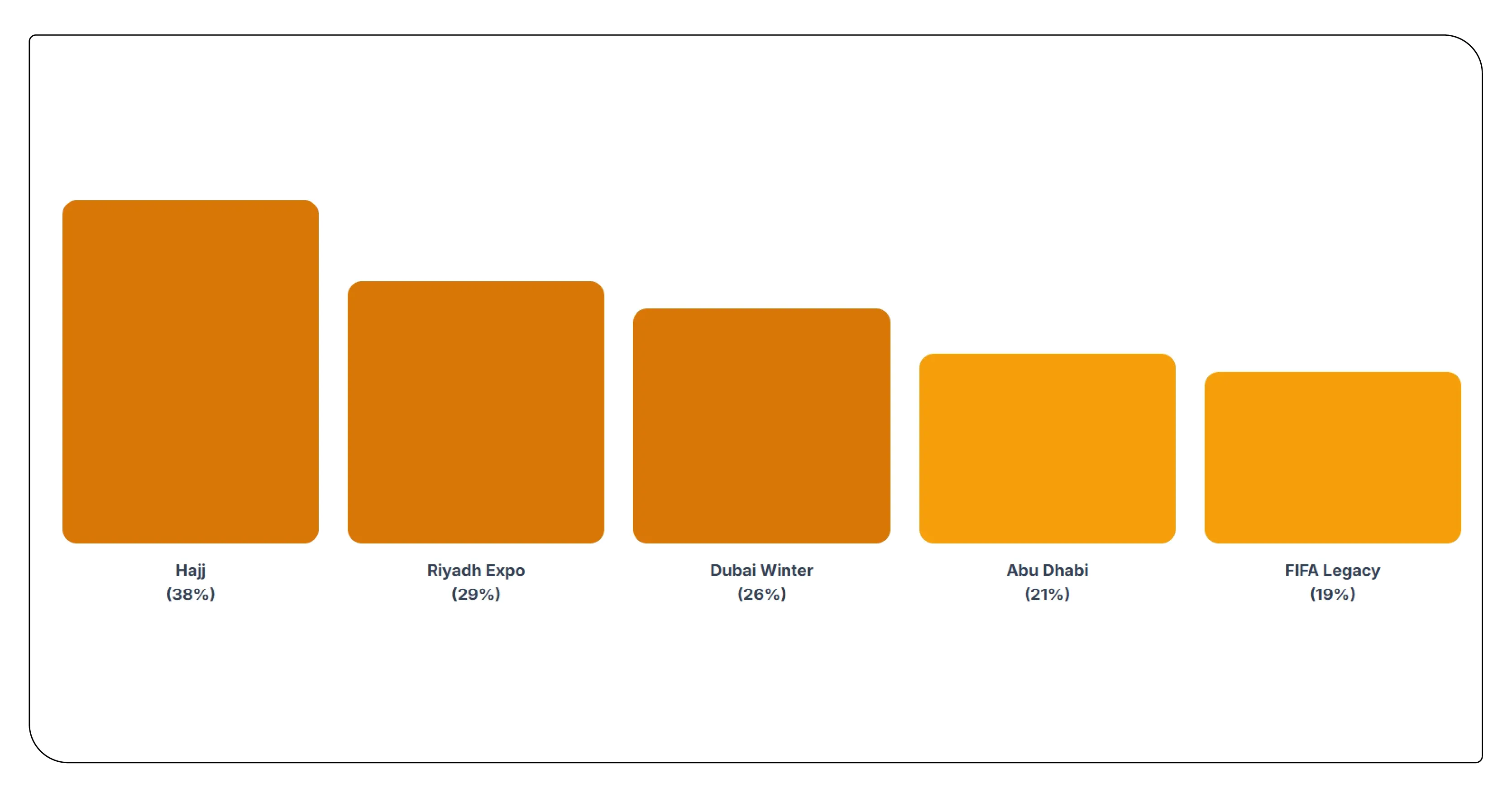
The digital transformation of tourism in MENA is powered by structured data pipelines that capture millions of daily travel interactions from OTAs, airlines, and booking platforms. These datasets allow stakeholders to:
- Identify demand spikes across seasons (Hajj, Expo events, winter tourism peaks)
- Monitor hotel pricing elasticity across luxury and budget segments
- Track demographic segmentation by nationality, income group, and travel purpose
- Analyze emerging source markets such as India, China, and Eastern Europe
This shift is strongly supported by MENA tourism data intelligence, which integrates AI-driven forecasting models with scraped datasets to improve pricing accuracy and demand prediction.
Governments in the UAE, Saudi Arabia, and Qatar are increasingly using Travel Data Intelligence systems to evaluate tourism ROI and optimize mega-event planning such as Expo 2030, FIFA World Cup legacy tourism, and NEOM development corridors.
Scraping Demographics and Traveler Behavior in MENA
One of the most important components of tourism analytics is demographic segmentation. travel demographic data scraping MENA enables analysts to extract structured insights about:
- Age distribution of tourists
- Income-level segmentation
- Country-of-origin breakdown
- Travel purpose (leisure, religious, business, MICE)
- Booking behavior across digital platforms
These datasets reveal that MENA tourism demand is highly diversified, with strong inflows from Europe for leisure tourism, South Asia for labor and family travel, and intra-GCC travel driven by business and religious tourism.
MENA Tourism Demographic & Demand Distribution (Sample Analytics Dataset)
| Demographic Segment | Key Source Markets | Travel Purpose Share (%) | Average Stay (Days) | Booking Channel Preference |
|---|---|---|---|---|
| European Tourists | UK, Germany, France | 38% Leisure, 12% Business | 6–10 | OTA Platforms (65%) |
| South Asian Tourists | India, Pakistan | 55% Visiting Friends/Work | 10–18 | Mobile Apps (72%) |
| GCC Travelers | UAE, Saudi, Qatar | 40% Leisure, 35% Business | 3–6 | Direct Hotel Booking (58%) |
| North African Tourists | Egypt, Morocco | 45% Cultural Tourism | 5–8 | OTA + Travel Agents (60%) |
| East Asian Tourists | China, Korea | 50% Group Tourism | 7–12 | Tour Operators (68%) |
Hotel Performance Analytics and Revenue Optimization
A key pillar of tourism intelligence is hotel demand and pricing analysis MENA, which focuses on occupancy trends, ADR fluctuations, and seasonal pricing behavior across competitive hotel markets.
Hotels in MENA are particularly sensitive to:
- Event-driven demand (sports, expos, religious pilgrimages)
- Geo-political disruptions
- Seasonal tourism cycles
- Luxury segment expansion
Recent data shows strong hotel pipeline growth across Saudi Arabia and the UAE, with thousands of new rooms under development driven by mega tourism projects and government investment programs.
MENA Hotel Performance & Pricing Analytics (Multi-City Dataset)
| City | Average Occupancy (%) | ADR (USD) | RevPAR (USD) | Peak Season Demand Index | Luxury Share (%) |
|---|---|---|---|---|---|
| Dubai | 78.5 | 143 | 112 | Very High (92) | 64% |
| Riyadh | 71.0 | 128 | 91 | High (85) | 58% |
| Doha | 74.2 | 135 | 100 | High (88) | 61% |
| Cairo | 69.5 | 89 | 62 | Medium (72) | 42% |
| Marrakech | 76.1 | 110 | 84 | High (80) | 55% |
| Muscat | 68.0 | 95 | 65 | Medium (70) | 40% |
Tourism Expansion and Market Growth Drivers
The MENA tourism sector is undergoing rapid expansion driven by structural reforms and investment-heavy strategies. Key drivers include:
- Mega infrastructure projects (NEOM, Red Sea Project, Qiddiya)
- Visa liberalization policies
- Airline expansion and hub connectivity
- Cultural and sports tourism investments
- Digital tourism transformation
The region’s hospitality market is projected to exceed $487 billion by 2032, reflecting sustained double-digit growth in demand and supply expansion.
This expansion is supported by advanced analytics systems that rely heavily on MENA region data-driven travel market insights, enabling governments and private operators to identify profitable tourism corridors and underdeveloped destinations.
Role of Advanced Travel Data Ecosystems

Modern tourism analytics relies on integrated scraping pipelines that extract:
- OTA hotel pricing (Booking, Expedia, Agoda)
- Airline fare trends
- Event-based demand spikes
- Social media travel sentiment
- Real-time availability signals
These systems are collectively categorized under Travel & Tourism Datasets, which form the backbone of AI-powered forecasting engines used by hotel chains and travel aggregators.
Applications of Data Scraping in MENA Travel Industry
The adoption of structured scraping techniques allows stakeholders to:
- Predict occupancy fluctuations
- Optimize seasonal pricing strategies
- Identify emerging tourism hotspots
- Benchmark competitor hotel performance
- Improve customer segmentation accuracy
The rise of automation in hotel demand and pricing analysis MENA is particularly important for luxury hotels, where even minor pricing adjustments can significantly impact revenue per room.
Conclusion
The MENA tourism ecosystem is evolving into a highly data-driven industry where digital intelligence determines competitiveness, profitability, and expansion strategy. The integration of demographic analysis, hotel performance tracking, and pricing intelligence has made tourism one of the most analytics-intensive sectors in the region.
As digital transformation accelerates, data extraction technologies such as Tour & Travel Data Scraping will continue to shape decision-making frameworks for governments, airlines, and hospitality groups. These systems ensure that tourism stakeholders can respond in real time to demand fluctuations, geopolitical shifts, and changing traveler behavior using MENA hotel performance data scraping. Advanced analytics also enhance forecasting accuracy and operational efficiency through Hotel Data Scraping.
Ultimately, the future of tourism in MENA will be defined not just by physical infrastructure expansion, but by the depth of intelligence derived from data ecosystems that continuously monitor, predict, and optimize global travel behavior.
Ready to elevate your travel business with cutting-edge data insights? Scrape Aggregated Flight Fares to identify competitive rates and optimize your revenue strategies efficiently. Discover emerging opportunities with tools to Extract Travel Website Data, leveraging comprehensive data to forecast market shifts and enhance your service offerings. Real-Time Travel App Data Scraping Services helps stay ahead of competitors, gaining instant insights into bookings, promotions, and customer behavior across multiple platforms. Get in touch with Travel Scrape today to explore how our end-to-end data solutions can uncover new revenue streams, enhance your offerings, and strengthen your competitive edge in the travel market.
Unlock the Full Report
Enter your details to access premium pricing intelligence insights