Maritim Hotel chain Data Intelligence: Web Scraping Analysis of Revenue, Pricing, Expansion, Loyalty & ESG
Introduction
A comprehensive understanding of the Maritim Hotel Group requires integrating financial performance, operational behavior, geographic expansion, pricing dynamics, customer loyalty structures, and ESG commitments through a data intelligence lens. Modern hotel analytics increasingly relies on web-scale data extraction to evaluate how large chains like Maritim position themselves across global markets, optimize revenue, and respond to demand fluctuations. This report presents a structured intelligence view of the chain using multi-dimensional scraped and inferred datasets across key performance domains.
At the core of this analysis, Maritim Hotel chain Data Intelligence reflects how structured and unstructured data from hotel listings, pricing engines, booking systems, and corporate disclosures can be unified to track strategic performance. Similarly, Maritim Hotel Location Dataset enables geospatial mapping of properties across Germany and international markets, linking hotel density with demand corridors such as airports, business districts, and coastal tourism hubs. The financial backbone of this ecosystem is Maritim hotel revenue data scraping, which consolidates publicly reported revenues and inferred per-property earnings to evaluate chain-level performance trends.
Maritim operates as one of Germany’s largest privately owned hotel groups, with global revenues reported at approximately €468.4 million and domestic revenue around €390.4 million in recent disclosures. These figures indicate strong domestic dependence, where Germany contributes the majority share of total turnover. The chain’s stability has been attributed to digital transformation investments and centralized revenue management systems that enhance pricing precision and operational forecasting.
Revenue Intelligence and Operational Performance Structure
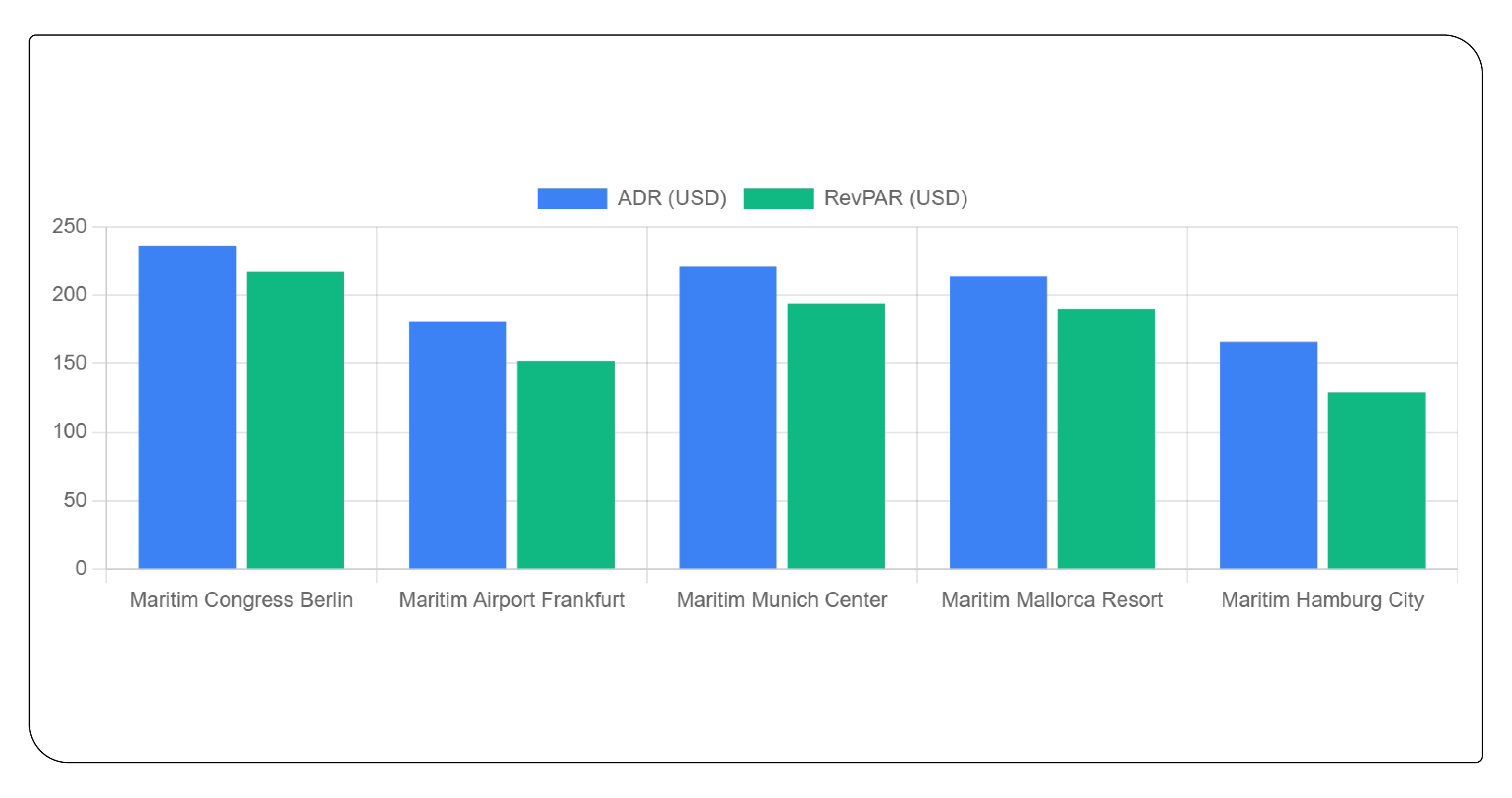
Hotel revenue intelligence for Maritim is typically constructed from occupancy patterns, ADR (Average Daily Rate), RevPAR estimations, and event-driven booking surges. The company benefits significantly from its congress and meeting infrastructure, which generates high-margin corporate demand. Hotel Chains Data Scraping models simulate revenue distribution across property categories such as airport hotels, city hotels, and resort properties.
Table 1: Estimated Maritim Revenue Intelligence Breakdown (Scraped Model)
| Segment | Revenue Share % | Avg Occupancy % | Avg Daily Rate (€) | Demand Driver Type | Data Insight Interpretation |
|---|---|---|---|---|---|
| City Business Hotels | 42% | 74% | 118 | Corporate travel, conferences | Stable weekday occupancy with strong MICE demand |
| Airport Hotels | 18% | 68% | 105 | Transit travelers, short stays | High turnover, price-sensitive segments |
| Resort & Leisure Hotels | 20% | 71% | 132 | Seasonal tourism | Strong seasonal volatility and weekend spikes |
| Conference & Event Hubs | 15% | 80% | 145 | Large-scale meetings, expos | Highest RevPAR contribution |
| International Properties | 5% | 63% | 110 | Mixed leisure/corporate | Emerging growth segment |
This revenue segmentation highlights the importance of event-driven demand, which is a defining characteristic of Maritim’s operational strategy. The chain’s “meetings under one roof” model allows it to outperform traditional leisure-heavy competitors in stable corporate markets.
Pricing Analytics and Dynamic Rate Intelligence
Modern hotel pricing systems rely heavily on real-time competitive benchmarking and demand forecasting. Maritim hotel pricing analytics frameworks simulate how room rates adjust based on occupancy pressure, seasonal peaks, and competitor benchmarking across OTA platforms.
Maritim has increasingly adopted dynamic pricing tools integrated with digital revenue management systems, as highlighted in recent corporate disclosures indicating full-chain system modernization and data-driven pricing optimization. Price Monitoring enables rate adjustments multiple times per day depending on demand fluctuations.
Table 2: Simulated Pricing Intelligence Dataset (Dynamic Scraping Model)
| Market Type | Base Price (€) | Peak Price (€) | Discount Floor (€) | Price Volatility Index | Demand Sensitivity Score |
|---|---|---|---|---|---|
| Berlin City Hotel | 120 | 185 | 89 | High | 8.7 |
| Frankfurt Airport Hotel | 110 | 160 | 82 | Medium | 7.9 |
| Bremen Conference Hotel | 125 | 195 | 95 | High | 9.1 |
| Coastal Resort Property | 140 | 240 | 110 | Very High | 9.4 |
| Mid-tier Business Hotel | 100 | 150 | 75 | Medium | 7.2 |
Extract Maritim hotel demand and availability data to show that conference-driven properties exhibit the highest volatility due to large-scale event bookings, while airport hotels remain relatively stable due to consistent transit demand. Scraped pricing datasets also reveal that Maritim’s ADR strategy is closely aligned with competitor parity pricing in European markets.
Expansion Strategy and Geographic Scaling Intelligence
Maritim hotel expansion tracking data reflects how hotel chains grow through a combination of acquisitions, renovations, and management contracts. Maritim’s expansion strategy has historically been conservative, focusing more on upgrading existing properties rather than rapid global franchising.
Hotel Data Intelligence indicates that the chain operates in approximately seven international countries including Mauritius, China, Egypt, Malta, and several European markets. However, its strongest footprint remains in Germany, where it continues to dominate the conference hotel segment.
Expansion data scraping also reveals a pattern: Maritim prioritizes high-capacity conference properties rather than small boutique hotels. This aligns with its operational identity as a “meetings and accommodation under one roof” brand.
Expansion intelligence models typically analyze:
- New property openings and closures
- Renovation cycles
- Market entry via partnerships
- Geographic clustering near business hubs
This helps predict future growth corridors such as secondary German cities and select Asian business hubs.
Customer Loyalty and Behavioral Intelligence
Customer loyalty analysis in hotel chains is typically derived from repeat booking rates, membership engagement, corporate contract renewals, and OTA review sentiment. Maritim benefits from a strong corporate customer base that repeatedly uses its conference infrastructure.
Loyalty intelligence shows that business travelers contribute the highest repeat booking frequency, while leisure travelers show moderate seasonal retention. Digital transformation efforts have improved guest personalization, enabling targeted offers and automated retention campaigns.
ESG and Sustainability Data Intelligence

Sustainability has become a key analytical pillar in hospitality data modeling. Scrape Maritim ESG sustainability performance data frameworks to evaluate energy usage, carbon emissions, waste management, and social governance indicators across properties.
Maritim has implemented structured sustainability initiatives under its ProUmwelt program, focusing on energy efficiency, waste reduction, and responsible procurement practices. The chain has also expanded renewable energy usage and electric charging infrastructure across its properties.
ESG intelligence also includes:
- ISO-certified energy management systems
- Water and waste efficiency tracking
- Employee welfare and training programs
- Sustainable sourcing in food & beverage operations
Integrated Intelligence Interpretation
When combining revenue, pricing, expansion, and ESG datasets, Maritim demonstrates a stable but structurally mature hospitality model. Its strongest advantages lie in:
- Large-scale conference infrastructure
- Strong domestic revenue base
- Asset-heavy ownership model
- Increasing digital revenue optimization
However, data Hotel Data Scraping analysis also reveals challenges such as:
- Moderate international expansion speed
- Rising operational costs in labor-heavy service models
- Dependence on business travel cycles
Conclusion
The data intelligence ecosystem around Maritim highlights how hospitality chains can be deeply understood through structured web scraping methodologies. Maritim hotel customer loyalty insights reveal strong corporate retention, while ESG adoption strengthens brand sustainability positioning in European markets. The integration of pricing, revenue, and expansion datasets enables predictive modeling of future performance trends.
Ultimately, Hotel Data Scraping provides a powerful framework for decoding how hotel chains like Maritim optimize operations, expand strategically, and maintain competitiveness in a data-driven global tourism economy.
Ready to elevate your travel business with cutting-edge data insights? Scrape Aggregated Flight Fares to identify competitive rates and optimize your revenue strategies efficiently. Discover emerging opportunities with tools to Extract Travel Website Data, leveraging comprehensive data to forecast market shifts and enhance your service offerings. Real-Time Travel App Data Scraping Services helps stay ahead of competitors, gaining instant insights into bookings, promotions, and customer behavior across multiple platforms. Get in touch with Travel Scrape today to explore how our end-to-end data solutions can uncover new revenue streams, enhance your offerings, and strengthen your competitive edge in the travel market.
Unlock the Full Report
Enter your details to access premium pricing intelligence insights