How Can the Ola vs Uber Price Difference Dataset Help with Real-Time Fare Comparison?
Introduction
In today’s rapidly evolving urban mobility ecosystem, pricing transparency and competitive intelligence have become essential for businesses, analysts, and aggregators. The rise of ride-hailing platforms has made fare comparison a critical aspect of consumer decision-making. This is where datasets and analytics play a vital role.
Understanding Ola vs Uber Price Difference Dataset allows companies to decode pricing strategies, demand fluctuations, and customer preferences. Alongside this, Uber Rentals Car Rental Prices Dataset provides valuable insights into car rental pricing across locations. Additionally, Ola vs Uber real-time fare comparison analytics helps stakeholders monitor dynamic fare changes and make data-driven decisions.
Understanding the Ride-Hailing Pricing Ecosystem
Both Ola and Uber operate on dynamic pricing models, where fares are influenced by multiple real-time factors such as demand, traffic, driver availability, weather, and time of day. These platforms continuously adjust their pricing algorithms to maximize efficiency and profitability.
A price difference dataset captures variations in fares for identical routes across both platforms. This data becomes extremely valuable for:
- Consumers looking for cost-effective rides
- Businesses analyzing competitive pricing
- Aggregators offering fare comparison tools
- Urban planners studying mobility patterns
Key Components of Ola vs Uber Price Difference Dataset
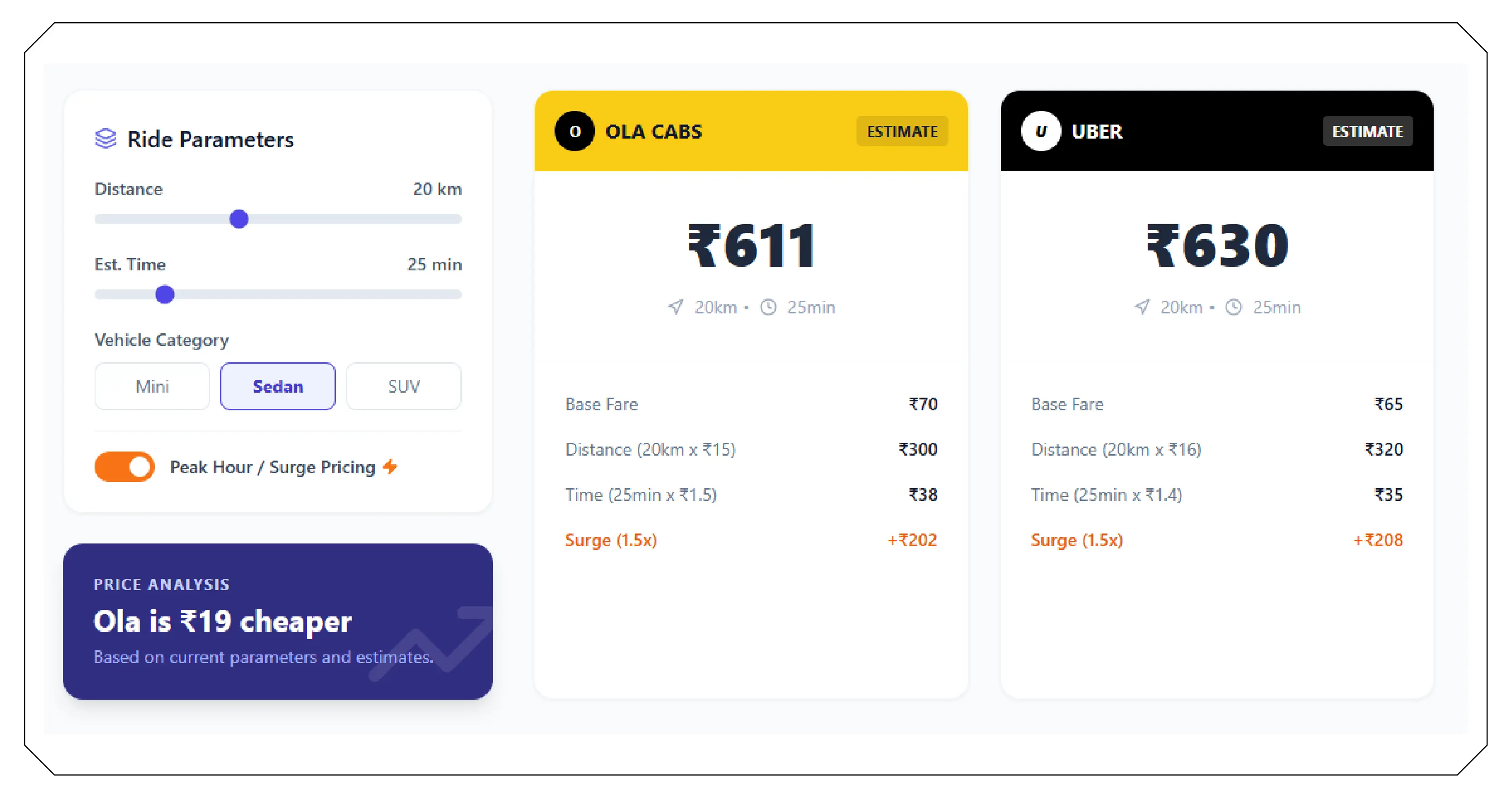
A comprehensive dataset includes multiple attributes that define ride pricing:
- Pickup and drop locations
- Distance and estimated travel time
- Base fare and per-kilometer rate
- Surge multiplier
- Time of booking
- Vehicle type (Mini, Sedan, SUV, Rentals)
- Waiting charges and additional fees
By collecting and structuring this data, businesses can perform in-depth pricing analysis and generate actionable insights.
Comparison Table: Ola vs Uber Pricing Parameters
| Parameter | Ola Pricing Model | Uber Pricing Model |
|---|---|---|
| Base Fare | Fixed starting fare | Slightly variable based on city |
| Per Km Rate | Competitive, often lower in Tier-2 cities | Slightly higher but consistent |
| Surge Pricing | Aggressive during peak hours | More dynamic and frequent adjustments |
| Rental Packages | Fixed hourly packages | Flexible packages with added benefits |
| Cancellation Charges | Applied after driver assignment | Applied after specific time threshold |
| Waiting Charges | Charged after initial free minutes | Similar structure but varies by city |
| Discounts & Offers | Frequent coupons and cashback | Limited but targeted promotions |
| Driver Availability Impact | Moderate | High influence on fare |
Importance of Location-Based Datasets
Datasets such as Uber Rentals Car Rental Locations Dataset provide geographic insights into service availability, pricing zones, and demand clusters. These datasets help businesses:
- Identify high-demand locations
- Optimize driver allocation
- Enhance customer experience
- Improve pricing strategies
Location intelligence combined with fare data offers a powerful tool for understanding urban mobility patterns.
Surge Pricing: The Core Differentiator
One of the most critical aspects of ride-hailing pricing is surge pricing. Through ride-hailing surge pricing analysis Ola vs Uber, businesses can understand how both platforms respond to demand spikes.
Key Observations:
- Ola tends to apply sharper surge multipliers during peak hours
- Uber uses more frequent but moderate surge adjustments
- Weather conditions significantly impact both platforms
- Events and festivals create predictable surge patterns
Surge pricing analysis helps in forecasting demand and preparing dynamic pricing strategies.
Role of Data Scraping in Fare Intelligence
Collecting real-time pricing data manually is nearly impossible. This is where Car Rental Data Scraping plays a crucial role. Automated scraping tools extract data from apps and websites at scale, enabling continuous monitoring.
Benefits of Data Scraping:
- Real-time fare tracking
- Large-scale data collection
- Accurate competitor benchmarking
- Historical data storage for trend analysis
Businesses leveraging scraping technologies gain a competitive edge by accessing up-to-date and structured datasets.
Advanced Pricing Insights with Trend Intelligence
Using Ola vs Uber surge pricing trend intelligence, companies can identify patterns over time. This includes:
- Peak demand hours across cities
- Weekly and seasonal trends
- Impact of external factors like weather and holidays
- Long-term pricing behavior
Similarly, Ola vs Uber urban mobility fare trends insights help stakeholders understand how pricing evolves with urban development and infrastructure changes.
Car Rental Data Intelligence for Strategic Decisions
Beyond ride-hailing, rental services are gaining popularity. Leveraging Car Rental Data Intelligence enables companies to:
- Analyze rental package pricing
- Understand customer preferences
- Optimize fleet utilization
- Benchmark against competitors
Rental datasets provide a broader perspective on mobility services beyond point-to-point rides.
Use Cases of Ola vs Uber Price Difference Dataset
1. Fare Aggregator Platforms
Companies can build apps that compare fares in real time, helping users choose the cheapest option.
2. Mobility Startups
Startups can use pricing datasets to design competitive pricing models and attract users.
3. Market Research Firms
Researchers can analyze pricing behavior and consumer trends in urban mobility.
4. Fleet Operators
Fleet owners can optimize pricing strategies and improve profitability.
5. Urban Planning Authorities
Governments can study transportation trends and improve infrastructure planning.
Challenges in Price Data Collection
While datasets are valuable, collecting and maintaining them comes with challenges:
- Frequent API and app changes
- Data accuracy and validation
- Handling large-scale data volumes
- Legal and compliance considerations
Advanced scraping tools and APIs help overcome these challenges efficiently.
Future of Ride-Hailing Price Intelligence
The future of pricing intelligence lies in AI-driven analytics and predictive modeling. With increasing data availability, companies can:
- Predict surge pricing in advance
- Offer personalized fare recommendations
- Optimize routes and pricing dynamically
- Enhance customer satisfaction
Integration of machine learning with pricing datasets will redefine how mobility platforms operate.
How Travel Scrape Can Help You?
1. Real-Time Fare Monitoring
Our data scraping services continuously collect live pricing data from ride-hailing platforms, enabling businesses to monitor fare fluctuations instantly and make timely decisions based on accurate, up-to-date insights.
2. Competitive Price Benchmarking
We help you compare pricing strategies across platforms like Ola and Uber, allowing you to identify gaps, optimize your pricing models, and stay ahead in the competitive mobility market.
3. Surge Pricing Insights
Our solutions capture peak-time pricing patterns and demand spikes, helping you understand surge behavior and build smarter strategies using ride-hailing surge pricing analysis Ola vs Uber.
4. Location-Based Intelligence
By extracting geo-specific data, we provide insights into high-demand zones, popular routes, and pricing variations, empowering businesses to improve service coverage and operational efficiency.
5. Scalable Data & API Integration
We deliver structured datasets and seamless integration through advanced APIs, including Real-Time Car Rental Data Scraping API, enabling automation, analytics, and easy integration into your business systems.
Conclusion
The growing demand for mobility intelligence has made datasets a cornerstone of decision-making in the ride-hailing industry. By leveraging structured data, businesses can unlock powerful insights into pricing strategies and consumer behavior.
Datasets like Ola vs Uber ride booking price difference datasets enable detailed comparisons, while Ola vs Uber dynamic pricing fluctuation analysis provides a deeper understanding of real-time fare changes. Additionally, tools like Real-Time Car Rental Data Scraping API empower businesses to collect and analyze data continuously, ensuring they stay ahead in the competitive mobility landscape.
In a world driven by data, mastering fare intelligence is no longer optional—it is essential for success in the ride-hailing ecosystem.
Ready to elevate your travel business with cutting-edge data insights? Scrape Aggregated Flight Fares to identify competitive rates and optimize your revenue strategies efficiently. Discover emerging opportunities with tools to Extract Travel Website Data, leveraging comprehensive data to forecast market shifts and enhance your service offerings. Real-Time Travel App Data Scraping Services helps stay ahead of competitors, gaining instant insights into bookings, promotions, and customer behavior across multiple platforms. Get in touch with Travel Scrape today to explore how our end-to-end data solutions can uncover new revenue streams, enhance your offerings, and strengthen your competitive edge in the travel market.
Unlock the Full Report
Enter your details to access premium pricing intelligence insights