Scrape Top Hotel Chains in Japan with Property Distribution and Market Analysis
This report provides comprehensive insights into Japan's leading hotel chains, analyzing property distribution, geographic coverage, market presence, expansion trends, and competitive positioning. It enables hospitality businesses, investors, and travel platforms to make informed decisions using structured, data-driven intelligence across Japan's evolving hotel industry.
Introduction
Japan’s hospitality industry is experiencing sustained growth in 2026, fueled by record international tourism, expanding domestic travel, and continuous investment in branded hotel developments. From luxury accommodations in Tokyo and Kyoto to budget and business hotels across regional cities, hotel chains are strengthening their nationwide presence to meet rising traveler demand. To understand these market dynamics, businesses increasingly rely on method to Scrape Top Hotel Chains in Japan for comprehensive visibility into property expansion, geographic coverage, and competitive positioning.
Organizations also Extract Top Hotel Chains in Japan to evaluate brand penetration across prefectures, identify emerging tourism hubs, and monitor operational growth. Combined with advanced hotel intelligence solutions, these datasets provide reliable information on hotel locations, room inventory, pricing behavior, and chain performance, enabling travel platforms, investors, and hospitality consultants to make informed strategic decisions.
Growing adoption of Japan hotel chain market analysis enables enterprises to benchmark leading brands, assess regional opportunities, forecast investment potential, and optimize expansion strategies. As Japan prepares for continued tourism growth, structured hotel intelligence has become an essential resource for market planning, competitive benchmarking, and long-term hospitality investments.
5,180+
Hotels Tracked
115+
Hotel Chains
520+
Cities Covered
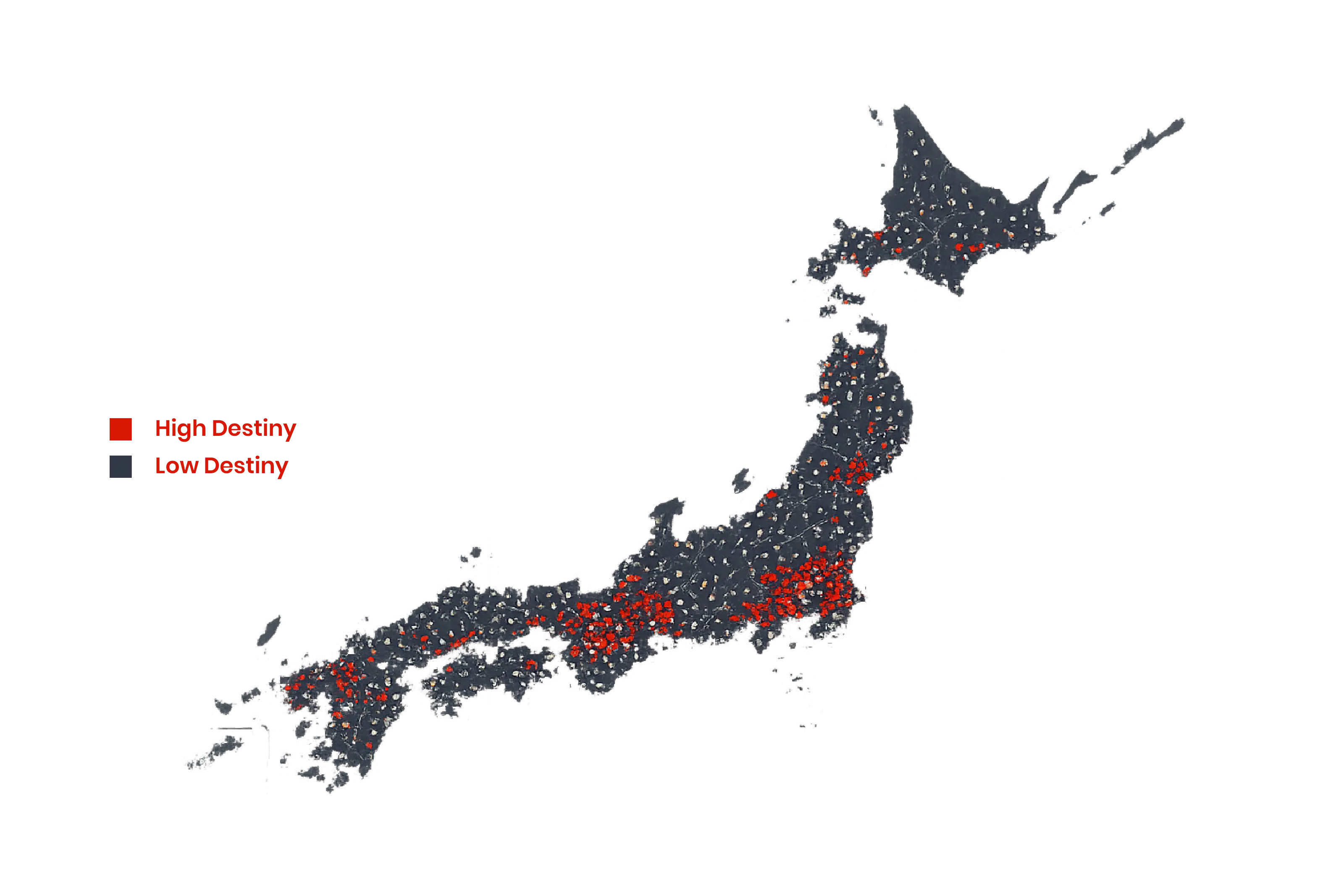
Top Prefectures by Number of Hotels
Prefectures with the Highest Concentration of Branded Hotel Chains in Japan
TOKYO
820+
Japan's largest hospitality market, supported by international tourism, corporate headquarters, business districts, entertainment hubs, and year-round domestic and global travelers.
OSAKA
610+
Driven by commercial activity, international visitors, conventions, Universal Studios tourism, and strong demand for business and leisure accommodations.
HOKKAIDO
460+
Supported by ski tourism, nature destinations, seasonal travel, luxury resorts, and increasing international visitor arrivals throughout the year.
KYOTO
390+
Historic attractions, cultural tourism, premium hospitality experiences, and growing inbound travel continue to fuel branded hotel expansion.
FUKUOKA
320+
Growing business investments, cruise tourism, regional commerce, and international connectivity encourage continuous hotel chain development.
AICHI
280+
Nagoya's manufacturing sector, automotive industries, exhibitions, and business travel generate strong demand for branded accommodations.
What is the largest hotel chain in Japan?
The APA Hotel network is the largest hotel chain in Japan in 2026.
APA Hotels
PROPERTIES
Prefectures
47
Cities
180+
Largest hotel chain operating across all Japanese prefectures with extensive urban coverage.
Toyoko Inn
PROPERTIES
Prefectures
46+
Cities
150+
One of Japan's largest business hotel operators with nationwide accessibility.
Super Hotel
PROPERTIES
Prefectures
40+
Cities
120+
Major business hotel chain offering standardized accommodations throughout Japan.
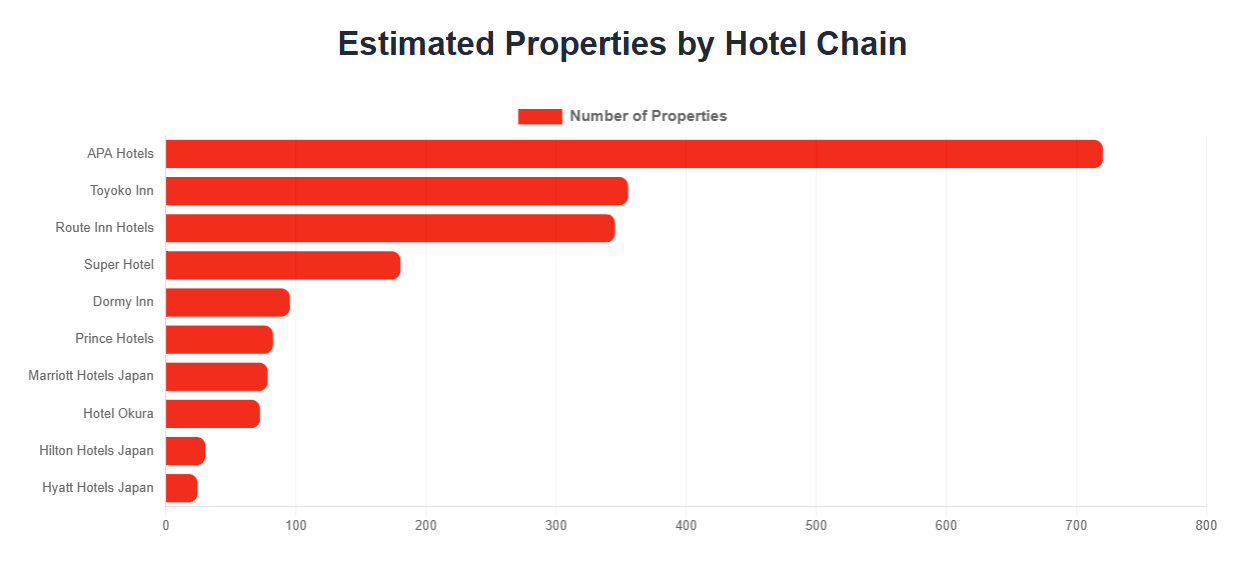
Top 10 Hotel Chains in Japan by Property Count and Geographic Presence – 2026
The table below illustrates the operational footprint of Japan's leading hotel brands based on property count, prefecture coverage, and city availability. Business-focused hotel chains such as APA Hotels, Toyoko Inn, and Super Hotel dominate through nationwide expansion and standardized accommodation models. Premium operators including Hotel Okura, Prince Hotels, Hilton, Marriott, and Hyatt concentrate on major metropolitan areas and international tourism destinations. This Japan hotel chain pricing comparison dataset helps hospitality consultants, investors, travel platforms, and market analysts evaluate competitive positioning, regional expansion strategies, and brand penetration across Japan.
| Hotel Chain | Total Properties | Availability (No. of Prefectures) | Availability (No. of Cities) | Download Dataset |
|---|---|---|---|---|
| APA Hotels | 720 | 47 prefectures | 180+ cities | Download |
| Toyoko Inn | 355 | 46+ prefectures | 150+ cities | Download |
| Super Hotel | 180 | 40+ prefectures | 120+ cities | Download |
| Route Inn Hotels | 345 | 45+ prefectures | 160+ cities | Download |
| Dormy Inn | 95 | 30+ prefectures | 60+ cities | Download |
| Prince Hotels | 82 | 22+ prefectures | 45+ cities | Download |
| Hotel Okura | 72 | 20+ prefectures | 35+ cities | Download |
| Marriott Hotels Japan | 78 | 18+ prefectures | 32+ cities | Download |
| Hilton Hotels Japan | 30 | 14 prefectures | 18+ cities | Download |
| Hyatt Hotels Japan | 24 | 12 prefectures | 15+ cities | Download |
What are the largest hotel chains in Japan in 2026?
Analysis of nationwide hotel chain expansion indicates that APA Hotels, Toyoko Inn, and Route Inn Hotels maintain the largest operational footprints across Japan. APA Hotels leads with approximately 720 properties concentrated in Tokyo, Osaka, Yokohama, and Sapporo. Toyoko Inn operates more than 355 hotels serving major transportation hubs and business districts, while Route Inn Hotels maintains an extensive regional network supporting both business and domestic leisure travel.
Top 10 Hotel Chains in Japan – 2026
Japan's hospitality landscape in 2026 is characterized by a balanced mix of business hotels, budget accommodations, luxury resorts, and internationally recognized premium brands. Business-focused operators continue expanding rapidly around railway stations, airports, and commercial districts, while luxury hotel groups strengthen their presence in major tourism and financial centers. Continuous Japan Top Hotel Chains price monitoring enables hospitality businesses to benchmark room rates, evaluate seasonal demand, and optimize pricing strategies across diverse travel markets.
Comprehensive Japan hotel chain property data scraping enables organizations to evaluate hotel distribution patterns, monitor chain expansion into emerging tourism markets, compare regional competitiveness, and identify investment opportunities. Together, the country's largest business hotel operators account for a significant share of branded accommodations, reflecting Japan's continued emphasis on standardized, technology-enabled hospitality services.

APA Hotels
Business Hotel LeaderAPA Hotels is Japan's largest domestic hotel chain, renowned for compact business accommodations, digital check-in services, and extensive coverage across metropolitan and regional markets. Its standardized operations and strategic locations near railway stations make it the preferred choice for business travelers and domestic tourists.

Toyoko Inn
Business EconomyToyoko Inn is one of Japan's most recognizable business hotel brands, offering affordable, standardized rooms with convenient access to train stations and commercial districts. The chain continues expanding to support business travelers, families, and international visitors.

Route Inn Hotels
Business & RegionalRoute Inn Hotels serves both metropolitan and regional markets by combining comfortable accommodations with business-friendly amenities. Its strong presence along major highways and industrial corridors supports corporate and transit travelers throughout Japan.

Super Hotel
Budget BusinessSuper Hotel focuses on affordable, environmentally friendly accommodations featuring smart room designs, wellness initiatives, and automated guest services. The chain attracts both domestic business travelers and value-conscious tourists.

Dormy Inn
Premium BusinessDormy Inn differentiates itself through premium business accommodations featuring natural hot springs, complimentary evening meals, and enhanced guest experiences. The brand enjoys strong demand among corporate and leisure travelers alike.

Prince Hotels
Luxury & ResortPrince Hotels operates upscale city hotels, ski resorts, golf destinations, and leisure properties across Japan. Its portfolio serves premium business travelers, international tourists, conferences, and luxury vacation experiences.

Marriott Hotels Japan
Premium InternationalMarriott Hotels maintains a growing portfolio of luxury and premium properties across Japan's major tourism destinations. Its hotels cater to international travelers seeking premium hospitality, loyalty benefits, and world-class amenities. Comprehensive hotel chain competitive analytics Japan allows investors and travel companies to benchmark Marriott alongside domestic competitors.

Hotel Okura
Luxury HeritageHotel Okura represents Japanese luxury hospitality through elegant accommodations, exceptional dining experiences, and premium guest services. Its strategically located hotels primarily serve diplomatic, business, and high-end leisure travelers.

Hilton Hotels Japan
International LuxuryHilton Hotels continues expanding its footprint in Japan by offering premium accommodations, conference facilities, and internationally recognized hospitality standards in leading business and tourism destinations.

Hyatt Hotels Japan
Luxury LifestyleHyatt Hotels provides luxury and lifestyle accommodations emphasizing personalized guest experiences, premium dining, wellness facilities, and modern business services. The chain maintains a carefully selected presence across Japan's highest-demand tourism and commercial markets.
Looking to gain deeper insights into Japan's hotel chain ecosystem for analytics or investment?
Our hospitality intelligence experts deliver continuously updated hotel location datasets, pricing intelligence, and chain performance analytics to help investors, travel platforms, consultants, and hospitality operators make faster, data-driven decisions across Japan.
Advantages of Chain-Focused Hotel Location Data
Our hospitality intelligence solutions provide comprehensive datasets that enable organizations to evaluate market opportunities, monitor competitors, and optimize hotel operations across Japan. Leveraging Hotel Chains Data Scraping, businesses can transform raw hotel information into actionable insights for expansion planning, pricing optimization, and strategic decision-making.
- Optimizing Hotel Network Performance: Detailed city- and prefecture-level intelligence helps hotel operators identify high-performing markets, evaluate competitor density, measure brand penetration, and discover underserved regions with strong growth potential. These insights support more effective operational planning and franchise expansion.
- Improving Revenue and Pricing Strategies: Travel aggregators, online booking platforms, and revenue management teams can Scrape Hotel Chains Location Data to monitor hotel availability, compare room prices, analyze seasonal demand, and implement dynamic pricing strategies that improve occupancy and maximize revenue.
- Supporting Investment and Expansion Planning: Investors, developers, and hospitality consultants gain comprehensive visibility into hotel distribution, regional saturation, tourism demand, and competitive intensity. This intelligence enables informed decisions regarding acquisitions, franchise development, market entry, and portfolio diversification.
- Delivering Regional Hospitality Intelligence: Tourism boards, destination marketers, and market research firms can evaluate hotel growth across prefectures, identify emerging travel destinations, forecast accommodation demand, and develop targeted promotional initiatives supported by reliable hospitality datasets.
| Field Name | Description |
|---|---|
| Hotel Name & Brand | Identifies the hotel property along with its parent hotel chain such as APA Hotels, Toyoko Inn, Marriott, Hilton, or Prince Hotels. |
| Location Details | Includes prefecture, city, complete address, postal code, latitude, longitude, and nearby transportation hubs for accurate mapping. |
| Property Information | Hotel category, property type, star rating, amenities, check-in/check-out details, and operational status. |
| Room & Occupancy Data | Number of rooms, room categories, occupancy estimates, booking availability, and seasonal utilization trends. |
| Pricing & Rate Information | Average room prices, weekday and weekend pricing, seasonal fluctuations, promotional offers, and revenue indicators. |
| Guest Ratings & Reviews | Overall ratings, total reviews, traveler feedback, sentiment analysis, review trends, and satisfaction metrics. |
| Brand Coverage | Hotel chain, ownership group, management company, and geographic distribution across prefectures and cities. |
| Nearby Attractions | Distance from airports, railway stations, business districts, tourist attractions, convention centers, and shopping areas. |
| Contact Information | Hotel phone number, website, email availability, and booking platform presence. |
| Operational Insights | Opening year, renovation history, chain expansion trends, operational benchmarks, and market positioning. |
Insights and Analysis
Japan's hotel industry continues to evolve through a combination of strong inbound tourism, domestic travel recovery, and sustained investment in branded accommodations. Business hotel operators remain the largest contributors to nationwide property growth, while luxury and international brands are expanding strategically within major metropolitan areas and globally recognized tourism destinations.
Advanced location intelligence enables hospitality businesses to monitor new hotel openings, identify underserved regional markets, evaluate competitive density, and benchmark pricing across different property categories. Continuous monitoring of hotel inventories and operational performance supports more accurate forecasting, improved revenue management, and data-driven investment planning.
Conclusion
Japan's hospitality industry continues to expand through sustained tourism growth, business travel demand, and increasing investment in branded accommodations across metropolitan and regional markets. Organizations leveraging comprehensive hospitality datasets can benchmark leading hotel brands, evaluate regional opportunities, monitor pricing movements, and identify emerging travel destinations with greater confidence. Integrating a Hotel Guest Review Dataset further enhances customer sentiment analysis, enabling businesses to improve guest experiences, strengthen service quality, and make informed operational decisions based on real traveler feedback.
Similarly, a robust Hotel Room Price Trends Dataset provides valuable insights into seasonal pricing fluctuations, promotional strategies, occupancy patterns, and revenue optimization across Japan's diverse hospitality market. Combined with a Real-Time Hotel Data Scraping API, stakeholders gain continuous access to updated hotel locations, room availability, pricing intelligence, and competitive benchmarks, empowering faster, data-driven decisions for expansion planning, investment analysis, and long-term success in Japan's evolving hotel industry.