Scrape Largest Hotels Chains in Australia in 2026 – Revenue, Pricing Trends, and Guest Satisfaction
This report provides a detailed analysis of Australia’s hotel sector in 2026, covering city-level distribution, occupancy trends, pricing patterns, guest satisfaction, and actionable insights for strategic decision-making.
Introduction
Australia’s hospitality industry is entering a transformative phase in 2026, fueled by international tourism recovery, growing domestic travel, and increased investment in urban and regional infrastructure. Organizations are increasingly Scrape Largest hotels chains in Australia in 2026 to monitor geographic distribution, operational density, and performance trends. Advanced solutions such as a Real-Time Hotel Data Scraping API enable continuous tracking of hotel openings, closures, pricing trends, and occupancy, supporting strategic decision-making for investors, hotel operators, and tourism agencies.
Through Australia Hotel chain data extraction, businesses and analysts gain actionable insights on city-level penetration, brand density, and competitor activity. This report focuses on the largest hotel chains operating in Australia in 2026, covering major metropolitan areas, high-demand leisure destinations, and emerging hospitality hubs.
4,950+
Hotels Tracked
85+
Hotel Chains
220+
Cities Covered
Top States by Number of Hotels
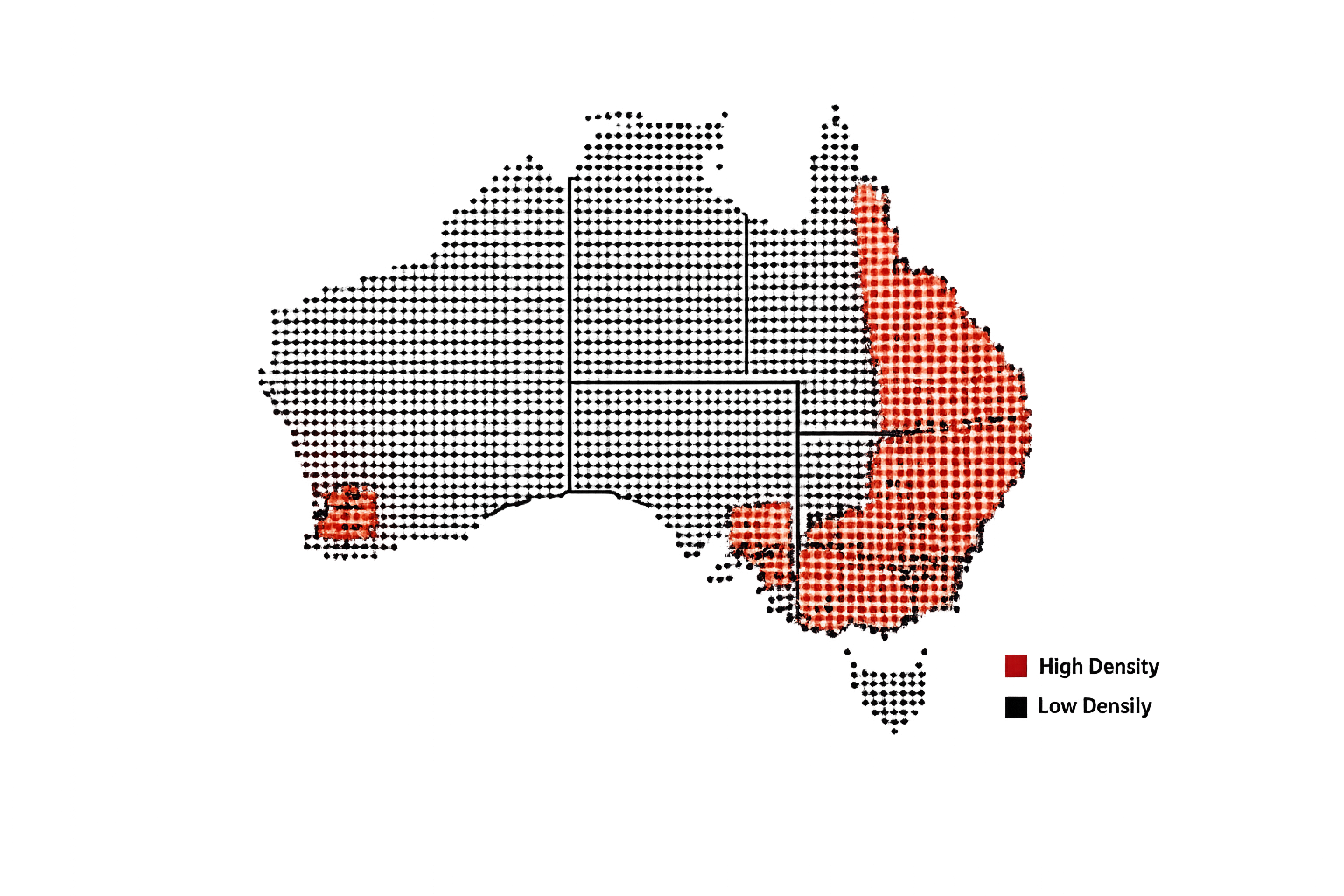
States with the highest concentration of branded hotel chains in Australia in 2026:
NEW SOUTH WALES
1,200++
Sydney, Newcastle, Wollongong; strong business & tourism demand across metropolitan and regional areas.
VICTORIA
950+
Melbourne, Geelong, Ballarat; cultural tourism, corporate travel, and high-value event-driven occupancy.
QUEENSLAND
880+
Brisbane, Gold Coast, Cairns; coastal leisure, resort expansion, and international tourism markets.
WESTERN AUSTRALIA
420+
Perth, Broome; mining-sector demand, conferences, and corporate travel opportunities.
SOUTH AUSTRALIA
260+
Adelaide, Barossa Valley; festivals, wine tourism, and regional business travel.
AUSTRALIAN CAPITAL TERRITORY
140+
Canberra; government, diplomatic, and policy-driven travel supporting steady hotel demand.
What is the largest hotel chain in Australia?
Accor Hotels is the largest hotel chain in Australia in 2026.
Accor Hotels
PROPERTIES
States
All states
Cities
120+
Largest hotel chain across all Australian states and 120+ cities
Quest Apartment Hotels
PROPERTIES
States
7
Cities
70+
Largest serviced apartment chain across 7 key states and 70+ cities
IHG Hotels & Resorts
PROPERTIES
States
7
Cities
60+
Major international chain with presence in 7 states and 60+ cities
Hilton Hotels & Resorts
PROPERTIES
States
6
Cities
40+
Luxury hotel chain operating in 6 states and 40+ cities
Mantra Group
PROPERTIES
States
6
Cities
55+
Mid-scale hotel chain with strong presence in 6 states and 55+ cities
Top 10 Hotel Chains in Australia by Property Count and Geographic Presence - 2026
Analysis of the Australian hotel market in 2026 indicates that Accor Hotels leads in property count and geographic reach. Other prominent chains include Quest Apartment Hotels, IHG Hotels & Resorts, Hilton, and Mantra Group, each with strategic city-level and regional penetration. Access to Hotel Data Scraping Services enables data-driven decisions for investment and operational planning.
| Hotel Chain | Total Properties | States Covered | Cities Covered |
|---|---|---|---|
| Accor Hotels | 1,050 | All states | 120+ cities |
| IHG Hotels & Resorts | 420 | 7 | 60+ cities |
| Hilton Hotels & Resorts | 210 | 6 | 40+ cities |
| Marriott International | 185 | 6 | 35+ cities |
| Mantra Group | 350 | 6 | 55+ cities |
| Quest Apartment Hotels | 380 | 7 | 70+ cities |
| Oaks Hotels & Resorts | 170 | 5 | 30+ cities |
| Hyatt Hotels | 95 | 5 | 20+ cities |
| Best Western Australia | 240 | 7 | 65+ cities |
| TFE Hotels | 150 | 6 | 28+ cities |
What are the largest hotel chains in Australia in 2026?
Scraping hotel chain locations in Australia reveals that Accor Hotels, Quest Apartment Hotels, and IHG Hotels & Resorts are the largest hotel chains in Australia in 2026 based on the number of properties. Accor Hotels leads with 1,050 properties across Sydney, Melbourne, and Brisbane. Quest Apartment Hotels has 380 properties in Melbourne, Sydney, and Brisbane. IHG Hotels & Resorts operates 420 properties across Sydney, Melbourne, and Gold Coast. Combined, these three chains make up over 50% of the top 10 largest hotel chains in Australia.
Top 10 Hotel Chains in Australia – 2026
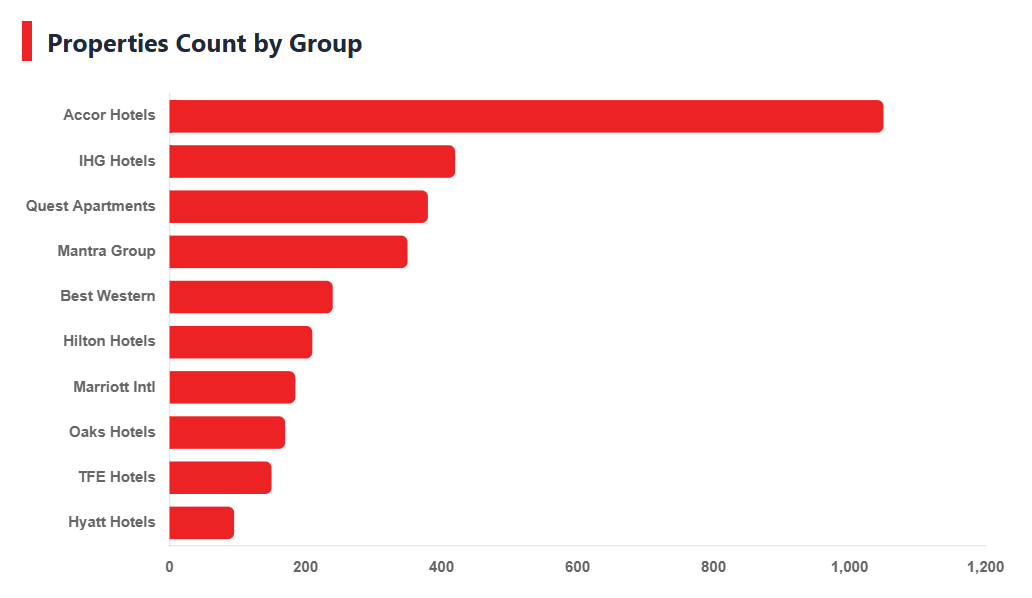
In 2026, Australia’s hotel sector demonstrates a mix of international, mid-scale, and boutique operators. Mid-scale and serviced apartment chains dominate property counts, while luxury operators focus on high-value urban and resort markets. Data derived from the Australia hotel chain locations dataset is critical for market research, competitive benchmarking, and portfolio optimization.

Accor Hotels
Global / Luxury & Mid-ScaleAccor Hotels is Australia’s largest hotel chain, offering both luxury and mid-scale properties across business and leisure destinations.
Quest Apartment Hotels
Mid-Scale / Serviced ApartmentsQuest Apartment Hotels provides extended-stay solutions in major cities, targeting corporate, leisure, and transit travelers.
IHG Hotels & Resorts
Luxury / BusinessIHG Hotels & Resorts operates internationally recognized hotels in Australia, serving business and premium leisure travelers.

Hilton Hotels & Resorts
LuxuryHilton focuses on premium properties in high-demand urban and resort locations.
.svg)
Mantra Group
Mid-Scale / LeisureMantra Group operates primarily in coastal and tourist-heavy locations, catering to leisure and business travelers.

Best Western Australia
Mid-Scale / RegionalBest Western targets regional and suburban markets with standardized amenities and business traveler services.

Marriott International
Luxury / BusinessMarriott maintains a selective presence in urban centers, offering luxury accommodations and premium amenities.

Oaks Hotels & Resorts
Serviced Apartments / Mid-ScaleOaks focuses on city apartments and suburban properties for extended-stay travelers.
Hyatt Hotels
LuxuryHyatt provides high-end accommodations in strategic urban locations and leisure destinations.

TFE Hotels
Boutique / Mid-ScaleTFE Hotels operates lifestyle and boutique hotels, combining business convenience with leisure appeal.
Want to make smarter decisions in Australia’s hospitality sector?
Unlock real-time hotel insights to enhance occupancy, revenue, and market strategy effectively.
Advantages of Chain-Focused Hotel Location Data
Structured datasets allow stakeholders to optimize operational and investment decisions by combining occupancy, pricing, and guest feedback metrics. These city-level insights support hotel chain location tracking in Australia, enabling informed decisions on site selection, expansion, and revenue management. Key advantages include:
- Optimizing Expansion Strategies: Identify high-demand urban and regional areas using detailed property-level data, enabling hotel chains to strategically plan new locations, maximize market penetration, and target growth opportunities effectively.
- Enhancing Revenue Management: Leverage occupancy trends, seasonal fluctuations, and event-driven data to dynamically adjust room pricing, maximize revenue, and ensure optimal performance across business and leisure travel markets.
- Supporting Investment Decisions: Analyze market saturation, property performance, and revenue potential to guide investors and franchisees in making informed decisions regarding acquisitions, expansions, and portfolio diversification across cities.
- Driving Competitive Intelligence: Use Hotel Data Intelligence to monitor rival hotel chains, assess service quality metrics, benchmark competitor performance, and develop strategies to maintain a competitive edge in the hospitality sector.
- Enhancing Guest Experience: Examine Hotel Guest Review Dataset to evaluate service quality, understand traveler preferences, identify improvement areas, and benchmark guest satisfaction, ultimately boosting brand loyalty and operational excellence.
| Field Name | Description |
|---|---|
| Hotel Name & Brand | Identifies the specific hotel and its chain brand. |
| Location Details | Includes city, state, full address, and GPS coordinates. |
| Room & Occupancy Data | Total rooms, occupancy rates, seasonal booking patterns. |
| Pricing & Rate Information | Average room rates, dynamic pricing, competitor rates. |
| Guest Ratings & Reviews | Aggregated review scores, total reviews, and feedback metrics. |
Insights and Analysis
The Australian hotel landscape in 2026 demonstrates distinct trends in property distribution and operational focus. Luxury hotel brands are primarily concentrated in central business districts and premium leisure destinations, targeting high-value travelers. Serviced apartment chains continue to expand in suburban business districts, catering to extended-stay corporate and transit guests. Regional markets, particularly coastal areas in Queensland and Western Australia, witness significant resort-focused growth driven by tourism and leisure demand. Real-time insights enabled by the Australia Hotel Chain Data Scraping API allow hotel operators to respond immediately to occupancy fluctuations, seasonal trends, and market events. Furthermore, chains that integrate advanced analytics with Hotel Room Price Trends Dataset data optimize revenue, enhance pricing strategies, and maintain a competitive edge in Australia’s dynamic hospitality sector.
Conclusion
Australia’s hospitality market in 2026 demonstrates strong growth, diversification, and a shift toward technology-driven operational efficiency. Leveraging web scraping Hotel chain listings Australia, organizations can perform predictive analytics and benchmark chain-level performance. Using Real time Australia Hotel chain data API allows businesses to optimize site selection and monitor occupancy trends efficiently. Integration with Hotel Room Price Trends Dataset supports dynamic pricing, revenue management, and investment strategy decisions. Structured datasets provide actionable insights into expansion planning, guest satisfaction, and competitive positioning. These tools enable stakeholders to make data-driven decisions and maintain a strong market presence, ensuring a sustainable advantage in Australia’s evolving hotel ecosystem.