How Scraped Hotel Demand Data Surfaced a ₹40Cr Hotel Investment Deal
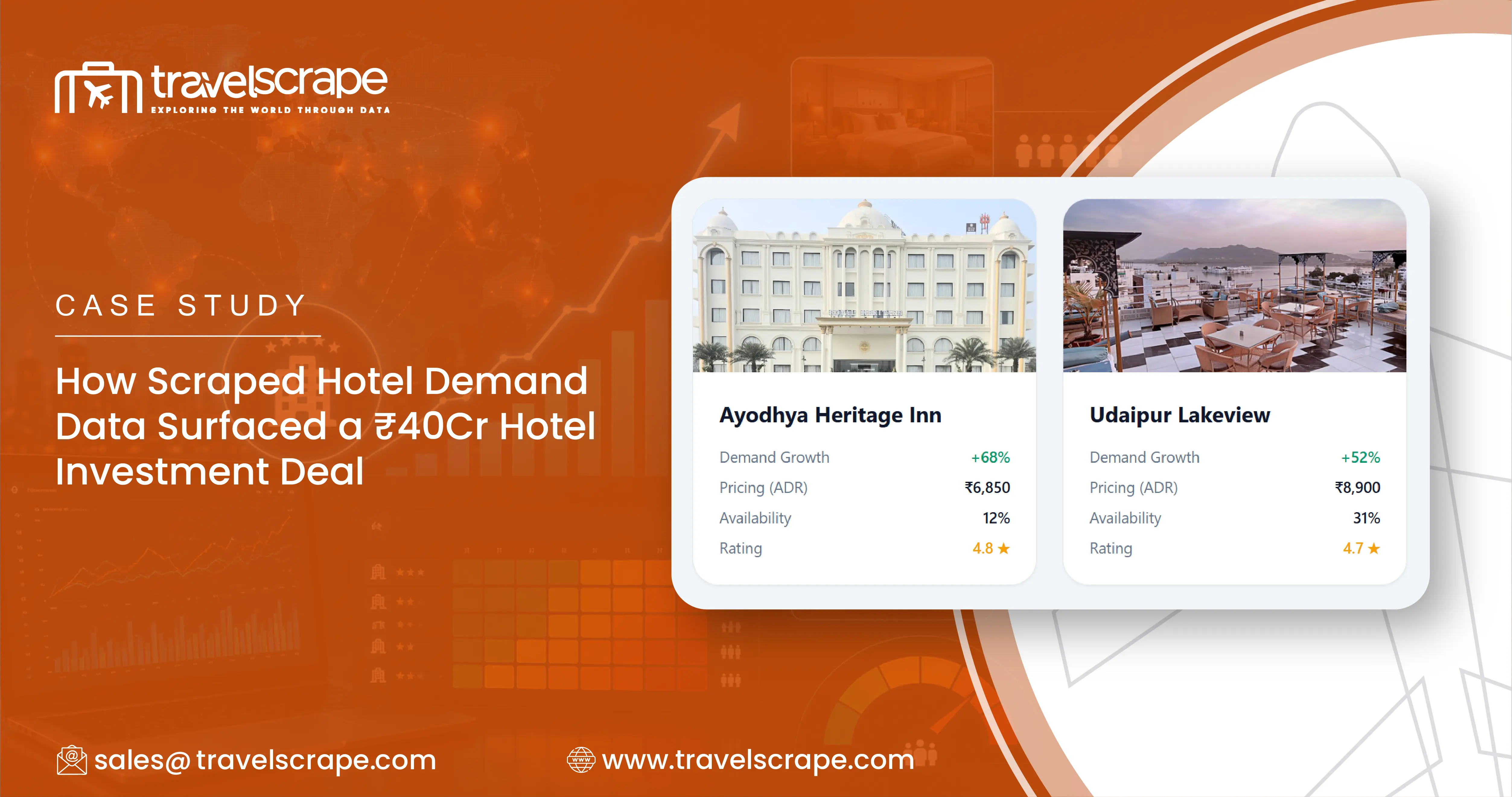
Case study summary. An investment firm used scraped hotel demand data from Travel Scrape to identify three undervalued markets and validate a hotel acquisition — helping close a ₹40Cr deal in six weeks. Pricing and availability signals revealed demand strength weeks before it appeared in official figures or competitor analysis.
This case study shows how hotel demand data turned scattered OTA prices into an investment edge. Details are anonymised; figures illustrative.
The client: an investment firm hunting for an edge
The client was an investment firm evaluating hotel and hospitality assets in India. In a competitive market, their challenge was information: by the time occupancy and demand showed up in official statistics or broker decks, the opportunity was priced in. They needed a leading indicator — hotel demand data that revealed strength before the market noticed.
The challenge: official data lags the opportunity
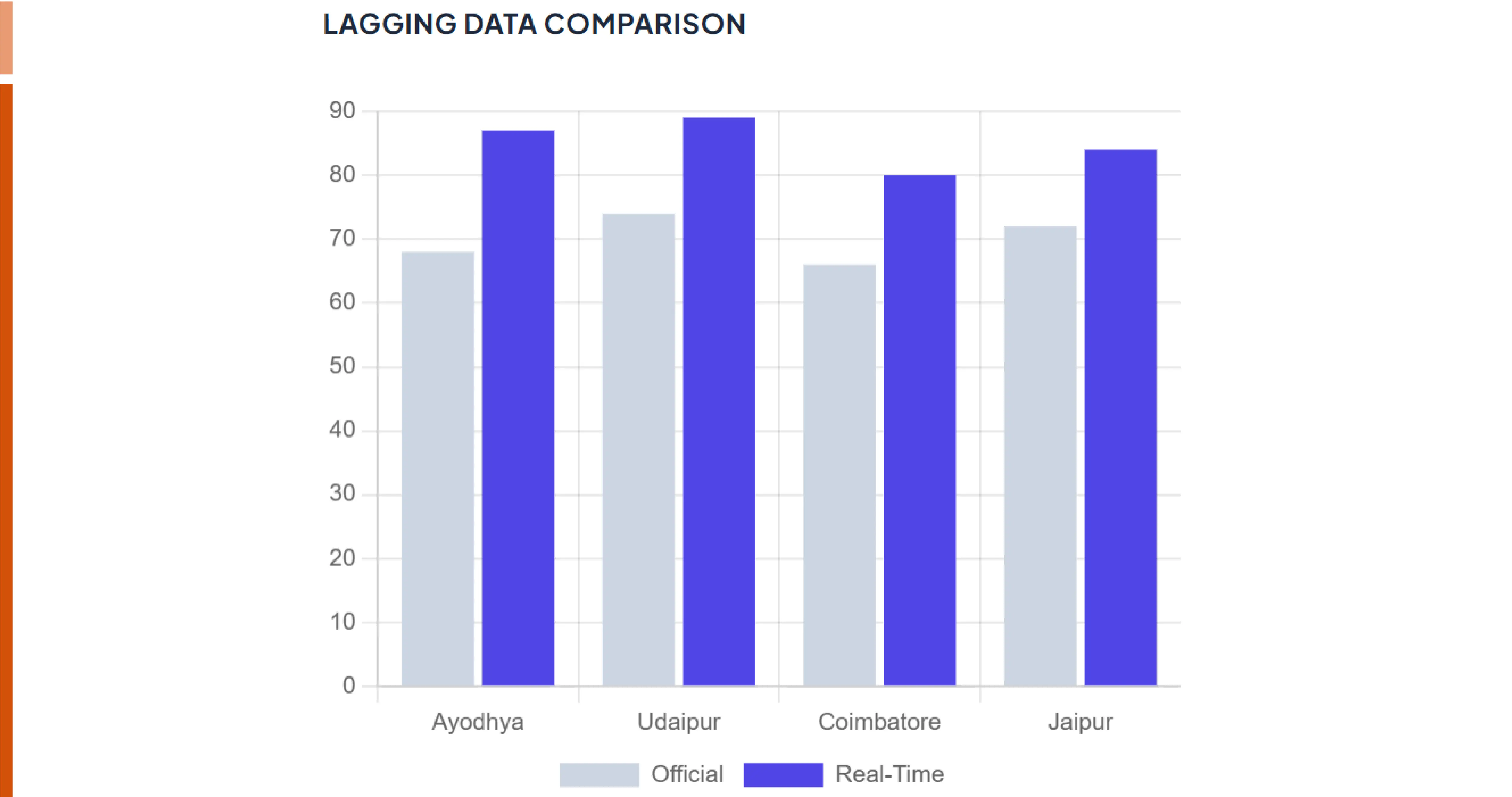
Traditional sources — tourism boards, industry reports, broker estimates — are slow and backward-looking. They describe what happened last quarter, not what’s happening now. For an investor, acting on lagging data means competing for already-obvious deals at already-bid-up prices.
- Slow signals — official occupancy data lags by months.
- Coarse geography — national figures hide city-level opportunities.
- No leading indicator — nothing to flag demand before competitors saw it.
Why the firm chose Travel Scrape hotel demand data
The firm engaged Travel Scrape for scraped, city-level hotel demand data — pricing, availability and sold-out patterns — with 12 months of history. The deciding factors:
- Leading indicator — live pricing and availability move before official stats.
- City-level granularity — surface Tier-2/Tier-3 opportunities national data hides.
- 12-month history — distinguish a real trend from seasonal noise.
- Custom research — Travel Scrape scoped the exact markets under evaluation.
The solution: demand signals from scraped OTA data
Travel Scrape delivered a custom hotel demand dataset across the firm’s candidate markets, combining ADR trends, availability tightness and sold-out frequency into a clear demand read.
{
  "market": "Tier-2 city A",
  "adr_trend_yoy": "+19%",
  "sold_out_rate": "high",
  "booking_lead_time": "lengthening",
  "signal": "undervalued_rising_demand"
}
Three markets stood out: rising ADR, tightening availability and lengthening booking lead times — a classic signature of demand outpacing supply, not yet reflected in asking prices.
The results: a ₹40Cr deal in six weeks
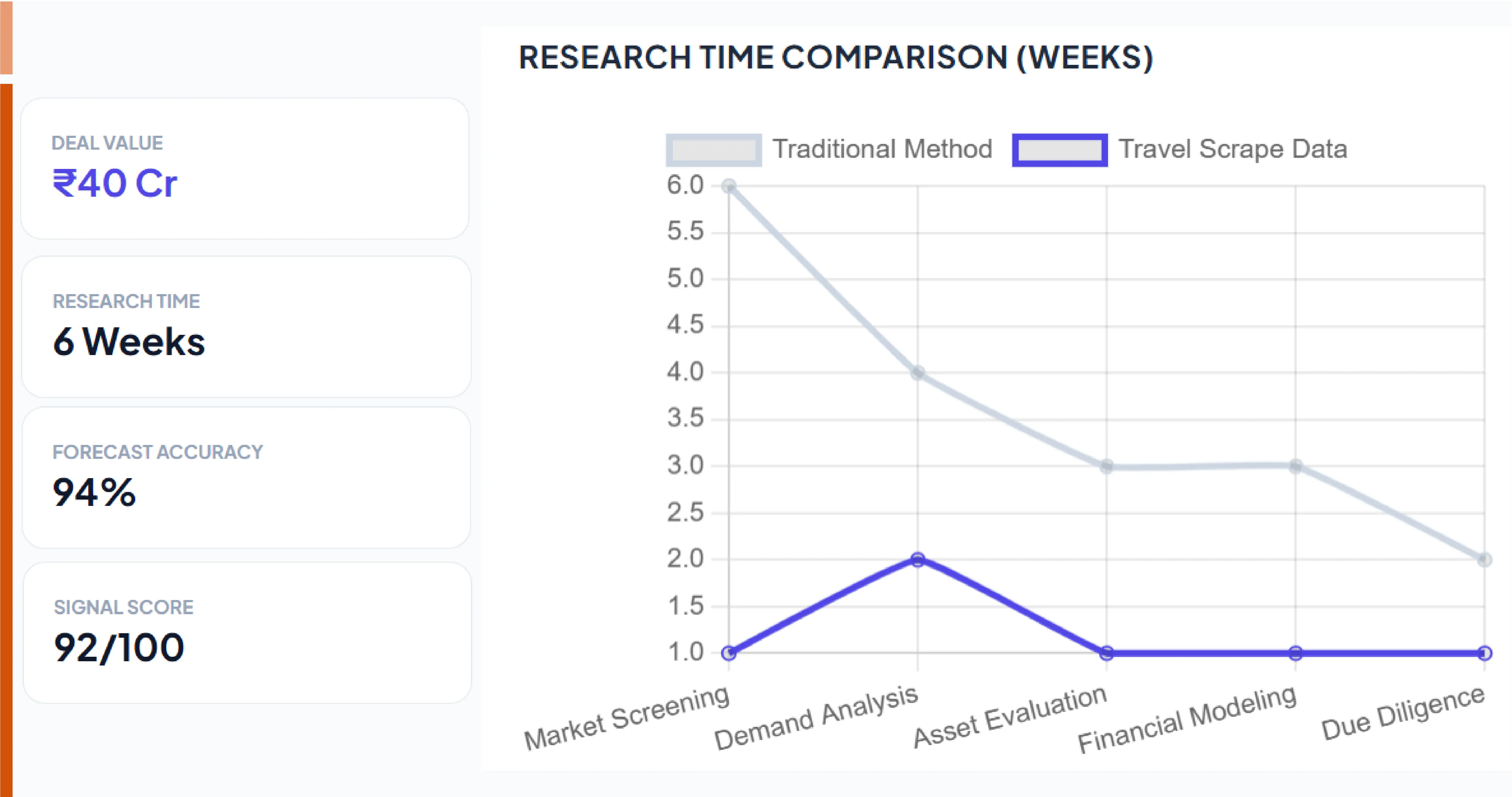
| Metric | Before | With Travel Scrape data | Outcome |
|---|---|---|---|
| Markets identified | Obvious, bid-up | 3 undervalued, early | — |
| Research time | Months (manual) | 6 weeks | — |
| Decision basis | Lagging reports | Live demand signals + 12mo history | — |
| Outcome | — | — | ₹40Cr deal closed |
By reading hotel demand data as a leading indicator, the firm moved on a market while it was still undervalued, validated the thesis with 12 months of scraped history, and closed a ₹40Cr deal in six weeks — ahead of competitors still waiting on official figures.
“The demand forecasting data helped us identify 3 undervalued hotel markets. We closed a ₹40Cr deal using insights Travel Scrape surfaced weeks before competitors noticed.”
Key takeaways for investors
- Scraped data is a leading indicator — it moves before official statistics.
- Granularity finds alpha — city-level signals reveal what national data hides.
- History separates signal from noise — 12 months turns a blip into a trend.
Frequently asked questions
Find your next deal in the data
Tell Travel Scrape which markets you’re evaluating. Get a free sample hotel demand dataset within 24 hours.
Unlock the Full Report
Enter your details to access premium pricing intelligence insights