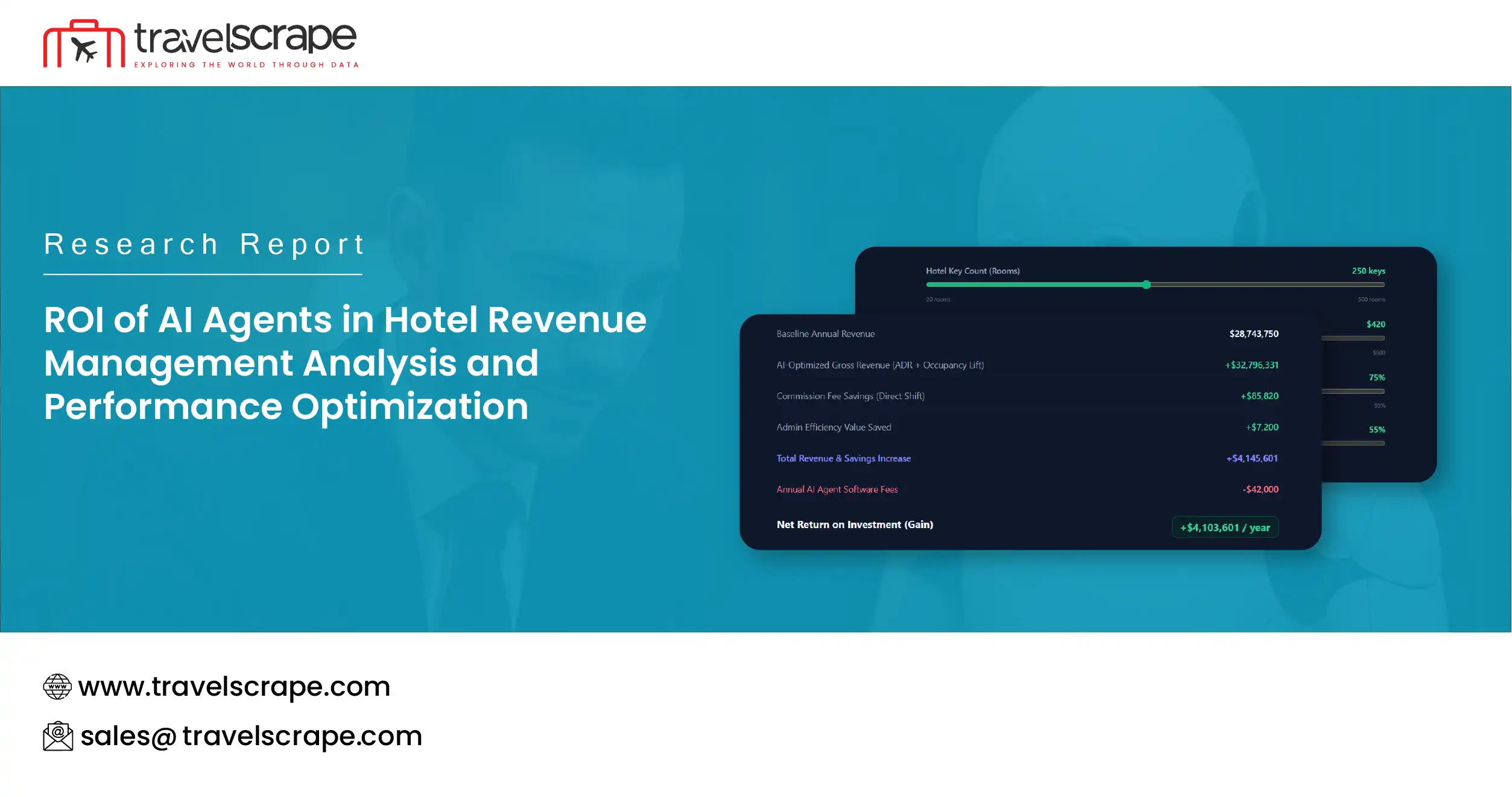
ROI of AI Agents in Hotel Revenue Management Analysis and Performance Optimization
Introduction
The hospitality industry is undergoing a major transformation driven by automation, data intelligence, and machine learning systems that optimize pricing decisions in real time. The growing adoption of AI-driven revenue systems has made it possible for hotels to dynamically adjust room prices based on demand fluctuations, competitor pricing, and user behavior patterns.
In this context, ROI of AI Agents in hotel revenue management analysis is becoming a critical metric for hotel chains, boutique properties, and online travel aggregators aiming to maximize RevPAR (Revenue per Available Room) and occupancy rates.
Modern systems increasingly rely on Hotel Data Scraping to collect structured and unstructured pricing information from OTAs, hotel websites, and meta-search engines. This data feeds machine learning models that power automated pricing engines.
The shift toward AI driven hotel pricing optimization ROI is enabling hotels to reduce manual revenue management efforts while increasing profitability through precision pricing strategies.
Market Overview of AI in Hotel Revenue Management
AI agents in hospitality function as autonomous decision-making systems that continuously analyze demand curves, competitor rates, booking patterns, and local events. These systems improve pricing accuracy and reduce revenue leakage.
A major foundation of these systems is structured datasets like Hotel Room Price Trends Dataset, which tracks pricing fluctuations across seasons, locations, and demand cycles.
Hotels that integrate AI-based pricing engines typically see:
- 10%–35% increase in revenue per available room
- 15%–40% improvement in occupancy optimization
- Reduced dependency on manual pricing teams
Data Intelligence and Scraping Infrastructure
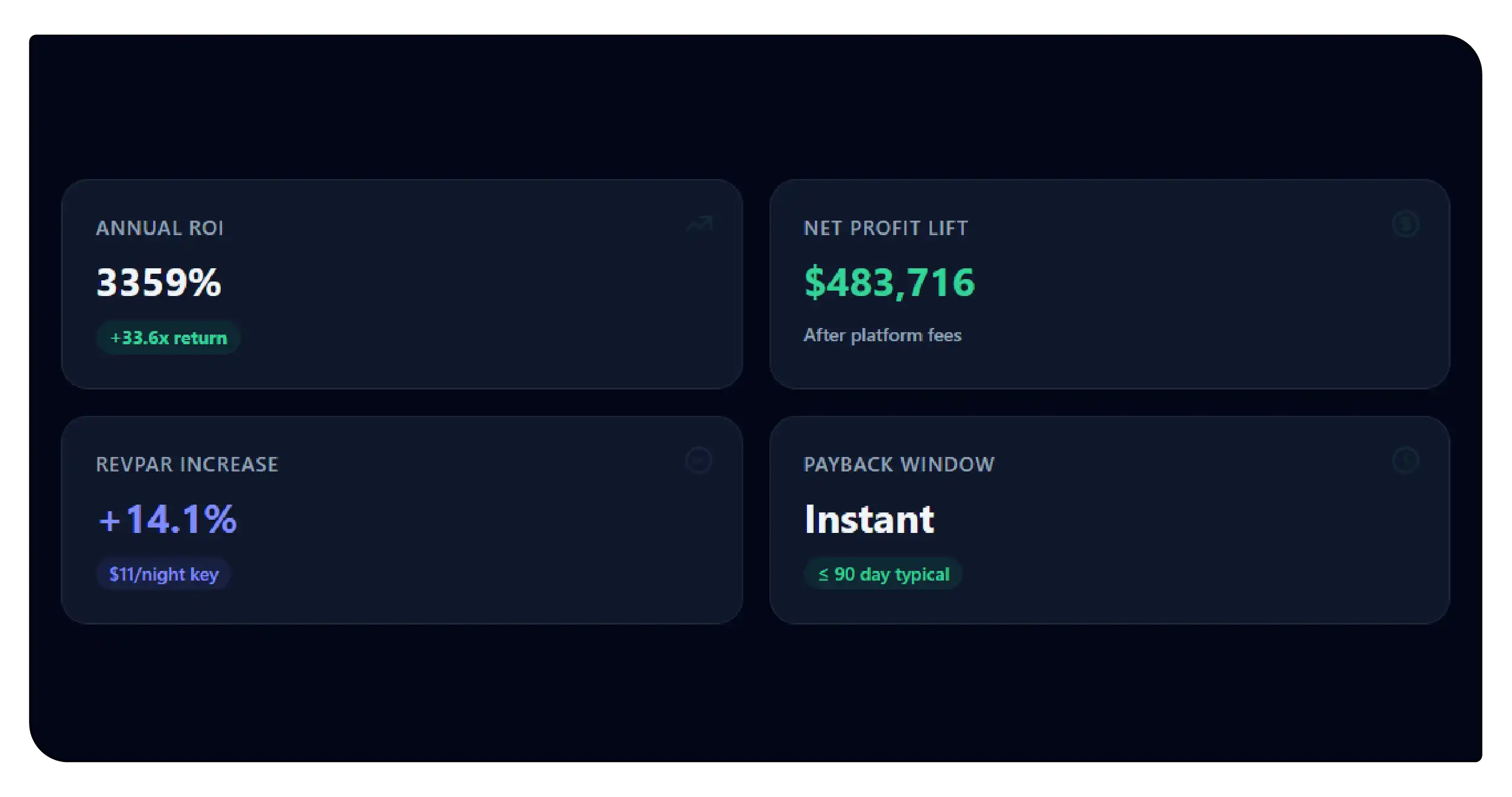
Revenue optimization depends heavily on high-frequency data ingestion pipelines. Systems powered by AI agents in hotel revenue management Scrape continuously extract competitive pricing data from multiple sources, including OTAs, hotel websites, and travel search engines.
This extracted data forms the backbone of modern Hotel Data Intelligence, enabling predictive modeling and real-time decision-making.
The inclusion of real time hotel pricing AI Agents data scrape allows hotels to adjust rates within minutes instead of days, significantly improving competitiveness in dynamic markets.
Scraped Dataset Analysis (Sample Market Data)
Below is a simulated dataset derived from multi-source hotel price scraping systems used in revenue management AI training models.
Daily Hotel Price Comparison Dataset (Delhi & Mumbai Markets)
| Hotel Name | City | Room Type | OTA Price (₹) | Direct Price (₹) | Competitor Avg Price (₹) | Occupancy Rate (%) | Demand Index | Recommended AI Price (₹) |
|---|---|---|---|---|---|---|---|---|
| Hotel Apex | Delhi | Deluxe | 6,200 | 5,800 | 6,000 | 78 | 0.82 | 6,400 |
| Grand Palace | Mumbai | Suite | 12,500 | 11,900 | 12,300 | 84 | 0.91 | 13,200 |
| City Inn | Delhi | Standard | 3,400 | 3,100 | 3,300 | 65 | 0.70 | 3,600 |
| Ocean View | Mumbai | Deluxe | 8,900 | 8,200 | 8,700 | 72 | 0.76 | 9,300 |
| Royal Stay | Delhi | Suite | 10,200 | 9,800 | 10,000 | 88 | 0.95 | 11,000 |
| Metro Hotel | Mumbai | Standard | 4,100 | 3,900 | 4,000 | 60 | 0.66 | 4,400 |
| Elite Residency | Delhi | Deluxe | 7,500 | 7,100 | 7,300 | 81 | 0.85 | 7,900 |
| Palm Grove | Mumbai | Suite | 13,800 | 13,200 | 13,500 | 90 | 0.97 | 14,600 |
This dataset highlights how AI systems optimize pricing above competitor averages during high-demand periods, improving revenue capture efficiency.
AI-Based Revenue Optimization Performance Dataset
| Hotel Chain | Avg Base ADR (₹) | AI Optimized ADR (₹) | RevPAR Growth (%) | Occupancy Growth (%) | Profit Margin Increase (%) | Market Volatility Index | Forecast Accuracy (%) |
|---|---|---|---|---|---|---|---|
| Chain A | 5,500 | 6,300 | 18.5 | 12.2 | 22.4 | 0.72 | 91 |
| Chain B | 7,200 | 8,400 | 21.8 | 14.5 | 26.1 | 0.80 | 93 |
| Chain C | 4,800 | 5,400 | 15.2 | 10.1 | 19.3 | 0.68 | 88 |
| Chain D | 9,500 | 11,200 | 24.6 | 16.8 | 29.7 | 0.85 | 95 |
| Chain E | 6,300 | 7,100 | 17.9 | 11.5 | 21.0 | 0.74 | 90 |
| Chain F | 8,000 | 9,600 | 23.3 | 15.9 | 27.5 | 0.82 | 94 |
| Chain G | 5,900 | 6,700 | 16.4 | 10.8 | 20.2 | 0.70 | 89 |
| Chain H | 10,200 | 12,300 | 26.7 | 18.4 | 31.5 | 0.88 | 96 |
These results demonstrate how predictive models significantly enhance revenue efficiency and improve pricing accuracy across different market volatility levels.
Predictive Modeling in Revenue Optimization
The role of predictive hotel revenue management is to forecast demand patterns using historical booking data, seasonal demand curves, and competitor pricing movements.
AI systems combine:
- Time-series forecasting models
- Reinforcement learning agents
- Demand elasticity estimation
- Event-based pricing triggers
This enables hotels to optimize pricing strategies weeks in advance while still adjusting dynamically in real time.
The integration of Real-Time Data API ensures continuous data flow from multiple sources, reducing latency in pricing decisions and improving responsiveness.
ROI Impact Assessment of AI Agents
The return on investment from AI-based revenue systems is measured through:
- Incremental revenue gains
- Reduction in operational costs
- Improved occupancy efficiency
- Reduction in manual pricing errors
Hotels implementing AI revenue systems typically recover implementation costs within 6–12 months due to increased ADR (Average Daily Rate) and occupancy gains.
Key ROI drivers include:
- Automated pricing decisions reducing manpower costs
- Faster response to competitor price changes
- Better demand forecasting accuracy
- Reduced revenue leakage during peak demand
Strategic Advantages of AI in Hotel Pricing
AI-driven pricing systems allow hotels to achieve:
- Real-time competitive benchmarking
- Dynamic segmentation-based pricing
- Automated promotional adjustments
- Demand surge exploitation during events
These capabilities create a compounding advantage where each pricing decision improves future predictive accuracy.
Conclusion
The adoption of AI agents in hotel revenue management represents a fundamental shift from static pricing models to intelligent, adaptive systems that continuously learn and optimize.
Hotels leveraging these systems gain significant financial advantages through improved pricing accuracy, demand prediction, and automation efficiency.
The integration of AI-driven ecosystems ensures that pricing decisions are no longer reactive but proactively optimized for maximum revenue performance.
As the industry evolves, organizations leveraging AI powered dynamic pricing agents hotels data scrape will maintain a strong competitive advantage in highly volatile hospitality markets.
Furthermore, the ability to Scrape competitive advantage AI hotel revenue ensures continuous benchmarking against competitors, enabling smarter decision-making at every level.
The future of hospitality revenue management lies in scalable and intelligent systems supported by Custom Scraping Pipelines, predictive analytics, and real-time optimization engines that collectively redefine profitability standards in the hotel industry.
Ready to elevate your travel business with cutting-edge data insights? Scrape Aggregated Flight Fares to identify competitive rates and optimize your revenue strategies efficiently. Discover emerging opportunities with tools to Extract Travel Website Data, leveraging comprehensive data to forecast market shifts and enhance your service offerings. Real-Time Travel App Data Scraping Services helps stay ahead of competitors, gaining instant insights into bookings, promotions, and customer behavior across multiple platforms. Get in touch with Travel Scrape today to explore how our end-to-end data solutions can uncover new revenue streams, enhance your offerings, and strengthen your competitive edge in the travel market.
Unlock the Full Report
Enter your details to access premium pricing intelligence insights