POI Intelligence Improves User Decision-Making in Travel Apps Through Advanced Location Analytics
Introduction
The travel industry has experienced a remarkable digital transformation over the last decade. Modern travelers increasingly depend on mobile applications for destination discovery, itinerary planning, accommodation booking, transportation navigation, restaurant recommendations, and local activity exploration. As competition among travel platforms intensifies, delivering accurate, relevant, and personalized recommendations has become a critical success factor. This is where POI Intelligence Improves User Decision-Making in Travel Apps by providing deeper insights into destinations, attractions, and traveler preferences.
The integration of Real-Time Travel App Data Scraping technologies enables travel platforms to collect continuously updated information regarding attractions, restaurants, hotels, transportation facilities, visitor trends, operating hours, and user-generated reviews. By leveraging these dynamic datasets, travel applications can present travelers with accurate and timely information that supports better decision-making throughout their journeys.
Point of Interest (POI) intelligence refers to the collection, enrichment, analysis, and utilization of location-based data associated with physical places. These points of interest include landmarks, museums, shopping centers, airports, train stations, restaurants, hotels, cultural attractions, parks, entertainment venues, and other locations relevant to travelers. When combined with artificial intelligence and predictive analytics, POI intelligence becomes a powerful tool for enhancing traveler experiences and improving travel application performance.
Understanding POI Intelligence in Travel Applications
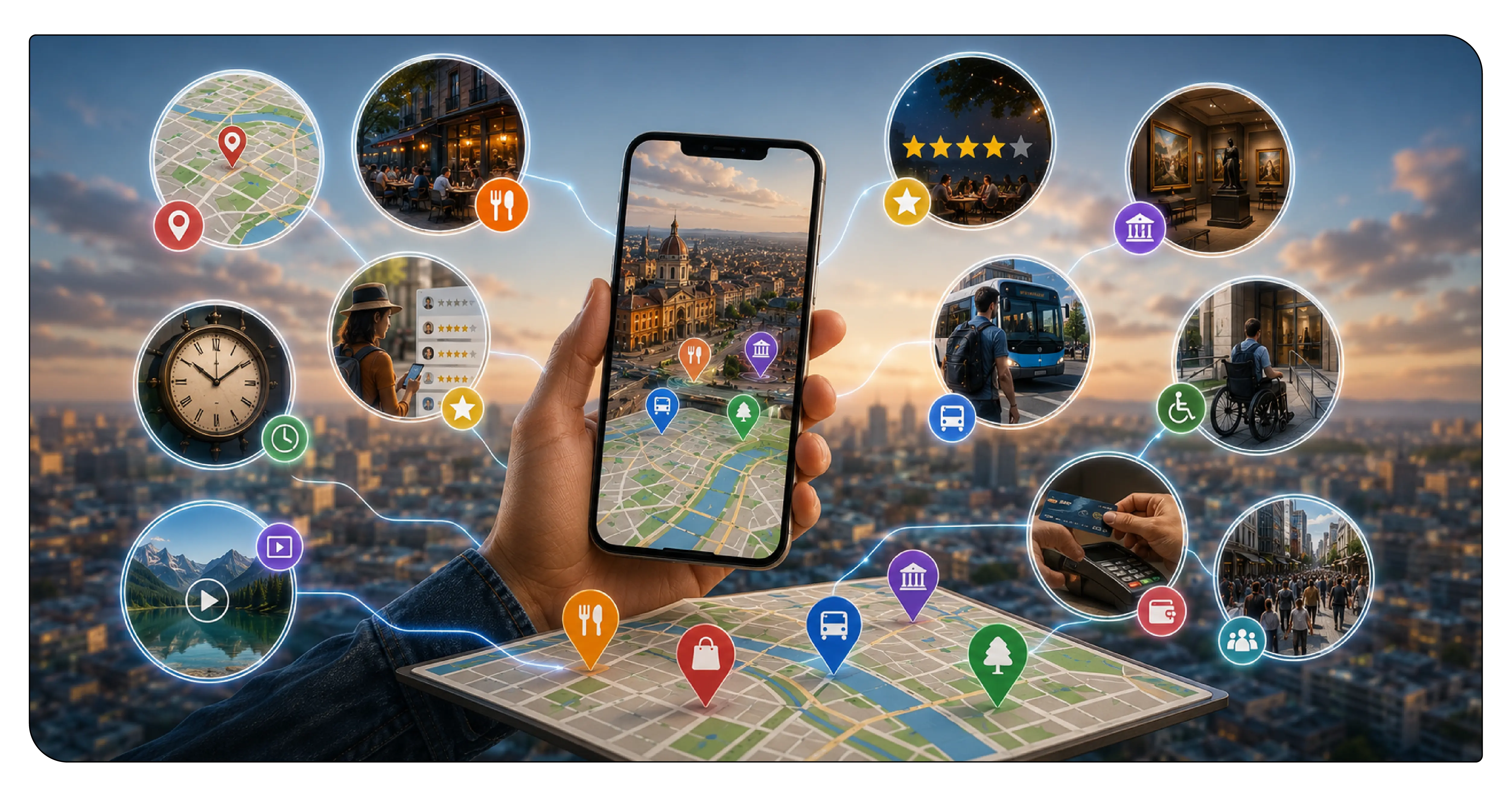
POI intelligence serves as the foundation of many modern travel applications. Every destination contains thousands of points of interest that travelers may want to explore. Simply displaying these locations on a map is no longer sufficient. Travelers expect contextual recommendations based on their interests, budget, travel goals, location, and available time.
Travel applications gather information from various sources including mapping platforms, review websites, tourism boards, transportation networks, booking systems, social media platforms, and user-generated content. The process of using points of interest data to enhance travel data scrape initiatives allows travel companies to create highly detailed destination databases that improve recommendation accuracy and user satisfaction.
The collected information typically includes:
- Geographic coordinates
- Business categories
- Operating hours
- Visitor ratings
- Customer reviews
- Photos and videos
- Accessibility information
- Transportation connectivity
- Pricing indicators
- Popularity metrics
By consolidating these data points, travel applications can provide travelers with comprehensive information before and during their trips.
Role of Travel Data Intelligence in Personalized Recommendations
Modern travelers seek personalized experiences rather than generic destination suggestions. Through advanced Travel Data Intelligence, travel platforms analyze historical travel behavior, search patterns, booking activity, and location interactions to understand user preferences.
For example, a traveler interested in historical landmarks may receive recommendations for museums, heritage sites, and cultural attractions. Another traveler interested in culinary experiences may receive restaurant recommendations based on cuisine preferences, ratings, and proximity.
Personalization engines evaluate multiple factors simultaneously, including:
| Personalization Factor | Impact on Recommendations | Data Source |
|---|---|---|
| Travel History | Previous destinations visited | Booking records |
| Search Behavior | Interests and preferences | App interactions |
| Budget Range | Suitable attraction suggestions | Transaction data |
| Current Location | Nearby recommendations | GPS systems |
| Trip Duration | Itinerary optimization | User input |
| Seasonal Preferences | Weather-based recommendations | Historical data |
| Review Engagement | Preferred experiences | User activity |
| Group Type | Family, solo, or business travel | Profile information |
| Transportation Mode | Route optimization | Mobility data |
| Time Availability | Schedule planning | Itinerary data |
These insights help travel applications provide highly relevant recommendations that improve traveler satisfaction and engagement.
Travel Apps Powered by POI Location Analytics
The rise of travel apps powered by POI location analytics has significantly changed how travelers interact with destinations. Instead of manually researching attractions, users can now access intelligent recommendations generated from sophisticated location-based algorithms.
Location analytics evaluates factors such as:
- Distance between attractions
- Visitor popularity trends
- Peak visitation periods
- Accessibility conditions
- Transportation availability
- Traveler demographics
- Local event schedules
This enables travel applications to create dynamic travel experiences tailored to individual needs. For example, if a traveler is located near a city center during lunchtime, the application may recommend nearby restaurants with high ratings and shorter wait times.
Location analytics also supports geofencing capabilities that trigger personalized notifications when travelers enter specific areas, further enhancing engagement and convenience.
Destination Discovery Through POI Intelligence
One of the most valuable applications of POI intelligence is destination discovery through POI intelligence. Travelers increasingly seek authentic experiences beyond traditional tourist attractions. POI intelligence helps uncover hidden gems, emerging destinations, and locally popular venues that may not appear in conventional travel guides.
By analyzing visitor reviews, social media activity, location popularity trends, and traveler movement patterns, travel applications can identify attractions gaining popularity among specific traveler segments.
Benefits include:
- Discovery of lesser-known attractions
- Reduced overcrowding at major landmarks
- Enhanced local tourism promotion
- Improved traveler satisfaction
- Increased exploration opportunities
As a result, travelers gain access to unique experiences that align more closely with their personal interests.
Sample POI Intelligence Performance Across Travel Categories
| Destination Category | Total POIs | Monthly Searches | Avg Rating | Review Volume | Daily Visitors | Recommendation Accuracy (%) | User Engagement Growth (%) |
|---|---|---|---|---|---|---|---|
| Historical Sites | 14,500 | 2,800,000 | 4.7 | 1,250,000 | 6,400 | 92 | 35 |
| Museums | 9,800 | 2,150,000 | 4.6 | 840,000 | 4,300 | 90 | 32 |
| Restaurants | 135,000 | 18,500,000 | 4.4 | 8,700,000 | 2,100 | 88 | 44 |
| Beaches | 5,900 | 2,950,000 | 4.8 | 720,000 | 9,800 | 94 | 39 |
| Shopping Centers | 12,300 | 4,150,000 | 4.5 | 1,340,000 | 7,900 | 87 | 31 |
| Adventure Parks | 4,200 | 1,650,000 | 4.6 | 520,000 | 5,200 | 89 | 36 |
| Religious Sites | 13,700 | 3,800,000 | 4.8 | 1,550,000 | 10,600 | 93 | 38 |
| Cultural Attractions | 8,950 | 2,240,000 | 4.7 | 710,000 | 4,800 | 91 | 34 |
| Entertainment Venues | 21,500 | 5,900,000 | 4.5 | 2,300,000 | 4,400 | 86 | 33 |
| Nature Parks | 6,300 | 1,850,000 | 4.8 | 460,000 | 3,100 | 95 | 41 |
Travel Review Data Intelligence and Sentiment Analysis
User reviews represent one of the most influential factors affecting travel decisions. Through Travel Review Data Intelligence, travel applications can analyze millions of reviews to identify patterns, trends, and traveler sentiments.
Natural Language Processing (NLP) algorithms classify reviews into various categories, including:
- Service quality
- Cleanliness
- Safety
- Accessibility
- Food quality
- Staff behavior
- Family friendliness
Rather than relying solely on numerical ratings, sentiment analysis provides deeper context regarding traveler experiences. This allows travel applications to deliver more trustworthy and comprehensive recommendations.
Review intelligence also helps travel companies identify emerging issues, improve service quality, and strengthen customer satisfaction initiatives.
Location Intelligence for Smarter Travel Experiences
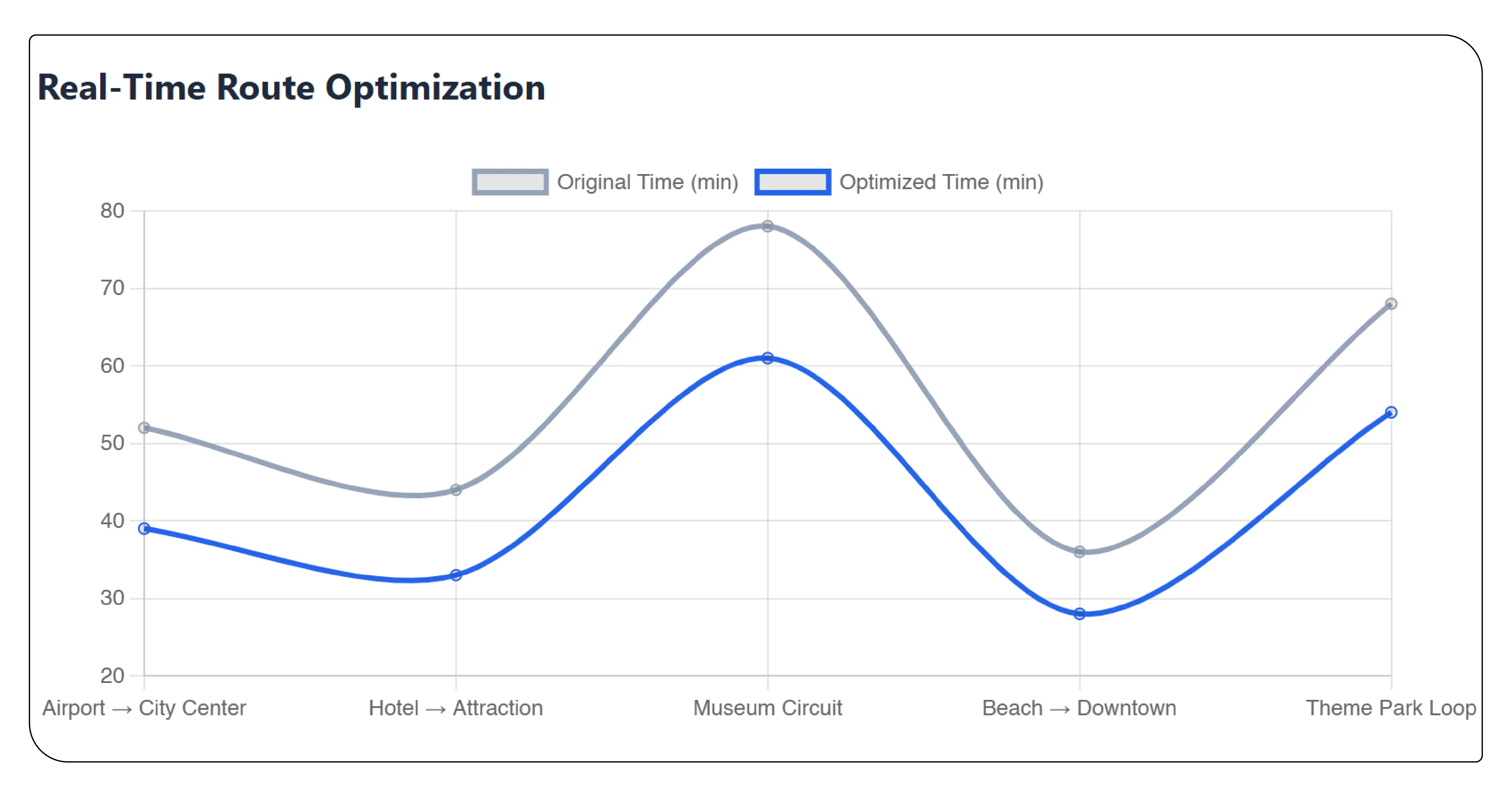
The combination of geospatial analytics and behavioral insights creates location intelligence for smarter travel experiences. Travel platforms can monitor how travelers move through destinations, which attractions they visit, and how long they spend at various locations.
These insights support:
- Real-time route optimization
- Dynamic itinerary adjustments
- Crowd management
- Transportation recommendations
- Personalized attraction suggestions
Travelers benefit from more efficient planning while travel companies gain valuable operational insights that improve platform performance and customer engagement.
Travel App Performance Before and After POI Intelligence Integration
| Performance Metric | Before Integration | After Integration | Improvement (%) |
|---|---|---|---|
| Average Session Duration (Minutes) | 8.7 | 16.2 | 86.2 |
| Recommendation Click Rate (%) | 12.4 | 27.8 | 124.2 |
| Booking Conversion Rate (%) | 4.1 | 9.3 | 126.8 |
| User Retention Rate (%) | 44 | 71 | 61.4 |
| Daily Active Users | 210,000 | 368,000 | 75.2 |
| Destination Discovery Rate (%) | 16 | 42 | 162.5 |
| Personalized Recommendation Accuracy (%) | 54 | 91 | 68.5 |
| Review Engagement Rate (%) | 21 | 48 | 128.6 |
| Itinerary Completion Rate (%) | 29 | 61 | 110.3 |
| Average Revenue Per User ($) | 12.8 | 23.5 | 83.6 |
| Repeat Booking Rate (%) | 20 | 39 | 95.0 |
| User Satisfaction Score | 3.9 | 4.7 | 20.5 |
| Customer Support Requests | 100% | 68% | -32.0 |
| Mobile Engagement Score | 63 | 89 | 41.3 |
| Attraction Conversion Rate (%) | 15 | 36 | 140.0 |
Emerging Trends in POI Intelligence
Artificial intelligence, machine learning, and geospatial analytics continue to advance the capabilities of travel applications. Future innovations are expected to include predictive destination recommendations, augmented reality navigation, real-time crowd forecasting, and hyper-personalized travel planning.
Travel companies are increasingly investing in AI-powered recommendation systems capable of adapting to traveler behavior in real time. These systems continuously refine recommendations based on user interactions, improving relevance and engagement.
Additionally, growing integration with smart city infrastructure will provide richer location datasets that further enhance travel experiences.
Conclusion
POI intelligence has become a critical component of modern travel applications, enabling platforms to deliver personalized recommendations, optimize itineraries, improve destination discovery, and enhance traveler satisfaction. Through advanced location analytics, real-time data collection, review intelligence, and artificial intelligence, travel companies can create highly engaging and context-aware travel experiences.
The growing importance of POI analytics for itinerary planning and destination Travel app development demonstrates how location data is shaping the future of travel technology. Similarly, AI travel planning for POI and destination data scrape solutions are helping travel platforms generate smarter recommendations and improve traveler decision-making at every stage of the journey. Furthermore, the integration of Guest Review Intelligence ensures that user-generated experiences contribute to more accurate recommendations, increased traveler confidence, and stronger overall platform performance.
As travel technology continues to evolve, organizations that effectively leverage POI intelligence will be better positioned to deliver personalized experiences, increase customer loyalty, and achieve sustainable growth in the increasingly competitive travel marketplace.
Ready to elevate your travel business with cutting-edge data insights? Scrape Aggregated Flight Fares to identify competitive rates and optimize your revenue strategies efficiently. Discover emerging opportunities with tools to Extract Travel Website Data, leveraging comprehensive data to forecast market shifts and enhance your service offerings. Real-Time Travel App Data Scraping Services helps stay ahead of competitors, gaining instant insights into bookings, promotions, and customer behavior across multiple platforms. Get in touch with Travel Scrape today to explore how our end-to-end data solutions can uncover new revenue streams, enhance your offerings, and strengthen your competitive edge in the travel market.
Unlock the Full Report
Enter your details to access premium pricing intelligence insights