Nigeria Aviation Pricing Trends Analytics: A Deep Dive into Domestic Airfare Dynamics
Introduction
Nigeria’s aviation sector plays a vital role in connecting major economic hubs such as Lagos, Abuja, Port Harcourt, and Kano. With increasing passenger traffic, fluctuating fuel costs, and evolving airline competition, pricing dynamics have become more complex than ever. This research report explores Nigeria aviation pricing trends analytics, highlighting how airlines adjust fares across domestic routes and departure schedules.
The adoption of Airline Data Scraping technologies has enabled stakeholders to collect real-time fare data, monitor competitor pricing, and identify hidden patterns across routes. Additionally, Nigeria domestic airline route and fares analysis provides a structured view of how pricing varies by distance, demand, and airline strategies.
Overview of Nigeria’s Domestic Aviation Market
Nigeria’s domestic aviation market is characterized by a mix of full-service and low-cost carriers. Airlines such as Air Peace, Arik Air, Ibom Air, and Dana Air dominate key routes, with Lagos–Abuja being the busiest corridor.
Pricing in this market is influenced by several factors:
- Fuel price volatility
- Airport taxes and operational costs
- Seasonal demand fluctuations
- Flight frequency and seat availability
- Time-of-day departure patterns
These variables create a dynamic pricing environment where fares can change multiple times daily.
Data Collection and Methodology
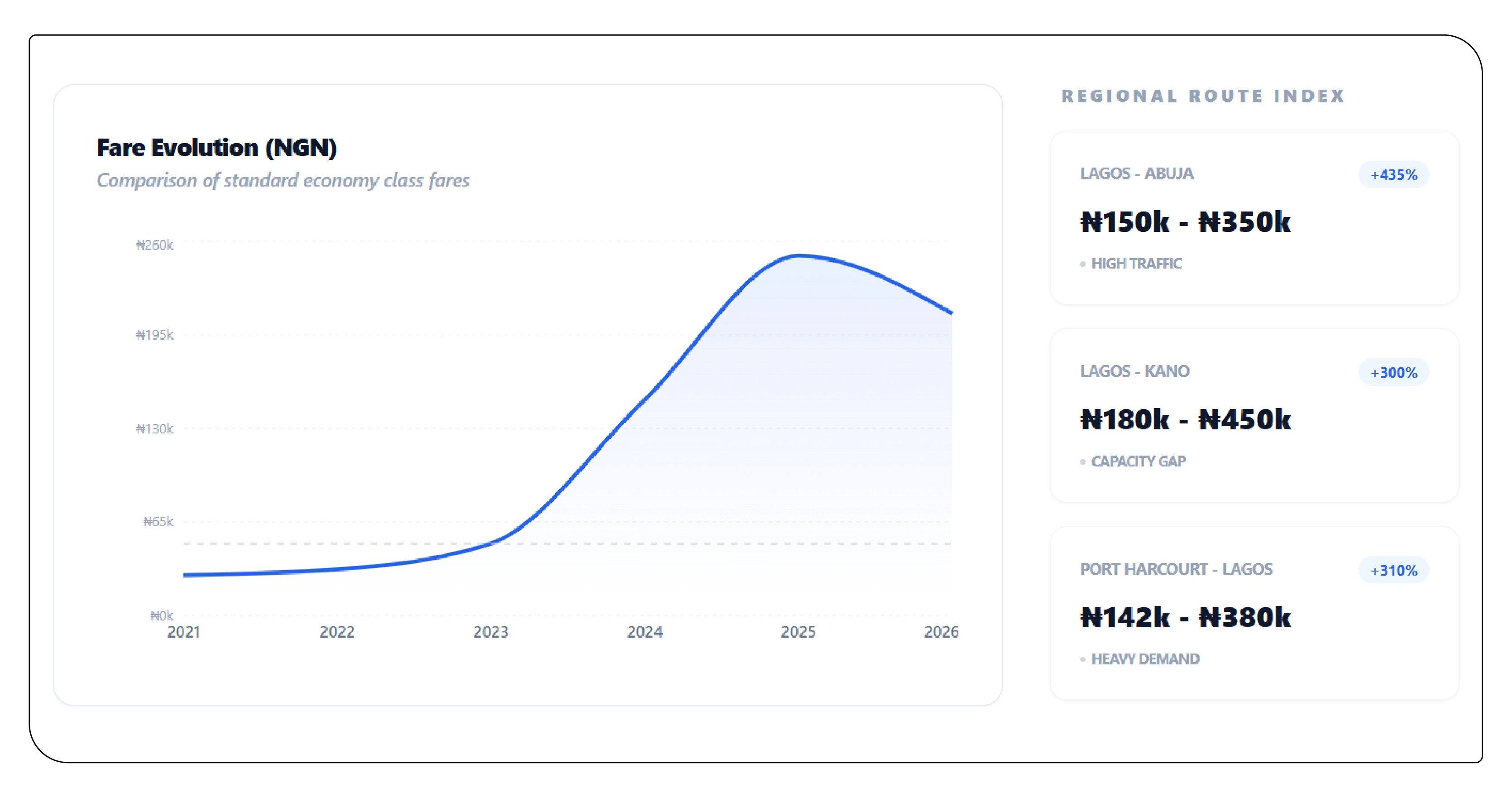
To analyze pricing trends effectively, large-scale datasets are required. The Airline Price Change Dataset used in this report includes:
- Historical fare data across multiple routes
- Departure and arrival time schedules
- Seat availability and booking patterns
- Airline-specific pricing strategies
Advanced analytics tools transform this raw data into actionable insights, forming the backbone of Nigeria aviation pricing trends intelligence.
Key Domestic Routes and Pricing Behavior
The Lagos–Abuja route is Nigeria’s most competitive and frequently traveled corridor. Other significant routes include:
- Lagos–Port Harcourt
- Abuja–Kano
- Lagos–Enugu
- Abuja–Owerri
Using Flight Price Data Intelligence, analysts can observe how fares fluctuate based on booking windows and departure timing.
Nigeria Domestic Route Pricing Comparison (Sample Dataset)
| Route | Airline | Dist (KM) | Avg Fare (₦) | Min / Max (₦) | Flights/Day | Load Factor | Booking Lead |
|---|---|---|---|---|---|---|---|
| Lagos–Abuja | Air Peace | 520 | 85,000 | 60k / 120k | 12 | 90% | 5 days |
| Lagos–Abuja | Ibom Air | 520 | 88,000 | 65k / 125k | 10 | 92% | 4 days |
| Abuja–PHC | Arik Air | 444 | 75,000 | 55k / 110k | 6 | 85% | 6 days |
| Lagos–Enugu | Dana Air | 386 | 70,000 | 50k / 100k | 5 | 80% | 7 days |
| Abuja–Kano | Air Peace | 358 | 65,000 | 45k / 95k | 7 | 78% | 6 days |
| Lagos–PHC | Ibom Air | 435 | 82,000 | 60k / 115k | 8 | 88% | 5 days |
| Abuja–Owerri | Arik Air | 420 | 72,000 | 52k / 105k | 4 | 76% | 8 days |
| Lagos–Benin | Air Peace | 250 | 55,000 | 40k / 80k | 6 | 74% | 3 days |
Departure Time Patterns and Pricing Impact
Flight departure times significantly influence ticket prices. Early morning and evening flights often command premium fares due to higher demand from business travelers.
Through Nigeria departure time pattern monitoring, the following trends are observed:
- Early morning flights (6 AM – 9 AM) have the highest fares
- Midday flights (11 AM – 3 PM) offer moderate pricing
- Late-night flights (8 PM – 11 PM) tend to be cheaper
- Weekend departures are generally more expensive than weekdays
Airlines strategically adjust pricing based on these demand patterns to maximize revenue.
Departure Time vs Pricing Trends Dataset
| Time Slot | Avg Fare (₦) | Demand | Load Factor | Cancel Rate | Biz vs Leisure | Volatility |
|---|---|---|---|---|---|---|
| 6 AM – 9 AM | 95,000 | 92% | 90% | 8% | 70 / 30 | High |
| 9 AM – 12 PM | 85,000 | 85% | 87% | 10% | 60 / 40 | Medium |
| 12 PM – 3 PM | 78,000 | 78% | 80% | 12% | 50 / 50 | Medium |
| 3 PM – 6 PM | 82,000 | 80% | 82% | 11% | 55 / 45 | Medium |
| 6 PM – 9 PM | 90,000 | 88% | 89% | 9% | 65 / 35 | High |
| 9 PM – 11 PM | 70,000 | 65% | 70% | 14% | 40 / 60 | Low |
Pricing Trends and Competitive Strategies
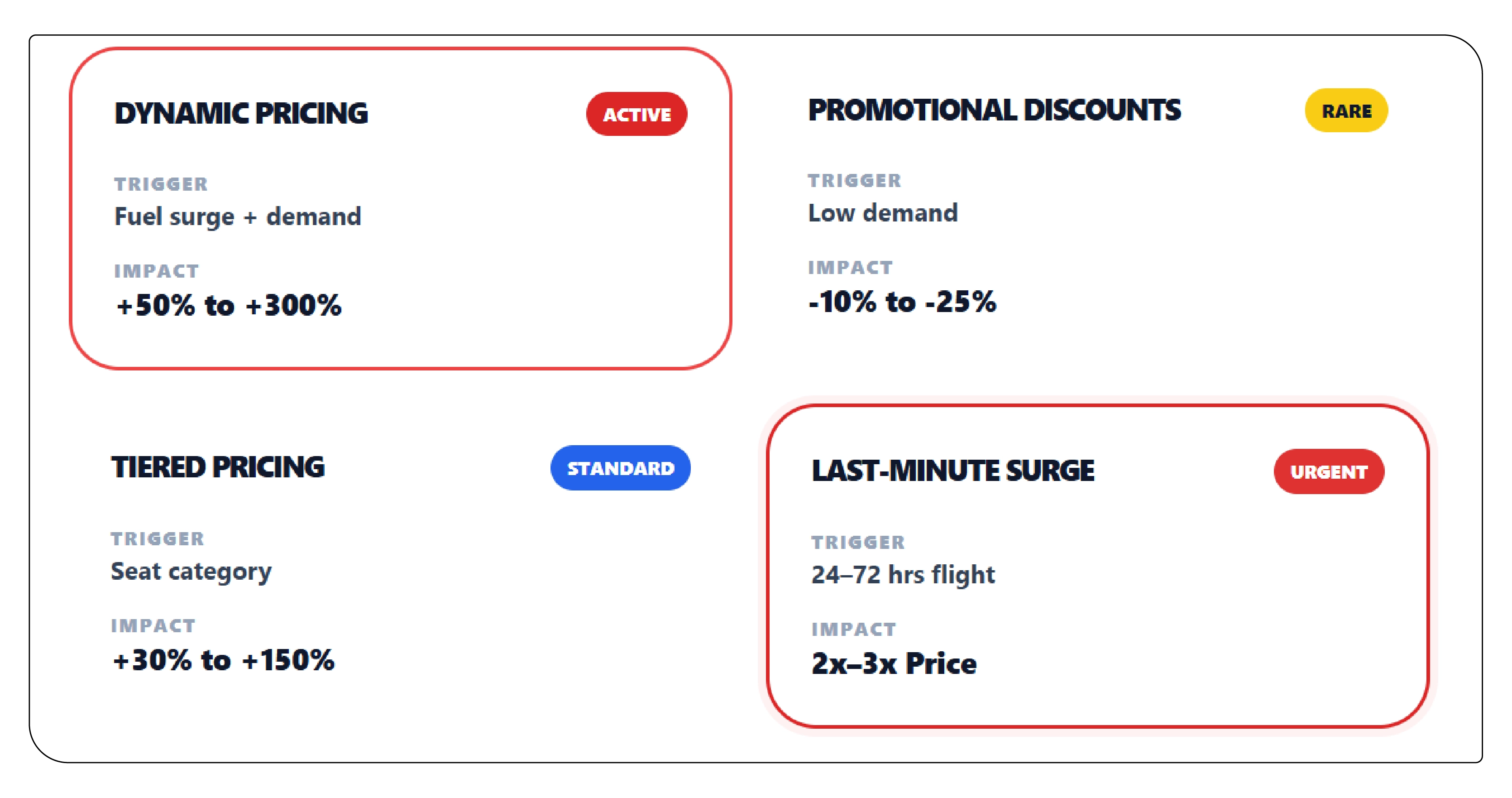
Airlines in Nigeria adopt dynamic pricing models that respond to demand fluctuations, competitor actions, and operational constraints. The use of Global Flight Schedule Dataset enables benchmarking against international standards and identifying best practices.
Key pricing strategies include:
- Dynamic fare adjustments based on demand
- Promotional discounts during off-peak periods
- Tiered pricing based on seat class and flexibility
- Last-minute fare increases for high-demand flights
These strategies contribute to evolving Nigeria aviation demand analytics, helping airlines maintain profitability while meeting customer expectations.
Role of Data Intelligence in Aviation
Data intelligence is transforming how airlines operate and compete. By leveraging advanced analytics, airlines can:
- Forecast demand accurately
- Optimize route profitability
- Improve customer segmentation
- Enhance operational efficiency
Real-time data collection and processing enable faster decision-making, ensuring airlines remain competitive in a rapidly changing market.
Challenges in Aviation Pricing Analysis
Despite technological advancements, several challenges persist:
- Limited data transparency across airlines
- High volatility in fuel prices
- Infrastructure constraints at airports
- Regulatory complexities
Addressing these challenges requires robust data pipelines, integration of multiple data sources, and continuous monitoring.
Future Outlook of Nigeria Aviation Pricing
The future of Nigeria’s aviation industry will be shaped by:
- Increased adoption of AI-driven pricing models
- Expansion of domestic routes
- Growth in low-cost carrier segments
- Enhanced customer experience through personalization
Data-driven insights will continue to play a critical role in shaping pricing strategies and improving operational efficiency.
Conclusion
Nigeria’s aviation sector is undergoing significant transformation, driven by data intelligence and advanced analytics. The ability to analyze pricing trends, monitor departure patterns, and benchmark competitor strategies provides airlines with a competitive edge.
By leveraging Nigeria flight schedule data scraping API, stakeholders can access real-time scheduling and pricing data for better decision-making. The use of Nigeria airline fare trends dataset enables deeper insights into pricing behavior, while Fare Fluctuation Alerts ensure timely responses to market changes.
As the industry evolves, data intelligence will remain a cornerstone of innovation, enabling airlines to optimize pricing, enhance customer satisfaction, and drive sustainable growth.
Ready to elevate your travel business with cutting-edge data insights? Scrape Aggregated Flight Fares to identify competitive rates and optimize your revenue strategies efficiently. Discover emerging opportunities with tools to Extract Travel Website Data, leveraging comprehensive data to forecast market shifts and enhance your service offerings. Real-Time Travel App Data Scraping Services helps stay ahead of competitors, gaining instant insights into bookings, promotions, and customer behavior across multiple platforms. Get in touch with Travel Scrape today to explore how our end-to-end data solutions can uncover new revenue streams, enhance your offerings, and strengthen your competitive edge in the travel market.
Unlock the Full Report
Enter your details to access premium pricing intelligence insights