How Does Cambodia Bus Route and Fare Analysis Using Camboticket Real-Time Data Scraping Transform Travel Intelligence?
Introduction
Cambodia’s transportation ecosystem is undergoing a significant transformation, driven by digital platforms, increasing tourism, and evolving consumer expectations. In this landscape, Cambodia Bus Route and Fare Analysis has emerged as a critical approach for understanding how routes, operators, and pricing structures interact in real time. As more travelers rely on online booking platforms, the need for accurate and dynamic Price Monitoring becomes essential for both businesses and analysts. By leveraging real-time Cambodia bus pricing extraction, stakeholders can access continuously updated fare data, enabling smarter decision-making, improved competitiveness, and better customer engagement.
The Role of Data Scraping in Cambodia’s Bus Ecosystem
Cambodia’s bus network connects major cities like Phnom Penh, Siem Reap, and Sihanoukville, serving both locals and international tourists. However, the system is far from static. Ticket prices fluctuate based on demand, availability, fuel costs, operator competition, and seasonal travel trends. Traditional data collection methods often fail to capture these rapid changes, creating a gap between market reality and business strategy.
This is where Bus Data Scraping plays a transformative role. By automating the extraction of data from platforms such as Camboticket, businesses can collect real-time information on routes, fares, schedules, and seat availability. This ensures that decision-makers are always working with the most up-to-date data rather than outdated snapshots.
The integration of a Cambodia bus ticket data scraping API further enhances this process by delivering structured and machine-readable data directly into analytics systems. This eliminates the need for manual intervention and allows seamless integration with dashboards, pricing engines, and forecasting tools. Additionally, Bus Data Scraping Services provide scalability, enabling organizations to monitor hundreds of routes and operators simultaneously without compromising on data quality or speed.
Under this framework, organizations can unlock several strategic advantages:
- Comprehensive Market Visibility: Continuous data collection ensures a complete view of pricing, routes, and operator performance across the entire network.
- Operational Efficiency: Automation reduces manual workload and minimizes the risk of human error in data collection and processing.
- Scalable Intelligence Systems: Businesses can expand their data operations as the market grows without needing to rebuild infrastructure.
By adopting these technologies, companies move from reactive decision-making to proactive strategy development, positioning themselves ahead of competitors.
Extracting Actionable Insights from Camboticket Data
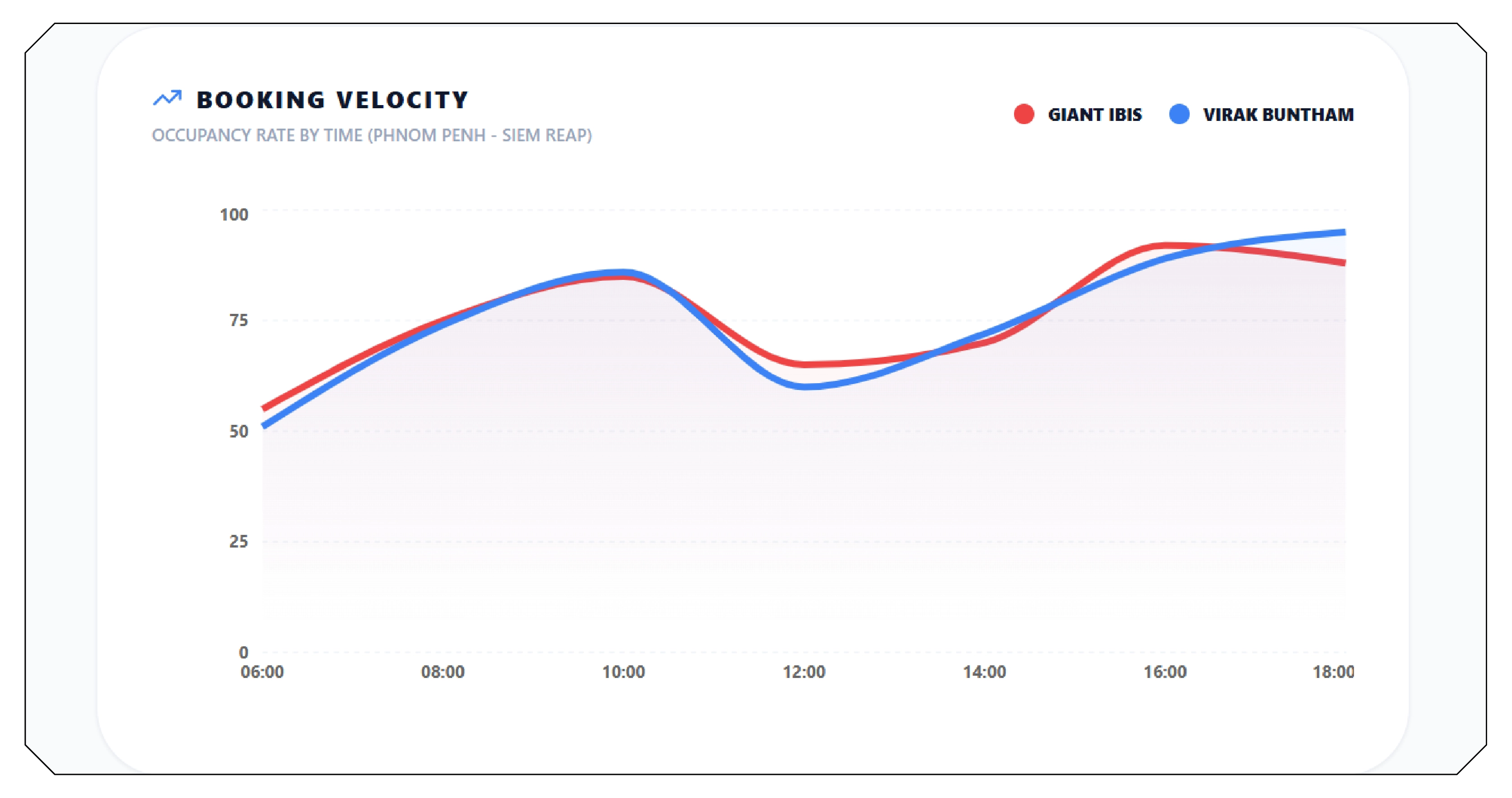
Raw data alone does not create value; it is the interpretation and application of that data that drives meaningful outcomes. Through detailed analysis of Camboticket booking and fare insights, businesses can identify behavioral patterns that influence ticket sales and pricing strategies.
For instance, certain routes may consistently experience higher demand during weekends or holiday seasons, leading to predictable fare increases. Similarly, early booking trends may reveal that travelers are willing to pay a premium for guaranteed seats, while last-minute bookings may either spike in price or drop depending on seat availability.
Another crucial component is the Camboticket real-time bus availability dataset, which provides a detailed view of how seats are being booked over time. This dataset allows businesses to monitor occupancy levels, detect demand surges, and identify underutilized routes.
From this analytical perspective, several key insights can be derived:
- Demand-Supply Optimization: By comparing seat availability with booking trends, businesses can identify where supply exceeds demand or vice versa, enabling better capacity planning.
- Dynamic Pricing Opportunities: Understanding when and why prices change allows companies to implement flexible pricing models that maximize revenue.
- Customer Behavior Analysis: Insights into booking timing, preferred routes, and price sensitivity help tailor marketing strategies and promotional campaigns.
These insights are not only valuable for travel platforms but also for bus operators, tourism boards, and logistics companies seeking to improve efficiency and profitability.
Monitoring Fare Dynamics and Market Trends
One of the most complex aspects of Cambodia’s bus industry is the constant fluctuation in ticket prices. Tracking Cambodia bus route fare fluctuation provides a deeper understanding of how external and internal factors influence pricing decisions.
Fare changes are often driven by a combination of variables, including seasonal tourism demand, fuel price variations, local events, and competitive actions by other operators. By analyzing historical and real-time data, businesses can identify recurring patterns and anticipate future changes.
This analysis reveals several important trends:
- Seasonal Demand Impact: Tourist-heavy periods such as holidays and festivals lead to increased demand, resulting in higher ticket prices and reduced availability.
- Route-Specific Pricing Behavior: High-traffic routes often experience more frequent and significant price adjustments compared to less popular routes.
- Competitive Pricing Strategies: Operators may adjust fares in response to competitors, creating a dynamic pricing environment that requires constant monitoring.
Understanding these dynamics enables businesses to develop more accurate forecasting models and respond quickly to market changes, ensuring they remain competitive while maximizing revenue.
Strategic Applications of Bus Data Intelligence
The application of real-time bus data extends far beyond basic pricing analysis. It forms the foundation for a wide range of strategic initiatives across industries. Travel platforms can enhance their recommendation systems by offering the most relevant routes and prices to users, while transport operators can optimize their schedules and pricing strategies based on demand patterns.
From a broader perspective, data intelligence supports:
- Revenue Optimization: Businesses can implement dynamic pricing strategies that adjust fares based on demand, availability, and competitor actions.
- Enhanced User Experience: Accurate and real-time data ensures that customers receive reliable information, improving trust and satisfaction.
- Market Positioning: Continuous monitoring of competitors allows businesses to refine their offerings and maintain a strong market presence.
Moreover, integrating this data with advanced analytics tools enables predictive modeling, allowing organizations to anticipate demand trends and adjust their strategies accordingly.
How Travel Scrape Can Help You?
1. Competitive Benchmarking Excellence
Our data scraping solutions empower businesses to track competitor pricing, routes, and service offerings in real time, helping identify gaps, refine strategies, and maintain a strong competitive position in rapidly evolving markets.
2. Accurate Demand Forecasting
We enable precise demand forecasting by collecting historical and real-time travel data, allowing businesses to anticipate peak seasons, optimize inventory allocation, and align resources with expected customer demand patterns effectively.
3. Seamless Data Integration
Our services deliver structured and clean datasets that integrate easily with your existing BI tools, dashboards, and analytics systems, ensuring smooth workflows, faster reporting, and enhanced visibility across business operations.
4. Time and Cost Efficiency
By automating complex data extraction processes, we significantly reduce manual effort and operational costs, allowing your teams to focus on strategy, innovation, and core business activities rather than repetitive data collection tasks.
5. Enhanced Decision-Making Capabilities
With access to high-quality, real-time insights, businesses can make informed decisions quickly, respond to market changes proactively, and develop data-driven strategies that drive growth, efficiency, and long-term success.
Conclusion
The growing complexity of Cambodia’s transportation market demands a shift toward data-driven decision-making. Real-time insights derived from scraping technologies provide businesses with the tools they need to navigate this dynamic environment effectively. By incorporating Cambodia bus travel demand trends intelligence, organizations can align their strategies with evolving market conditions and customer preferences. At the same time, implementing Fare Fluctuation Alerts ensures that businesses can respond instantly to pricing changes, maintaining competitiveness and operational agility. Ultimately, investing in Custom Travel Data Solutions empowers companies to build scalable, intelligent systems that drive long-term growth and innovation in Cambodia’s rapidly expanding travel sector.
Ready to elevate your travel business with cutting-edge data insights? Scrape Aggregated Flight Fares to identify competitive rates and optimize your revenue strategies efficiently. Discover emerging opportunities with tools to Extract Travel Website Data, leveraging comprehensive data to forecast market shifts and enhance your service offerings. Real-Time Travel App Data Scraping Services helps stay ahead of competitors, gaining instant insights into bookings, promotions, and customer behavior across multiple platforms. Get in touch with Travel Scrape today to explore how our end-to-end data solutions can uncover new revenue streams, enhance your offerings, and strengthen your competitive edge in the travel market.
Unlock the Full Report
Enter your details to access premium pricing intelligence insights