How Can the Hyatt Hotel Booking Trend Dataset Reveal Global Travel Demand Patterns?
Introduction
The hospitality industry has rapidly transformed into a data-driven ecosystem where travel brands rely heavily on analytics to understand customer behavior and booking patterns. Among the most valuable resources available for hospitality analysts today is the Hyatt hotel booking trend dataset, which provides detailed insights into reservation behavior, seasonal demand fluctuations, and global travel patterns across Hyatt properties.
Modern travel businesses and research teams rely on advanced tools to Extract API for Hyatt Hotels to gather structured booking information directly from digital platforms. These automated extraction solutions allow companies to track hotel availability, booking frequency, pricing shifts, and customer demand across multiple destinations. With this information, analysts can identify emerging travel trends and evaluate how different regions contribute to overall hotel occupancy.
Additionally, businesses increasingly depend on Hyatt hotel booking demand trend insights to understand how travelers interact with Hyatt’s extensive network of properties worldwide. These insights reveal important patterns such as peak travel seasons, last-minute booking behavior, corporate travel demand, and regional tourism fluctuations. By analyzing these datasets, hospitality companies gain a clearer understanding of how demand evolves across different markets.
Growing Importance of Data in the Hospitality Sector
Data analytics has become a fundamental part of the hospitality industry. Hotels, travel agencies, and tourism research firms depend on structured datasets to identify opportunities, predict future travel demand, and improve operational efficiency.
One of the most efficient ways to gather large-scale hospitality information is through a Hotel Chains Data Scraping Service, which automates the extraction of structured hotel data from multiple travel platforms. These services collect key data points such as room availability, booking frequency, seasonal demand, and pricing variations.
When combined with advanced analytics tools, these datasets enable hospitality organizations to track customer behavior and identify trends that influence booking decisions. This information helps hotels adjust their marketing campaigns, optimize pricing strategies, and enhance guest experiences.
For example, hotels can determine whether customers prefer booking weeks in advance or closer to travel dates. They can also analyze which destinations attract the most reservations during peak holiday periods.
Hospitality Market Intelligence and Industry Insights
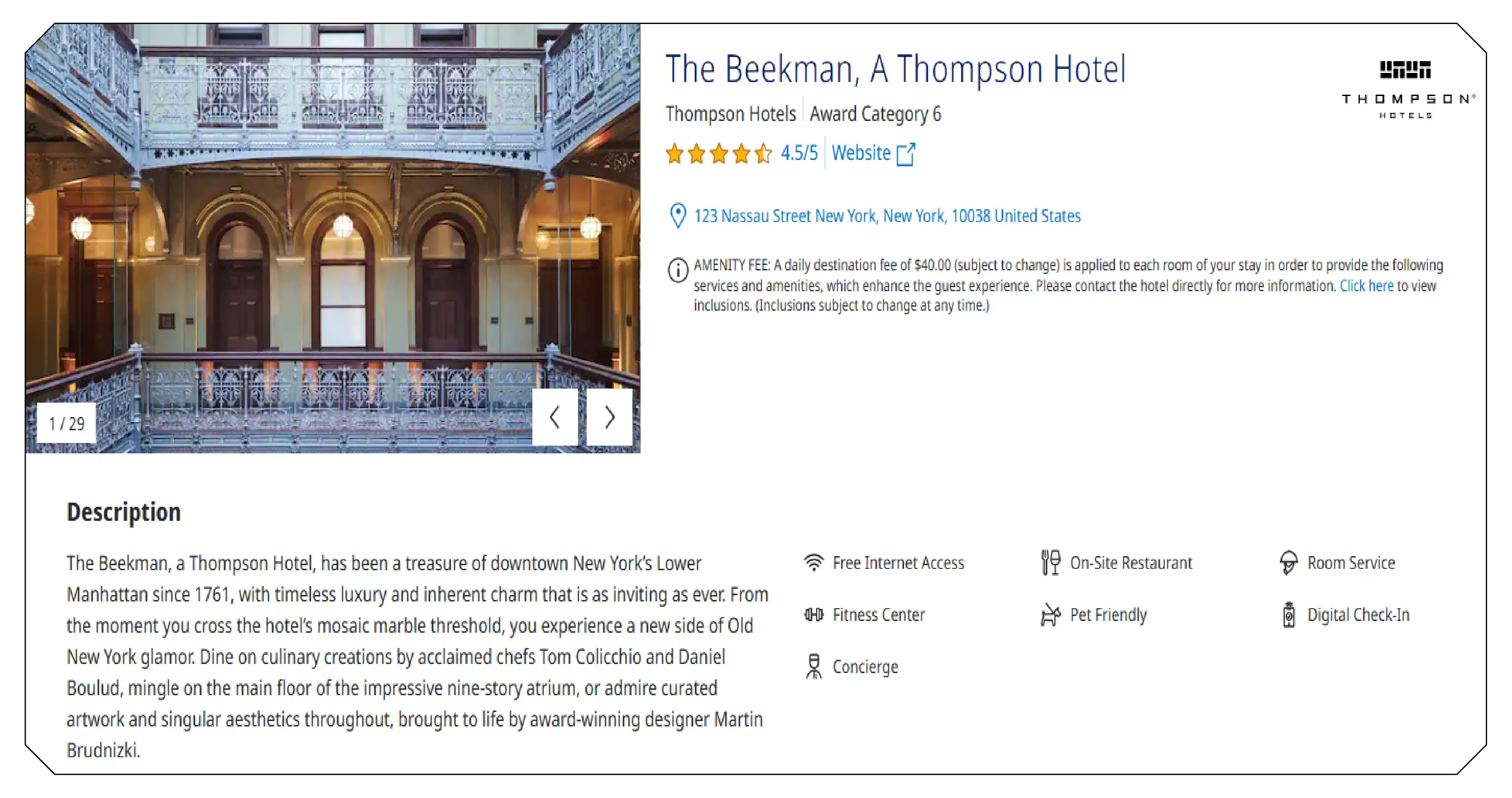
Travel intelligence companies rely on detailed datasets to understand how hotel brands perform across global markets. The value of Hyatt hospitality market intelligence data lies in its ability to combine multiple types of hospitality information into one analytical framework.
These datasets often include booking patterns, pricing movements, geographic distribution of properties, customer reviews, and loyalty program activity. By combining these elements, analysts can build a comprehensive picture of how Hyatt properties perform in different regions.
Market intelligence data helps hospitality organizations answer several important questions:
- Which cities experience the highest hotel booking demand?
- How do seasonal travel trends influence occupancy rates?
- What pricing strategies perform best in specific markets?
- Which customer segments contribute the most bookings?
Such insights are essential for travel analysts, hotel investors, and tourism boards aiming to understand the dynamics of the hospitality sector.
Location-Based Analysis of Hotel Properties
The geographic distribution of hotel properties plays a crucial role in determining booking trends. The Hyatt Place Hotel Location Dataset offers valuable information about Hyatt properties worldwide, including city-level data, regional distribution, and proximity to popular tourist attractions.
Location datasets typically contain information such as:
| Data Attribute | Description | Business Use |
|---|---|---|
| Hotel Name | Property identification | Brand analysis |
| City & Country | Geographic location | Regional demand tracking |
| Coordinates | Latitude and longitude | Mapping & travel analytics |
| Property Category | Brand classification | Market segmentation |
| Nearby Attractions | Tourist hotspots | Demand prediction |
By analyzing location datasets, travel companies can identify high-demand regions and understand how tourist attractions influence hotel bookings.
For instance, properties located near airports, convention centers, and popular tourist landmarks often experience higher booking rates compared to hotels located farther from major travel hubs.
Understanding Booking Patterns and Demand Fluctuations
Travel demand is rarely constant. Booking activity varies depending on seasons, holidays, events, and economic conditions. The power of Hyatt hotel booking trend intelligence lies in its ability to reveal these fluctuations over time.
By analyzing historical booking data, analysts can detect patterns such as:
- Seasonal travel demand increases
- Weekend versus weekday booking variations
- Business travel trends in metropolitan areas
- Event-driven spikes in hotel reservations
- International tourism trends
These patterns allow hotel operators to forecast future demand more accurately. For example, beach destinations often see increased bookings during summer months, while city hotels may experience higher demand during business conferences or festivals.
Understanding these fluctuations helps hospitality companies prepare for demand surges and allocate resources efficiently.
Analyzing Price Movements Across Hotel Markets
Pricing plays a crucial role in attracting hotel guests. Travel analytics teams frequently analyze the Hotel Room Price Trends Dataset to monitor how hotel room rates change over time.
This dataset typically includes pricing information for different room types, booking periods, promotional offers, and seasonal discounts. Monitoring these price trends helps hotels understand how demand affects room rates.
Typical dataset components include:
| Pricing Field | Description |
|---|---|
| Room Category | Standard, Deluxe, Suite |
| Price Per Night | Daily room rate |
| Discount Offers | Seasonal or promotional discounts |
| Booking Window | Time between booking and check-in |
| Occupancy Indicator | Demand level affecting pricing |
By analyzing this data, hotels can develop dynamic pricing strategies that adjust room rates based on demand levels. This approach helps maximize revenue while ensuring competitive pricing within the hospitality market.
Competitive Pricing and Market Monitoring
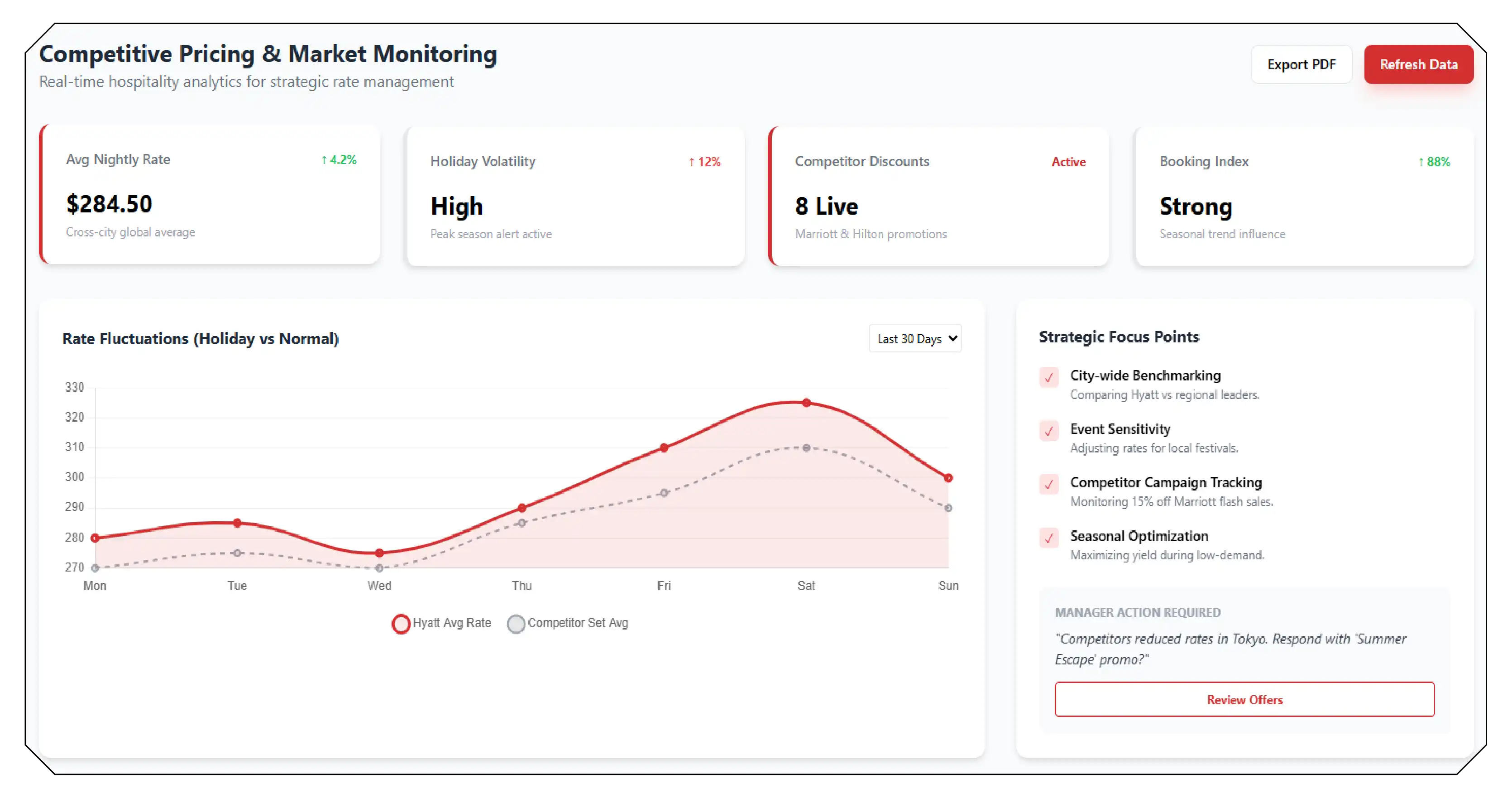
Another critical component of hospitality analytics is price comparison. Hotels constantly monitor competitors to ensure their rates remain competitive in the market. Through Hyatt hotel Pricing monitoring, analysts can track price changes across Hyatt properties and competing hotel brands.
Pricing monitoring provides insights such as:
- Average nightly rates across different cities
- Price fluctuations during holidays or events
- Discount campaigns offered by competing hotels
- Seasonal promotions influencing bookings
This information allows hospitality managers to adjust their pricing strategies in real time. For instance, if competing hotels reduce their rates during low demand periods, Hyatt properties may respond with promotional offers to maintain occupancy levels.
Such monitoring ensures hotels remain competitive while maintaining profitability.
Business Applications of Hotel Booking Datasets
Hotel booking datasets are valuable not only for hotel operators but also for several industries connected to travel and tourism.
Travel agencies use booking data to identify trending destinations and adjust travel packages accordingly. Tourism boards rely on booking trends to measure visitor activity and plan marketing campaigns that promote regional tourism.
Investors and hospitality consultants analyze booking data to determine the potential profitability of new hotel developments. By understanding travel demand in specific cities, they can identify markets where new hotel properties may succeed.
Technology companies and travel analytics platforms also use hotel datasets to build dashboards that visualize booking patterns, pricing trends, and occupancy levels. These tools help travel businesses make faster and more informed decisions.
Advantages of Data-Driven Hospitality Strategies
The growing availability of hospitality datasets has transformed how travel businesses operate. Data-driven strategies provide several benefits for hotel chains and travel platforms.
First, demand forecasting becomes more accurate when historical booking data is analyzed. Hotels can anticipate busy seasons and prepare staff and resources accordingly.
Second, pricing strategies become more effective when supported by market intelligence. Hotels can adjust their rates dynamically based on occupancy levels and competitor pricing.
Third, customer experiences improve when hotels understand guest preferences. Data analysis can reveal which amenities attract the most bookings and which services guests value the most.
Finally, location intelligence helps hotel chains identify expansion opportunities in regions with increasing travel demand.
The Future of Hospitality Data Intelligence
The hospitality industry is entering a new era where data plays a central role in shaping strategic decisions. As travel technology continues to evolve, hotel datasets will become even more detailed and sophisticated.
Future hospitality analytics platforms will integrate booking data, travel search trends, customer feedback, and loyalty program information into unified intelligence systems. Artificial intelligence and predictive analytics will further enhance the ability to forecast travel demand and optimize pricing strategies.
Advanced data solutions will also help hospitality companies understand traveler preferences more deeply, enabling personalized experiences and targeted marketing campaigns.
Driving Smarter Hospitality Strategies with Data
Hotel booking datasets provide valuable insights into how travelers plan their trips, select accommodation, and respond to pricing strategies. By analyzing the Hyatt hotel booking trend dataset, travel companies and hospitality analysts can uncover patterns that influence global hotel demand.
Modern extraction technologies such as Extract API for Hyatt Hotels allow organizations to gather structured booking data at scale, enabling comprehensive analytics and forecasting models. Combined with pricing analytics, location intelligence, and customer behavior insights, these datasets reveal actionable trends that shape strategic decisions.
How Travel Scrape Can Help You?
1. Comprehensive Data Collection
Our scraping solutions automatically gather hotel listings, room availability, booking patterns, pricing variations, and property details from multiple platforms, helping businesses build structured hospitality datasets for deeper analytics and smarter decision-making.
2. Real-Time Price Monitoring
We track hotel room prices continuously across locations and booking platforms, allowing businesses to identify pricing fluctuations, competitor strategies, and seasonal rate changes for improved revenue management and competitive positioning.
3. Accurate Demand Insights
Our services collect booking frequency, occupancy indicators, and seasonal demand signals to help businesses understand traveler behavior, predict booking peaks, and optimize marketing strategies for higher reservations.
4. Location and Property Intelligence
We extract detailed hotel property data including addresses, amenities, property categories, and geographic coordinates, enabling travel companies to analyze market coverage, regional demand trends, and expansion opportunities.
5. Custom Hospitality Data Solutions
Our flexible scraping infrastructure delivers tailored datasets, automated updates, and structured data formats, allowing businesses to integrate hospitality intelligence directly into dashboards, analytics platforms, and forecasting systems.
Conclusion
As the hospitality industry becomes increasingly competitive, businesses must rely on advanced analytics to remain ahead of market shifts. Insights derived from Hyatt hotel booking demand trend insights help travel companies optimize pricing, identify high-demand destinations, and improve customer engagement strategies.
Looking forward, integrating datasets such as Hyatt global hotel demand and loyalty insights will provide deeper visibility into traveler behavior and brand engagement. Enhanced analytics built on Hyatt membership and rewards data analytics will strengthen customer retention and loyalty programs. Ultimately, the continued growth of Hotel Data Intelligence will empower hospitality organizations to make smarter decisions and deliver exceptional travel experiences worldwide.
Ready to elevate your travel business with cutting-edge data insights? Scrape Aggregated Flight Fares to identify competitive rates and optimize your revenue strategies efficiently. Discover emerging opportunities with tools to Extract Travel Website Data, leveraging comprehensive data to forecast market shifts and enhance your service offerings. Real-Time Travel App Data Scraping Services helps stay ahead of competitors, gaining instant insights into bookings, promotions, and customer behavior across multiple platforms. Get in touch with Travel Scrape today to explore how our end-to-end data solutions can uncover new revenue streams, enhance your offerings, and strengthen your competitive edge in the travel market.
Unlock the Full Report
Enter your details to access premium pricing intelligence insights