Scrape 10 Largest hotel Chains in Canada in 2026 – Property Distribution and Geographic Coverage
This report analyzes the 10 largest hotel chains in Canada in 2026, highlighting property distribution, market trends, and data-driven insights.
Introduction
Canada’s hospitality sector is entering a transformative phase in 2026, driven by strong domestic tourism, U.S. cross-border travel, international arrivals, and expansion of branded mid-scale and extended-stay properties. To understand this evolving landscape, this research leverages insights derived as organizations increasingly Scrape 10 Largest hotel Chains in Canada in 2026 to monitor expansion strategies, province-wise penetration, and competitive positioning. Advanced solutions such as a Real-Time Hotel Data Scraping API now enable continuous visibility into new hotel openings, closures, pricing signals, and occupancy shifts, strengthening structured Canada Hotel chain locations data Scrape intelligence for investors, travel platforms, and hospitality consultants.
This report analyzes monitored hotel chain activity across 320+ Canadian cities, covering 2,950+ hotels and the 10 largest hotel chains operating nationwide. The focus is on provincial concentration, urban dominance, operational scale, and forward-looking insights shaping Canada’s hotel ecosystem in 2026.
2,950+
Hotels Tracked
50+
Hotel Chains
Monitored
320+
Cities Covered
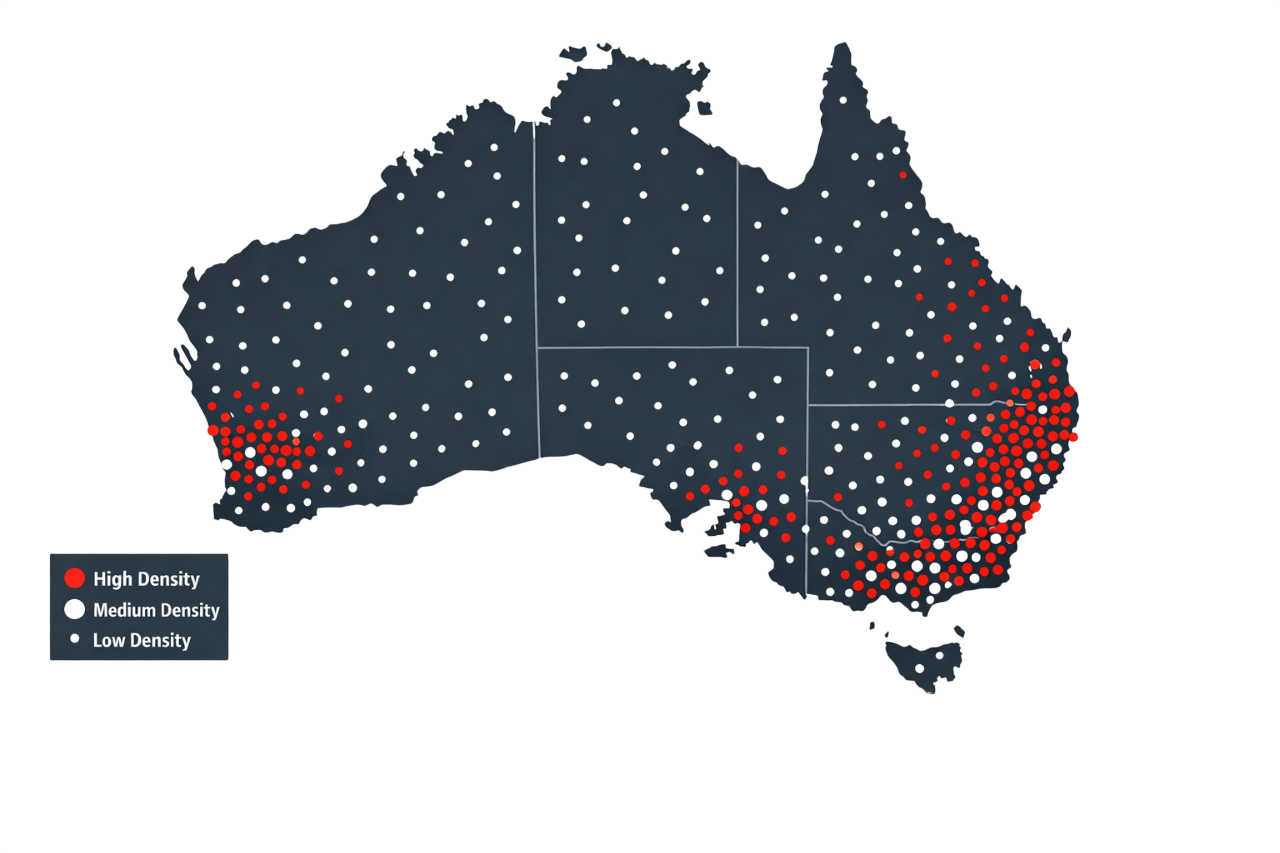
Top Provinces by Number of Hotels
Provinces with the Highest Concentration of Branded Hotel Chains in Canada
ONTARIO
820+
Ontario’s hotel density is fueled by multinational corporations, technology clusters, major event venues, medical tourism, and strong domestic travel, positioning Toronto and Ottawa as year-round demand centers across luxury, mid-scale, and extended-stay categories.
BRITISH COLUMBIA
520+
British Columbia benefits from international tourism, ski and adventure travel, cruise terminals, film production activity, and high-end leisure demand, strengthening branded hotel presence across Vancouver, Whistler, Victoria, and emerging secondary destinations.
ALBERTA
410+
Alberta’s hospitality sector grows through oil and gas operations, infrastructure projects, airport connectivity, and corporate mobility, with Calgary and Edmonton leading expansion across business-oriented, airport-focused, and extended-stay hotel segments.
QUEBEC
390+
Quebec’s hotel market thrives on cultural tourism, international festivals, historic attractions, culinary travel, and conference demand, encouraging balanced growth across boutique luxury, upscale brands, and established mid-scale properties.
NOVA SCOTIA
120+
Nova Scotia experiences stable hotel expansion through coastal tourism, cruise ship arrivals, academic institutions, and public-sector travel, supporting consistent growth in mid-scale and upscale chains across Halifax and surrounding urban centers.
MANITOBA
150+
Manitoba’s hotel ecosystem is supported by logistics networks, regional trade, agricultural commerce, and provincial administration activities, sustaining demand for standardized branded accommodations across Winnipeg and strategically connected regional cities.
What is the Largest Hotel Chain in Canada?
Marriott International is the largest hotel chain operating in Canada in 2026.
Marriott International
PROPERTIES
Provinces
10+
Cities
150+
Largest hotel operator across all provinces with diversified luxury, premium, and mid-scale brand portfolio.
Hilton Worldwide
PROPERTIES
Provinces
10+
Cities
120+
Leading upper mid-scale and premium operator across major Canadian metros. Strong airport, business district, and conference-driven property concentration nationwide.
Choice Hotels Canada
PROPERTIES
Provinces
10+
Cities
200+
Dominant economy and mid-scale chain across secondary cities and highways. Extensive franchise network ensuring deep geographic penetration nationwide.
Top 10 Hotel Chains in Canada by Property Count and Geographic Presence – 2026
The table presents a comparative overview of the 10 largest hotel chains operating in Canada in 2026, outlining their total property count, provincial coverage, and city-level presence. It illustrates how large franchised networks concentrate on nationwide scalability and broad market access, while upscale and luxury operators adopt selective expansion strategies in economically strong urban centers. The distribution pattern reflects a clear segmentation approach—economy brands expanding through volume and geographic spread, and premium chains focusing on high-revenue metropolitan hubs, airport corridors, and established leisure destinations to maximize profitability and brand positioning.
| Hotel Chain | Total Properties | Availability (No. of Provinces) | Availability (No. of Cities) | Download Dataset |
|---|---|---|---|---|
| Marriott International | 710+ | 10 provinces | 150+ cities | Download |
| Hilton Worldwide | 520+ | 10 provinces | 120+ cities | Download |
| Choice Hotels Canada | 460+ | 10 provinces | 200+ cities | Download |
| Wyndham Hotels & Resorts | 380+ | 9 provinces | 160+ cities | Download |
| Best Western Hotels & Resorts | 330+ | 10 provinces | 170+ cities | Download |
| IHG Hotels & Resorts | 240+ | 9 provinces | 90+ cities | Download |
| Accor | 130+ | 6 provinces | 40+ cities | Download |
| Hyatt Hotels Corporation | 90+ | 6 provinces | 25+ cities | Download |
| Sandman Hotel Group | 60+ | 5 provinces | 20+ cities | Download |
| Germain Hotels | 30+ | 4 provinces | 12+ cities | Download |
What are the largest hotel chains in Canada in 2026?
Location-based monitoring and structured hotel datasets reveal that Marriott International, Hilton Worldwide, and Choice Hotels Canada are the three largest hotel chains operating in Canada in 2026 based on property count and geographic reach. Marriott leads with 710+ properties concentrated in Toronto, Vancouver, and Montreal. Hilton operates 520+ properties across Alberta, Ontario, and British Columbia. Choice Hotels maintains 460+ properties with strong penetration in secondary cities and transit corridors. Combined, these three chains account for more than 55% of branded hotel properties across Canada.
Top 10 Hotel Chains in Canada – 2026
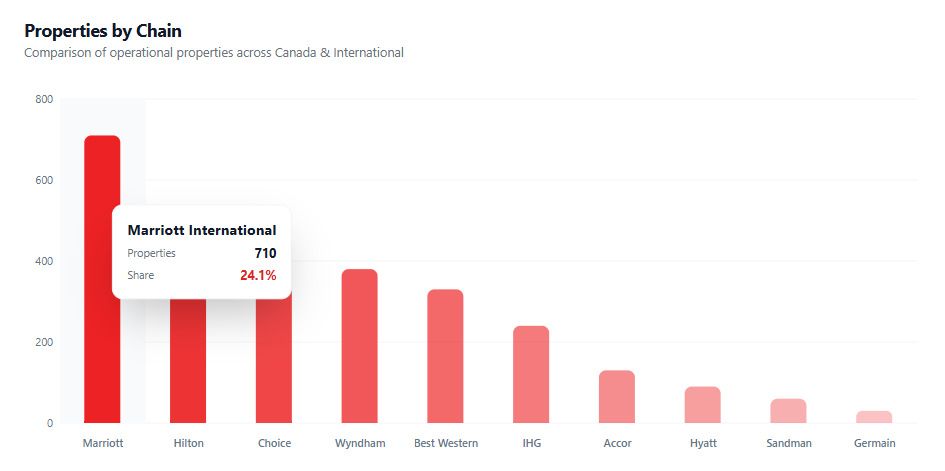
Canada’s hotel market in 2026 demonstrates a carefully balanced mix of economy, mid-scale, and luxury offerings, designed to meet the needs of business, leisure, and transit travelers alike. Marriott International dominates with 710+ properties across Toronto, Vancouver, and Montreal, capturing the premium and luxury segment with multi-brand strategies. Hilton Worldwide and Choice Hotels Canada lead the upper mid-scale and economy segments, strategically positioned in key metros, airport zones, and secondary cities to maximize occupancy. Mid-scale and domestic operators such as Wyndham Hotels & Resorts, Best Western, and Sandman Hotel Group provide wide-reaching coverage along highways, suburban hubs, and emerging business corridors. Boutique and lifestyle brands like Accor, Hyatt Hotels Corporation, and Germain Hotels target high-value urban cores and resort destinations, offering differentiated experiences. Using insights from Hotel Data Scraping Services, these chains collectively create a well-distributed network, ensuring optimized coverage across all provinces while supporting revenue management and expansion planning.

Marriott International
Luxury / Premium LeaderMarriott International commands Canada’s largest branded footprint, operating diversified luxury, premium, and extended-stay brands across gateway cities, financial districts, resort destinations, and high-demand urban corridors.

Hilton Worldwide
Upper Mid-Scale / BusinessHilton Worldwide maintains a strong presence in airport zones, convention centers, and downtown business districts, capturing corporate mobility, event-driven demand, and consistent weekday occupancy across major Canadian metros.

Choice Hotels Canada
Economy / Mid-ScaleChoice Hotels maintains extensive reach across secondary cities and highway corridors, delivering standardized, affordable accommodations tailored to business travelers, road trippers, and regional corporate demand.

Wyndham Hotels & Resorts
Economy / TransitWyndham operates diversified economy and mid-scale brands, strategically positioned in suburban districts, airport zones, and transit corridors serving consistent domestic and cross-provincial travel demand.

Best Western Hotels & Resorts
Mid-Scale / RegionalBest Western sustains strong rural and regional penetration, balancing leisure tourism, small-city business activity, and dependable mid-scale offerings across Canada’s distributed hospitality markets.
IHG Hotels & Resorts
Premium / BusinessIHG emphasizes upscale urban centers, conference venues, and corporate districts, positioning its diversified portfolio to capture high-value business travel and premium accommodation demand.

Accor
Luxury / LifestyleAccor focuses on lifestyle-driven and luxury hospitality experiences, expanding selectively within culturally significant metros and established tourism destinations across Canada.

Hyatt Hotels Corporation
Luxury / Select ServiceHyatt targets affluent travelers through premium urban properties and resort-focused developments, prioritizing service consistency, design excellence, and high-demand metropolitan locations.

Sandman Hotel Group
Mid-Scale / DomesticSandman strengthens its domestic footprint across western provinces, supporting business mobility, airport proximity demand, and balanced mid-scale offerings for regional travelers.

Germain Hotels
Boutique / UpscaleGermain Hotels delivers design-forward boutique hospitality, concentrating on upscale urban neighborhoods and culturally vibrant cities with strong leisure and corporate travel demand.
Looking to gain deeper insights into India’s hotel chain ecosystem for analytics or investment?
Connect with our experts to access continuously updated Canada hotel chain data for smarter investment and expansion decisions.
Advantages of Chain-Focused Hotel Location Data
Our structured datasets powered by Hotel Data Scraping Services deliver actionable intelligence for hospitality stakeholders across Canada. Key benefits include:
- Maximizing Operational Efficiency: Detailed province-level insights into brand density, occupancy trends, and competitor distribution help operators identify high-performing markets.
- Advancing Revenue Optimization: Access to structured pricing feeds supports ADR benchmarking and integration with revenue systems.
- Enabling Strategic Capital Allocation: Through reliable Extraction hotel chains data in Canada, investors gain clarity into market saturation and whitespace opportunities.
- Improving Demand Forecast Accuracy: Advanced Hotel Data Intelligence models help forecast demand shifts across business and leisure corridors.
- Enhancing Competitive Benchmarking: With Canada Hotel Chain Market Analytics, brands can evaluate expansion speed and operational scale against competitors.
| Field Name | Description |
|---|---|
| Hotel Name & Brand | Identifies the hotel and parent chain |
| Province & City | Enables geographic penetration analysis |
| Full Address & GPS | Supports mapping and cluster evaluation |
| Total Rooms | Measures operational capacity |
| Pricing & ADR | Tracks seasonal and event-based rate changes |
| Occupancy Trends | Reveals demand patterns |
| Guest Ratings | Aggregated performance indicators |
| Review Volume | Measures brand engagement |
| Opening Timeline | Tracks new supply growth |
Insights and Analysis
The 2026 landscape of Canada’s hotel chains demonstrates strategic growth and data-informed location planning. Budget and mid-scale chains maintain the largest property footprints, whereas luxury and premium brands target high-demand metropolitan and resort markets.
Ongoing tracking of new hotel launches in provinces like Ontario and British Columbia shows that expansion prioritizes market potential over volume, ensuring optimal coverage. Chains leveraging Canada hotel chain locations dataset and structured analytics exhibit enhanced pricing agility, quicker response to market trends, and more efficient long-term growth strategies. Additionally, insights derived from Hotel Guest Review Dataset support service improvement and guest satisfaction monitoring across all property segments.
Conclusion
As Canada’s hospitality competition intensifies, structured intelligence becomes essential for strategic planning. Organizations that Scrape Canada Hotel chain listings data gain measurable advantages in benchmarking and investment planning.
Continuous hotel chain location tracking in Canada ensures accurate visibility into geographic expansion patterns and emerging supply clusters.
Furthermore, integrating insights from a standardized Hotel Room Price Trends Dataset enables precise revenue forecasting and demand-based pricing optimization.
In 2026, actionable data, automation, and intelligent monitoring define leadership within Canada’s hotel industry.