Scrape Hotel Occupancy & Demand Signals for Real-Time Hospitality Market Intelligence
Introduction
The global hospitality industry has entered an era where live booking behavior and occupancy trends influence nearly every operational and revenue-related decision. Hotels, travel aggregators, tourism boards, and investment firms now depend heavily on data intelligence to understand traveler demand patterns before they fully develop in the market. One of the fastest-growing areas within travel analytics is the use of method to Scrape Hotel Occupancy & Demand Signals methodologies to monitor hotel inventory, booking urgency, and pricing fluctuations across online booking platforms.
The increasing importance of predictive travel analytics has made Demand Forecasting an essential capability for hospitality businesses seeking to maximize occupancy and improve revenue management. Instead of relying solely on historical reports, organizations are now collecting live booking indicators from travel platforms to predict occupancy trends days or even weeks in advance.
The evolution of hotel occupancy and demand intelligence solutions has significantly improved how hospitality businesses analyze traveler behavior. Modern data systems can now track room inventory reductions, urgency notifications, and pricing volatility in real time, allowing companies to respond quickly to changing market demand.
Understanding Hotel Occupancy and Demand Signal Scraping
Hotel occupancy and demand signal scraping refers to the process of automatically collecting hotel-related booking information from online travel platforms. The extracted data is then analyzed to understand occupancy levels, traveler demand, pricing behavior, and destination popularity.
Travel platforms constantly display indicators that reflect how quickly rooms are being booked. When monitored continuously, these signals become highly valuable for forecasting future occupancy levels and identifying destinations experiencing rising traveler demand.
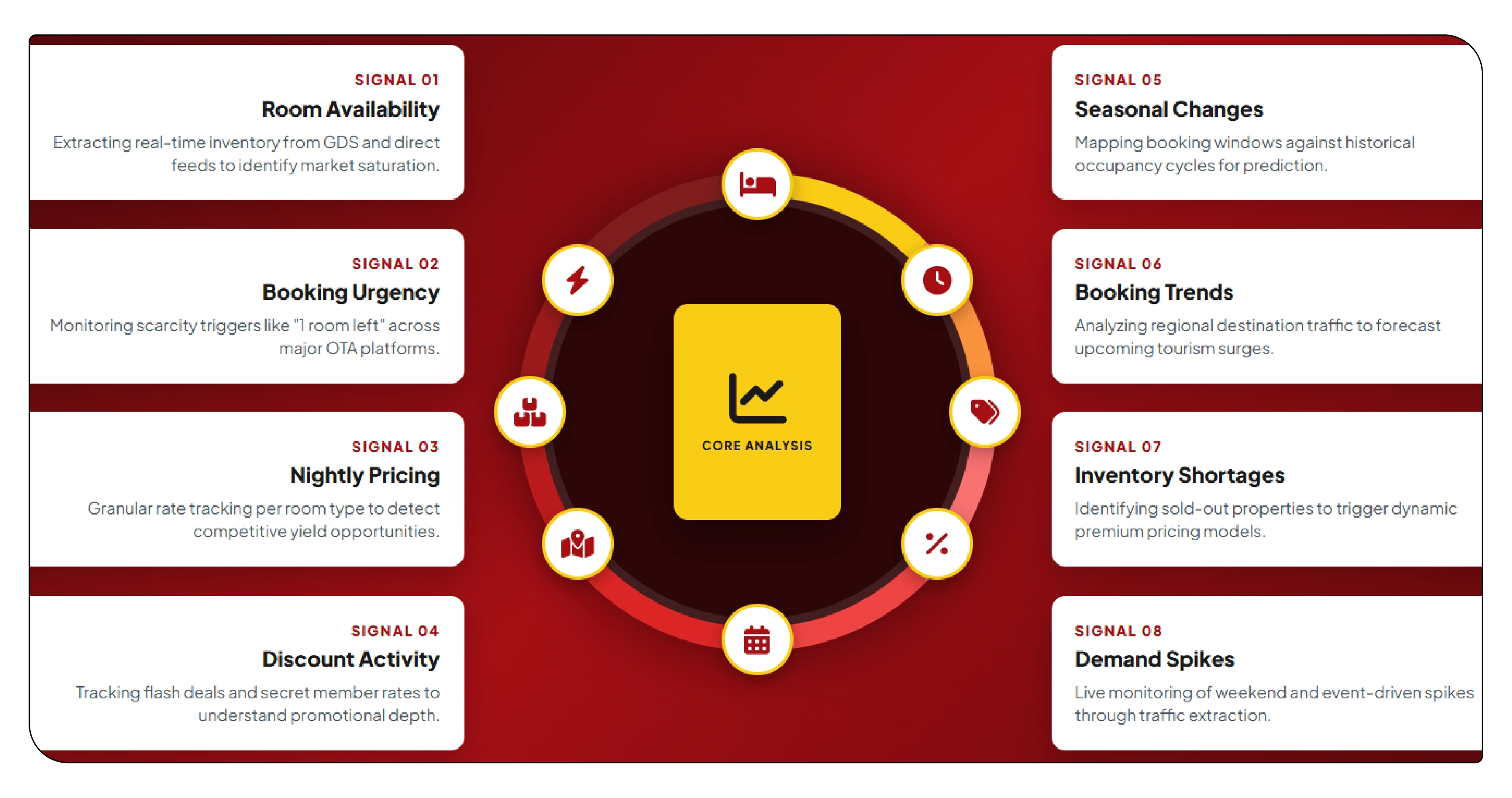
The most commonly extracted datasets include:
- Room availability
- Booking urgency notifications
- Nightly room pricing
- Discount activity
- Seasonal occupancy changes
- Destination-level booking trends
- Inventory shortages
- Weekend and holiday demand spikes
These datasets help businesses move beyond static reporting models and adopt dynamic forecasting systems that reflect real-time market behavior.
Why Hotel Occupancy Signals Matter?
Occupancy trends directly influence hotel profitability, pricing strategy, staffing, inventory management, and investment planning. A hotel operating at high occupancy can increase room prices confidently, while properties facing lower booking demand may need promotional campaigns or discount strategies.
Traditional occupancy forecasting methods relied mainly on historical booking reports and seasonal patterns. However, modern hospitality markets are increasingly affected by real-time factors such as events, weather conditions, airline pricing, festivals, and social media-driven tourism demand. Because of this, live booking intelligence has become significantly more valuable than static historical analysis.
When businesses continuously monitor room inventory and pricing movements, they gain the ability to predict demand surges earlier. This allows revenue managers to optimize pricing before occupancy peaks occur.
Major Platforms Used for Occupancy Intelligence
Two of the most valuable sources of hotel demand intelligence are Airbnb and Agoda. These platforms generate millions of booking interactions daily, making them ideal sources for travel demand analytics.
Airbnb provides strong insights into short-term rental demand, urban tourism patterns, and seasonal leisure travel behavior. Analysts monitor Airbnb inventory to identify growing tourism markets, weekend occupancy surges, and rapidly increasing accommodation prices.
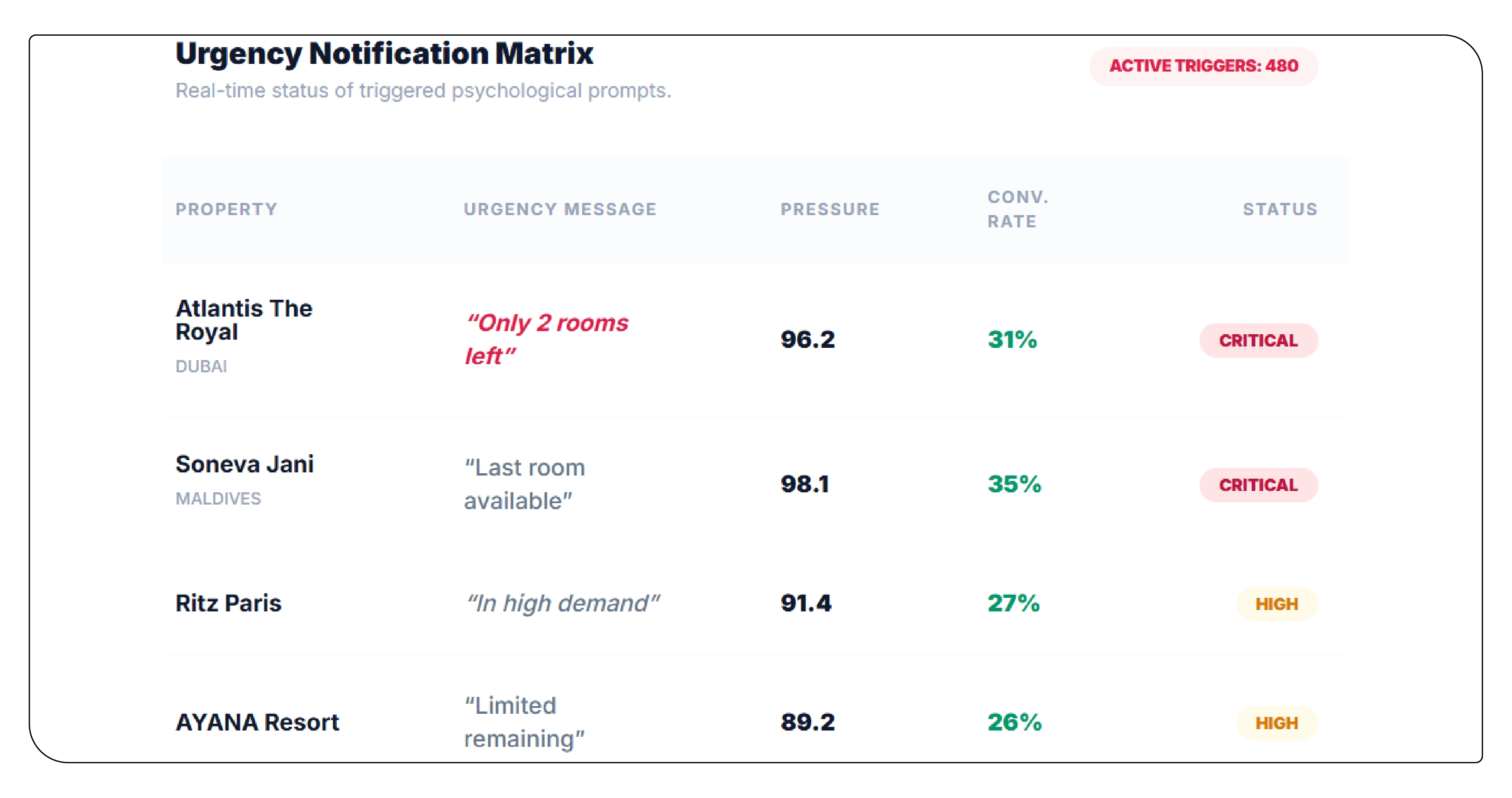
Agoda, on the other hand, offers highly detailed hotel booking signals across international markets. The platform frequently displays urgency messages such as “Only 2 rooms left” or “Booked 10 times today,” which act as direct indicators of rising occupancy pressure.
By combining datasets from multiple platforms, businesses can generate a broader understanding of traveler behavior across regions and accommodation categories.
Room Availability as a Demand Indicator
Room availability is one of the most reliable indicators of hotel occupancy trends. When available inventory decreases rapidly, it often signals growing booking activity and increasing traveler demand.
Businesses use Hotel Data Scraping technologies to monitor hotel inventory levels continuously throughout the booking cycle. These systems collect data at frequent intervals, allowing analysts to observe how quickly rooms are being booked across destinations.
For example, if a beach resort shows 40 available rooms on Monday and only 8 rooms by Wednesday for the same travel dates, the system can identify a strong demand acceleration pattern. This information becomes highly valuable for revenue managers seeking to adjust prices dynamically.
The value of availability tracking becomes even greater during festivals, holiday seasons, and large public events where occupancy levels can change dramatically within hours.
Sample Hotel Occupancy and Availability Monitoring Data
| Destination | Platform | Initial Available Rooms | Available Rooms After 48 Hours | Occupancy Trend | Demand Signal |
|---|---|---|---|---|---|
| Goa Beach Resorts | Agoda | 120 | 22 | Rapid occupancy growth | Holiday tourism surge |
| Dubai Downtown Hotels | Airbnb | 85 | 18 | Strong booking acceleration | International traveler demand |
| Bangkok City Hotels | Agoda | 140 | 40 | Moderate occupancy increase | Business travel activity |
| Bali Villas | Airbnb | 65 | 7 | Near sold out | Vacation season demand |
| Singapore Marina Hotels | Agoda | 90 | 15 | High occupancy pressure | Corporate event bookings |
| Shimla Hotels | Airbnb | 50 | 5 | Extreme occupancy spike | Weekend mountain tourism |
| Tokyo Business Hotels | Agoda | 200 | 75 | Stable booking growth | International business travel |
| Paris Luxury Hotels | Airbnb | 45 | 4 | Premium occupancy surge | Fashion event tourism |
| New York City Hotels | Agoda | 175 | 38 | Strong occupancy trend | Conference-driven travel |
| Maldives Resorts | Airbnb | 30 | 2 | Near full occupancy | Luxury tourism demand |
Organizations increasingly scrape hotel room availability for occupancy data to improve forecasting accuracy and detect occupancy surges before they become visible in traditional reporting systems.
Booking Urgency Messages as Real-Time Demand Signals
Online booking platforms are designed to encourage faster customer decisions. One of the most powerful techniques used by travel platforms involves urgency-based messaging.
Notifications such as:
- “Only 2 rooms left”
- “Booked 15 times today”
- “In high demand”
- “Last room available”
- “Limited rooms remaining”
are not just marketing tools. They also function as valuable demand indicators for analysts monitoring booking behavior.
When urgency messages begin appearing frequently for a destination, it usually reflects rapidly decreasing inventory and rising occupancy pressure. Hospitality companies monitor these signals carefully because they often emerge before official occupancy reports become available.
For example, if urgency notifications start appearing across hotels in Dubai several weeks before a major trade event, businesses can confidently predict an upcoming occupancy surge. Hotels may then increase room prices earlier, while travel companies can intensify promotional campaigns.
These urgency signals also help analysts understand traveler psychology. Higher urgency levels often increase booking conversion rates because customers fear losing room availability.
This type of monitoring generates highly actionable Booking Trend Insights for hotels, tourism agencies, and travel intelligence providers.
Monitoring Hotel Price Surge Patterns
Pricing behavior is another critical indicator of hotel demand intensity. Hotel prices fluctuate constantly based on occupancy levels, traveler demand, seasonality, and local events.
Modern hospitality businesses increasingly scrape hotel price surge patterns for dynamic pricing optimization because pricing changes often reveal occupancy pressure earlier than traditional occupancy reports.
When room demand rises quickly, hotel algorithms automatically increase prices to maximize revenue. These price increases may occur gradually or spike dramatically during peak periods.
Sample Hotel Price Surge and Occupancy Intelligence Data
| Event or Scenario | Destination | Average Room Price Increase | Occupancy Impact | Strategic Insight |
|---|---|---|---|---|
| New Year Holiday | Dubai | 92% | Near full occupancy | Premium seasonal pricing |
| Music Festival | Goa | 58% | Heavy room demand | Event-driven tourism spike |
| International Expo | Singapore | 75% | High business occupancy | Corporate travel demand |
| Summer Tourism Season | Bali | 48% | Resort occupancy growth | Vacation-driven pricing |
| Cricket Tournament | Mumbai | 62% | Strong regional demand | Sports tourism increase |
| Fashion Week | Paris | 80% | Luxury hotel surge | Premium traveler concentration |
| School Holidays | Bangkok | 41% | Family travel growth | Seasonal leisure demand |
| Ski Season | Switzerland | 67% | Resort inventory shortage | Winter tourism demand |
| Religious Festival | Varanasi | 54% | Pilgrimage occupancy surge | Spiritual tourism activity |
| Flight Disruptions | London Airport Hotels | 33% | Emergency occupancy increase | Transit accommodation demand |
Dynamic pricing intelligence allows hotels to improve revenue optimization strategies significantly. Instead of reacting after occupancy peaks occur, businesses can proactively adjust rates based on real-time booking activity.
Real-Time Destination Demand Analysis
One of the biggest advantages of occupancy intelligence systems is the ability to identify emerging high-demand destinations in real time.
Traditional tourism reports often become available weeks or months after travel activity occurs. In contrast, live booking data allows analysts to detect destination popularity almost immediately.
For example, if hotel inventory across Bali begins declining rapidly while room prices simultaneously increase, businesses can identify growing tourism demand early. Travel companies may then increase advertising campaigns targeting Bali travelers, while hotels can optimize room pricing.
This capability has made Hotel Data Intelligence increasingly important for hospitality businesses seeking competitive advantages.
The growing demand for real time destination demand analytics for hotel pricing data is pushing companies toward advanced AI-driven forecasting platforms capable of processing millions of booking signals daily.
Use Cases of Hotel Occupancy Intelligence
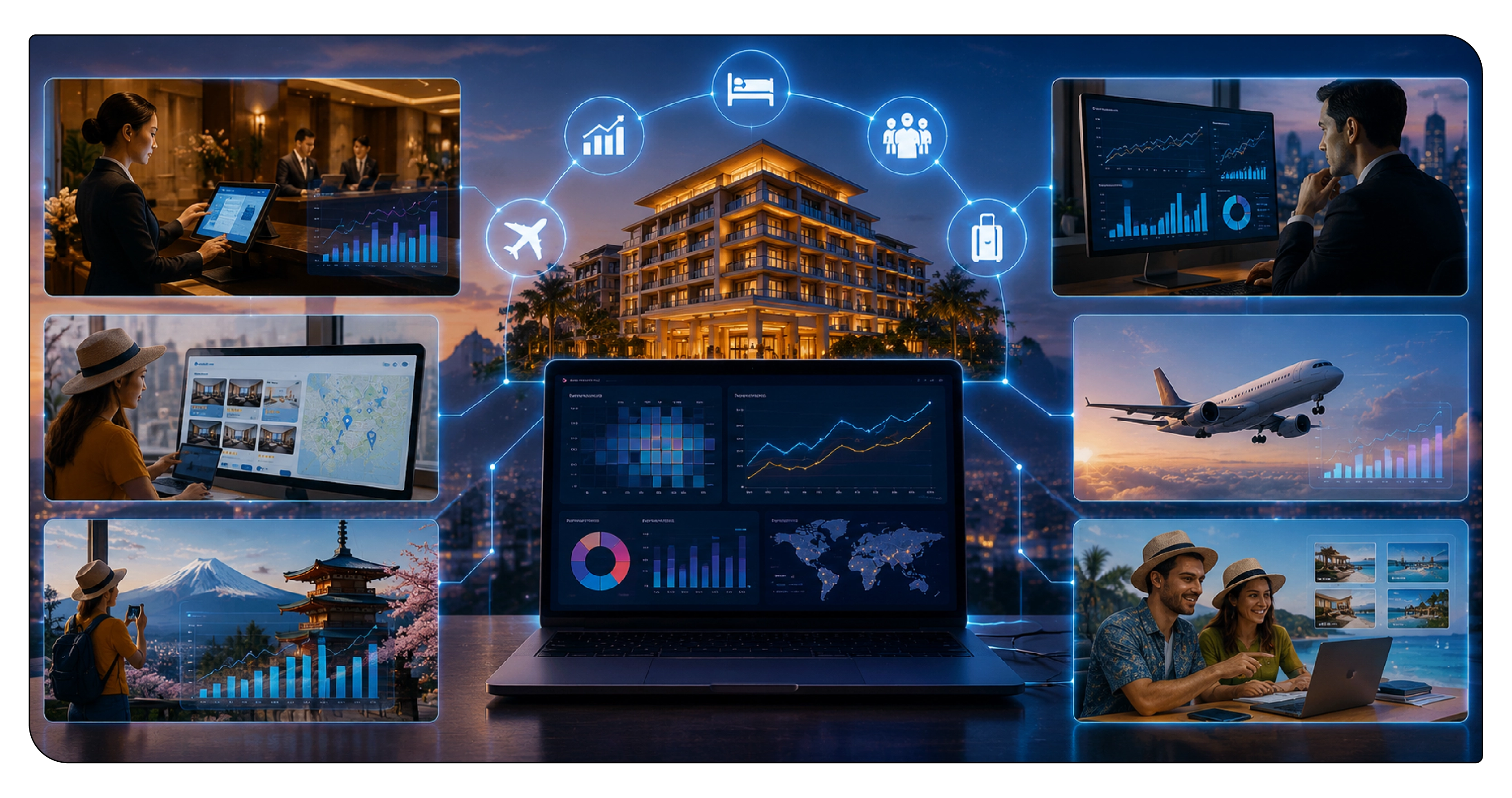
The applications of occupancy intelligence extend across multiple industries.
Hotels use live demand signals to optimize pricing strategies, improve staffing decisions, and maximize occupancy during high-demand periods. Online travel agencies analyze booking behavior to improve promotional targeting and destination recommendations.
Tourism boards use occupancy intelligence to evaluate regional tourism performance and forecast visitor inflows. Investment firms analyze occupancy growth patterns to identify profitable hotel investment opportunities.
Airlines and travel package providers also benefit from occupancy intelligence because hotel demand trends often correlate strongly with flight demand and tourism growth.
Future of Occupancy Intelligence in Hospitality
The hospitality industry is rapidly shifting toward AI-powered forecasting systems capable of predicting occupancy trends with remarkable precision.
Future systems will likely integrate hotel occupancy data with airline demand, weather conditions, social media sentiment, event schedules, and transportation analytics. These multi-source intelligence models will provide even more accurate demand forecasting capabilities.
Machine learning systems will also improve automated revenue management by adjusting hotel prices dynamically based on predicted occupancy behavior.
As travel markets become increasingly competitive, businesses that leverage advanced occupancy intelligence systems will gain substantial operational and financial advantages.
Conclusion
Hotel occupancy intelligence has become one of the most valuable components of modern hospitality analytics. By monitoring room availability, urgency notifications, and dynamic pricing behavior across Airbnb and Agoda, businesses can predict occupancy trends more accurately and respond faster to changing market conditions.
Real-time booking intelligence enables hotels, travel agencies, and tourism organizations to improve revenue optimization, identify emerging travel hotspots, and make smarter operational decisions. These insights are becoming increasingly essential in a hospitality industry driven by rapid booking fluctuations and evolving traveler behavior.
The adoption of hotel occupancy prediction high demand dynamic pricing systems is expected to rise significantly as hospitality companies pursue more advanced forecasting capabilities. Businesses are increasingly investing in real time hotel demand occupancy and pricing intelligence platforms that combine live inventory tracking, pricing analytics, and demand forecasting into unified intelligence systems.
Comprehensive solutions such as the Hotel Availability Forecast Dataset are helping organizations build more accurate predictive models that improve pricing strategy, occupancy planning, and destination-level tourism analysis across global hospitality markets.
Ready to elevate your travel business with cutting-edge data insights? Scrape Aggregated Flight Fares to identify competitive rates and optimize your revenue strategies efficiently. Discover emerging opportunities with tools to Extract Travel Website Data, leveraging comprehensive data to forecast market shifts and enhance your service offerings. Real-Time Travel App Data Scraping Services helps stay ahead of competitors, gaining instant insights into bookings, promotions, and customer behavior across multiple platforms. Get in touch with Travel Scrape today to explore how our end-to-end data solutions can uncover new revenue streams, enhance your offerings, and strengthen your competitive edge in the travel market.
Unlock the Full Report
Enter your details to access premium pricing intelligence insights