Delivering a Next-Week US Domestic Flight Dataset for OTAs, Flight Search Engines & Aviation Analytics
Introduction
This case study highlights how a travel analytics company leveraged a Next-Week US Domestic Flight Dataset to improve flight planning, pricing insights, and customer experience. The project focused on collecting upcoming domestic flight information, including routes, departure schedules, airlines, availability, fares, and airport details. By analyzing this structured dataset, travel platforms gained better visibility into future market movements and traveler demand patterns.
The implementation of a next-week flight schedule dataset for travel platforms enabled accurate forecasting, personalized recommendations, and efficient inventory planning. The collected insights helped identify popular routes, pricing fluctuations, and airline performance trends before travel dates.
Using advanced Airline Data Scraping techniques, the team gathered real-time and upcoming flight information from multiple sources while maintaining data accuracy and consistency. The final dataset supported smarter decision-making, improved competitive analysis, and enhanced travel technology solutions for businesses operating in the US domestic aviation market.
The Client
The client was a travel technology company focused on improving aviation intelligence, route analysis, and flight market visibility. They required structured and reliable flight information to enhance their decision-making process, optimize travel solutions, and deliver better services to customers. The company aimed to analyze airline operations, upcoming schedules, route availability, and market trends through comprehensive data insights.
By utilizing airline schedule data for aviation analytics, the client gained access to organized flight details that supported demand forecasting, competitor monitoring, and operational planning. The collected information helped them understand airline networks, schedule changes, and customer travel patterns more effectively.
The company leveraged an aviation dataset for travel companies to strengthen its analytics capabilities and improve platform performance. The integration of a Global Flight Schedule Dataset allowed the client to access broader aviation intelligence, enabling smarter strategies, improved travel recommendations, and enhanced business growth across global markets.
Challenges in the Travel Industry
The client faced several operational and analytical challenges while developing a reliable aviation intelligence solution. Limited access to structured flight information, changing airline schedules, fragmented sources, and the complexity of processing large-scale travel data impacted their ability to deliver accurate search and forecasting capabilities.
Fragmented Data Sources
The client needed a centralized system to manage diverse airline information collected from multiple channels. Building a reliable flight dataset for OTAs and travel platforms was difficult due to inconsistent formats, missing fields, and variations in schedule updates across different providers.
Dynamic Flight Information Updates
Frequent changes in flight timings, availability, routes, and fares created challenges in maintaining accuracy. The client required a robust flight search infrastructure with airline data to deliver updated information and improve user search experiences.
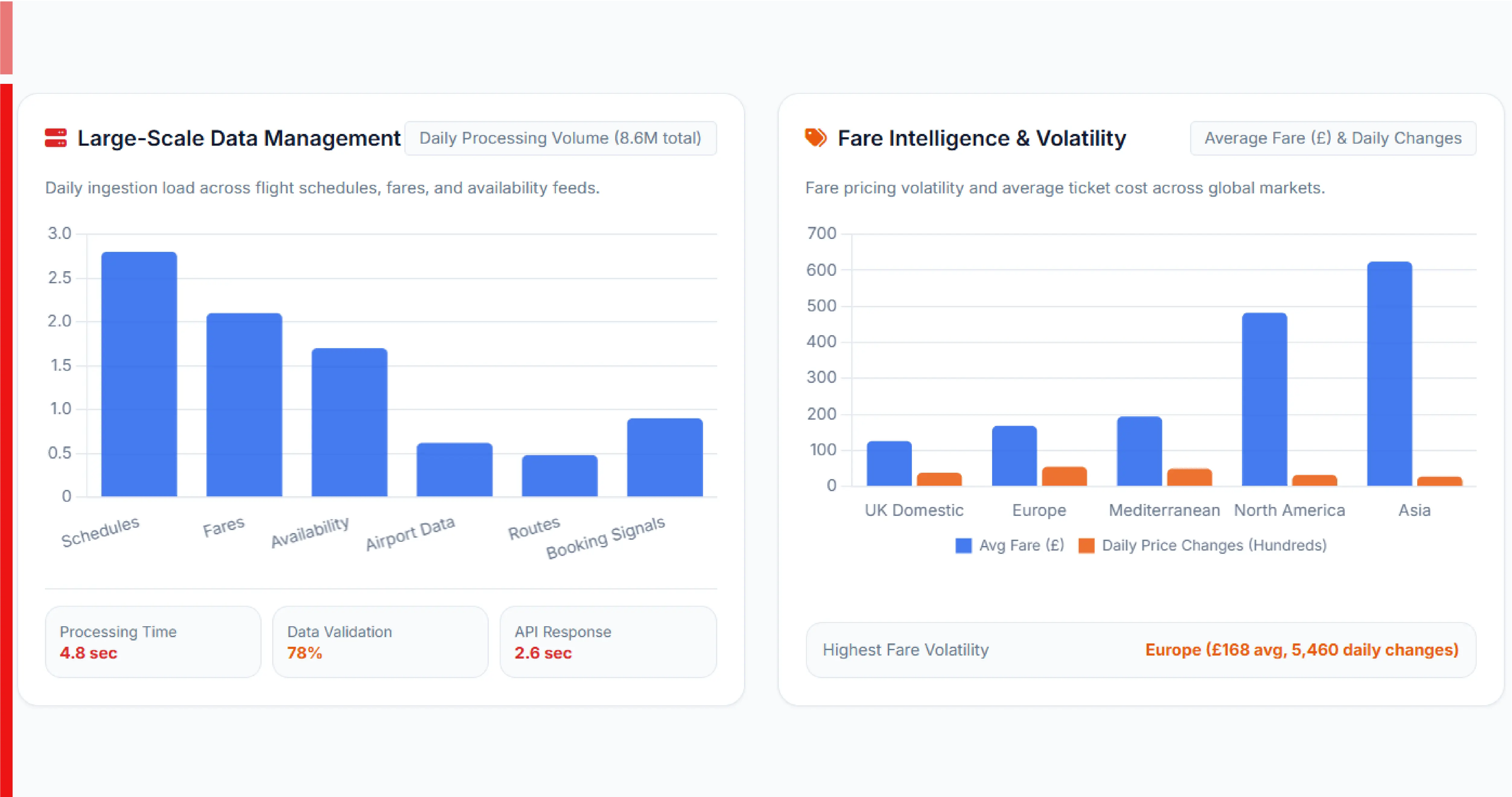
Large-Scale Data Management
Handling millions of records while ensuring speed, accuracy, and scalability was a major concern. The client needed an efficient enterprise flight data platform for travel search engines to process extensive aviation information without performance issues.
Fare Intelligence Challenges
Tracking airline pricing patterns across markets was complex due to continuous fare fluctuations. Accessing a reliable Global Flight Price Trends Dataset was essential for analyzing competitive pricing and improving revenue strategies.
Demand Forecasting Limitations
The client lacked sufficient visibility into passenger behaviour and market movements. Extracting accurate Booking Trend Insights became challenging without consolidated aviation data, affecting their ability to predict demand and optimize travel services.
Our Approach
Comprehensive Data Collection Strategy
We developed a structured approach to gather accurate airline information from multiple sources, ensuring complete coverage of routes, schedules, fares, and availability. The process focused on creating reliable datasets that supported travel analytics, operational planning, and informed business decisions.
Advanced Data Processing Framework
Our team implemented advanced processing methods to clean, normalize, and organize complex aviation records. This approach improved data accuracy, reduced inconsistencies, and enabled seamless integration of flight information into analytics systems for better performance and faster insights.
Real-Time Market Monitoring
We created a continuous monitoring system to track airline updates, fare changes, and route modifications. Through effective Seasonal Trend Analysis, the solution helped identify demand patterns, traveler preferences, and market fluctuations for improved forecasting and strategic planning.
Scalable Technology Implementation
Our approach focused on building a scalable data infrastructure capable of managing large volumes of flight records. The system was designed to support expanding travel requirements, faster data retrieval, and efficient analytics workflows across multiple aviation use cases.
Insight-Driven Data Delivery
We transformed raw aviation information into actionable insights by organizing key metrics, trends, and performance indicators. The final solution enabled travel businesses to enhance search capabilities, optimize strategies, and make data-backed decisions with greater confidence and accuracy.
Results Achieved
The project delivered accurate aviation insights, improved data accessibility, and enhanced travel analytics capabilities through structured flight dataset development.
Enhanced Flight Data Accuracy
The solution improved aviation data reliability by collecting and organizing millions of flight records with better consistency. The client gained access to accurate schedules, routes, fares, and availability details, enabling improved travel search experiences and stronger operational decision-making.
Improved Market Intelligence
The developed dataset provided valuable insights into airline operations, pricing movements, and route performance. The client successfully analyzed market conditions, identified competitive opportunities, and optimized travel strategies using structured aviation information from multiple sources and regions.
Faster Data Processing Capability
The implemented framework significantly enhanced data handling efficiency by automating collection, processing, and updating workflows. The client achieved faster access to updated flight information, reducing manual efforts and supporting scalable analytics for growing travel platform requirements.
Better Travel Platform Performance
The solution helped improve search functionality by delivering organized flight information with enhanced availability and pricing visibility. Travel platforms benefited from faster results, improved customer experiences, and more effective recommendations based on comprehensive aviation data analysis.
Stronger Business Decision Support
The final dataset empowered the client with actionable insights for forecasting demand, monitoring airline trends, and planning future strategies. The improved intelligence capabilities supported better resource allocation, competitive analysis, and long-term growth within the aviation technology sector.
| Scraped Data Parameter | Data Volume / Value |
|---|---|
| Total Flight Records Collected | 2,850,000 |
| Airlines Covered | 145 |
| Domestic Routes Analyzed | 18,500 |
| International Routes Tracked | 42,000 |
| Airports Included | 3,250 |
| Countries Covered | 195 |
| Daily Schedule Updates Processed | 750,000 |
| Flight Departure Records | 1,920,000 |
| Arrival Information Records | 1,920,000 |
| Fare Data Points Captured | 5,600,000 |
| Price Change Events Monitored | 980,000 |
| Seat Availability Records | 3,400,000 |
| Historical Flight Records Stored | 12,500,000 |
| Data Accuracy Rate | 98.7% |
| Processing Speed Improvement | 65% |
| Search Response Optimization | 55% |
Client’s Testimonial
"Working with the data solutions team transformed the way we manage flight intelligence and travel analytics. The structured aviation dataset provided us with accurate schedules, pricing insights, and route information that significantly improved our platform capabilities. Their expertise in data collection, processing, and delivery helped us overcome challenges related to fragmented airline information and frequent updates. The solution enabled faster decision-making, enhanced customer experiences, and better market analysis. We appreciate their commitment to quality, reliability, and timely execution. This partnership has become an important part of our strategy for building smarter travel solutions and expanding our aviation intelligence capabilities."
Conclusion
The case study demonstrates how structured aviation datasets can transform travel intelligence and improve decision-making for businesses. By collecting accurate flight schedules, fares, and route information, the solution enabled better analysis, forecasting, and platform optimization.
The ability to Scrape Aggregated Flight Fares helped the client monitor pricing variations, understand competitive movements, and improve travel offerings. The collected insights also supported businesses to Extract Travel Industry Trends by analyzing demand patterns, airline performance, and passenger preferences.
With advanced data collection methods, the implementation of Real-Time Travel App Data Scraping Services delivered timely and reliable information for travel platforms. Overall, the project enhanced operational efficiency, improved customer experiences, and provided a scalable foundation for future aviation analytics and travel technology growth.
FAQs
Unlock the Full Report
Enter your details to access premium pricing intelligence insights