How Does Google Flights Data Extract in Canada Help Track Seasonal Fare Trends?
Introduction
Canada’s air travel ecosystem is shaped by geography, seasonality, cross-border mobility, and fluctuating demand across provinces. From transcontinental routes like Toronto to Vancouver to international corridors connecting Montreal with Europe, airfare pricing is dynamic and constantly evolving. In this environment, leveraging Google Flights data extract in Canada provides structured, real-time airfare intelligence that supports strategic decision-making across the aviation and travel sectors.
Businesses increasingly rely on automated Google Flights Flight Data Scraping Services to capture fare listings, route options, airline competition, stopover patterns, and historical price variations. Instead of manually comparing ticket prices across dates and destinations, organizations can build centralized datasets that monitor thousands of routes simultaneously. Through systematic Google Flights Seasonal Pricing Analysis Canada, stakeholders identify high-demand periods, fare surges, and discount cycles that influence traveler behavior throughout the year.
The Strategic Importance of Canadian Flight Data
Canada’s aviation network connects vast domestic regions alongside major international gateways. Airports such as Toronto Pearson, Vancouver International, Montreal-Trudeau, Calgary International, and Ottawa International serve as high-volume hubs. Pricing patterns between these airports often reflect tourism trends, economic cycles, and corporate travel activity.
By building a Google Flights Global Flight Prices Dataset, companies gain access to structured comparisons across:
- Domestic interprovincial routes
- Cross-border U.S. connections
- Long-haul European destinations
- Asia-Pacific travel corridors
This global-to-local perspective allows analysts to understand not only fare competitiveness within Canada but also how Canadian pricing compares internationally.
For example, Toronto–New York fares may fluctuate daily due to business travel demand, while Vancouver–Tokyo prices may shift based on seasonal tourism and airline capacity adjustments.
Understanding Seasonal Fare Behavior in Canada
Seasonality plays a dominant role in Canadian airfare patterns. The summer months (June to August) often produce higher ticket prices due to tourism, school holidays, and outdoor travel demand. Winter holidays, particularly December and early January, generate another pricing peak.
By analyzing historical fare changes, companies generate Google Flights Price Prediction Insights that anticipate upcoming price movements. These predictive insights are derived from:
- Multi-year fare history
- Booking window trends
- Airline capacity announcements
- Holiday-based demand cycles
- Fuel cost sensitivity
For instance, flights from Montreal to Florida typically experience price spikes during winter, as Canadian travelers seek warmer climates. Conversely, fall months often present price stabilization opportunities on domestic routes.
This type of forecasting supports smarter booking strategies and more accurate promotional timing.
Flight Scheduling Intelligence Beyond Pricing
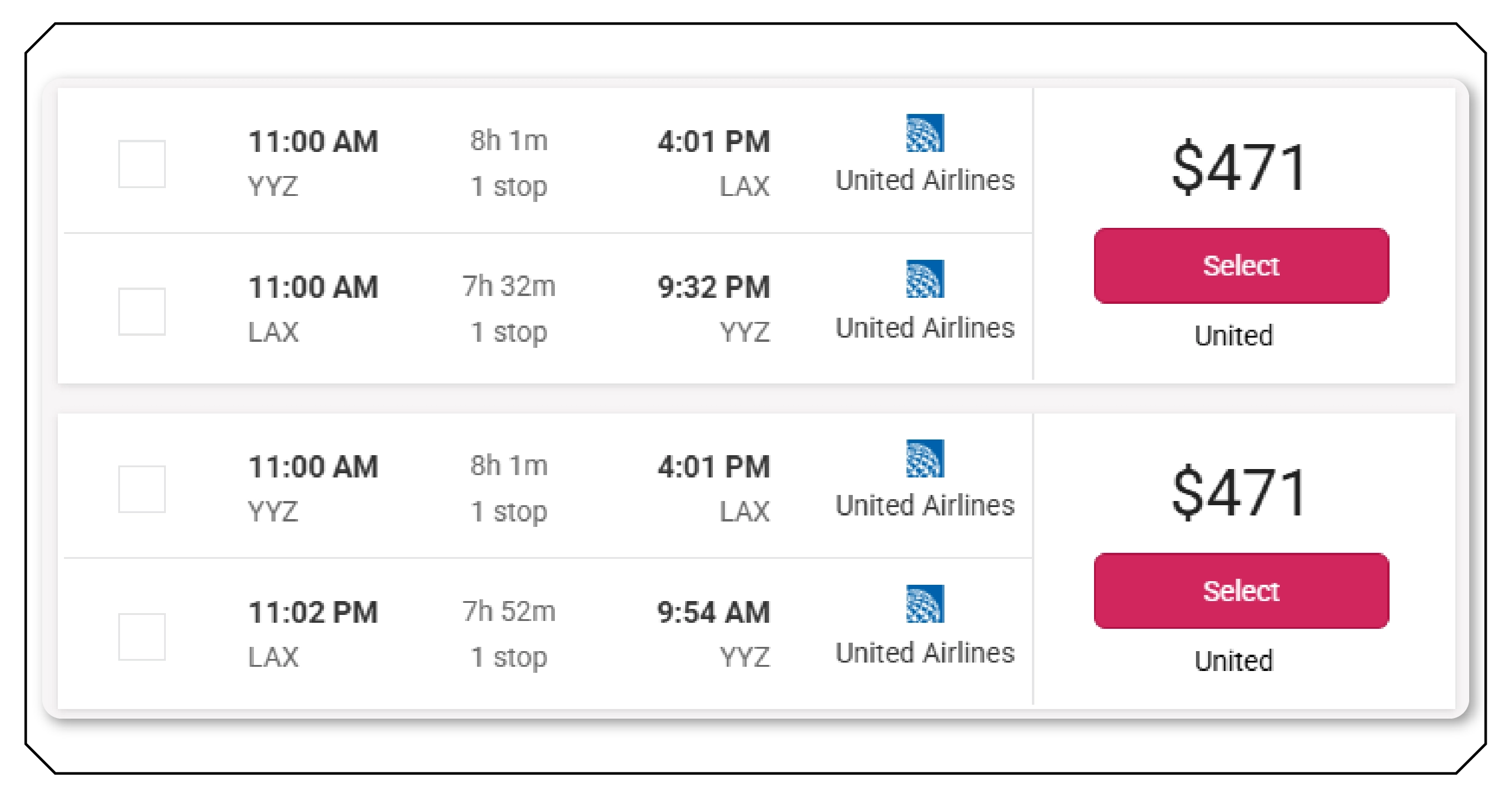
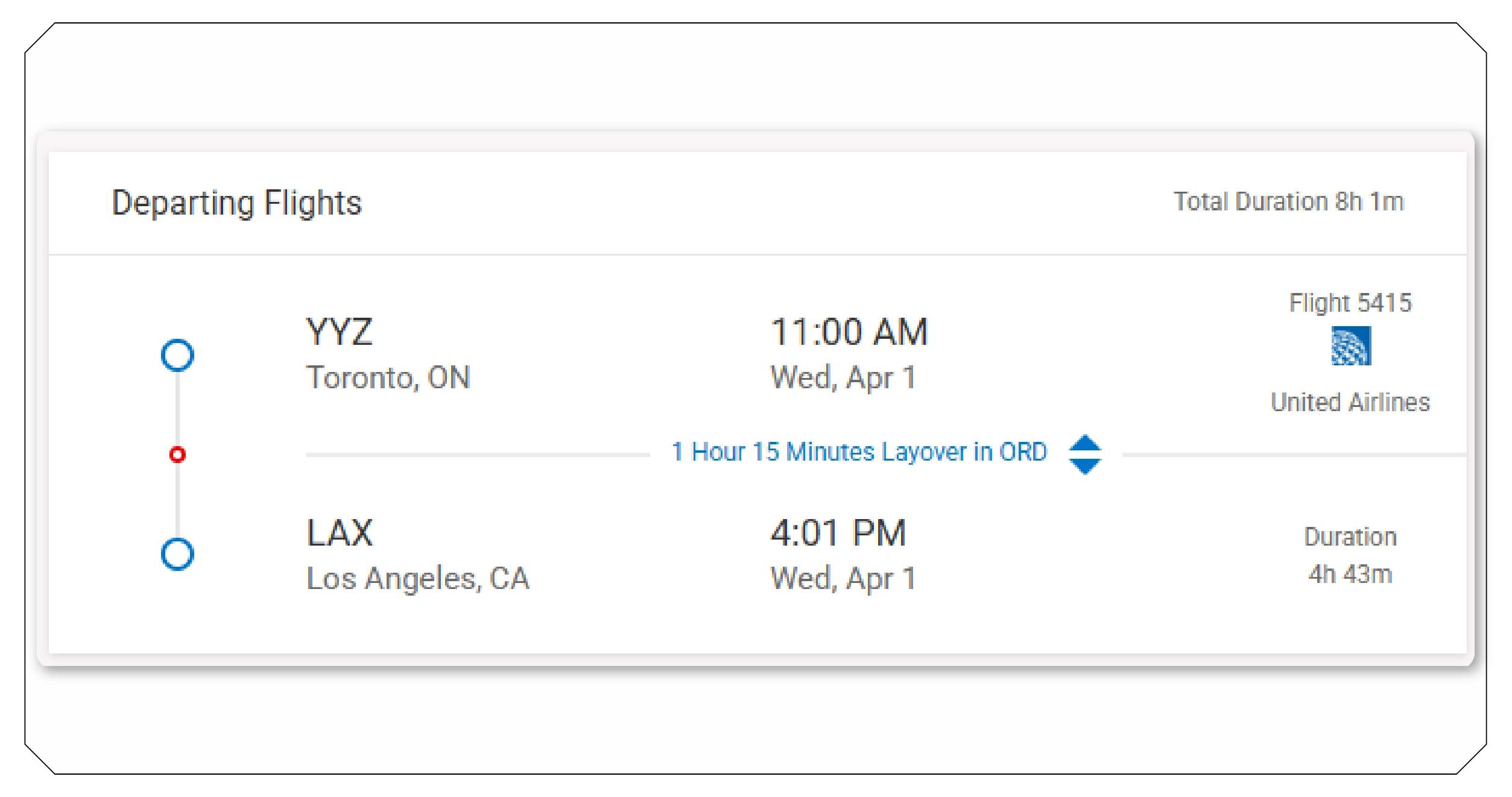
Airfare value is influenced not only by price but also by timing and frequency. Extracting scheduling information creates a comprehensive Google Flights Flight Schedules Dataset that includes departure times, stopovers, flight duration, and airline frequency.
When analysts examine scheduling alongside pricing, they often observe patterns such as:
- Increased frequency leading to competitive price drops
- Limited daily departures resulting in higher fares
- Early morning and late-night departures priced lower than peak hours
Schedule-based analysis is particularly valuable in business-heavy corridors such as Toronto–Calgary, where flight frequency may exceed 15 daily departures. This saturation typically drives fare competitiveness.
Continuous Monitoring and Real-Time Tracking
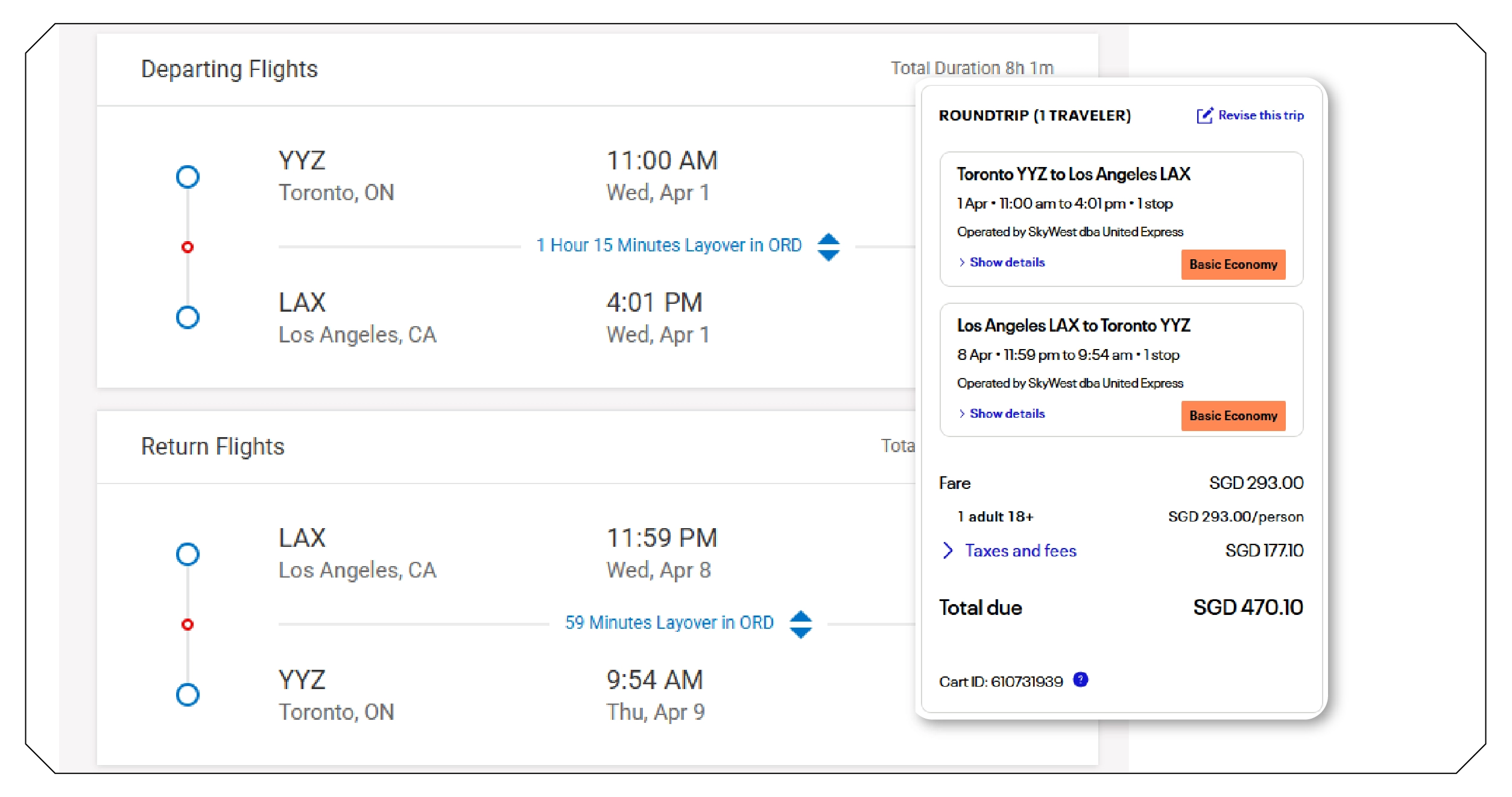
Static pricing snapshots are insufficient in today’s fast-moving travel market. Implementing Canada Flight Price Tracking for Google Flights enables organizations to monitor fare changes in real time.
Tracking systems can record price fluctuations at hourly or daily intervals. Over time, this creates a structured Google Flights Price Trends Dataset, revealing:
- Average fare volatility
- Cheapest booking windows
- Weekly price cycles
- Sudden demand-driven surges
For example, analysts may discover that Tuesday departures consistently offer lower fares on specific domestic routes, while Friday evenings carry premium pricing.
This continuous tracking empowers corporate travel managers, travel agencies, and pricing strategists to reduce costs and improve forecasting precision.
Route-Level Intelligence and Competitive Positioning
One of the most powerful applications of airfare extraction lies in route-level analysis. Canada’s aviation network includes high-demand domestic corridors and specialized international connections. Through Canada Airfare & Route Analytics for Google Flights, organizations evaluate fare behavior per origin-destination pair rather than at a national level.
Route analysis reveals:
- Which airlines dominate specific corridors
- How pricing differs between direct and connecting flights
- Seasonal volatility differences between east-west and north-south routes
- High-margin opportunities for new route entry
For instance, Toronto–Vancouver may exhibit steady demand year-round, while Calgary–Houston may show demand linked closely to the energy sector’s business travel cycle.
This level of detail supports revenue management teams in making strategic expansion or pricing adjustments.
Business Use Cases Across Industries
The applications of structured Google Flights data in Canada extend beyond airlines alone.
Travel agencies use pricing intelligence to recommend optimal booking periods and identify competitive route options for clients. Online travel aggregators integrate fare datasets into dynamic comparison engines. Tourism boards analyze inbound airfare accessibility to evaluate visitor growth potential.
Corporate travel departments rely on price monitoring tools to forecast annual travel budgets. Meanwhile, aviation research firms leverage large-scale datasets to conduct long-term passenger flow modeling and capacity planning.
Across these use cases, data accuracy and structured processing are critical to generating reliable insights.
Structuring and Processing Extracted Data
Raw airfare data must be standardized before analysis. Each data entry typically includes airport codes, travel dates, airline names, cabin classes, and total ticket cost. After extraction, this information is organized into databases that allow time-series modeling and comparative analysis.
Advanced analytics techniques transform datasets into predictive insights. Time-based modeling detects recurring seasonal cycles. Machine learning algorithms estimate price movements based on historical behavior. Correlation analysis identifies relationships between fare changes and external factors such as holidays or major events.
These structured approaches elevate airfare extraction from simple price monitoring to full-scale aviation intelligence.
Addressing Technical and Market Challenges
Airfare data extraction in Canada involves several complexities. Pricing updates frequently, inventory availability changes in real time, and route competition varies by region. Additionally, exchange rates may influence international fare comparisons.
Organizations must implement resilient automation systems that maintain consistent data flow while ensuring compliance with platform policies. Data validation processes are essential to avoid inaccuracies caused by temporary fare changes or promotional discounts.
With proper infrastructure, these challenges become manageable, allowing businesses to maintain long-term analytical reliability.
The Future of Canadian Airfare Analytics
As artificial intelligence adoption accelerates, airfare analytics is shifting toward predictive and prescriptive intelligence. Instead of merely observing price movements, companies aim to forecast and optimize them.
Enhanced modeling techniques are strengthening Canada Airport Fare Forecasting Google Flights, helping stakeholders anticipate pricing behavior across major and regional airports with greater precision.
Similarly, detailed corridor-based evaluations are advancing Google Flights Route Price Analysis Canada, enabling data-driven decisions on route expansion, pricing strategy, and market competitiveness.
Organizations that wish to scale these capabilities often integrate automated systems to Extract Google Flights API Data, feeding structured airfare intelligence directly into dashboards, forecasting models, and revenue optimization platforms.
How Travel Scrape Can Help You?
1. Real-Time Airfare Monitoring Across Canadian Routes
Our data scraping services enable continuous tracking of airfare changes across major and regional Canadian airports. By extracting live pricing data, airline availability, and route frequency, we help businesses monitor fluctuations as they happen. This ensures you never rely on outdated pricing information and can respond instantly to market shifts, seasonal demand spikes, or competitive fare adjustments across domestic and international routes.
2. Advanced Seasonal and Demand-Based Insights
Through structured historical datasets and intelligent processing, we identify seasonal pricing cycles, booking window patterns, and holiday-driven demand surges. Our analytics help you understand when fares typically rise or stabilize, allowing you to plan promotions, adjust travel budgets, or optimize revenue strategies. Instead of reacting to price changes, you gain predictive insights that strengthen forecasting and long-term planning.
3. Route-Level Competitive Intelligence
We provide detailed route-level analysis that reveals airline dominance, pricing gaps between direct and connecting flights, and volatility across origin-destination pairs. This granular intelligence allows airlines, OTAs, and travel agencies to identify profitable corridors, underpriced opportunities, and emerging travel demand trends. With structured route analytics, your decisions are based on measurable performance indicators rather than assumptions.
4. Customizable Data Integration and Dashboards
Our scraping solutions deliver clean, structured datasets that integrate seamlessly with your BI tools, dashboards, or forecasting systems. Whether you require API-based data feeds, CSV exports, or cloud database integration, we ensure your airfare intelligence is accessible, organized, and analysis-ready. This simplifies reporting processes and accelerates executive-level decision-making with real-time visual insights.
5. Scalable, Secure, and Compliant Automation
We design scalable automation pipelines capable of handling large volumes of flight data across multiple cities and dates. Our processes prioritize data accuracy, consistency, and compliance with platform standards. As your analytical needs grow, our infrastructure adapts, allowing you to expand coverage, add new routes, and maintain continuous monitoring without operational disruption.
Conclusion
The Canadian aviation market is characterized by seasonal demand swings, vast geographic dispersion, and intense competition across key corridors. Extracting structured airfare data from Google Flights transforms fragmented pricing information into actionable intelligence.
From predictive modeling and seasonal analysis to route-level competitiveness and real-time tracking, airfare data extraction provides measurable strategic advantages. Businesses that invest in structured datasets, advanced analytics, and forecasting tools gain the ability not only to monitor the market but to anticipate it.
In an industry where pricing can shift within hours, data-driven foresight is no longer optional—it is the foundation of competitive success in Canadian aviation.
Ready to elevate your travel business with cutting-edge data insights? Scrape Aggregated Flight Fares to identify competitive rates and optimize your revenue strategies efficiently. Discover emerging opportunities with tools to Extract Travel Website Data, leveraging comprehensive data to forecast market shifts and enhance your service offerings. Real-Time Travel App Data Scraping Services helps stay ahead of competitors, gaining instant insights into bookings, promotions, and customer behavior across multiple platforms. Get in touch with Travel Scrape today to explore how our end-to-end data solutions can uncover new revenue streams, enhance your offerings, and strengthen your competitive edge in the travel market.
Unlock the Full Report
Enter your details to access premium pricing intelligence insights