How Does Scraping Dubai to Mediterranean Costa Cruise Data Improve Travel Market Intelligence?
Introduction
The cruise travel industry has evolved into a highly dynamic pricing ecosystem where fares fluctuate based on seasonality, cabin type, demand spikes, and departure schedules. Among the most sought-after routes, Dubai to Mediterranean cruises stand out due to their luxury appeal and multi-destination experiences across Europe and the Middle East. Businesses, travel analysts, and aggregators increasingly rely on structured digital intelligence to understand these shifts in real time.
At the core of this transformation is Scraping Dubai to Mediterranean Costa Cruise data, which enables companies to extract structured insights from cruise listings, booking engines, and travel portals. By systematically collecting this information, organizations can analyze pricing variations, availability patterns, and consumer demand trends across multiple platforms.
Modern travel intelligence systems also depend heavily on Costa Cruise Data Scraping, which allows access to granular data points such as itinerary changes, cabin availability, onboard offerings, and seasonal fare adjustments. This structured extraction helps businesses build predictive pricing models and competitive benchmarks.
Another critical dimension is Costa Cruise cabin pricing intelligence, which focuses specifically on understanding how cabin categories—interior, ocean view, balcony, and suites—are priced differently depending on demand cycles, departure dates, and promotional campaigns. Together, these data layers create a powerful foundation for strategic decision-making in the cruise travel industry.
Understanding the Dubai to Mediterranean Cruise Ecosystem
The Dubai to Mediterranean cruise route connects two major tourism hubs, offering travelers a blend of Middle Eastern luxury and European coastal charm. Cruise operators, especially Costa Cruises, design seasonal itineraries that adjust frequently based on demand, geopolitical conditions, and fuel costs.
Within this ecosystem, pricing is never static. Instead, it is influenced by real-time occupancy rates, competitor pricing, and travel season peaks such as summer holidays and festive periods. This makes manual tracking insufficient and highlights the importance of structured digital intelligence systems.
Cruise aggregators and travel analytics firms increasingly rely on automated data extraction pipelines to track fare movements across multiple booking engines. These systems help identify undervalued routes, high-demand sailing windows, and promotional pricing strategies used by cruise operators.
Data-Driven Insights into Cruise Pricing Behavior
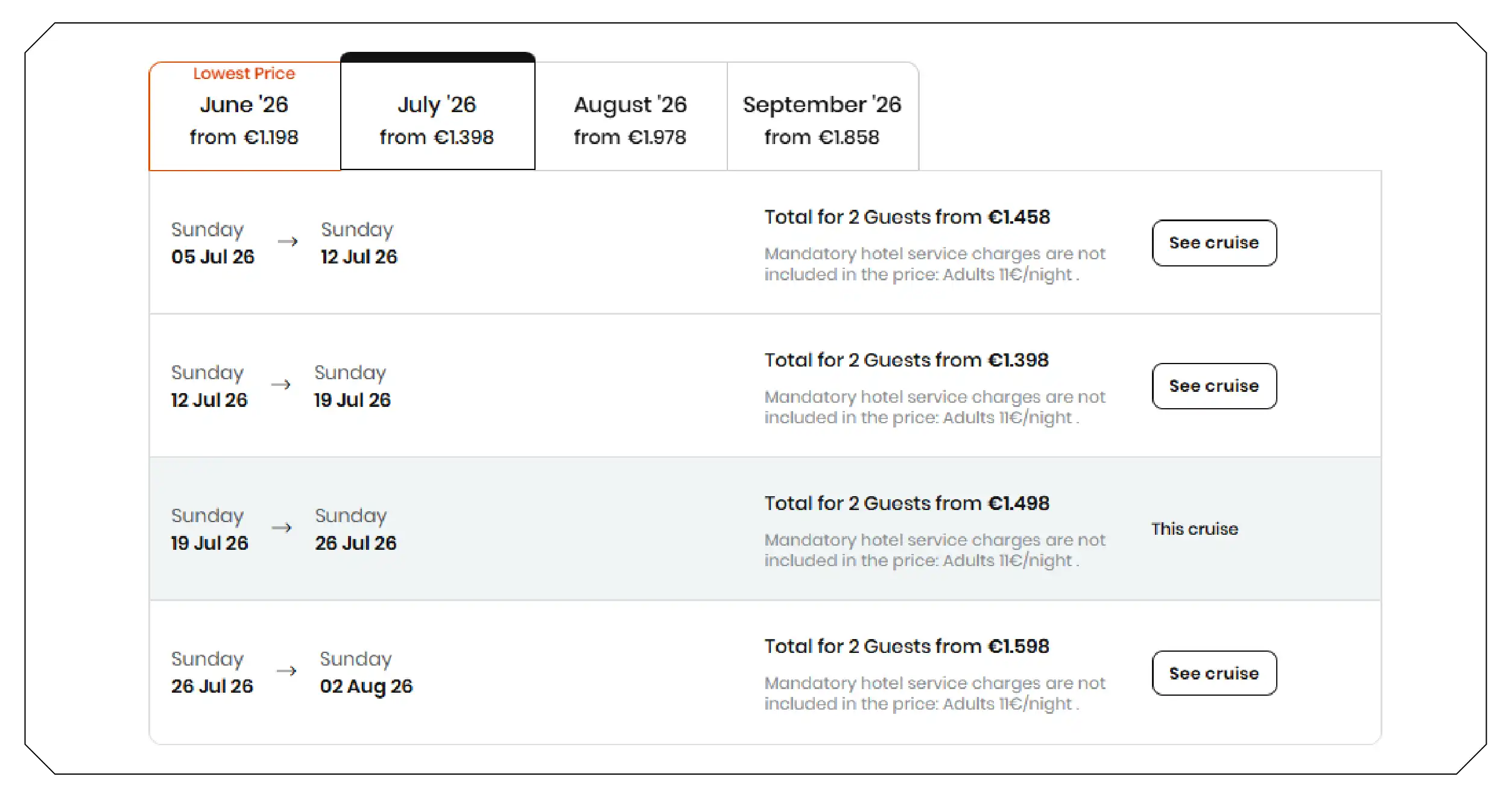
Cruise pricing is one of the most complex models in the travel industry. Unlike fixed-ticket transportation systems, cruise fares change dynamically based on hundreds of variables. This is where structured intelligence plays a transformative role.
Costa Cruise sailing date pricing analytics helps organizations understand how pricing varies depending on departure timing. Early bookings often offer lower fares, while last-minute bookings may either spike due to demand or drop due to unsold inventory.
In parallel, Scraping Costa Cruise Price Data enables continuous monitoring of fare fluctuations across different platforms. This ensures that travel platforms and agencies can respond instantly to competitor changes and promotional campaigns.
Another key dimension is Costa Cruise fare comparison analytics, which allows businesses to compare pricing across multiple vendors, travel portals, and booking channels. This ensures transparency and helps identify the most competitive offers available in the market.
Additionally, Costa Cruise Price Monitoring provides real-time tracking of fare updates, enabling agencies to adjust their pricing strategies dynamically. This is especially useful in highly competitive cruise routes like Dubai to Mediterranean, where small price differences can significantly influence booking decisions.
Demand Patterns and Market Intelligence
Understanding demand is just as important as tracking prices. Seasonal tourism trends, global travel sentiment, and regional holidays significantly impact cruise bookings.
Dubai to Mediterranean cruise demand intelligence plays a crucial role in identifying when travelers are most likely to book cruises. For example, demand typically increases during winter months in Europe and during summer vacation periods in the Middle East.
By analyzing search behavior, booking frequency, and occupancy trends, businesses can forecast demand spikes and optimize inventory allocation. This helps cruise operators maximize revenue while ensuring better occupancy rates across sailings.
Furthermore, demand intelligence also supports marketing strategies, allowing companies to target potential travelers with personalized offers based on historical booking patterns and preferences.
Strategic Applications of Cruise Data Intelligence
Cruise data scraping is not just about collecting information; it is about transforming raw data into actionable business intelligence. Travel companies, OTAs, and analytics providers use this data for multiple strategic applications.
One of the primary applications is revenue optimization, where pricing models are adjusted based on demand forecasts and competitor behavior. Another important application is market segmentation, where travelers are categorized based on preferences such as luxury travel, family cruises, or budget-friendly packages.
Additionally, predictive analytics helps businesses anticipate future price trends and adjust their promotional strategies accordingly. This ensures that companies remain competitive while maximizing profitability in a highly volatile market.
How Travel Scrape Can Help You?
Advanced Cruise Data Extraction Systems
Our solutions provide structured extraction pipelines that capture real-time cruise data from multiple booking platforms. This ensures accurate and continuous access to fare updates, itinerary changes, and availability patterns, enabling businesses to stay ahead in highly competitive cruise markets with reliable intelligence.
Scalable Pricing Intelligence Architecture
We design scalable systems capable of handling large volumes of cruise pricing data across global routes. These systems process dynamic fare updates efficiently, ensuring that travel companies can analyze pricing shifts and optimize their strategies without delays or data inconsistencies in operations.
Real-Time Market Tracking Solutions
Our technology enables continuous monitoring of cruise pricing fluctuations across different vendors. Businesses can instantly detect price drops, promotional offers, or demand spikes, allowing them to react quickly and maintain competitive advantage in fast-changing travel and cruise booking environments worldwide.
Predictive Demand Forecasting Models
We help organizations forecast cruise demand using historical booking data and real-time search trends. These insights allow businesses to anticipate seasonal spikes, allocate inventory efficiently, and develop targeted marketing strategies that align with traveler behavior and evolving cruise tourism trends.
Competitive Benchmarking Intelligence Tools
Our services provide detailed benchmarking across cruise operators and booking platforms. This helps companies compare pricing strategies, identify gaps in offerings, and refine their market positioning using structured intelligence derived from continuous data extraction and advanced analytics frameworks.
Conclusion: Transforming Cruise Data into Business Advantage
The cruise industry is rapidly becoming data-driven, where every pricing decision and booking trend is influenced by real-time analytics. Companies that leverage structured intelligence gain a significant advantage in understanding market movements and customer behavior.
With advanced systems capable of continuous monitoring and extraction, businesses can optimize pricing, improve occupancy rates, and enhance customer satisfaction. This is especially critical on high-demand routes such as Dubai to Mediterranean cruises, where competition is intense and pricing shifts are frequent.
The integration of Dubai to Mediterranean Costa cruise booking price monitoring empowers travel companies to track fare movements with precision and respond quickly to market fluctuations.
At the same time, destination-based Costa cruise fare intelligence helps businesses understand how pricing varies across different ports, regions, and seasonal travel patterns.
Finally, Real-Time Price Intelligence enables organizations to make instant, data-backed decisions that improve competitiveness, maximize revenue, and strengthen long-term strategic planning in the cruise travel ecosystem.
Ultimately, the future of cruise travel lies in intelligent automation and continuous data visibility, where every fare change becomes an opportunity for strategic decision-making and revenue optimization.
Ready to elevate your travel business with cutting-edge data insights? Scrape Aggregated Flight Fares to identify competitive rates and optimize your revenue strategies efficiently. Discover emerging opportunities with tools to Extract Travel Website Data, leveraging comprehensive data to forecast market shifts and enhance your service offerings. Real-Time Travel App Data Scraping Services helps stay ahead of competitors, gaining instant insights into bookings, promotions, and customer behavior across multiple platforms. Get in touch with Travel Scrape today to explore how our end-to-end data solutions can uncover new revenue streams, enhance your offerings, and strengthen your competitive edge in the travel market.
Unlock the Full Report
Enter your details to access premium pricing intelligence insights