Multi-Modal Travel Transfer Pricing Intelligence for Smarter Global Transport Analytics
Introduction
This case study demonstrates how our advanced analytics ecosystem enables seamless tracking of pricing dynamics across Indonesia, Philippines, India, and Japan. By leveraging Multi-Modal Travel Transfer Pricing Intelligence, we unify fragmented datasets from buses, ferries, railways, flights, and private transfers into a centralized intelligence framework that supports strategic pricing decisions.
Our solution is built to deliver multi-modal travel pricing intelligence Asia, allowing businesses to understand how different transport modes compete within the same route. For instance, a traveler choosing between a ferry and a budget flight in Indonesia or between rail and bus in India creates pricing interdependencies that traditional systems fail to capture. By analyzing these overlaps, companies can identify pricing inefficiencies and optimize their offerings accordingly.
A key strength of our platform lies in route-level competitor benchmarking. We continuously monitor thousands of routes, comparing fares across operators and transport modes in real time. This enables businesses to detect fluctuations caused by demand surges, seasonal travel, or promotional campaigns. For example, when airline prices spike during holidays, our system identifies a shift in demand toward buses or ferries, helping clients respond with competitive pricing strategies.
To support ground transportation analysis, our Bus Data Scraping Service extracts highly granular data, including ticket prices, seat availability, operator schedules, and booking trends. This is particularly valuable in markets like India and Indonesia, where bus networks are extensive and pricing is highly dynamic. By benchmarking this data against competitors, businesses can refine pricing tiers, improve occupancy rates, and enhance route profitability.
The real-time dashboard delivery further enhances decision-making by presenting actionable insights through intuitive visualizations. Clients can track fare changes, evaluate route performance, and monitor competitor behavior instantly. These dashboards also highlight emerging travel patterns, such as shifts between transport modes or growing demand on specific corridors.
In addition, our system incorporates predictive analytics to forecast pricing trends based on historical and real-time data. This proactive approach allows businesses to anticipate market changes, adjust pricing strategies in advance, and stay ahead of competitors.
Overall, this case study highlights how integrating multi-modal transport data into a single intelligence layer empowers travel companies to make smarter, faster, and more profitable decisions in complex and competitive markets.
The Client
The client is a fast-growing travel technology company focused on optimizing pricing strategies across multiple transportation modes in Asia. They specialize in route-level transport pricing benchmarking, enabling them to analyze fare variations across buses, trains, ferries, and flights for improved competitiveness. Their platform integrates multi-platform travel fare comparison Benchmarking to deliver accurate insights into pricing trends across various booking channels and service providers.
With a strong presence in markets like India, Indonesia, the Philippines, and Japan, the client relies heavily on data-driven decision-making to enhance operational efficiency and customer satisfaction. By leveraging our Train Data Scraping Service, they gain access to detailed rail pricing, schedules, and availability data, helping them compare routes effectively and refine their pricing models. Their goal is to create a unified travel intelligence ecosystem that supports dynamic pricing, improves customer experience, and maximizes revenue growth across highly competitive and diverse transportation networks.
Challenges in the Travel Industry
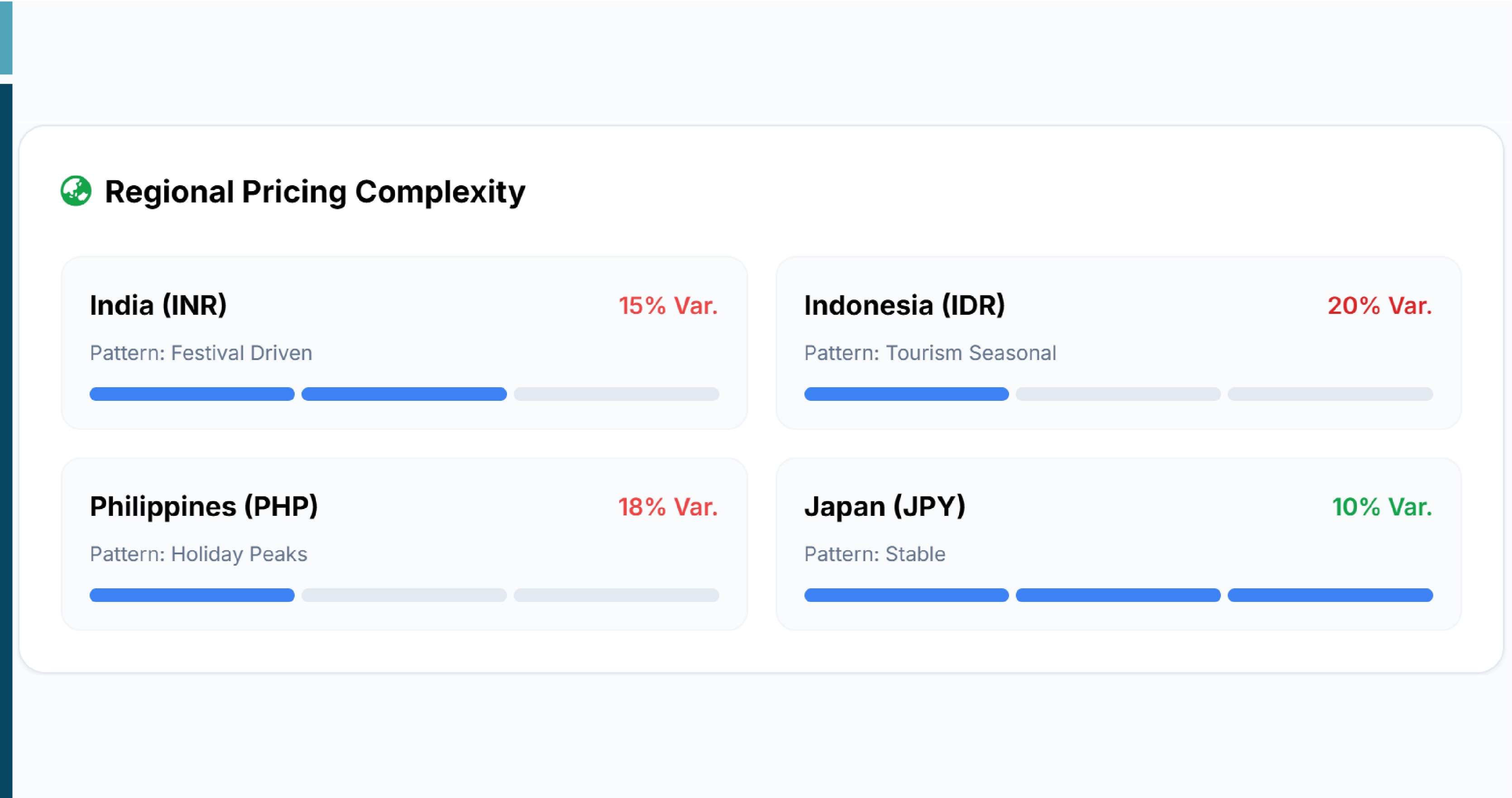
The client faced multiple operational and analytical challenges while managing pricing intelligence across diverse transportation modes and regions. Fragmented data sources, inconsistent pricing formats, and lack of unified visibility made it difficult to maintain competitiveness and respond quickly to dynamic market changes.
Fragmented Data Across Transport Modes
The client struggled to consolidate data from buses, ferries, railways, and airlines due to inconsistent formats and sources. This fragmentation limited visibility and made building a real-time transport pricing intelligence dashboard extremely complex and resource-intensive for accurate decision-making.
Limited Visibility in Private Transfer Pricing
Capturing accurate pricing for private taxis and transfers across Asian markets was challenging due to unstructured data sources. The absence of reliable private transfer pricing data extraction Asia restricted their ability to benchmark and optimize pricing strategies effectively across cities.
Regional Complexity in Pricing Trends
Operating across multiple countries introduced inconsistencies in pricing behavior, currency, and demand patterns. Managing travel pricing intelligence Indonesia, Philippines, India, Japan required handling diverse market dynamics, making it difficult to standardize insights and maintain pricing accuracy across regions.
Inconsistent Ferry Data Availability
Ferry operators often lacked structured digital platforms, making data extraction difficult. Without dependable Ferry Data Scraping Services, the client faced gaps in route-level analysis, limiting their ability to compare ferry pricing with other transport modes in coastal and island regions.
Dynamic Airline Pricing Volatility
Airfare prices changed frequently due to demand, competition, and external factors. Without efficient Airline Data Scraping Services, the client struggled to track real-time fare fluctuations, impacting their ability to respond quickly with competitive pricing and accurate benchmarking insights.
Our Approach
Unified Data Aggregation Framework
We designed a centralized system to collect and normalize data from buses, ferries, trains, flights, and private transfers. This ensured consistent data formats, improved accessibility, and enabled seamless integration across multiple sources for comprehensive pricing analysis and decision-making.
Advanced Route-Level Mapping
Our team implemented intelligent route-matching algorithms to align similar routes across different transport modes and providers. This allowed accurate comparisons, reduced duplication, and delivered meaningful insights into pricing variations, helping the client understand competitive positioning across regions and travel options.
Real-Time Data Processing Pipeline
We built a scalable pipeline capable of processing high-frequency data updates from multiple sources. This ensured that pricing changes were captured instantly, enabling the client to monitor fluctuations, respond quickly to market dynamics, and maintain up-to-date intelligence across all routes.
Custom Analytics and Visualization
We developed tailored dashboards with interactive visualizations to present complex pricing data in a simplified manner. These tools helped stakeholders track trends, identify anomalies, and make informed decisions through clear insights into route performance and competitive movements.
Predictive Insights and Optimization
Our solution incorporated historical data analysis and forecasting models to predict pricing trends and demand shifts. This empowered the client to proactively adjust pricing strategies, optimize inventory, and improve revenue generation by anticipating changes before they occurred.
Results Achieved
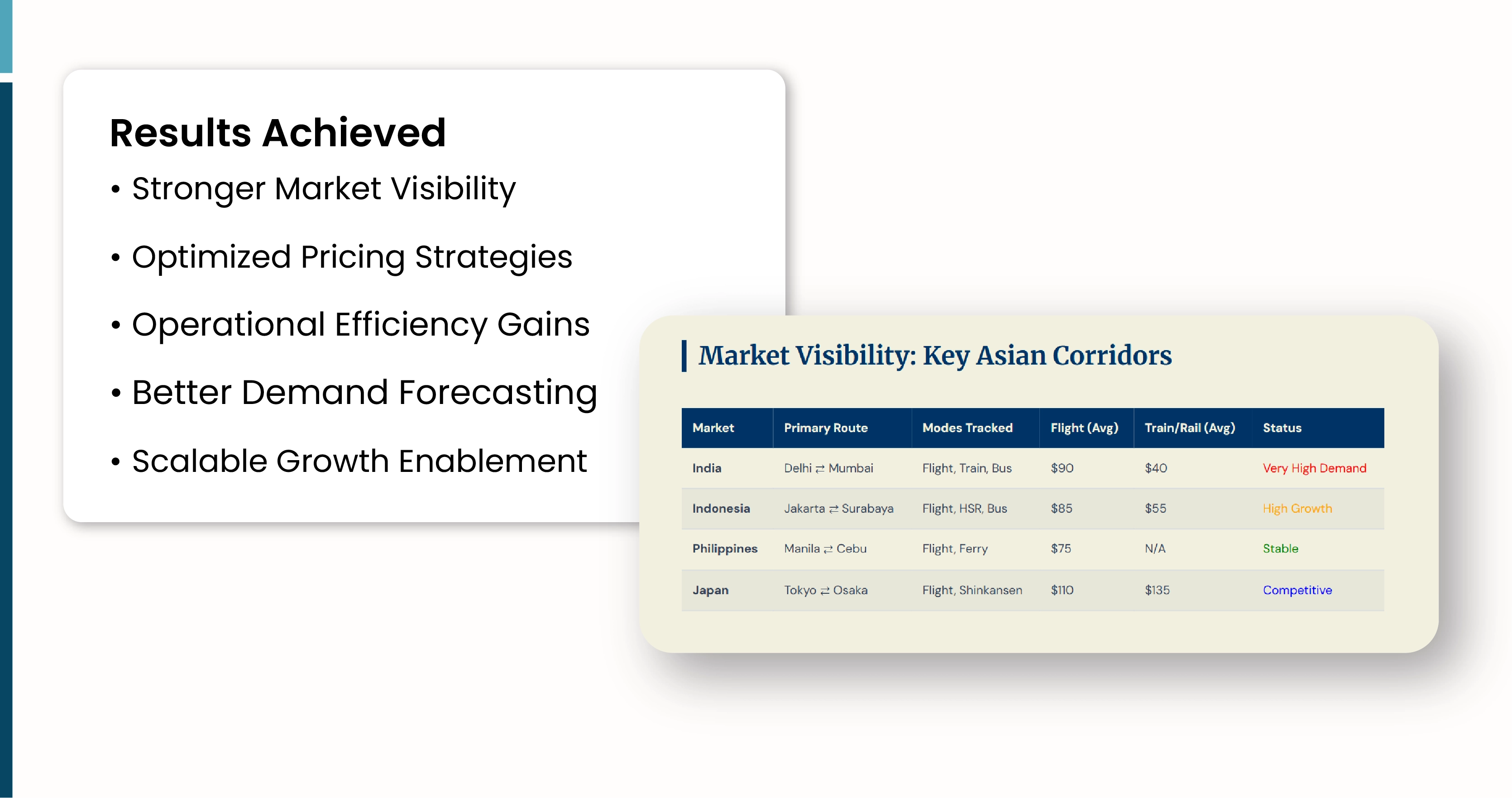
Our implementation transformed fragmented transport data into a powerful decision-making engine, delivering measurable gains in pricing strategy, operational efficiency, and market responsiveness across multiple regions and transport modes.
Stronger Market Visibility
The client gained deeper visibility into pricing trends across routes and transport types. This enabled better identification of demand patterns, competitor strategies, and fare gaps, allowing more informed decisions and improved alignment with evolving market conditions across regions.
Optimized Pricing Strategies
Access to consolidated and timely data helped the client refine pricing models. They could adjust fares dynamically based on demand fluctuations, seasonal trends, and competitor activity, leading to more competitive offerings and improved customer engagement across all platforms.
Operational Efficiency Gains
Automation significantly reduced manual intervention in data collection and analysis. Teams could focus on strategic planning rather than data handling, resulting in faster workflows, reduced operational costs, and improved overall efficiency in managing large-scale transport datasets.
Better Demand Forecasting
With access to historical and real-time insights, the client improved demand prediction accuracy. This allowed proactive planning, better inventory management, and more effective allocation of resources across high-demand and low-demand routes in different regions.
Scalable Growth Enablement
The solution provided a flexible and scalable infrastructure that supported expansion into new markets and transport modes. The client could seamlessly onboard additional data sources while maintaining performance, ensuring long-term sustainability and growth.
Sample Scraped Transport Pricing Dataset
| Country | Route | Type | Operator | Time | Platform | Price ($) | Availability | Duration | Date Collected |
|---|---|---|---|---|---|---|---|---|---|
| India | Delhi – Jaipur | Bus | RedBus Travels | 08:00 AM | Web | 12 | Available | 5h | 2026-03-10 |
| India | Mumbai – Goa | Train | IRCTC Express | 06:30 PM | App | 18 | Waitlist | 10h | 2026-03-10 |
| Indonesia | Jakarta – Bali | Flight | AirAsia | 09:45 AM | Web | 55 | Available | 2h | 2026-03-11 |
| Indonesia | Surabaya – Lombok | Ferry | FerryFast ID | 07:00 AM | Web | 20 | Limited | 6h | 2026-03-11 |
| Philippines | Manila – Cebu | Flight | Cebu Pacific | 01:00 PM | App | 60 | Available | 1.5h | 2026-03-12 |
| Philippines | Batangas – Mindoro | Ferry | OceanJet | 10:30 AM | Web | 15 | Available | 2h | 2026-03-12 |
| Japan | Tokyo – Osaka | Train | Shinkansen | 07:00 AM | App | 110 | Available | 2.5h | 2026-03-13 |
| Japan | Osaka – Hiroshima | Bus | JR Bus | 11:00 PM | Web | 35 | Available | 6h | 2026-03-13 |
| India | Bangalore – Chennai | Private Taxi | Ola Rentals | Flexible | App | 75 | Available | 6h | 2026-03-14 |
| Indonesia | Bali – Gili Islands | Ferry | BlueWater Express | 09:00 AM | Web | 25 | Limited | 3h | 2026-03-14 |
Client’s Testimonial
"Working with this team has completely transformed how we approach pricing intelligence across multiple transport modes. Their ability to aggregate and deliver real-time, route-level insights has significantly improved our decision-making speed and accuracy. We now have clear visibility into competitor pricing and market trends, which has helped us optimize our strategies and boost revenue. The dashboards are intuitive, and the data reliability is exceptional. Their scalable solution continues to support our expansion across new regions seamlessly."
Conclusion
The final outcome delivered a transformative impact on the client’s pricing strategy and operational efficiency across multiple regions and transport modes. By implementing advanced Competitor Benchmarking, the client gained clear visibility into market positioning, enabling them to adjust fares dynamically and stay ahead of competitors.
With the integration of Travel Data Intelligence, the client successfully unified fragmented datasets into a single, actionable ecosystem. This resulted in improved pricing accuracy, faster decision-making, and better demand forecasting. The real-time insights allowed the team to respond instantly to market fluctuations, optimize route performance, and enhance customer conversion rates.
Overall, the solution empowered the client to scale efficiently, expand into new markets, and achieve sustainable revenue growth through data-driven strategies.
FAQs
Unlock the Full Report
Enter your details to access premium pricing intelligence insights