How Can the 2026 Hotel Room Types and Suites Data Scraping Guide Transform Hospitality Analytics?
Introduction
The hospitality industry is entering a new era where data-driven decisions are becoming essential for hotels, online travel agencies, market researchers, and hospitality technology providers. With increasing competition among hotels and changing traveler expectations, businesses need accurate insights into room categories, pricing patterns, availability, and guest preferences. The 2026 Hotel Room Types and Suites Data Scraping Guide explains how automated data collection helps organizations analyze accommodation offerings and improve strategic decision-making.
Modern travelers no longer choose hotels only based on location and price. They compare room sizes, facilities, views, cancellation policies, luxury features, and personalized services before making reservations. Tracking Room Type Availability across multiple booking platforms enables businesses to understand inventory changes, identify demand patterns, and optimize pricing strategies.
A structured hotel room types dataset provides valuable information about different accommodations, including standard rooms, deluxe rooms, executive suites, villas, family rooms, and luxury categories. By collecting and analyzing this information, hospitality businesses can improve competitive benchmarking, forecast demand, and create better revenue strategies.
Growing Importance of Hotel Room Data Collection
The hotel industry has become highly competitive, with thousands of properties competing across online booking platforms. Every hotel uses different naming conventions, room descriptions, and pricing approaches, making it difficult for businesses to compare accommodations manually.
Automated data collection helps transform scattered hotel listings into structured datasets that businesses can analyze efficiently. Instead of reviewing individual hotel pages, organizations can collect comprehensive accommodation information from multiple sources and evaluate market trends in real time.
Hotel room data scraping provides visibility into important factors such as room categories, occupancy limits, available dates, pricing variations, amenities, and booking conditions. This information supports travel companies, hotel chains, investors, and analytics providers in understanding market behavior.
For example, a hotel management company can compare how competitors price similar suite categories during peak seasons. Similarly, a travel marketplace can identify which room types receive higher customer demand and adjust recommendations accordingly.
Understanding Different Hotel Room Categories
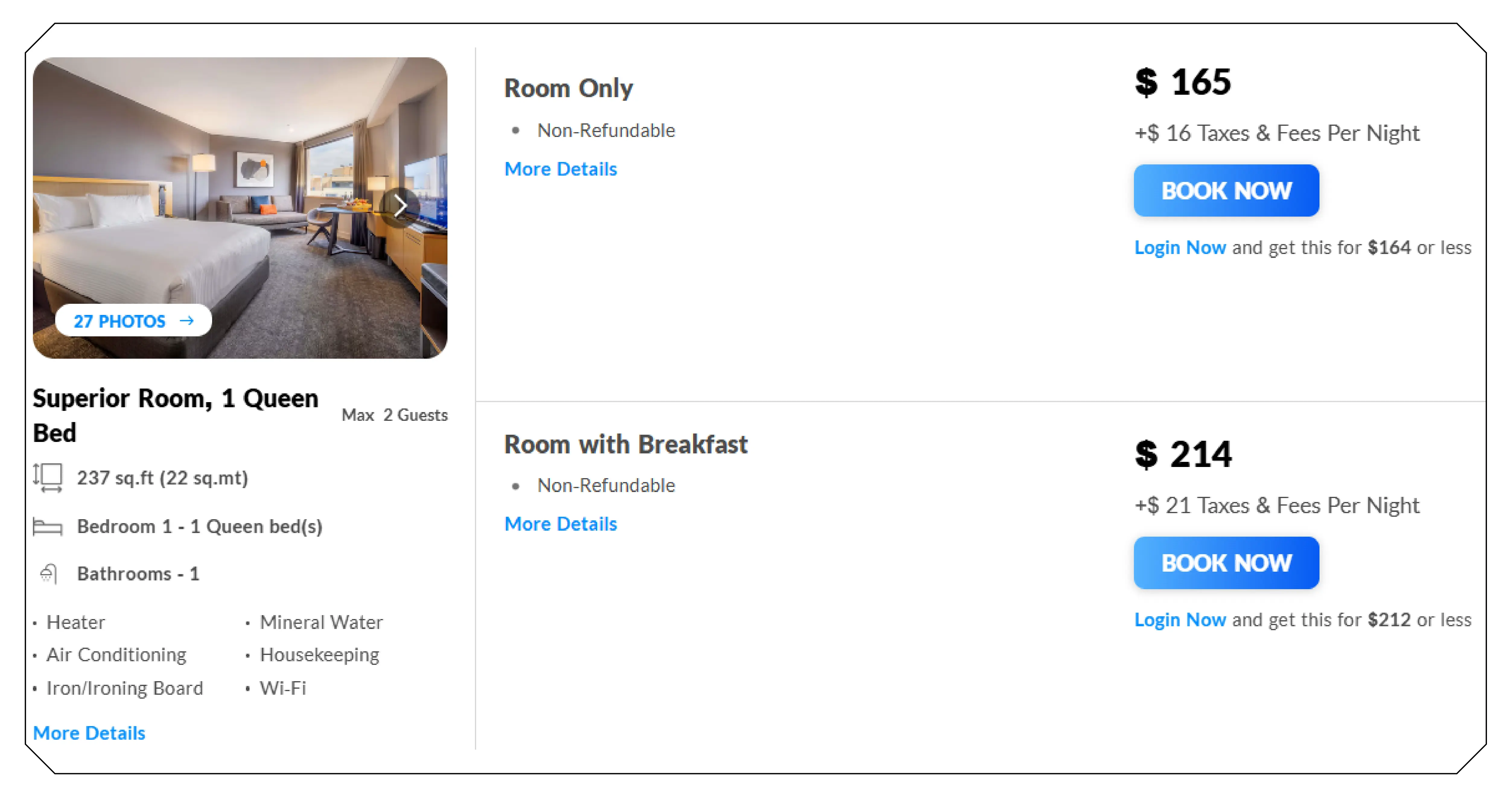
Hotel accommodations have evolved significantly, with properties offering specialized rooms designed for different traveler segments. Understanding these categories is essential for businesses looking to analyze market positioning and customer preferences.
Standard rooms remain the most common accommodation type across hotels worldwide. These rooms usually include basic facilities such as beds, bathrooms, Wi-Fi access, and essential guest services. Monitoring standard room pricing helps businesses understand competitive entry-level pricing strategies.
Deluxe and premium rooms usually offer additional benefits, including larger spaces, upgraded furniture, better views, and enhanced amenities. These categories often attract travelers willing to pay more for improved comfort.
Executive rooms are designed mainly for business travelers and frequently include workspace facilities, lounge access, meeting services, and premium support. Tracking executive room demand provides insights into corporate travel trends.
Luxury suites represent the highest-value accommodation segment. Properties may offer junior suites, presidential suites, penthouses, honeymoon suites, and exclusive villas. Hotel suites demand and availability monitoring helps businesses analyze luxury travel growth and premium customer behavior.
Role of Hotel Room Price Data in Market Analysis
Pricing is one of the most important factors influencing hotel booking decisions. Hotel rates constantly change depending on seasonality, occupancy levels, competitor pricing, local events, and customer demand.
A comprehensive Hotel Room Price Trends Dataset allows businesses to analyze historical and current pricing patterns. This information helps revenue managers identify pricing opportunities, optimize discounts, and improve forecasting accuracy.
For example, hotels can understand when competitors increase prices during holidays or reduce rates during low-demand periods. Travel platforms can also use pricing intelligence to recommend competitive offers to customers.
Dynamic pricing has become a major strategy in hospitality. Hotels now adjust room rates multiple times based on demand signals. Continuous data monitoring enables businesses to track these changes and make faster pricing decisions.
Extracting Hotel Accommodation Information Through Data Scraping
Modern hospitality businesses require detailed accommodation information beyond basic room names and prices. They need complete datasets containing descriptions, images, amenities, policies, and availability information.
Through hotel room accommodations data scraping, businesses can collect structured information from hotel websites, online travel agencies, and accommodation platforms. The extracted data can include room names, bed types, occupancy capacity, room sizes, facilities, meal options, cancellation policies, and booking restrictions.
This information helps organizations create powerful analytical systems for market research and customer experience improvement. Travel companies can compare accommodation features, while hotels can identify gaps in their own offerings compared with competitors.
Importance of Hotel Suite Data Analysis
Luxury accommodations generate significant revenue for hotels, making suite intelligence increasingly valuable. Businesses need to understand which suite categories are popular, how prices change, and which amenities influence customer decisions.
Using hotel suite categories data extraction, organizations can monitor premium accommodation trends across destinations and brands. This includes analyzing suite availability, pricing differences, room layouts, luxury facilities, and seasonal demand.
For example, a luxury hotel chain can study competitor suites to identify opportunities for introducing new premium packages. Travel agencies can also improve recommendations by understanding which suite categories match specific traveler preferences.
Tracking Hotel Amenities and Guest Preferences
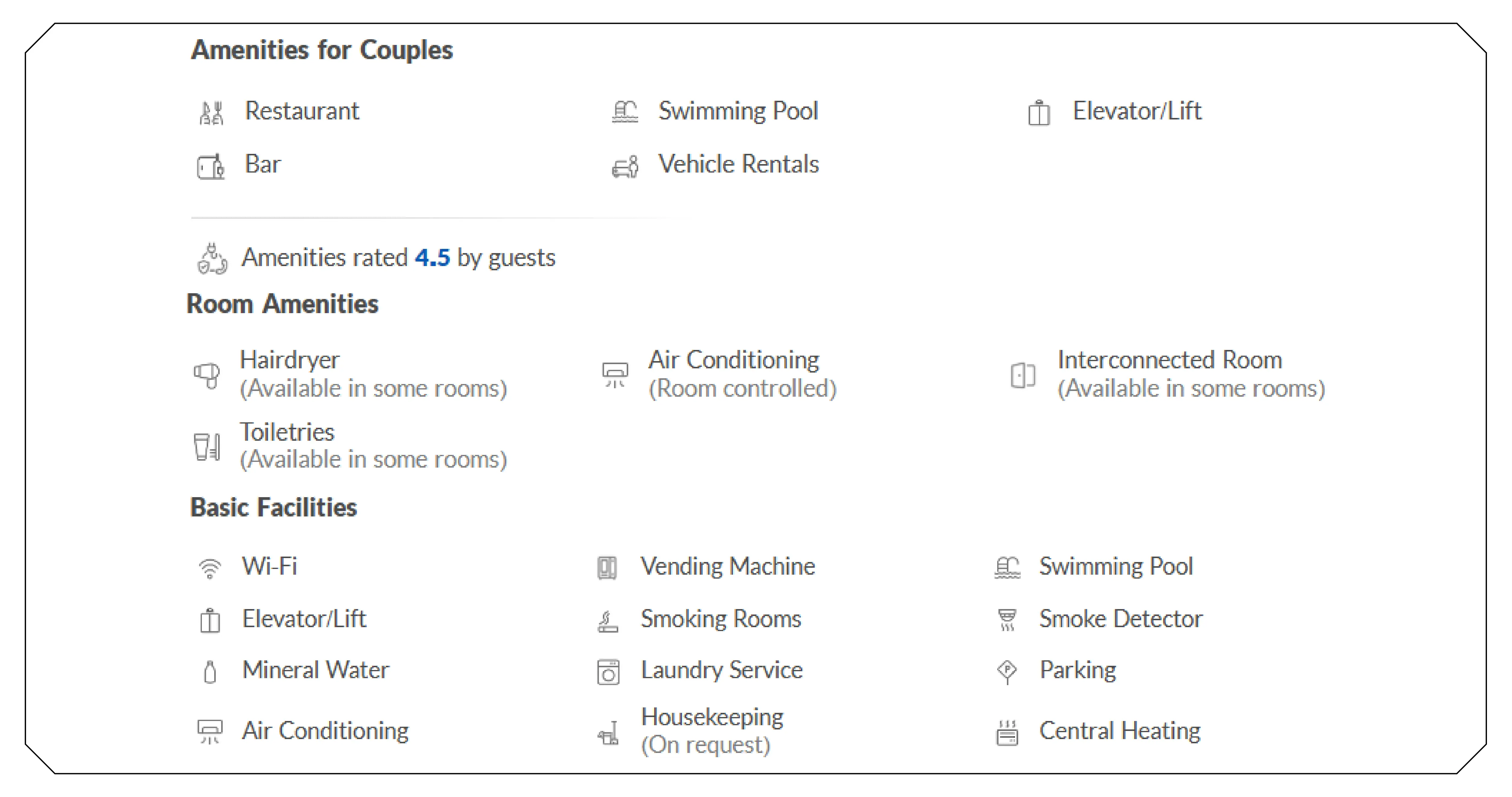
Amenities play a major role in modern booking decisions. Travelers often compare hotels based on facilities such as swimming pools, balconies, smart entertainment systems, workspace areas, kitchen facilities, and wellness services.
Analyzing accommodation amenities helps businesses understand what features attract customers. Hotels can identify which facilities create higher booking conversions and improve their service offerings.
Data-driven amenity analysis also supports personalized recommendations. Travel platforms can suggest rooms based on customer preferences, such as family-friendly accommodations, business facilities, or luxury experiences.
Monitoring Hotel Availability and Booking Patterns
Hotel availability changes constantly due to cancellations, new reservations, seasonal demand, and promotional campaigns. For businesses operating in the travel ecosystem, monitoring these changes provides valuable insights into market conditions and customer behavior.
Real-time availability tracking allows companies to identify high-demand destinations, sold-out periods, and emerging travel trends. Hotels can use this information to adjust inventory strategies, while travel platforms can improve their recommendation systems.
Through advanced hotel room booking trends analytics, organizations can understand customer reservation patterns, popular room categories, average booking windows, and demand fluctuations. These insights help businesses predict future requirements and develop better pricing and marketing strategies.
For example, analyzing booking behavior can reveal whether travelers prefer budget rooms, premium suites, or extended-stay accommodations in specific regions. Such information helps hospitality companies create targeted campaigns and improve revenue opportunities.
Competitive Intelligence Through Hotel Data Collection
The hospitality market is highly competitive, with hotels continuously changing their room offerings, promotions, and pricing strategies. Businesses need reliable competitive intelligence to understand how their properties compare with others in the market.
Hotel data scraping enables organizations to collect information from multiple accommodation sources and compare important factors such as room categories, rates, amenities, customer ratings, and availability.
By analyzing competitor data, hotels can identify market gaps and improve their own offerings. For example, if competing properties provide additional suite amenities or flexible booking policies, hotels can adjust their strategies to remain competitive.
Travel agencies and booking platforms also benefit from competitive intelligence because it helps them provide customers with better recommendations and more accurate comparisons.
How Artificial Intelligence Improves Hotel Data Analysis?
Artificial Intelligence has transformed the way hospitality companies process large volumes of accommodation information. Instead of manually analyzing thousands of hotel listings, AI-powered systems can categorize, clean, and interpret collected data automatically.
AI algorithms can identify similar room categories despite different naming structures. For example, "Luxury King Room," "Premium King Accommodation," and "Deluxe King Suite" may represent comparable offerings, and intelligent classification systems can organize them correctly.
Machine learning models can also predict pricing trends, estimate demand, identify popular amenities, and recommend suitable accommodations based on customer behavior.
Combining AI with automated data collection creates powerful hospitality intelligence solutions that help businesses make faster and more accurate decisions.
Multi-Platform Hotel Data Monitoring
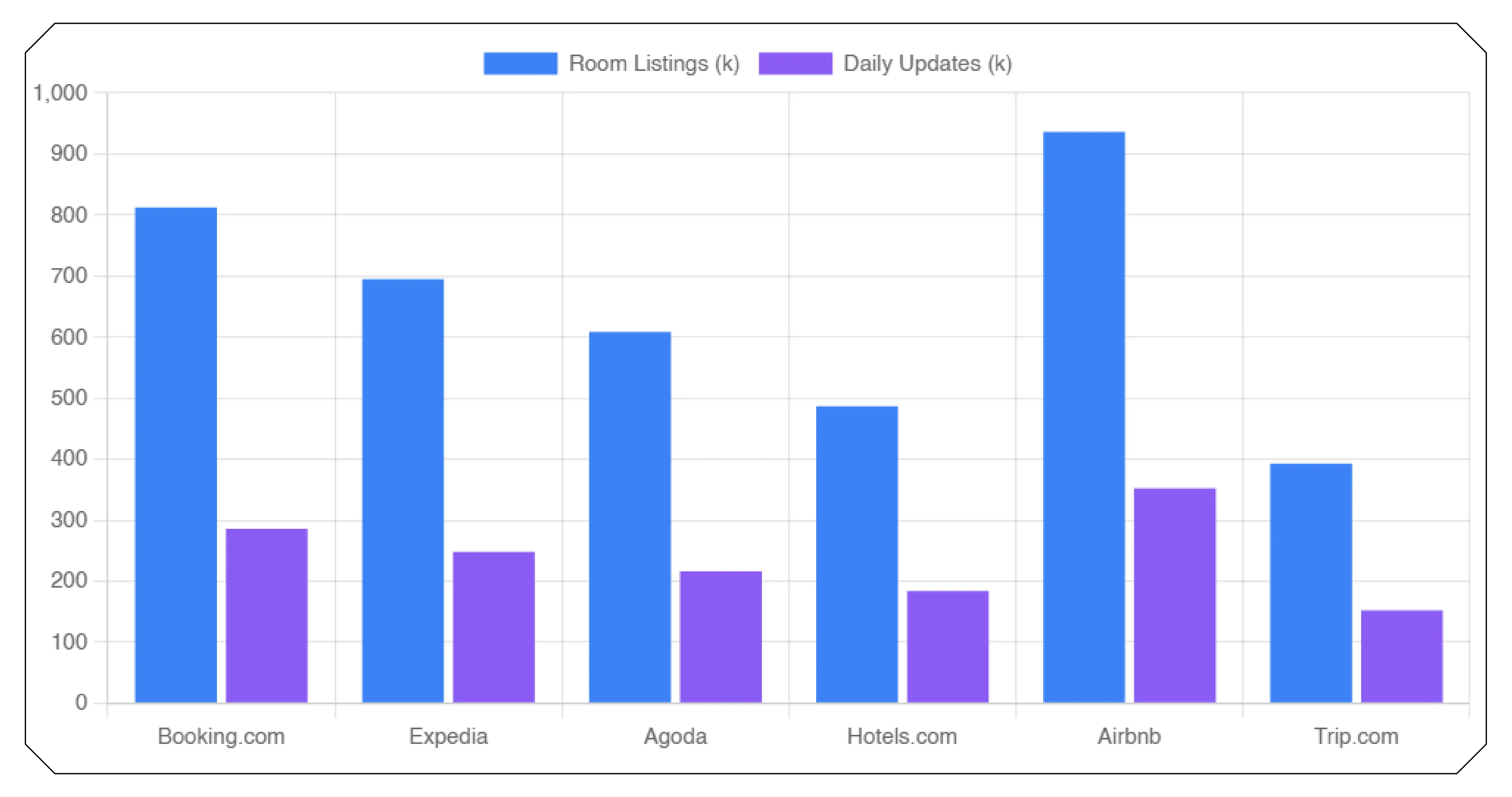
Hotels and accommodations are listed across numerous online travel platforms, each displaying different information, pricing, and availability. Monitoring these platforms manually is time-consuming and often results in incomplete insights.
Automated Hotel Data Scraping solutions help businesses collect consistent information from multiple sources and organize it into structured formats. This enables companies to compare hotel offerings across different channels and identify pricing differences.
Multi-platform monitoring supports several business activities, including competitor analysis, rate comparison, inventory management, and market research.
For online travel agencies, this information improves search results and ensures customers receive accurate accommodation options. For hotels, it provides visibility into their digital presence across different booking channels.
Benefits of Building a Hotel Accommodation Intelligence System
A strong hotel data intelligence system provides businesses with continuous insights into market performance. By collecting and analyzing accommodation information regularly, companies can make decisions based on current market conditions rather than outdated reports.
Key advantages include improved pricing decisions, better demand forecasting, stronger competitor monitoring, and enhanced customer personalization.
Hospitality businesses can also identify new opportunities by studying travel trends across different locations. For instance, increasing demand for family suites may indicate opportunities for resorts, while growing interest in business accommodations may highlight corporate travel expansion.
A structured intelligence system helps organizations stay flexible and respond quickly to changing customer expectations.
Future Trends in Hotel Room Data Scraping
The future of hospitality will depend heavily on accurate and continuously updated datasets. As travelers demand personalized experiences, businesses will require deeper insights into room preferences, pricing behavior, and accommodation trends.
Future hotel intelligence systems will combine real-time scraping, artificial intelligence, predictive analytics, and automation to deliver more accurate market forecasts.
Hotels will increasingly use data to personalize offers, optimize room inventory, and improve guest satisfaction. Travel companies will rely on accommodation datasets to enhance recommendations and provide better customer experiences.
Companies that adopt advanced data collection strategies will have a stronger advantage in the competitive hospitality market.
How Travel Scrape Can Help You?
Collect Accurate Hotel Accommodation Information
Our data scraping solutions collect detailed hotel accommodation information, including room categories, pricing, amenities, availability, policies, and descriptions, helping businesses build reliable datasets for hospitality analysis and strategic decision-making.
Monitor Dynamic Pricing Changes
We track hotel pricing fluctuations across multiple platforms, enabling businesses to analyze competitor rates, seasonal changes, promotional offers, and demand-based pricing strategies for improved revenue management decisions.
Analyze Room Demand Patterns
Our solutions capture booking behavior, availability trends, and customer preferences, allowing hospitality companies to identify popular room categories, forecast demand, and optimize inventory planning with accurate market insights.
Extract Detailed Suite Intelligence
We collect comprehensive suite information, including luxury categories, amenities, layouts, facilities, and pricing details, helping businesses understand premium accommodation trends and improve their competitive positioning.
Deliver Scalable Hospitality Datasets
Our enterprise-grade scraping infrastructure provides structured hotel datasets in flexible formats, supporting analytics platforms, dashboards, forecasting systems, and business intelligence solutions for global hospitality operations.
Conclusion
The growing complexity of the hospitality industry has increased the demand for accurate accommodation intelligence. Hotels, travel platforms, and market researchers need reliable datasets to understand room categories, pricing trends, availability patterns, and customer preferences.
By implementing advanced scraping solutions, businesses can collect valuable accommodation insights and transform them into actionable strategies. These insights support better pricing decisions, improved inventory management, and stronger market positioning.
With accurate Booking Trend Insights, businesses can identify changing traveler behavior and optimize accommodation strategies. The ability to Extract hotel suite amenities data enables organizations to understand premium guest expectations and competitive offerings. Through advanced Hotel Data Intelligence, hospitality companies can unlock new opportunities, improve customer experiences, and build successful strategies for the evolving travel market.
Ready to elevate your travel business with cutting-edge data insights? Scrape Aggregated Flight Fares to identify competitive rates and optimize your revenue strategies efficiently. Discover emerging opportunities with tools to Extract Travel Website Data, leveraging comprehensive data to forecast market shifts and enhance your service offerings. Real-Time Travel App Data Scraping Services helps stay ahead of competitors, gaining instant insights into bookings, promotions, and customer behavior across multiple platforms. Get in touch with Travel Scrape today to explore how our end-to-end data solutions can uncover new revenue streams, enhance your offerings, and strengthen your competitive edge in the travel market.
Unlock the Full Report
Enter your details to access premium pricing intelligence insights