Hotel Rate Scraping Case Study: How a Hotel Chain Lifted RevPAR 28% Across 8 OTAs
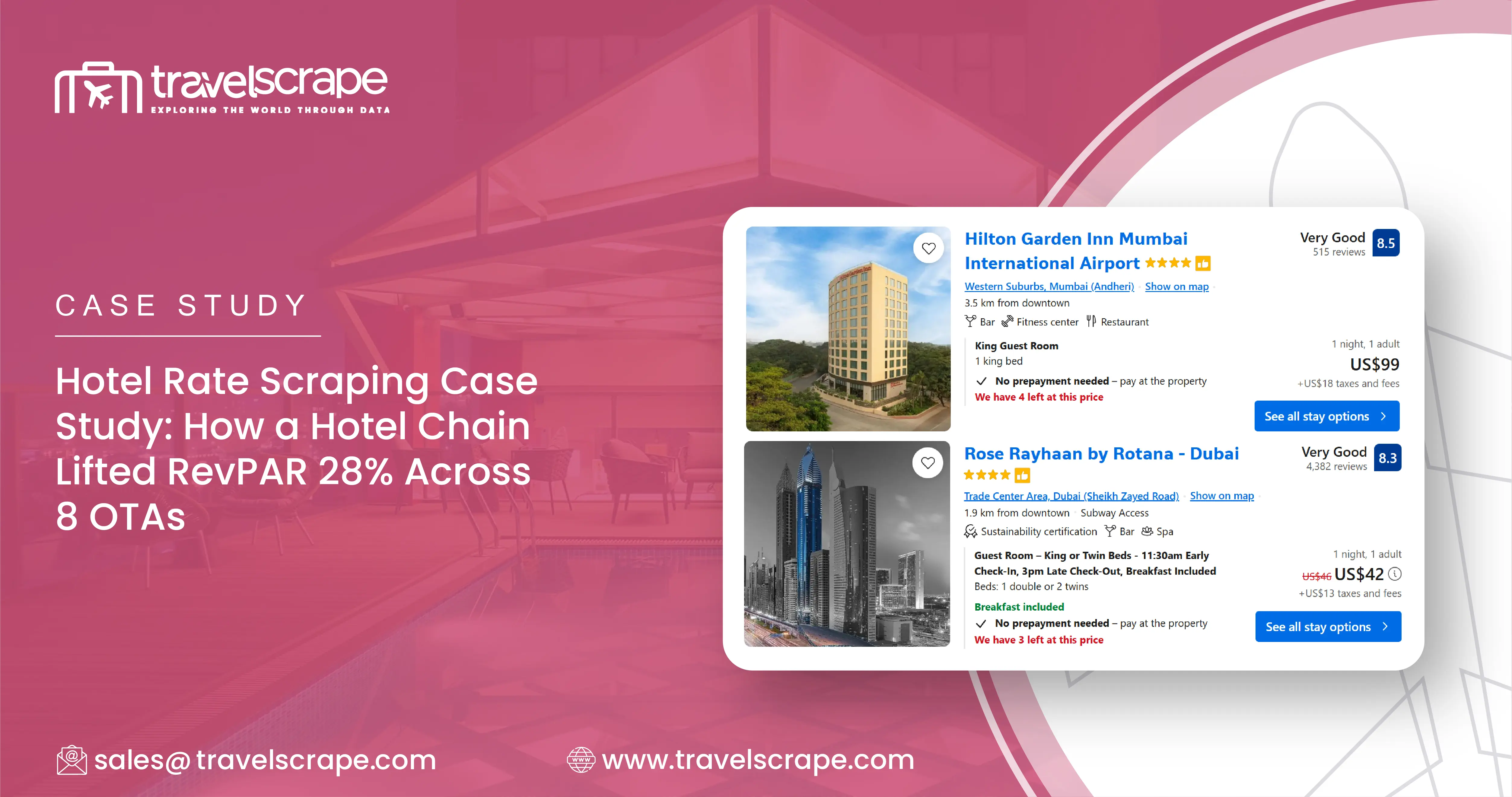
Case study summary. A mid-size hotel chain used hotel rate scraping from Travel Scrape to monitor competitor prices across 8 OTAs in real time, fix 340+ rate parity violations, and lift RevPAR by 28% in a single quarter. By replacing manual rate checks with automated, 15-minute OTA price monitoring, the revenue team moved from reacting late to pricing ahead of demand.
This travel data scraping case study shows how OTA scraping and real-time web data extraction turned a chain’s pricing from guesswork into a data-driven advantage — with the sample data, setup and results behind a 28% RevPAR gain.
The client: a growing hotel chain losing revenue to the OTAs
The client is a mid-size hotel chain operating 40+ properties across India and the UAE, spanning business hotels and leisure resorts. Like most chains its size, it distributed rooms across every major Online Travel Agency — Booking.com, Agoda, Expedia, Hotels.com, MakeMyTrip and more — while also selling direct. For privacy, the chain is anonymised here, but the numbers, workflow and sample data reflect a real Travel Scrape engagement.
On paper, the chain had a healthy distribution footprint. In practice, it had almost no visibility into how it was being priced across those channels at any given moment. The revenue team relied on a junior analyst manually opening OTA pages each morning, copying competitor rates into a spreadsheet, and emailing a summary by mid-day. By the time anyone acted on that data, it was already hours old — and in fast-moving markets, hours-old pricing data is effectively wrong.
That gap between what was happening on the OTAs and what the team could see is exactly the problem hotel rate scraping is built to solve.
The challenge: stale data, rate parity leaks, and missed demand
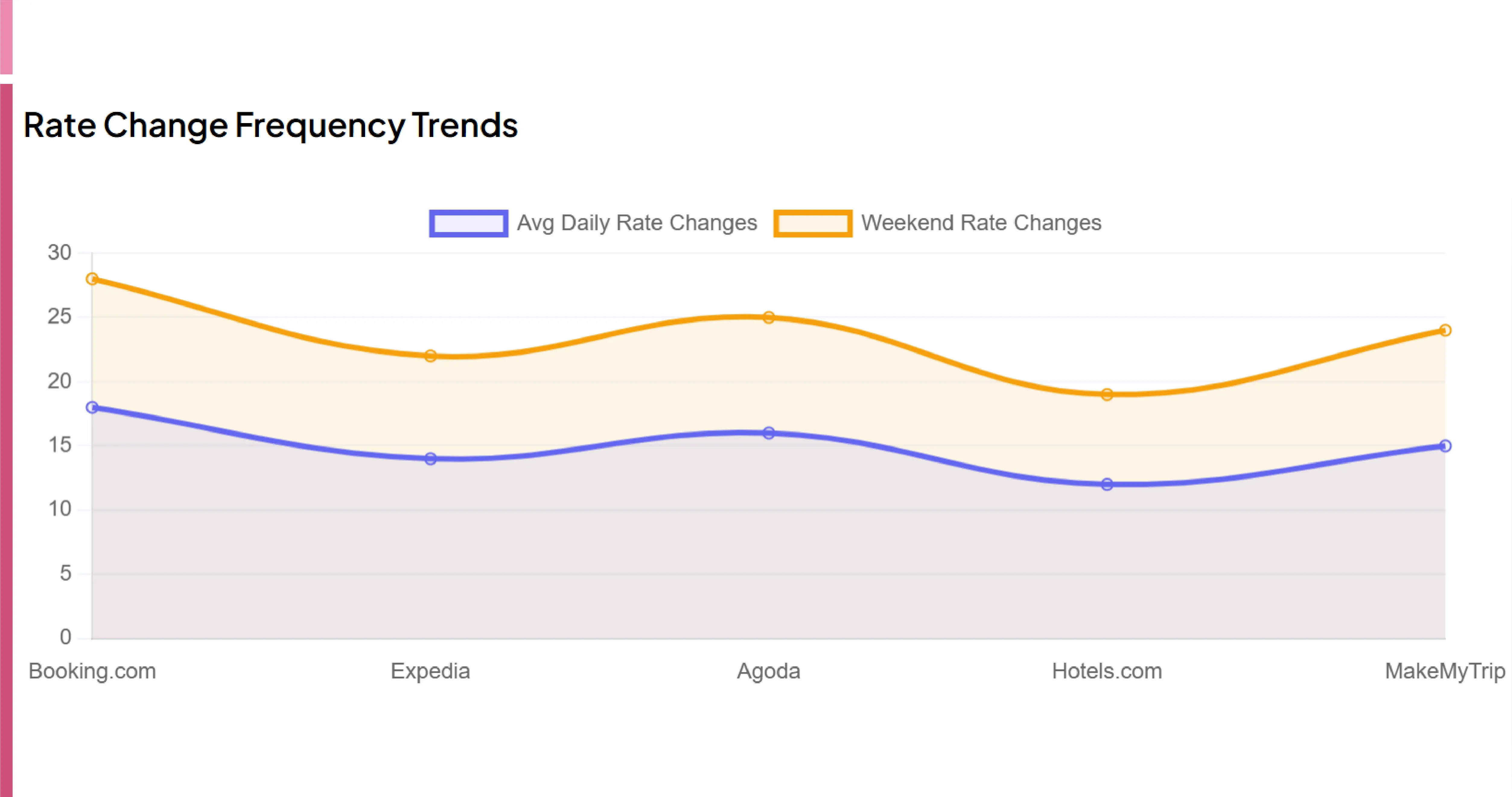
When Travel Scrape’s team ran an initial audit, three distinct problems surfaced — and each was quietly costing the chain revenue.
1. Pricing decisions based on stale data
The manual process produced a single snapshot per day. But OTA hotel rates change many times within 24 hours, especially around weekends, events and demand spikes. The chain was effectively pricing today’s rooms using yesterday’s market. Competitors with faster competitor rate tracking were adjusting in near real time, capturing bookings the chain should have won.
2. Rate parity violations bleeding margin
Because no one could watch every channel continuously, the chain’s own rooms were being sold at inconsistent prices across OTAs — a classic rate parity problem. On several properties, one OTA showed a rate noticeably lower than the others and lower than the direct site. Guests naturally booked the cheapest channel, which often carried the highest commission, eroding net revenue on every stay. Without continuous rate parity monitoring, these leaks went undetected for weeks.
3. Missing demand surges entirely
The chain had no early-warning system for demand. When a major conference or festival drove a city’s hotels toward sold-out, competitors raised rates ahead of the surge. The chain, still pricing on stale data, kept rooms too cheap and sold out early at low rates — the worst possible outcome for a revenue manager.
The core issue: the chain wasn’t short of distribution — it was short of real-time hotel pricing data. Every problem traced back to not being able to see the market as it actually moved.
Why the chain chose Travel Scrape for hotel rate scraping
The revenue team had considered building an in-house scraper, but quickly hit the reality every team does: web scraping and OTA data extraction at scale is an engineering problem, not a weekend project. OTAs use anti-bot defences, vary prices by location and device, and change their page layouts frequently. An in-house web scraping build would mean hiring engineers, buying rotating proxies, and committing to constant maintenance — all before the first useful dataset arrived.
They chose Travel Scrape instead for four reasons:
- Travel-specific by design. Travel Scrape works only in travel and OTA data, with pre-built parsers for every major platform — zero setup time for standard sources like Booking.com and Agoda.
- 15-minute refresh. For hotel rate scraping, speed is everything. A 15-minute refresh meant seeing competitor moves almost as they happened, not the next day.
- Clean, structured delivery. Data arrived normalised, validated and deduplicated — ready to load straight into their pricing engine with no ETL work.
- Compliance-minded collection. Travel Scrape collects only public, non-personal pricing data and respects reasonable rate limits.
A free sample dataset sealed the decision: the team validated accuracy against their own manual checks before committing to anything.
The solution: real-time hotel rate scraping across 8 OTAs
Travel Scrape designed a travel data scraping pipeline tailored to the chain’s exact footprint. This hotel data scraping and automated data collection setup followed a simple four-step process with no technical lift on the client’s side.
Step 1 — Define the target set
The team specified which properties to track, which competitors to benchmark in each city, the OTAs to monitor (8 in total), the date ranges, and the exact fields needed — rate, room type, availability, cancellation policy and OTA ranking position. Travel Scrape configured everything and delivered a test run within 24 hours.
Step 2 — Build anti-block scrapers per OTA
Each OTA got a dedicated, anti-block scraper using rotating residential proxies, headless browser rendering and CAPTCHA handling. This is the part that defeats most in-house efforts: rendering JavaScript-loaded prices and avoiding IP bans at scale. Geo-targeting ensured the chain saw the same prices its real customers in India and the UAE would see.
Step 3 — Run on a 15-minute schedule
The pipeline ran every 15 minutes across all 8 OTAs. On each run, the data was automatically cleaned, deduplicated, normalised and validated before delivery — so the revenue team never touched raw HTML or inconsistent formats.
Step 4 — Deliver into the pricing stack
Structured data flowed directly into the chain’s pricing engine via REST API, with a parallel CSV feed into the analysts’ dashboards. Rate parity alerts were pushed in real time, so violations triggered a notification the moment they appeared rather than surfacing in a monthly report.
Sample data: what hotel rate scraping actually delivers
The value of hotel rate scraping is only as good as the structure of the scraped data it produces. Below are representative samples of the web scraping output Travel Scrape delivered (values illustrative).
Sample 1 — Live competitor rate comparison
| Property | OTA | Room | Date | Rate | Avail. |
|---|---|---|---|---|---|
| City Grand Mumbai | Booking.com | Deluxe | 2026-07-10 | ₹8,400 | Yes |
| City Grand Mumbai | Expedia | Deluxe | 2026-07-10 | ₹7,500 | Yes |
| City Grand Mumbai | Agoda | Deluxe | 2026-07-10 | ₹9,100 | Yes |
| City Grand Mumbai | MakeMyTrip | Deluxe | 2026-07-10 | ₹7,650 | 3 left |
| Bay Resort Dubai | Booking.com | Sea View | 2026-07-10 | AED 540 | Yes |
| Bay Resort Dubai | Hotels.com | Sea View | 2026-07-10 | AED 595 | Yes |
In one glance, the revenue team could see exactly where its rooms sat against the market — and where its own pricing was inconsistent across channels.
Sample 2 — Rate parity violation alert (JSON)
{
  "alert_type": "rate_parity_violation",
  "property": "City Grand Mumbai",
  "room_type": "Deluxe",
  "checkin": "2026-07-10",
  "direct_rate": 7800,
  "lowest_ota": { "source": "expedia", "rate": 7500 },
  "gap_pct": -3.8,
  "severity": "high",
  "detected_at": "2026-06-01T09:31:12Z"
}
This told the team Expedia was undercutting the direct rate by 3.8% — a parity violation pushing guests to a high-commission channel. With real-time competitor rate tracking, it was caught in minutes, not weeks.
Sample 3 — Price history for demand detection (JSON)
{
  "property": "City Grand Mumbai",
  "checkin": "2026-12-25",
  "observations": [
    { "captured_at": "2026-06-01", "market_avg": 8200, "available_pct": 64 },
    { "captured_at": "2026-06-08", "market_avg": 9100, "available_pct": 41 },
    { "captured_at": "2026-06-15", "market_avg": 11800, "available_pct": 18 }
  ],
  "signal": "demand_surge_detected"
}
Because every observation was timestamped, the data surfaced a clear demand curve: as availability fell from 64% to 18%, the market average rate climbed 44%. The chain could raise its own rates ahead of the surge instead of selling out cheap.
The results: 28% higher RevPAR in one quarter
Within a single quarter of switching to automated hotel rate scraping, the chain’s revenue performance changed measurably.
| Metric | Before | After | Change |
|---|---|---|---|
| RevPAR | Baseline | +28% | ▲ 28% |
| Rate parity violations / month | ~340 | Near zero | ▼ 95%+ |
| Pricing decision speed | Once daily | Every 15 min | 96× faster |
| Manual analyst hours / week | ~20 | ~2 | ▼ 90% |
| OTAs monitored | 1–2 (manual) | 8 (automated) | 4–8× |
The headline figure — a 28% RevPAR increase — came from three compounding wins. First, fixing rate parity stopped revenue leaking to high-commission channels. Second, real-time competitor rate tracking let the team price competitively without underselling. Third, demand detection meant the chain captured surges instead of being caught by them.
Just as important, the analyst who had spent 20 hours a week copying rates by hand was freed to do actual revenue strategy — the kind of work hotel rate scraping and automated data extraction are supposed to enable. The clean feed also fed the chain’s dynamic pricing engine directly, so rates adjusted to the market without manual input.
"“We plugged Travel Scrape’s hotel rate data into our pricing engine and RevPAR jumped 28% in the first quarter. The 15-minute refresh is what made the difference — we finally price ahead of the market instead of chasing it.”"
Implementation timeline: from kickoff to measurable impact
One reason the chain saw results so quickly is that hotel rate scraping with Travel Scrape required almost no engineering effort on their side.
- Day 1 — Scoping call. Listed properties, competitor sets, the 8 target OTAs, date windows and fields. No setup fees to begin.
- Day 1–2 — Test run delivered. A sample dataset for two flagship properties let the team validate accuracy against their manual checks. The numbers matched.
- Week 1 — Full pipeline live. All 8 OTAs live on a 15-minute schedule, feeding both the API and dashboards.
- Week 2 — Parity alerts on. Real-time rate parity monitoring cleared the backlog of long-standing gaps within days.
- Weeks 3–12 — Compounding gains. RevPAR climbed steadily, reaching +28% by quarter end.
Crucially, the chain never hired an engineer, never bought a proxy, and never maintained a line of scraping code — the genuinely hard part of any hotel data scraping programme stayed entirely with Travel Scrape.
Behind the scenes: keeping the data flowing reliably
The reason most in-house web scraping projects fail is not the first build — it is everything afterwards. OTAs actively defend against automated data extraction, and their pages change without warning. Travel Scrape’s managed approach absorbed all of this.
Throughout the engagement, the OTAs deployed the usual obstacles: CAPTCHA challenges, rate limiting, occasional IP blocks, and two significant layout changes on major platforms. Each would have broken a typical in-house scraper and produced silent data gaps — the most dangerous kind, because decisions get made on data wrongly believed to be complete.
Travel Scrape’s infrastructure handled them automatically. Rotating residential proxies and randomised browser fingerprints kept request patterns realistic. Geo-targeted collection ensured true India and UAE pricing. Continuous monitoring repaired extraction before any gap reached the client’s dashboard. To the revenue team, the data simply kept arriving — clean, complete and on schedule. This reliability is the quiet foundation under the headline RevPAR number.
Beyond hotels: extending the data programme
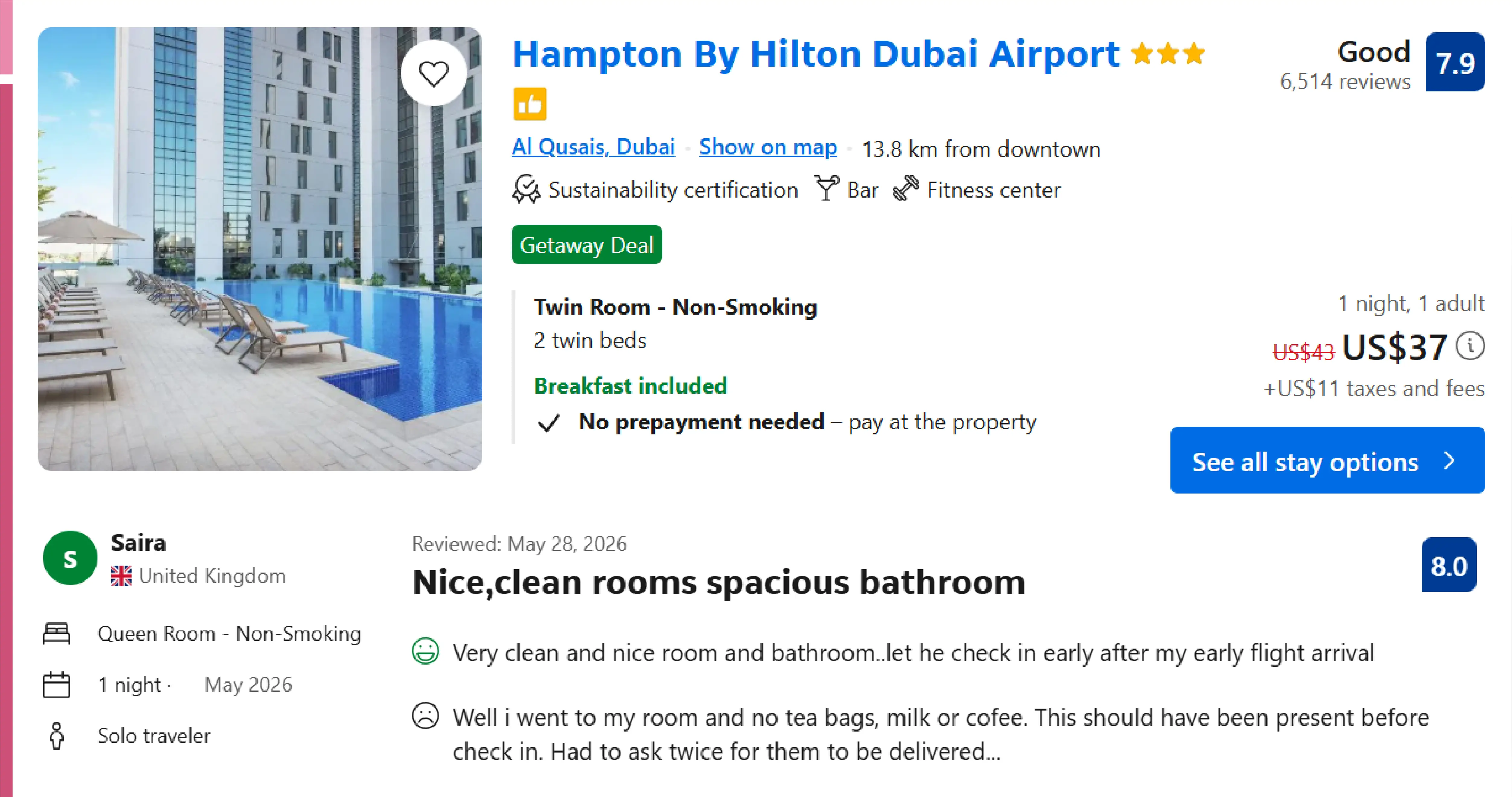
Once the hotel rate scraping programme proved its value, the chain expanded in two directions. First, it added review and sentiment data across TripAdvisor, Booking.com and Google, to benchmark guest satisfaction against the same competitor set it tracked on price. Second, for its resort properties, it layered in flight fare monitoring on key inbound routes, using airfare trends as an early signal of leisure demand.
This is a common pattern: a chain starts with competitor rate tracking to solve an urgent pricing problem, proves the return, and builds a broader travel data intelligence capability on the same foundation. Because every dataset arrives in the same clean format, each new source plugs in without fresh integration work.
Key takeaways for revenue teams
- Speed beats effort. A daily manual check can’t compete with OTA price monitoring that refreshes every 15 minutes.
- Rate parity is silent revenue. Continuous rate parity monitoring usually pays for itself quickly.
- History makes data predictive. Snapshots tell you today’s price; timestamped history reveals demand before it peaks.
- Build vs buy is a maintenance question. The hard part of hotel data scraping and web data extraction is keeping it working as OTAs change. A managed travel data scraping service removes that burden.
Frequently asked questions
Want results like this from hotel rate scraping?
Tell Travel Scrape which OTAs, cities and properties to track. Get a free sample dataset within 24 hours — no credit card, no commitment.
Unlock the Full Report
Enter your details to access premium pricing intelligence insights