Scraping Hotel Price Competitiveness for Small OTAs: Benchmarking 300 Hotels Against Booking.com and Local Competitors with Rate Parity Monitoring
Introduction
The online travel industry has become one of the most competitive digital marketplaces, where pricing transparency significantly influences booking decisions. Travellers compare room rates across multiple booking platforms within seconds, making it essential for small Online Travel Agencies (OTAs) to offer competitive prices without sacrificing profitability. This is where Scraping Hotel Price Competitiveness for Small OTAs becomes a valuable strategy for gaining market intelligence and improving pricing decisions.
Modern travel businesses increasingly rely on Hotel Room Price Trends Dataset hotel rate parity monitoring to understand market dynamics, monitor fluctuations, and identify opportunities to outperform competitors. At the same time, Booking.com hotel pricing comparison enables smaller OTAs to evaluate their listings against one of the world's largest travel marketplaces, ensuring attractive pricing that drives higher conversions.
Rather than relying on manual checks or delayed reports, automated hotel data collection provides real-time visibility into pricing trends across cities, regions, hotel categories, and competing booking platforms. By leveraging accurate and continuously updated pricing intelligence, small OTAs can compete effectively with larger travel brands while enhancing customer trust and booking performance.
Why Hotel Pricing Intelligence Matters?
Hotel prices fluctuate constantly due to seasonality, local events, occupancy levels, promotional campaigns, holidays, demand surges, and competitor strategies. Even small pricing differences can influence booking decisions because travellers often compare several platforms before making a reservation.
Without access to real-time competitor pricing, smaller OTAs risk offering rates that are either too high to attract customers or unnecessarily low, reducing overall profitability. Continuous pricing intelligence enables travel businesses to remain aligned with market conditions while maximising booking potential.
A comprehensive pricing strategy helps agencies understand customer expectations, market behaviour, competitor positioning, and promotional timing across multiple destinations.
The Challenges Small OTAs Face
Unlike global travel marketplaces with advanced pricing systems, many smaller OTAs operate with limited analytical resources. Monitoring thousands of hotels manually is almost impossible.
Common challenges include inconsistent pricing across suppliers, changing room availability, last-minute discounts, dynamic pricing algorithms, promotional offers, cancellation policies, and regional demand variations.
Additionally, travellers expect identical or better prices across every booking platform. If they discover cheaper alternatives elsewhere, customer confidence quickly declines, reducing repeat business and conversion rates.
Building Competitive Intelligence Through Data
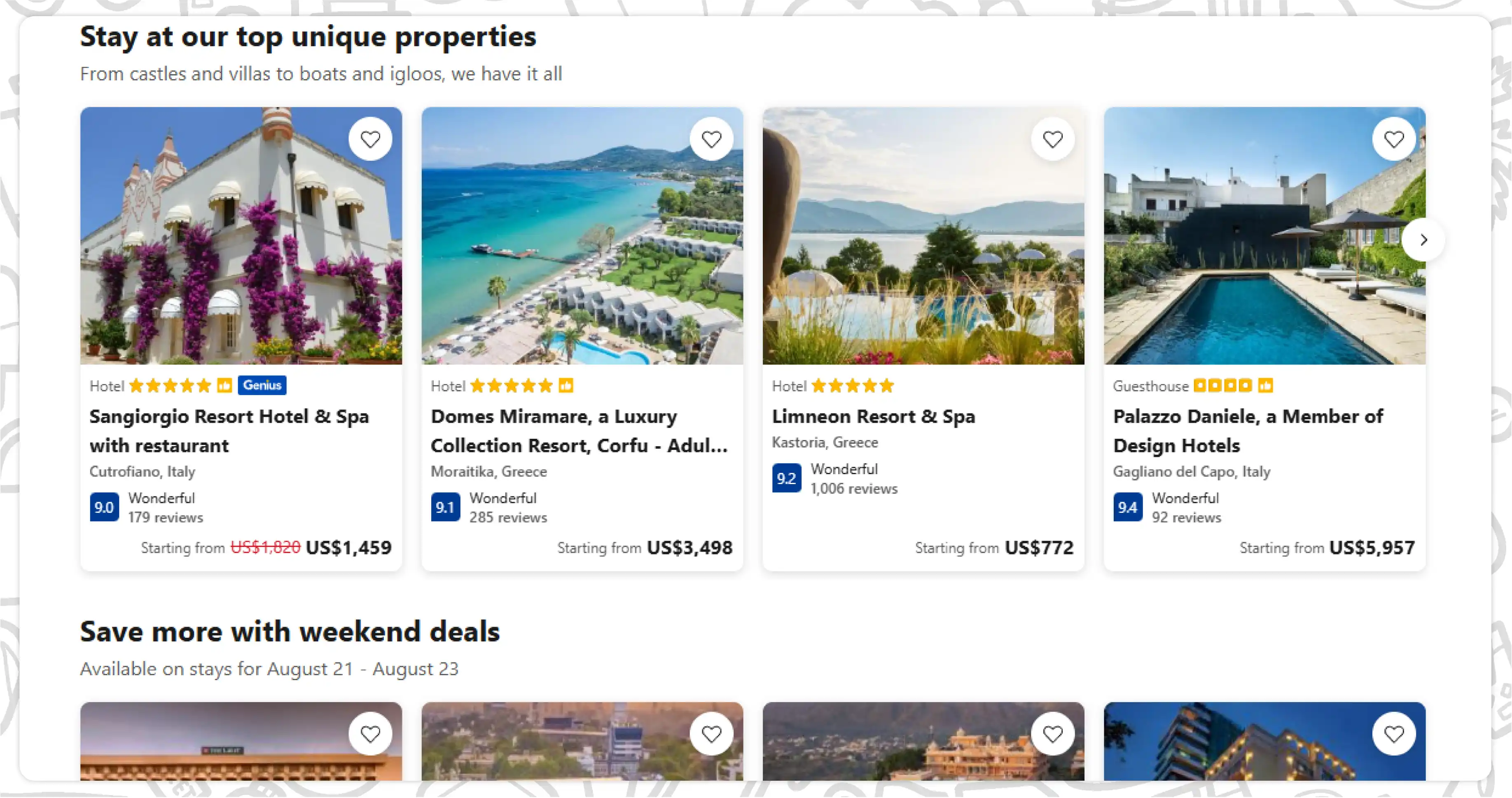
Successful OTAs increasingly rely on Competitor Price Tracking to understand how competing travel platforms adjust hotel prices throughout the day.
Instead of collecting occasional snapshots, automated monitoring captures multiple pricing updates daily across different room categories, occupancy options, booking dates, refund policies, and promotional campaigns.
This continuous flow of pricing intelligence enables analysts to identify:
- Premium pricing opportunities
- Seasonal discount patterns
- Weekend versus weekday pricing
- Holiday demand fluctuations
- High-performing hotel categories
- Geographic pricing differences
- Flash sales and promotional campaigns
Such insights support smarter pricing strategies and more profitable customer acquisition.
Automating Large-Scale Hotel Data Collection
Modern travel intelligence depends heavily on Web Scraping Booking.com Hotels Data to gather comprehensive hotel pricing information efficiently.
Automated scraping systems collect valuable information including hotel names, room categories, nightly rates, taxes, service charges, discounts, amenities, availability, ratings, reviews, cancellation policies, breakfast options, occupancy limits, and promotional offers.
The collected information is structured into organised datasets suitable for dashboards, business intelligence tools, pricing engines, and revenue optimisation systems.
Automation dramatically reduces manual effort while increasing data freshness and accuracy.
Understanding Rate Parity
Maintaining consistent hotel pricing across different booking platforms is essential for both hotels and OTAs.
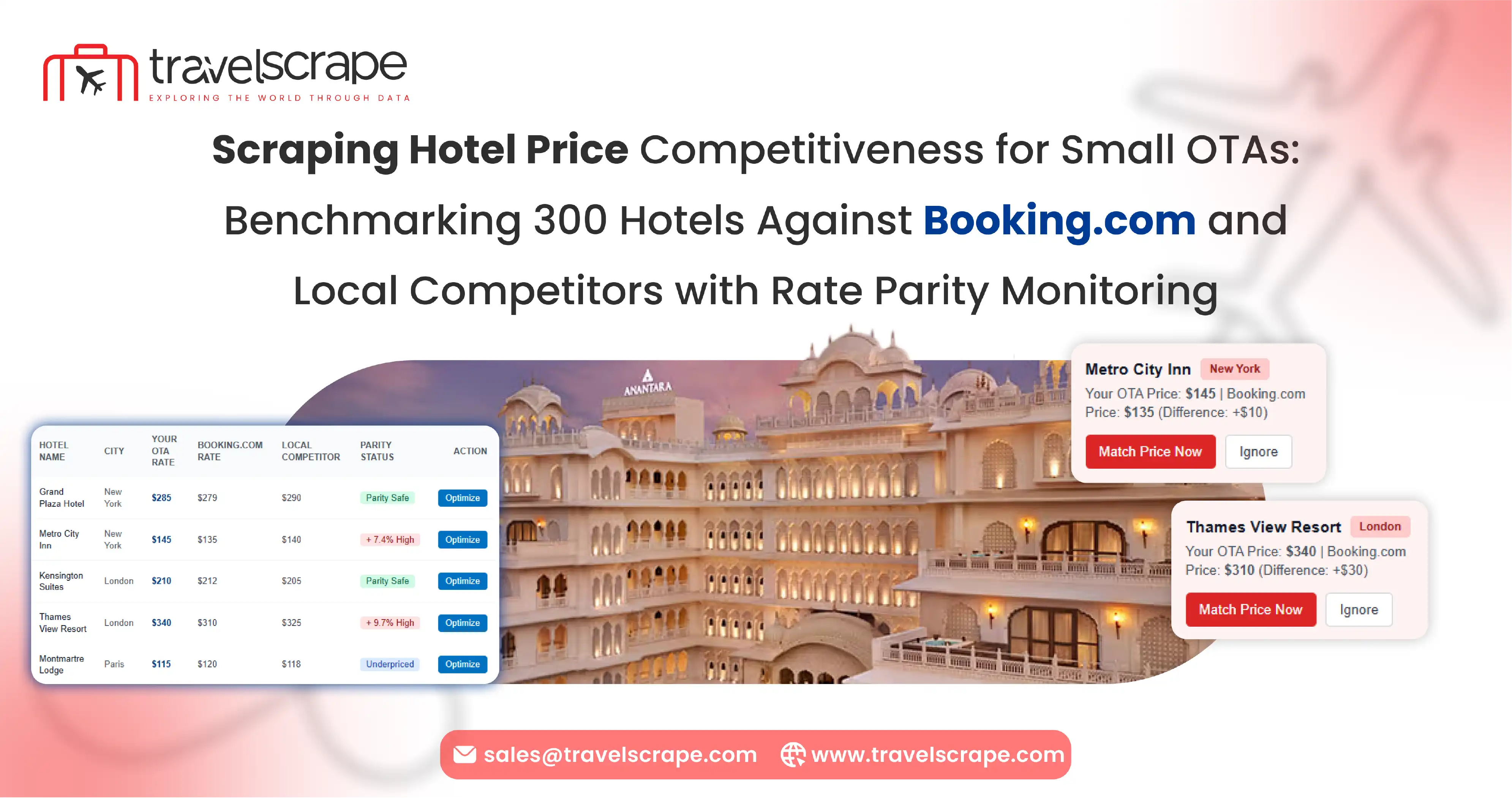
Rate Parity Monitoring helps identify situations where room prices differ across marketplaces despite contractual agreements.
Monitoring parity allows OTAs to quickly identify pricing inconsistencies that may affect customer trust or reduce conversion rates.
It also helps hotels maintain pricing consistency while ensuring distribution partners follow agreed pricing policies.
Regular monitoring strengthens supplier relationships while protecting brand reputation.
Benchmarking Against Major Competitors
Small travel agencies frequently compete against global booking platforms with enormous pricing databases and sophisticated algorithms.
Using small OTA hotel rate benchmarking, businesses can compare their hotel prices against larger competitors to understand where they stand in the market.
Benchmarking identifies hotels that consistently appear overpriced, underpriced, or perfectly aligned with market averages.
This information enables revenue managers to make evidence-based pricing adjustments that increase booking competitiveness without unnecessary discounting.
Monitoring Multiple Competitors Simultaneously
Price competitiveness should not focus on only one travel marketplace.
Businesses increasingly Scrape Hotels Against Booking.com and Local Competitors to obtain broader market visibility.
Local OTAs often introduce regional promotions, exclusive member discounts, loyalty programmes, or seasonal campaigns unavailable on international booking sites.
Monitoring both global and regional competitors creates a much more accurate picture of actual market pricing and customer choices.
It also reveals opportunities where smaller OTAs can differentiate through pricing, exclusive offers, or bundled travel packages.
Data-Driven Revenue Optimisation
Accurate pricing intelligence supports far more than competitive comparisons.
Revenue managers analyse historical pricing patterns alongside occupancy forecasts, local events, public holidays, flight demand, tourism trends, and customer booking windows.
These insights allow businesses to optimise pricing strategies for maximum profitability while remaining attractive to price-sensitive travellers.
Instead of reacting after competitors change prices, OTAs can proactively adjust pricing based on predictive trends and historical behaviour.
Creating Market Pricing Intelligence
Real-time hotel datasets support broader strategic planning beyond daily pricing updates.
With Small hotel OTAs market pricing intelligence, businesses can analyse long-term pricing trends across destinations, hotel categories, brands, and booking channels.
This intelligence supports expansion into new cities, supplier negotiations, promotional planning, customer segmentation, inventory allocation, and revenue forecasting.
Executives gain visibility into market opportunities that may otherwise remain hidden within isolated booking data.
Hotel Data Integration for Business Intelligence
Modern travel companies combine Hotel Data Scraping with internal reservation systems, customer analytics, CRM platforms, and business intelligence dashboards.
Integrated datasets enable automated reporting, pricing alerts, competitor benchmarking dashboards, supplier scorecards, and executive performance reports.
Interactive dashboards allow managers to monitor pricing movements across thousands of hotels while identifying exceptions requiring immediate action.
Data integration transforms raw hotel information into meaningful business intelligence that supports faster strategic decisions.
Supporting Dynamic Pricing Strategies
Dynamic pricing has become a necessity rather than a luxury.
Travel businesses continuously adjust room rates according to demand forecasts, competitor pricing, occupancy trends, seasonal factors, and booking lead times.
Real-time hotel datasets improve pricing responsiveness while reducing the risk of revenue loss caused by outdated market information.
The ability to monitor multiple competitors simultaneously gives smaller OTAs greater pricing confidence in highly competitive destinations.
Enhancing Customer Experience
Competitive pricing benefits customers as much as businesses.
Travellers appreciate transparent pricing, fair rates, accurate availability, and consistent booking experiences across devices and booking channels.
Reliable pricing reduces booking abandonment while increasing customer satisfaction and repeat reservations.
Better pricing intelligence also enables OTAs to personalise promotions according to traveller behaviour, preferred destinations, travel seasons, and budget preferences.
Future of Hotel Pricing Intelligence
Artificial intelligence and machine learning are making hotel pricing even more dynamic.
Future pricing systems will combine competitor monitoring with weather forecasts, airline pricing, event schedules, tourism demand, customer sentiment, and economic indicators.
Predictive analytics will recommend pricing changes before competitors react, allowing smaller OTAs to remain competitive despite limited resources.
As automation advances, pricing intelligence will become increasingly essential for sustainable growth in online travel.
How Travel Scrape Can Help You?
Real-Time Monitoring
Our automated scraping platform continuously monitors hotel prices across multiple booking websites, delivering fresh pricing intelligence every day to help your OTA react faster, optimise rates, and improve booking competitiveness.
Large-Scale Coverage
We collect pricing data from thousands of hotels, destinations, room categories, booking platforms, and regional travel websites, enabling comprehensive market visibility that supports informed pricing, benchmarking, and strategic expansion decisions.
Customised Datasets
Our experts deliver structured hotel datasets tailored to your preferred locations, competitors, booking dates, room types, currencies, and reporting formats, making integration with existing business intelligence systems seamless and efficient.
Advanced Analytics
Beyond raw data, we provide analytical insights, trend reports, competitor comparisons, historical pricing analysis, and customised dashboards that transform hotel pricing information into actionable revenue optimisation strategies for growing OTAs.
Reliable Data Delivery
Our scalable infrastructure ensures accurate, secure, and timely hotel pricing data through APIs, cloud storage, databases, or scheduled exports, helping your business maintain consistent pricing intelligence without manual monitoring efforts.
Conclusion
Hotel pricing competition continues to intensify as travellers compare dozens of booking platforms before completing reservations. Small OTAs that rely solely on manual pricing reviews struggle to keep pace with rapidly changing market conditions. Automated hotel price intelligence enables businesses to benchmark competitors, monitor rate parity, optimise pricing strategies, and improve booking conversions through data-driven decision-making. By leveraging continuous hotel data collection, travel agencies gain deeper market visibility while enhancing customer satisfaction and operational efficiency. Comprehensive Small OTAs hotel competitor pricing dataset solutions provide the competitive foundation needed to grow bookings, strengthen supplier relationships, and compete confidently against larger online travel marketplaces in an increasingly dynamic hospitality industry.
Ready to elevate your travel business with cutting-edge data insights? Scrape Aggregated Flight Fares to identify competitive rates and optimize your revenue strategies efficiently. Discover emerging opportunities with tools to Extract Travel Website Data, leveraging comprehensive data to forecast market shifts and enhance your service offerings. Real-Time Travel App Data Scraping Services helps stay ahead of competitors, gaining instant insights into bookings, promotions, and customer behavior across multiple platforms. Get in touch with Travel Scrape today to explore how our end-to-end data solutions can uncover new revenue streams, enhance your offerings, and strengthen your competitive edge in the travel market.
Unlock the Full Report
Enter your details to access premium pricing intelligence insights