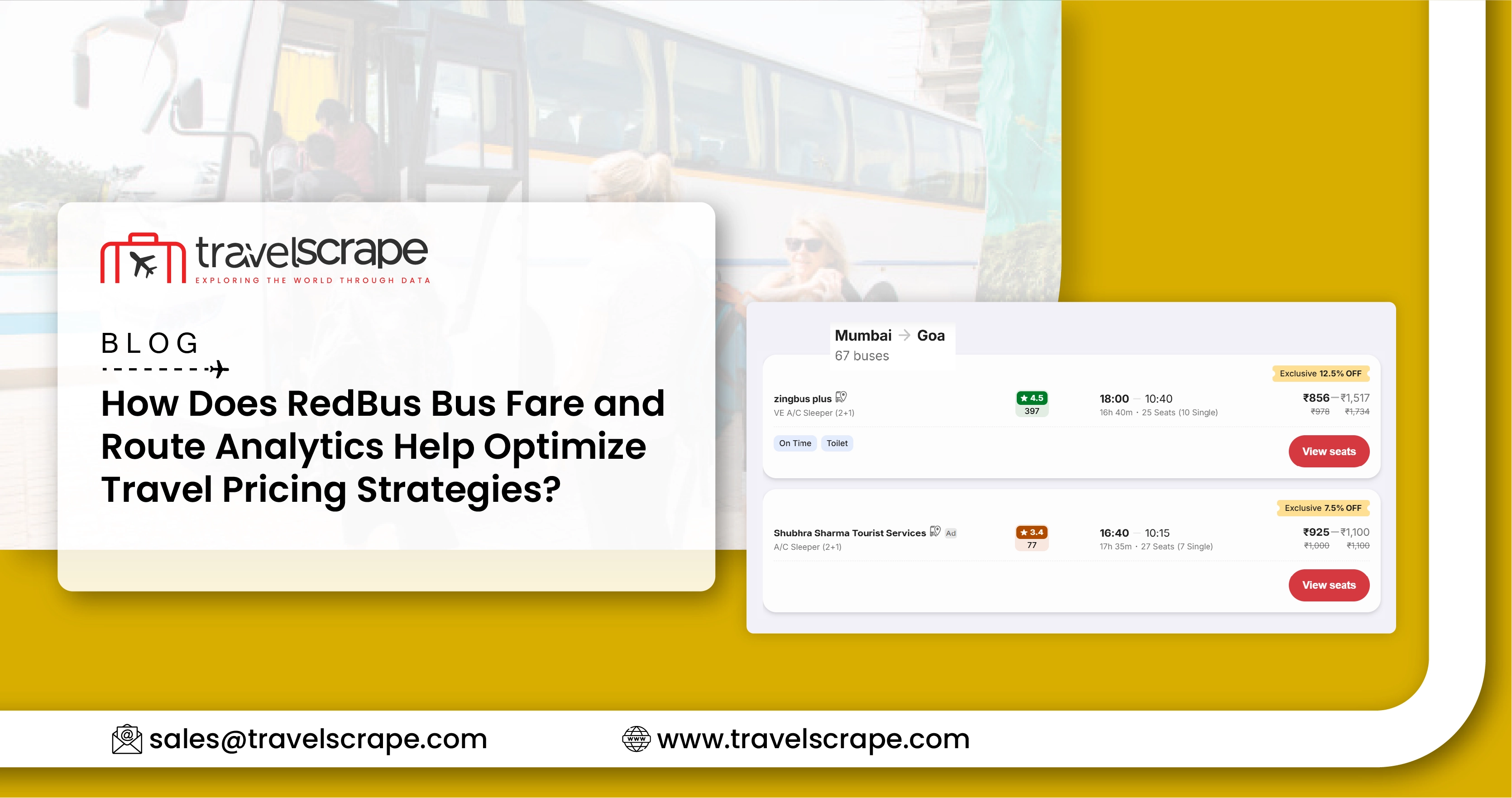
How Does RedBus Bus Fare and Route Analytics Help Optimize Travel Pricing Strategies?
Introduction
In today’s rapidly evolving travel ecosystem, data-driven decision-making has become the backbone of operational efficiency and customer satisfaction. Platforms like RedBus have revolutionized how travelers search, compare, and book bus tickets across regions. Leveraging RedBus bus fare and route analytics enables businesses to uncover deep insights into pricing strategies, route performance, and consumer demand patterns. Alongside this, tools like Fare Fluctuation Alerts empower stakeholders to respond instantly to market changes, while RedBus booking pattern analysis helps decode traveler behavior for better planning and optimization.
Understanding the Importance of Bus Fare Analytics
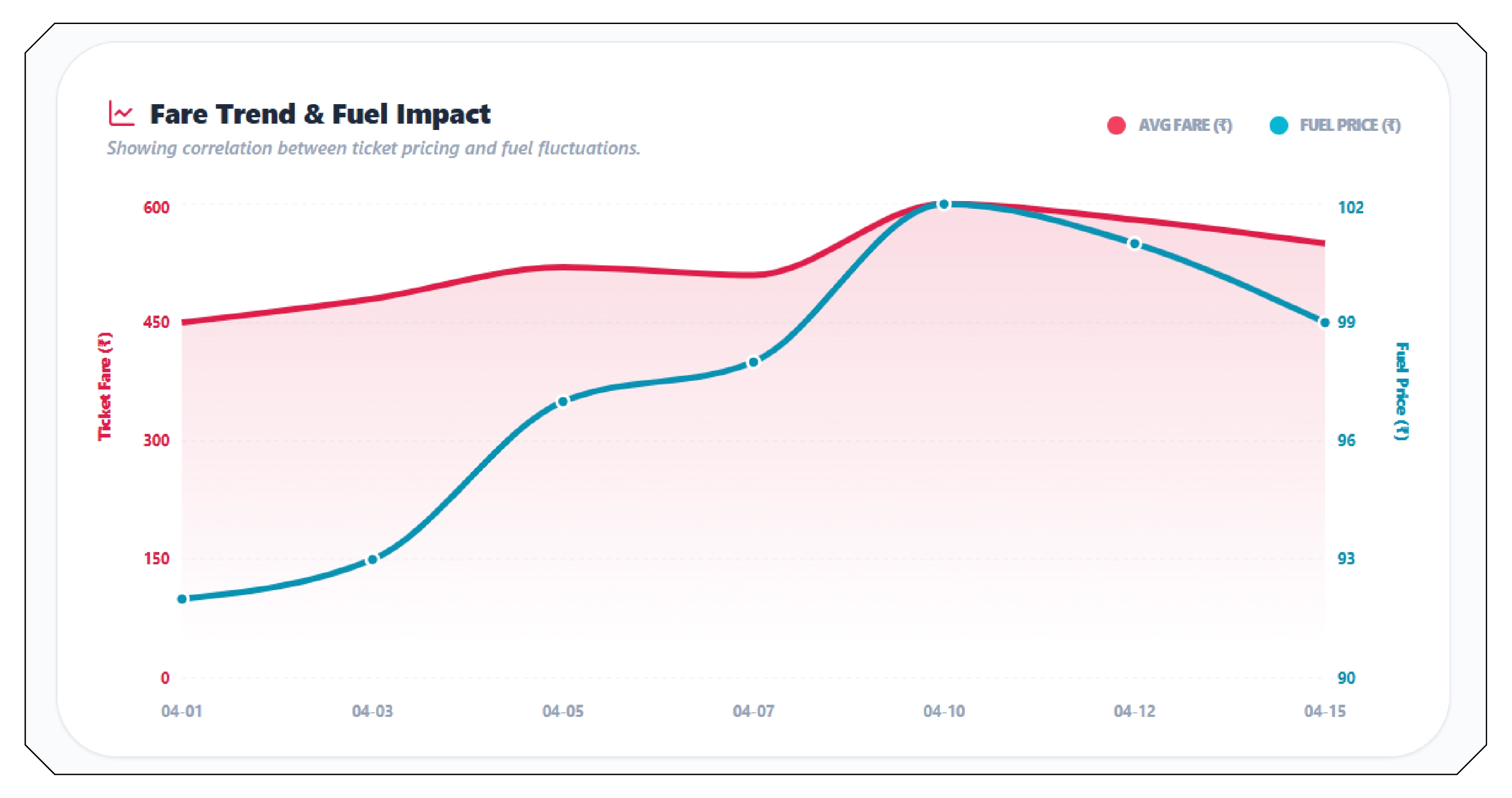
Bus fare analytics is not just about tracking ticket prices—it’s about understanding the dynamics behind them. Travel demand varies based on seasonality, holidays, local events, fuel prices, and competitor strategies. By integrating Price Monitoring, businesses can observe how fares evolve across routes and timeframes, enabling smarter pricing decisions.
For instance, fares for intercity routes often spike during weekends or festive seasons. Analytics tools help capture these patterns and predict future changes. This allows operators to adjust pricing in advance and maximize revenue without compromising occupancy rates.
How RedBus Data Powers Route Optimization?
Route analytics plays a crucial role in improving service efficiency. By utilizing RedBus fare data extraction, companies can gather structured datasets containing route details, departure times, seat availability, and pricing trends. These insights help operators identify high-demand routes and optimize schedules accordingly.
Each Bus service page on RedBus provides valuable information such as operator details, boarding points, drop-off locations, amenities, and customer reviews. Extracting and analyzing this data enables companies to enhance route planning, reduce idle capacity, and improve overall service quality.
Global Insights with RedBus Data
RedBus operates across multiple countries, making it a valuable source for international travel insights. With RedBus global bus pricing data analytics, businesses can compare fare trends across regions and identify opportunities for expansion or competitive positioning.
For example, pricing strategies in Southeast Asia may differ significantly from those in India due to variations in demand elasticity and operational costs. By studying global data, companies can adopt best practices and refine their pricing models to suit specific markets.
The Role of Dynamic Pricing in Bus Travel
Dynamic pricing has become a standard practice in the travel industry. By leveraging Dynamic Pricing Intelligence, bus operators can adjust fares in real time based on demand, availability, and competitor pricing.
This approach ensures that prices remain competitive while maximizing revenue. For instance, if a particular route experiences sudden demand due to a local event, prices can be increased strategically. Conversely, discounts can be offered during low-demand periods to boost occupancy.
Real-Time Monitoring for Competitive Advantage
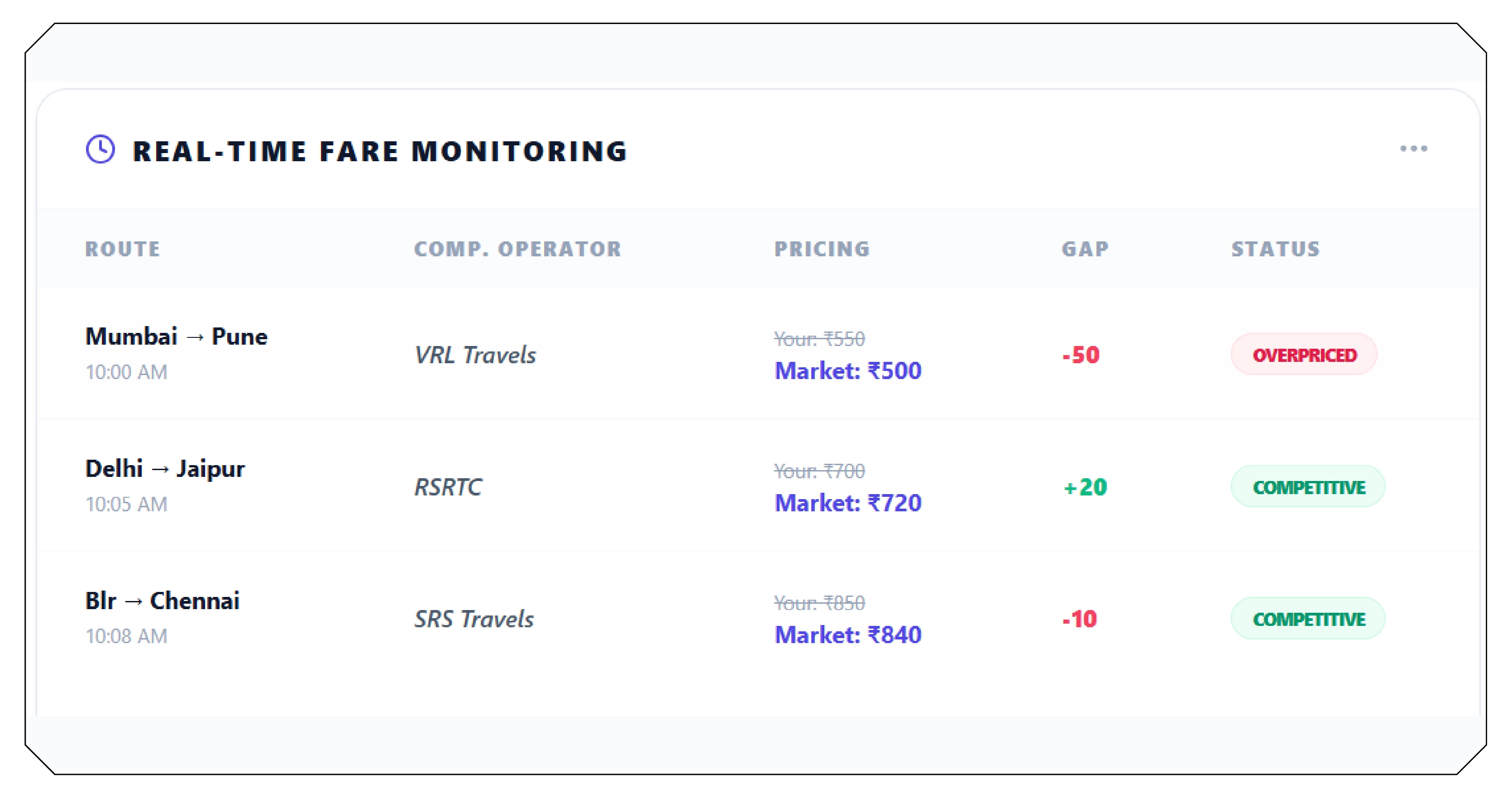
In a highly competitive market, staying updated with pricing changes is essential. Tools that enable RedBus ticket pricing monitoring provide real-time visibility into fare movements across multiple routes and operators.
This allows businesses to:
- Track competitor pricing strategies
- Identify underpriced or overpriced routes
- Adjust fares instantly to maintain competitiveness
- Improve customer retention through better pricing
Real-time monitoring also helps detect anomalies, such as sudden price drops or spikes, enabling quick corrective actions.
Leveraging Booking Patterns for Strategic Growth
Understanding customer behavior is key to long-term success. Booking pattern analysis reveals when customers are most likely to book tickets, which routes are most popular, and what price points drive conversions.
For example:
- Early bookings often indicate price-sensitive customers
- Last-minute bookings may reflect urgent travel needs
- Certain routes may show consistent demand regardless of price
By analyzing these trends, businesses can design targeted promotions, optimize inventory allocation, and enhance customer experience.
Enhancing Customer Experience Through Data
Data analytics not only benefits operators but also improves the traveler experience. By studying fare trends and route performance, platforms can provide personalized recommendations, suggest optimal travel times, and offer competitive pricing options.
Features like fare alerts and predictive pricing models help users make informed decisions, increasing trust and satisfaction. This ultimately leads to higher booking rates and customer loyalty.
Challenges in Bus Fare and Route Analytics
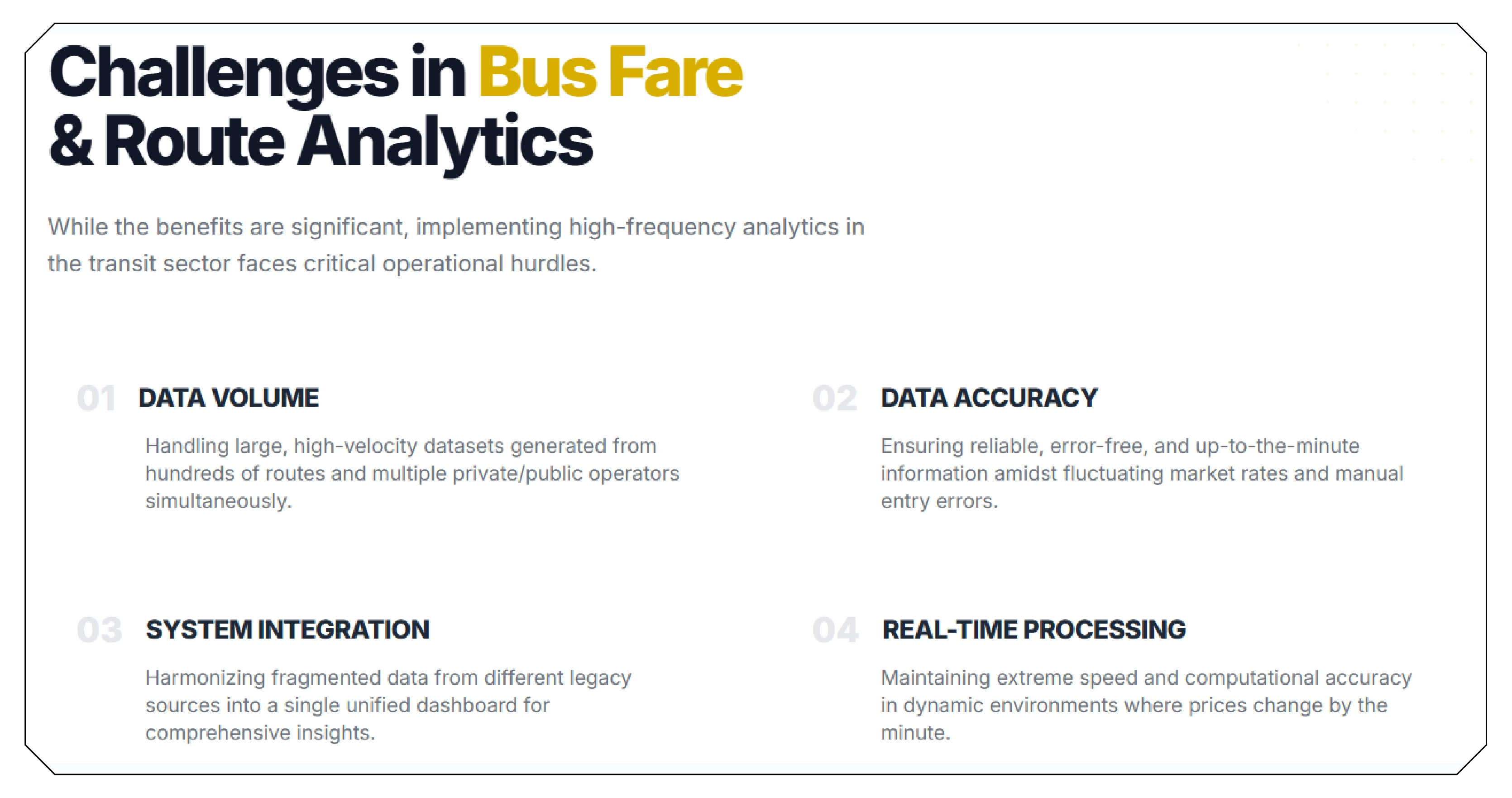
While the benefits are significant, implementing analytics comes with challenges:
- Data Volume: Handling large datasets from multiple routes and operators
- Data Accuracy: Ensuring reliable and up-to-date information
- Integration: Combining data from different sources for comprehensive insights
- Real-Time Processing: Maintaining speed and accuracy in dynamic environments
Overcoming these challenges requires robust data infrastructure, advanced analytics tools, and continuous monitoring.
Future Trends in Bus Travel Analytics
The future of bus travel analytics lies in advanced technologies such as AI and machine learning. These technologies enable predictive modeling, automated pricing adjustments, and enhanced customer segmentation.
Key trends include:
- Predictive demand forecasting
- AI-driven pricing strategies
- Integration with multimodal transport systems
- Enhanced personalization for travelers
As the industry evolves, data analytics will continue to play a pivotal role in shaping smarter and more efficient travel ecosystems.
How Travel Scrape Can Help You?
1. Real-Time Fare Intelligence
Our data scraping services deliver real-time bus fare insights across multiple routes and operators. This enables businesses to track price fluctuations instantly, respond to demand shifts, and implement smarter pricing strategies for improved revenue outcomes.
2. Route Performance Optimization
We collect and analyze route-level data, including travel frequency, occupancy trends, and seasonal demand variations. This helps you identify high-performing routes, eliminate inefficiencies, and optimize schedules to enhance operational productivity and customer satisfaction.
3. Competitor Benchmarking Insights
Our solutions monitor competitor pricing, discounts, and service offerings continuously. This allows you to benchmark your performance, adjust pricing competitively, and maintain a strong market position while attracting more customers and increasing conversions.
4. Customer Booking Behavior Analysis
By analyzing booking patterns, travel timings, and user preferences, we help you understand customer behavior deeply. These insights support targeted marketing campaigns, personalized offers, and better demand forecasting for consistent business growth.
5. Scalable Data Integration Solutions
Our scraping services provide structured, clean, and scalable datasets that integrate seamlessly into your analytics systems. This ensures faster decision-making, supports advanced analytics, and empowers your business with reliable, actionable travel intelligence.
Conclusion
RedBus has emerged as a powerful platform for understanding bus travel dynamics at both local and global levels. By leveraging advanced analytics, businesses can gain a competitive edge, optimize operations, and deliver superior customer experiences.
From extracting insights through RedBus global bus travel data scraping to enabling smarter decisions with RedBus real-time bus fare tracking intelligence, the potential of data-driven strategies is immense. Incorporating Competitor Price Tracking further strengthens market positioning, ensuring that businesses stay ahead in an increasingly competitive landscape.
Ultimately, RedBus bus fare and route analytics is not just a tool—it’s a strategic asset that drives growth, innovation, and customer satisfaction in the modern travel industry. Ready to elevate your travel business with cutting-edge data insights? Scrape Aggregated Flight Fares to identify competitive rates and optimize your revenue strategies efficiently. Discover emerging opportunities with tools to Extract Travel Website Data, leveraging comprehensive data to forecast market shifts and enhance your service offerings. Real-Time Travel App Data Scraping Services helps stay ahead of competitors, gaining instant insights into bookings, promotions, and customer behavior across multiple platforms. Get in touch with Travel Scrape today to explore how our end-to-end data solutions can uncover new revenue streams, enhance your offerings, and strengthen your competitive edge in the travel market.
Ready to elevate your travel business with cutting-edge data insights? Scrape Aggregated Flight Fares to identify competitive rates and optimize your revenue strategies efficiently. Discover emerging opportunities with tools to Extract Travel Website Data, leveraging comprehensive data to forecast market shifts and enhance your service offerings. Real-Time Travel App Data Scraping Services helps stay ahead of competitors, gaining instant insights into bookings, promotions, and customer behavior across multiple platforms. Get in touch with Travel Scrape today to explore how our end-to-end data solutions can uncover new revenue streams, enhance your offerings, and strengthen your competitive edge in the travel market.
Unlock the Full Report
Enter your details to access premium pricing intelligence insights