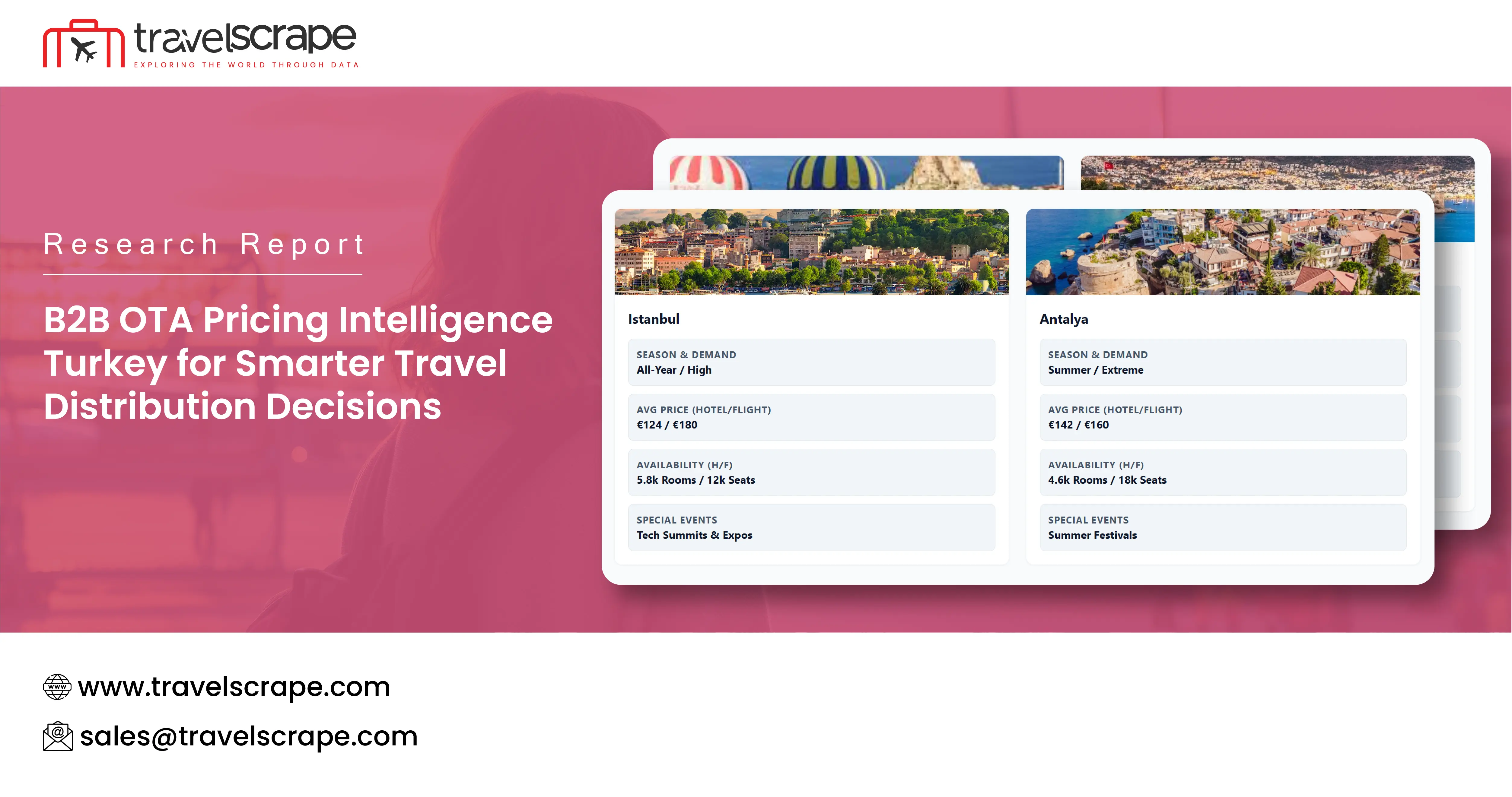
B2B OTA Pricing Intelligence Turkey for Smarter Travel Distribution Decisions
Introduction
Turkey has emerged as one of the most dynamic travel markets connecting Europe, Asia, and the Middle East. The rapid expansion of online travel distribution, wholesale accommodation networks, and digital booking ecosystems has intensified competition among travel intermediaries. As a result, B2B OTA pricing intelligence Turkey has become a critical capability for wholesalers, travel agencies, destination management companies, hotel consolidators, and tourism technology providers seeking to maximize profitability and market share.
Modern travel businesses increasingly depend on Dynamic Pricing Intelligence to monitor competitor pricing, analyze inventory fluctuations, evaluate demand shifts, and optimize distribution strategies across multiple booking channels. Simultaneously, Turkey B2B travel OTA pricing analytics enables organizations to understand pricing trends across destinations, seasons, supplier categories, and booking windows.
With millions of hotel room nights, flight reservations, transfer bookings, and package sales processed through B2B travel networks, pricing intelligence has become a strategic asset that directly influences revenue performance, booking conversion, and supplier competitiveness.
The Growing Importance of Pricing Intelligence in Turkey's Travel Ecosystem
Turkey's tourism sector serves diverse traveler segments, including leisure tourists, religious travelers, business visitors, luxury vacationers, and group tour operators. Major destinations such as Istanbul, Antalya, Cappadocia, Bodrum, Izmir, and Marmaris experience substantial booking activity through B2B distribution channels.
Travel wholesalers often source inventory from multiple suppliers while competing against numerous OTAs offering similar products. Even minor price variations can significantly impact booking volumes. Therefore, travel companies increasingly utilize pricing intelligence systems to monitor market rates continuously and identify revenue opportunities.
Key objectives include:
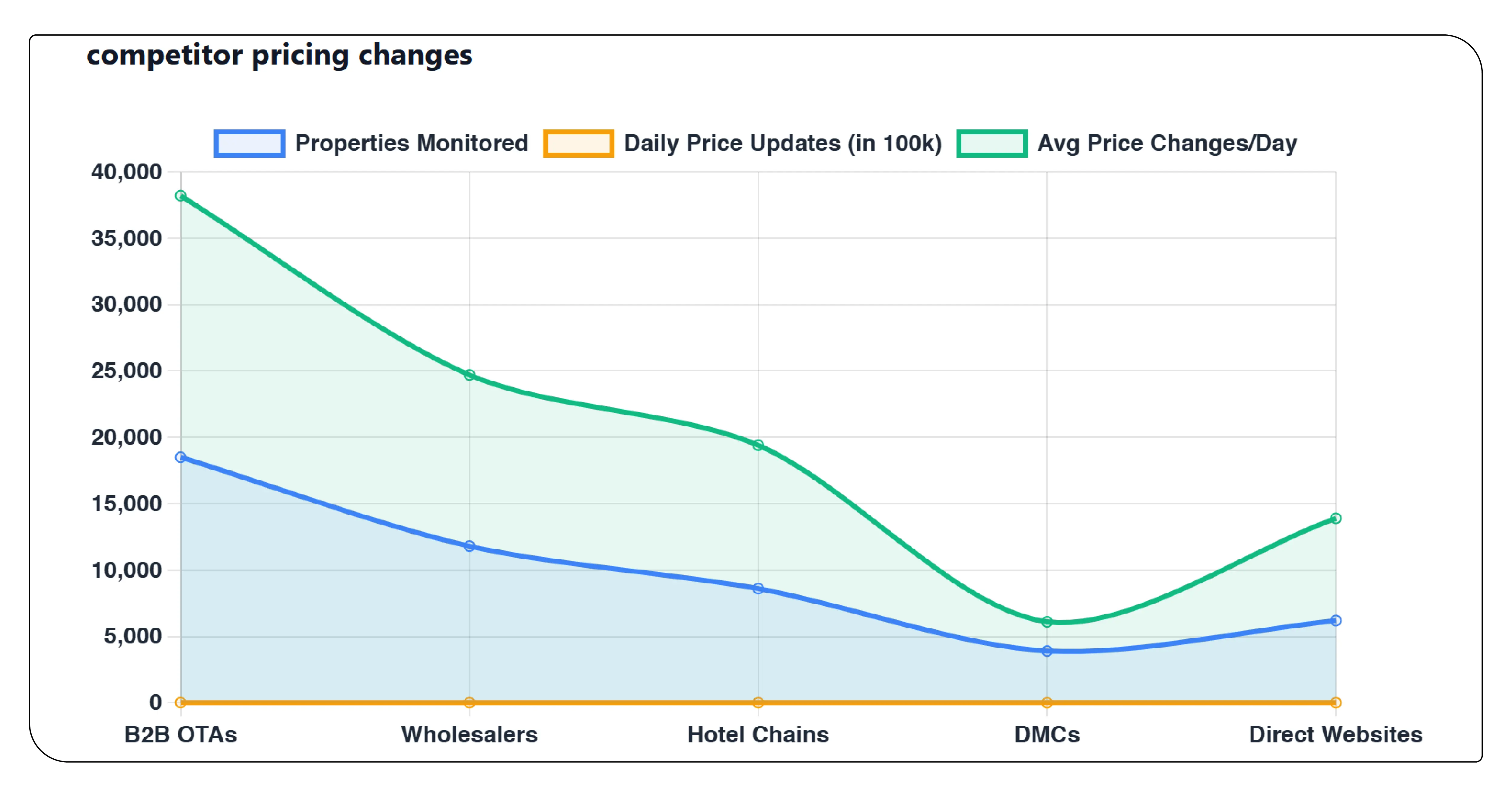
- Monitoring competitor pricing changes
- Tracking supplier inventory availability
- Identifying demand fluctuations
- Improving booking conversion rates
- Enhancing revenue management decisions
- Supporting strategic contracting negotiations
These insights help travel businesses make informed pricing decisions while maintaining competitiveness across regional and international markets.
Sample Turkey B2B OTA Hotel Pricing Intelligence Dataset
| Destination | Hotel Category | Avg B2B Rate (€) | Avg Retail Rate (€) | Markup % | Occupancy Trend | Booking Window (Days) | Competitor Count | Demand Index |
|---|---|---|---|---|---|---|---|---|
| Istanbul | 3-Star | 58 | 72 | 24% | High | 21 | 15 | 88 |
| Istanbul | 4-Star | 91 | 115 | 26% | High | 25 | 18 | 92 |
| Istanbul | 5-Star | 155 | 194 | 25% | Medium | 34 | 20 | 85 |
| Antalya | 3-Star | 49 | 64 | 31% | High | 18 | 14 | 90 |
| Antalya | 4-Star | 82 | 104 | 27% | High | 23 | 17 | 95 |
| Antalya | 5-Star | 168 | 212 | 26% | Very High | 31 | 21 | 98 |
| Cappadocia | 3-Star | 61 | 76 | 25% | Medium | 20 | 10 | 80 |
| Cappadocia | 4-Star | 97 | 124 | 28% | Medium | 28 | 13 | 84 |
| Cappadocia | 5-Star | 172 | 219 | 27% | Medium | 35 | 15 | 81 |
| Bodrum | 3-Star | 65 | 81 | 25% | High | 19 | 12 | 87 |
| Bodrum | 4-Star | 104 | 132 | 27% | High | 24 | 15 | 91 |
| Bodrum | 5-Star | 211 | 268 | 27% | High | 36 | 18 | 93 |
| Izmir | 3-Star | 54 | 68 | 26% | Medium | 22 | 11 | 79 |
| Izmir | 4-Star | 88 | 112 | 27% | Medium | 26 | 14 | 83 |
| Izmir | 5-Star | 149 | 189 | 27% | Medium | 33 | 16 | 82 |
Sample market intelligence data for analytical illustration.
Competitive Benchmarking Across B2B OTA Networks
Pricing transparency has transformed how travel suppliers compete. Modern intelligence platforms collect data from multiple OTA channels, supplier portals, wholesalers, and booking systems to create comprehensive competitive benchmarks.
Organizations can compare:
- Hotel room rates
- Flight pricing structures
- Transfer service costs
- Package holiday pricing
- Cancellation policy impacts
- Seasonal discount patterns
Such benchmarking allows travel providers to understand how their offerings compare against market averages and competitor strategies.
The implementation of OTA Ranking & Visibility analytics further helps suppliers determine how pricing affects their placement within search results. Higher visibility often leads to increased bookings, making ranking intelligence an important component of revenue optimization strategies.
Travel businesses can identify whether reduced visibility stems from pricing disadvantages, inventory shortages, restrictive policies, or competitor promotions.
Demand Forecasting and Revenue Growth Opportunities
Travel demand in Turkey is highly seasonal and influenced by numerous factors including holidays, airline capacity, geopolitical developments, conferences, festivals, and weather conditions.
Pricing intelligence systems aggregate booking data to forecast future demand and identify booking surges before competitors react.
Benefits include:
- Early demand detection
- Occupancy forecasting
- Inventory planning
- Strategic pricing adjustments
- Improved supplier negotiations
- Enhanced package construction
These capabilities generate valuable B2B travel revenue optimization insights that support long-term profitability while minimizing revenue leakage caused by delayed market responses.
Travel businesses leveraging predictive intelligence frequently outperform competitors relying solely on historical booking trends.
Understanding Price Elasticity in Turkish Travel Markets
Consumer purchasing behavior varies considerably across destinations and traveler segments. Some markets are highly price-sensitive, while others prioritize luxury experiences and service quality.
Through advanced pricing intelligence solutions, companies can evaluate:
- Price sensitivity by destination
- Seasonal pricing thresholds
- Conversion response rates
- Package bundle effectiveness
- Promotional campaign performance
This information supports more effective Price Optimization strategies that balance competitiveness and profitability.
For example, premium Antalya resorts may tolerate smaller discounts due to strong demand, whereas city hotels in secondary destinations may require more aggressive pricing adjustments during off-peak periods.
Turkey OTA Demand and Competitive Pricing Analysis
| Destination | Average Daily Searches | OTA Average Rate (€) | Lowest Competitor Rate (€) | Highest Competitor Rate (€) | Price Gap % | Booking Growth % | Visibility Score | Revenue Opportunity Score |
|---|---|---|---|---|---|---|---|---|
| Istanbul | 58,400 | 108 | 95 | 126 | 14% | 11% | 89 | 85 |
| Antalya | 71,600 | 124 | 108 | 148 | 15% | 17% | 92 | 94 |
| Bodrum | 34,800 | 138 | 119 | 165 | 16% | 13% | 87 | 89 |
| Cappadocia | 29,200 | 114 | 101 | 137 | 13% | 10% | 84 | 82 |
| Izmir | 24,500 | 98 | 85 | 117 | 15% | 8% | 81 | 78 |
| Marmaris | 21,700 | 117 | 103 | 139 | 14% | 12% | 83 | 84 |
| Fethiye | 18,900 | 112 | 96 | 134 | 17% | 14% | 85 | 88 |
| Bursa | 12,400 | 87 | 76 | 102 | 13% | 7% | 75 | 72 |
| Ankara | 16,100 | 92 | 81 | 109 | 14% | 6% | 77 | 74 |
| Alanya | 26,300 | 119 | 102 | 143 | 17% | 15% | 88 | 91 |
| Trabzon | 14,800 | 95 | 83 | 112 | 14% | 9% | 79 | 76 |
| Pamukkale | 11,600 | 101 | 89 | 121 | 13% | 8% | 78 | 75 |
Illustrative competitive pricing and demand intelligence dataset.
Building Competitive Intelligence Frameworks

Travel organizations increasingly deploy automated monitoring systems capable of collecting large-scale pricing and availability data from multiple distribution channels.
These intelligence frameworks support:
- Market-wide pricing surveillance
- Competitor benchmarking
- Inventory monitoring
- Promotion tracking
- Demand forecasting
- Supplier performance evaluation
The resulting Turkey B2B OTAs competitive pricing intelligence provides travel businesses with actionable insights that improve strategic decision-making.
Rather than reacting to competitor moves after revenue losses occur, companies can proactively identify market shifts and adjust pricing strategies accordingly.
Booking Demand Analysis and Market Trends
The Turkish travel market experiences rapid demand fluctuations driven by domestic tourism, international arrivals, airline capacity growth, and regional events.
Advanced intelligence systems perform OTA booking demand analysis Turkey by evaluating search behavior, booking patterns, occupancy trends, and conversion metrics.
Key indicators include:
- Search-to-book ratios
- Advance booking windows
- Length-of-stay trends
- Seasonal demand spikes
- Geographic demand distribution
- Traveler segment preferences
These insights allow travel businesses to allocate resources efficiently and maximize booking opportunities during peak demand periods.
Real-Time Intelligence for Faster Decision Making
Travel pricing changes continuously throughout the day. Static pricing reports often become outdated before meaningful decisions can be implemented.
Consequently, many travel organizations are investing in Real-Time Price Intelligence platforms that provide continuous visibility into market conditions.
Real-time monitoring enables:
- Immediate competitor tracking
- Faster promotional responses
- Inventory adjustment alerts
- Revenue management optimization
- Dynamic package repricing
- Enhanced customer acquisition strategies
As the Turkish travel ecosystem becomes increasingly digital, organizations capable of acting on real-time intelligence gain a substantial competitive advantage.
Conclusion
Travel distribution across Turkey has evolved significantly, making pricing intelligence an essential component of modern business strategy. Travel wholesalers, OTAs, suppliers, and destination management companies increasingly rely on data-driven insights to remain competitive in a rapidly changing marketplace.
By leveraging comprehensive pricing intelligence solutions, organizations can improve visibility, optimize inventory allocation, strengthen supplier negotiations, and enhance overall profitability. Advanced analytics platforms transform large volumes of pricing and demand data into actionable intelligence that supports sustainable growth and informed decision-making.
Future-focused travel businesses will continue investing in technologies that help Scrape Turkey travel demand for B2B OTA growth.
Organizations are increasingly building comprehensive Turkey wholesale travel pricing dataset repositories to support forecasting and competitive benchmarking.
Advanced OTA Price Intelligence capabilities will play a critical role in long-term revenue optimization, market positioning, and business expansion across Turkey's growing travel ecosystem.
Ready to elevate your travel business with cutting-edge data insights? Scrape Aggregated Flight Fares to identify competitive rates and optimize your revenue strategies efficiently. Discover emerging opportunities with tools to Extract Travel Website Data, leveraging comprehensive data to forecast market shifts and enhance your service offerings. Real-Time Travel App Data Scraping Services helps stay ahead of competitors, gaining instant insights into bookings, promotions, and customer behavior across multiple platforms. Get in touch with Travel Scrape today to explore how our end-to-end data solutions can uncover new revenue streams, enhance your offerings, and strengthen your competitive edge in the travel market.
Unlock the Full Report
Enter your details to access premium pricing intelligence insights