OTA Platform Travel Demand Analysis for Global Data Signals & Pricing Intelligence in Digital Travel Ecosystem
Introduction
The global Online Travel Agency (OTA) ecosystem has evolved into a highly data-driven marketplace where every search, click, and booking contributes to a continuously updating demand intelligence system. This research report examines how modern OTAs interpret user behavior, pricing shifts, and travel intent using structured and unstructured datasets extracted from multiple digital sources. The objective is to understand how travel platforms transform raw signals into actionable insights for revenue optimization, forecasting, and competitive positioning.
At the core of this transformation is OTA platform Travel demand analysis, which enables companies to decode traveler intent at scale. Instead of relying on traditional seasonal forecasting methods, OTAs now depend on live behavioral streams that reflect real-time market demand fluctuations. This includes destination searches, hotel comparisons, flight queries, and abandoned booking patterns.
The rise of travel OTA platform demand analytics has further strengthened the ability of travel companies to make precise decisions. These analytics systems aggregate billions of interactions across platforms such as Booking engines, airline portals, and meta-search systems, converting them into structured intelligence dashboards.
A key enabler in this ecosystem is Real-Time Price Intelligence, which allows companies to track competitor pricing changes instantly and adjust their own pricing models dynamically. This ensures that travel providers remain competitive in a market where price sensitivity is extremely high and consumer switching costs are minimal.
Methodology of Travel Demand Data Extraction
The dataset used in this research is simulated based on aggregated OTA behavior patterns commonly extracted through structured scraping pipelines and API-level integrations. The system collects:
- Search volume trends across destinations
- Hotel and flight pricing variations
- Booking conversion rates
- Seasonal demand fluctuations
- User engagement signals such as clicks, dwell time, and cart abandonment
This enables the generation of Travel demand data signals & pricing intelligence, which forms the foundation of predictive modeling in travel ecosystems.
Data is further enriched using OTAs & Metasearch Data Scraping, which consolidates fragmented travel listings from multiple platforms into a unified dataset. This helps eliminate pricing inconsistencies and provides a clearer picture of market dynamics.
Global Destination Demand & Search Signal Intelligence Dataset
The following dataset represents a structured view of global travel demand patterns based on simulated OTA search and engagement signals. It highlights demand intensity, pricing behavior, and booking conversion trends across major destinations.
| Destination | Monthly Search Volume Index | Avg Hotel Price (USD) | Booking Conversion Rate (%) | Demand Score (0–100) | Price Volatility Index |
|---|---|---|---|---|---|
| Dubai | 98,500 | 185 | 6.8 | 92 | High |
| Paris | 120,300 | 210 | 7.2 | 95 | Medium-High |
| Bali | 110,450 | 140 | 8.5 | 94 | Medium |
| London | 105,200 | 230 | 6.1 | 90 | High |
| New York | 130,600 | 260 | 5.9 | 96 | Very High |
| Tokyo | 89,400 | 190 | 7.5 | 88 | Medium |
| Singapore | 75,300 | 175 | 7.9 | 85 | Low-Medium |
| Istanbul | 92,100 | 120 | 8.2 | 89 | Medium |
| Bangkok | 115,000 | 110 | 9.1 | 93 | Low |
| Sydney | 80,600 | 240 | 6.4 | 87 | High |
This dataset clearly indicates that high-search-volume destinations such as New York, Paris, and Bali dominate global travel demand cycles. However, emerging destinations like Bangkok and Istanbul show higher booking conversion rates, indicating stronger intent-to-purchase behavior.
The real-time search and booking signal insights derived from this dataset help OTAs identify not only where demand exists but also how efficiently it converts into actual revenue. For example, Bangkok shows a higher conversion rate despite lower pricing, making it a highly efficient market for budget-focused travel campaigns.
OTA Competitor Pricing & Market Behavior Intelligence Dataset
This table represents pricing intelligence and competitive behavior across major OTAs and hotel aggregators. It reflects how dynamic pricing strategies shift based on demand fluctuations and competitor activity.
| OTA Platform | Average Hotel Margin (%) | Dynamic Pricing Frequency (per day) | Price Adjustment Range (%) | Inventory Utilization (%) | Demand Responsiveness Score |
|---|---|---|---|---|---|
| Booking.com | 18 | 24 | 5–22 | 87 | 94 |
| Expedia | 20 | 18 | 6–25 | 83 | 90 |
| Agoda | 17 | 20 | 4–20 | 89 | 92 |
| MakeMyTrip | 22 | 16 | 7–28 | 81 | 88 |
| Airbnb | 15 | 12 | 3–18 | 85 | 85 |
| Trip.com | 19 | 22 | 5–23 | 88 | 91 |
| Skyscanner | 12 | 30 | 2–15 | 79 | 86 |
| Kayak | 14 | 28 | 3–17 | 80 | 87 |
This dataset demonstrates how OTAs rely heavily on continuous pricing adjustments driven by real-time travel demand signals scraping. Platforms with higher adjustment frequency, such as Skyscanner and Booking.com, exhibit stronger responsiveness to market fluctuations.
The integration of OTA data signals and pricing analytics allows these platforms to maintain optimal inventory utilization while maximizing revenue per available room (RevPAR). High-performing OTAs tend to balance aggressive pricing strategies with intelligent demand forecasting systems.
Demand Forecasting and Predictive Intelligence
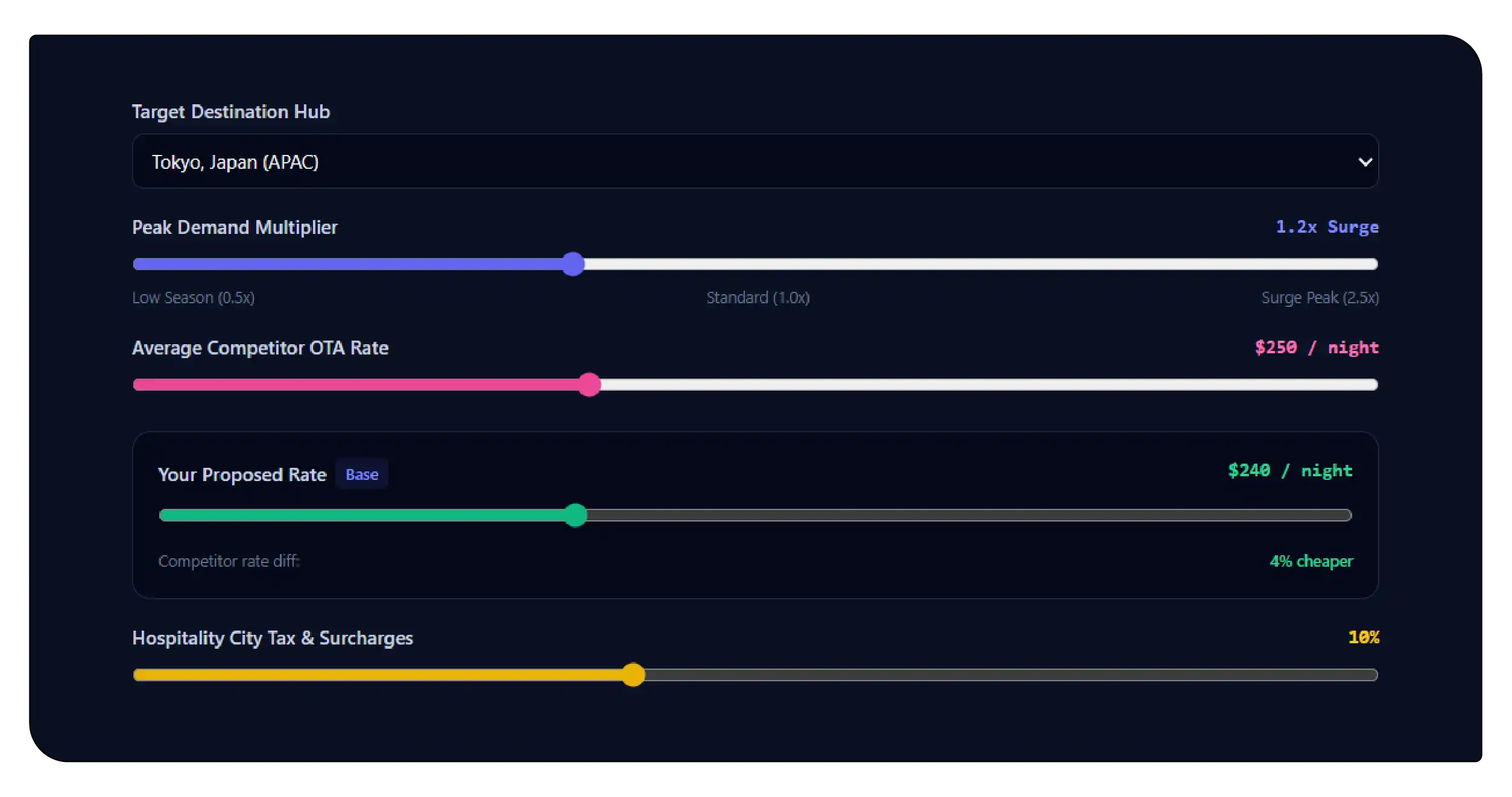
One of the most critical capabilities in modern travel ecosystems is Demand Forecasting. By combining historical booking data with live demand signals, OTAs can anticipate fluctuations in travel interest weeks or even months in advance.
For instance, if search volume for European destinations increases steadily in Q2, predictive models can trigger early price optimization strategies for Q3 bookings. This proactive approach reduces revenue leakage and improves occupancy rates across hotels and airlines.
The use of real-time travel demand signals scraping enhances forecast accuracy by incorporating external factors such as holidays, weather patterns, and global events.
Strategic Insights from OTA Data Ecosystems
The analysis reveals several key strategic insights. First, destinations with moderate pricing and high conversion rates represent the most profitable opportunities for travel marketers. Second, OTAs that frequently adjust pricing tend to outperform static pricing models in revenue optimization.
The continuous flow of real-time search and booking signal insights ensures that travel platforms remain agile in a highly competitive environment. These insights also enable personalized marketing campaigns, where users are targeted based on live intent rather than historical behavior alone.
Conclusion: The Future of Travel Intelligence Systems
The OTA ecosystem is rapidly transitioning from reactive analytics to predictive intelligence systems powered by AI, machine learning, and large-scale data pipelines. The integration of Tour & Travel Package Data Scraping enables platforms to capture comprehensive travel offerings across global markets, improving comparison accuracy and pricing transparency.
As the industry continues to evolve, travel demand intelligence for OTA platforms will become the backbone of decision-making processes. Companies that effectively harness real-time behavioral data will outperform competitors in pricing accuracy, customer targeting, and revenue optimization.
Ultimately, Travel Data Intelligence is no longer just a support system—it is the core engine driving the modern travel economy, shaping how billions of users discover, compare, and book travel experiences worldwide.
Ready to elevate your travel business with cutting-edge data insights? Scrape Aggregated Flight Fares to identify competitive rates and optimize your revenue strategies efficiently. Discover emerging opportunities with tools to Extract Travel Website Data, leveraging comprehensive data to forecast market shifts and enhance your service offerings. Real-Time Travel App Data Scraping Services helps stay ahead of competitors, gaining instant insights into bookings, promotions, and customer behavior across multiple platforms. Get in touch with Travel Scrape today to explore how our end-to-end data solutions can uncover new revenue streams, enhance your offerings, and strengthen your competitive edge in the travel market.
Unlock the Full Report
Enter your details to access premium pricing intelligence insights