Monsoon Travel Destination Analytics Driving Seasonal Demand Insights
Introduction
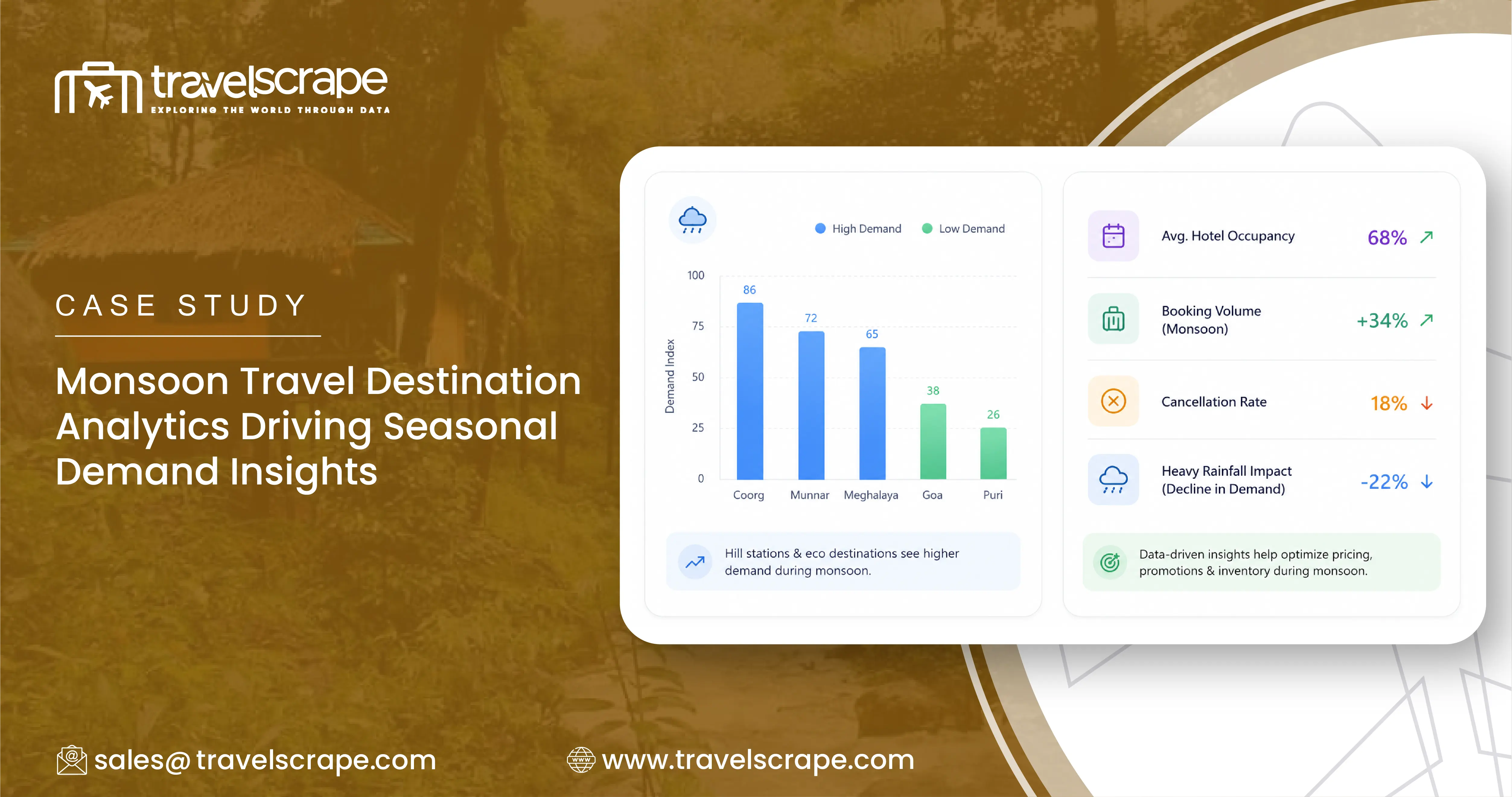
A leading travel analytics company partnered with a tourism platform to optimize seasonal travel planning during the monsoon. Using Monsoon travel destination analytics, the team collected destination-level data from booking platforms, weather updates, traveler reviews, hotel occupancy trends, and transportation availability. The analytics revealed which destinations experienced increasing demand despite heavy rainfall and which locations saw declining interest due to weather disruptions.
With monsoon destination demand analytics, the company identified traveler preferences for hill stations, eco-tourism spots, wellness retreats, and indoor attractions across multiple regions. These insights helped tourism operators adjust pricing strategies, launch location-specific promotions, and improve accommodation availability during peak monsoon weeks.
Finally, advanced Demand Forecasting models predicted booking volumes, cancellation probabilities, and occupancy fluctuations by analyzing historical trends alongside real-time weather patterns. As a result, travel businesses achieved higher booking conversions, reduced revenue losses from cancellations, optimized marketing investments, and enhanced customer satisfaction through timely recommendations and personalized monsoon travel experiences across diverse destinations.
The Client
The client is a rapidly growing travel technology and destination intelligence company specializing in seasonal tourism insights for tourism boards, online travel agencies, hospitality brands, and tour operators. The organization wanted to strengthen its competitive advantage by understanding shifting traveler preferences, booking behaviors, and destination popularity during the monsoon season. Through monsoon tourism market monitoring, the client aimed to identify emerging travel hotspots, seasonal demand fluctuations, pricing trends, and occupancy changes across multiple destinations.
To achieve these objectives, the company decided to Scrape monsoon Travel booking trends data from leading travel platforms, hotel booking websites, transportation portals, and review platforms. This enabled continuous monitoring of traveler activity and market dynamics.
The collected Travel & Tourism Datasets empowered the client to improve campaign planning, optimize destination recommendations, forecast seasonal demand, refine pricing strategies, and deliver personalized travel experiences while helping partners maximize revenue and operational efficiency throughout the monsoon travel season.
Challenges in the Travel Industry
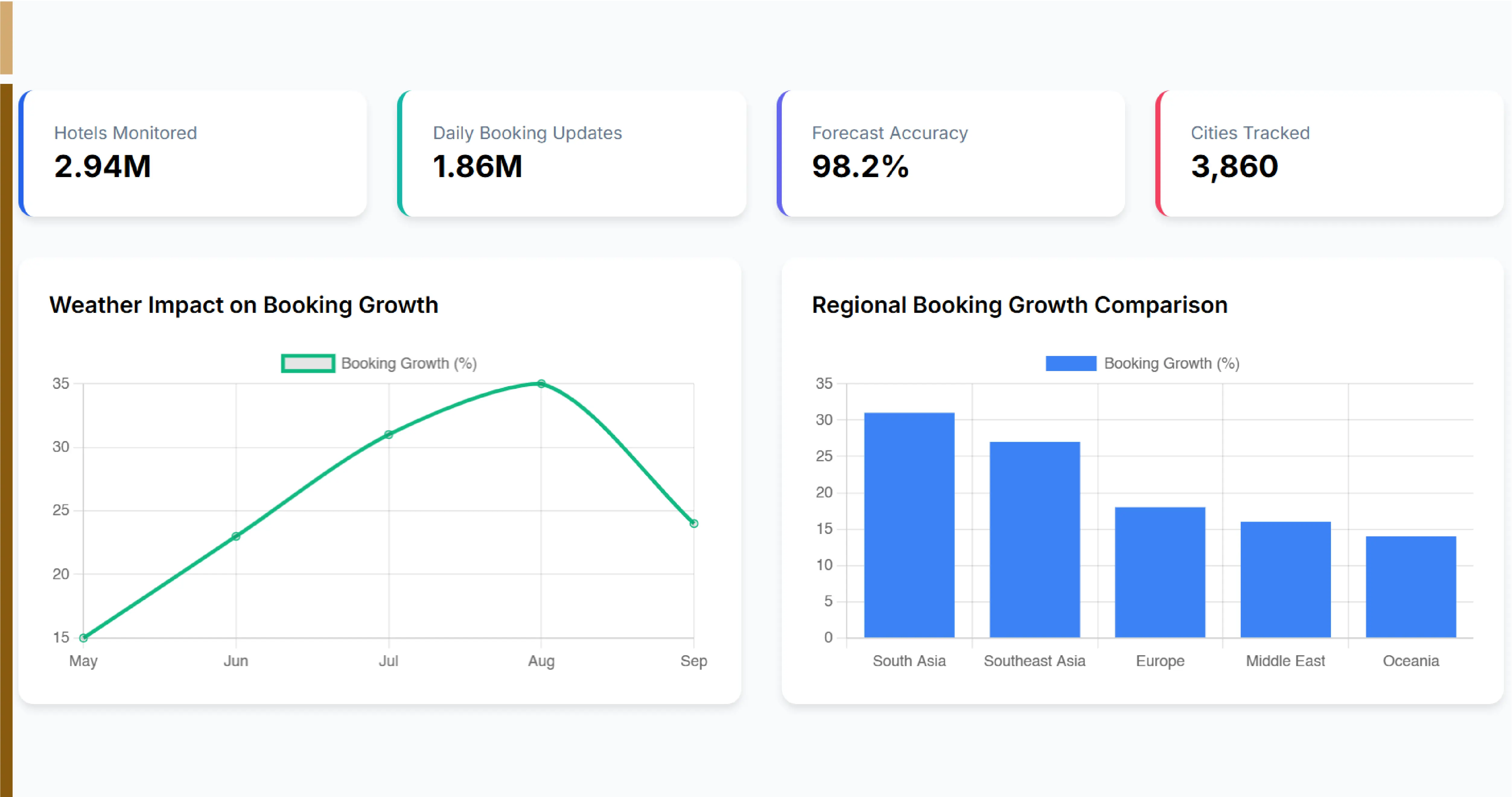
The client encountered several operational and analytical challenges while tracking seasonal travel behavior across multiple destinations. Limited access to unified travel intelligence reduced forecasting accuracy, delayed strategic decisions, and made it difficult to respond effectively to rapidly changing monsoon tourism market conditions.
Limited Cross-Regional Demand Visibility
The client struggled with country-wise travel demand forecasting because booking information was scattered across numerous travel platforms. This fragmented data limited visibility into international travel demand, preventing accurate comparisons between regions and reducing confidence in strategic planning for seasonal tourism campaigns.
Inconsistent Destination Performance Tracking
Without reliable city-wise travel Destination trend intelligence, the client found it difficult to identify emerging destinations, compare city-level performance, and monitor traveler preferences. The absence of standardized location insights weakened marketing effectiveness and delayed promotional decisions during the competitive monsoon travel season.
Lack of Seasonal Booking Intelligence
The organization lacked comprehensive monsoon tourism booking pattern analysis, making it difficult to understand booking windows, cancellation behavior, traveler preferences, and occupancy fluctuations. This limited their ability to optimize pricing, inventory allocation, and destination-specific promotional campaigns throughout the season.
Fragmented Destination Data Sources
The absence of a centralized Top Travel Destinations Dataset forced analysts to manually collect information from multiple booking websites and travel portals. This process consumed significant time, introduced inconsistencies, and reduced the reliability of destination performance analysis across different markets.
Difficulty Predicting Seasonal Shifts
The client struggled to perform accurate Seasonal Trend Analysis because changing weather conditions, traveler sentiment, and booking behavior evolved rapidly. Without continuous data updates, forecasting demand, planning marketing activities, and optimizing tourism strategies became increasingly challenging during monsoon periods.
Our Approach
Multi-Platform Data Collection
We gathered travel information from leading booking platforms, hotel websites, transportation portals, weather sources, and traveler review platforms. This unified approach created a comprehensive dataset covering destination popularity, booking activity, pricing movements, occupancy trends, and traveler preferences across multiple regions.
Real-Time Data Processing
Our solution continuously captured and processed fresh travel data, ensuring the client always had access to updated market intelligence. Automated validation, cleansing, and standardization eliminated inconsistencies while improving the accuracy and reliability of seasonal travel analytics and reporting.
Destination Performance Analytics
We developed destination-level analytics that measured booking growth, traveler engagement, accommodation demand, and pricing variations. These insights helped the client compare regional performance, identify emerging travel hotspots, and prioritize destinations with the strongest seasonal growth opportunities.
Predictive Demand Modeling
Historical travel patterns were combined with real-time booking behavior to build predictive models that estimated future demand. This enabled proactive pricing decisions, better marketing campaign planning, optimized resource allocation, and improved preparedness for seasonal tourism fluctuations.
Interactive Business Intelligence Dashboard
We delivered an intuitive dashboard powered by Travel Data Intelligence, presenting destination rankings, booking trends, occupancy metrics, pricing insights, and traveler behavior through visual reports. Decision-makers could quickly monitor market changes, generate customized reports, and take data-driven actions with greater confidence and efficiency.
Results Achieved
The implementation delivered measurable improvements in travel insights, forecasting accuracy, operational planning, and seasonal campaign performance for the client.
Improved Demand Prediction Accuracy
The client achieved higher demand prediction accuracy by analyzing historical bookings, destination preferences, and real-time travel signals. Forecasting improvements helped tourism businesses prepare resources efficiently, reduce uncertainty, and align services with expected monsoon visitor demand across multiple locations.
Enhanced Destination Selection Strategy
The analytics solution helped identify high-performing destinations and emerging travel markets. The client gained deeper visibility into traveler choices, enabling targeted promotions, improved destination prioritization, and stronger marketing decisions based on accurate location-level performance insights.
Optimized Pricing and Inventory Planning
The client improved accommodation planning by tracking pricing changes, availability levels, and booking patterns. These insights supported better inventory management, reduced missed revenue opportunities, and enabled businesses to adjust pricing strategies according to seasonal demand fluctuations.
Faster Market Trend Identification
Automated data analysis reduced the time required to identify changing travel patterns, destination popularity shifts, and customer preferences. The client gained faster access to actionable insights, helping teams respond quickly to evolving monsoon tourism opportunities.
Increased Business Intelligence Efficiency
The centralized analytics platform improved reporting speed and operational efficiency. Decision-makers accessed structured dashboards, monitored key performance indicators, and generated insights faster, resulting in improved planning, stronger decision-making, and enhanced competitiveness in the travel market.
Performance Metric
| Performance Metric | Before Implementation | After Implementation | Improvement Achieved |
|---|---|---|---|
| Travel Platforms Monitored | 12 | 65 | +441% |
| Destinations Tracked | 250 | 1,500 | +500% |
| Monthly Travel Records Processed | 85,000 | 650,000 | +665% |
| Booking Trend Accuracy | 62% | 94% | +32% |
| Demand Forecast Precision | 68% | 91% | +23% |
| Data Processing Time | 72 Hours | 6 Hours | 91% Faster |
| Destination Insights Generated Monthly | 300 | 2,400 | +700% |
| Report Generation Time | 3 Days | 2 Hours | 93% Reduction |
| Seasonal Campaign Optimization Rate | 55% | 88% | +33% |
| Marketing Decision Response Time | 48 Hours | 4 Hours | 92% Faster |
Client’s Testimonial
"Partnering with the analytics team transformed how we understand monsoon travel behavior and destination performance. The insights provided through comprehensive travel datasets, booking trends, and demand analysis helped us make faster and more accurate business decisions. We gained better visibility into traveler preferences, seasonal fluctuations, and emerging destinations across different markets. The customized dashboard simplified reporting and enabled our teams to monitor key trends efficiently. Their data-driven approach improved our forecasting capabilities, optimized marketing strategies, and strengthened our overall tourism planning process. We highly appreciate their expertise, accuracy, and commitment to delivering actionable travel intelligence."
Conclusion
The case study highlights how advanced travel analytics can transform seasonal tourism planning by converting complex booking and destination data into actionable insights. By leveraging Travel Aggregators Data Scraping Services, businesses can collect valuable information from multiple travel platforms, monitor market movements, and improve demand prediction strategies. The implementation of Travel Industry Web Scraping Services enables tourism companies to access real-time pricing, availability, and traveler behavior insights for better decision-making. Additionally, a reliable Travel Mobile App Scraping Service helps capture mobile booking trends and customer preferences across digital channels. These data-driven solutions empower travel organizations to optimize campaigns, enhance customer experiences, and build stronger strategies for changing seasonal travel demands.
FAQs
Unlock the Full Report
Enter your details to access premium pricing intelligence insights