Flight Route Demand Analysis for Global Airline Revenue Optimization
Introduction
Flight Route Demand Analysis is becoming a core pillar of modern aviation intelligence, helping airlines, OTAs, and travel analysts understand how passengers search, book, and respond to dynamic pricing across global routes. With increasing digital booking activity, demand signals are now extracted from search behavior, pricing movement, and seat availability patterns across platforms.
Flight Route Demand Analysis is no longer just about historical booking data—it now integrates real-time search trends, pricing fluctuations, and capacity constraints to forecast demand more accurately.
Airline Data Scraping enables structured extraction of flight search, pricing, and availability data from multiple OTAs, making it possible to analyze demand at a granular route level.
The route popularity analysis using flight search data helps identify emerging travel corridors, seasonal spikes, and underserved markets where demand is growing faster than supply.
Data Sources and Intelligence Ecosystem
Modern flight demand systems rely heavily on OTA data aggregation platforms and airline APIs. Two of the most influential platforms in this ecosystem are:
- Expedia
- Kayak
These platforms collectively provide billions of search queries, fare comparisons, and availability signals that power predictive analytics for airlines and travel agencies.
Global Flight Route Data Scraping plays a crucial role in consolidating this fragmented data into structured datasets for route intelligence and forecasting.
Route-Level Search Frequency Analysis
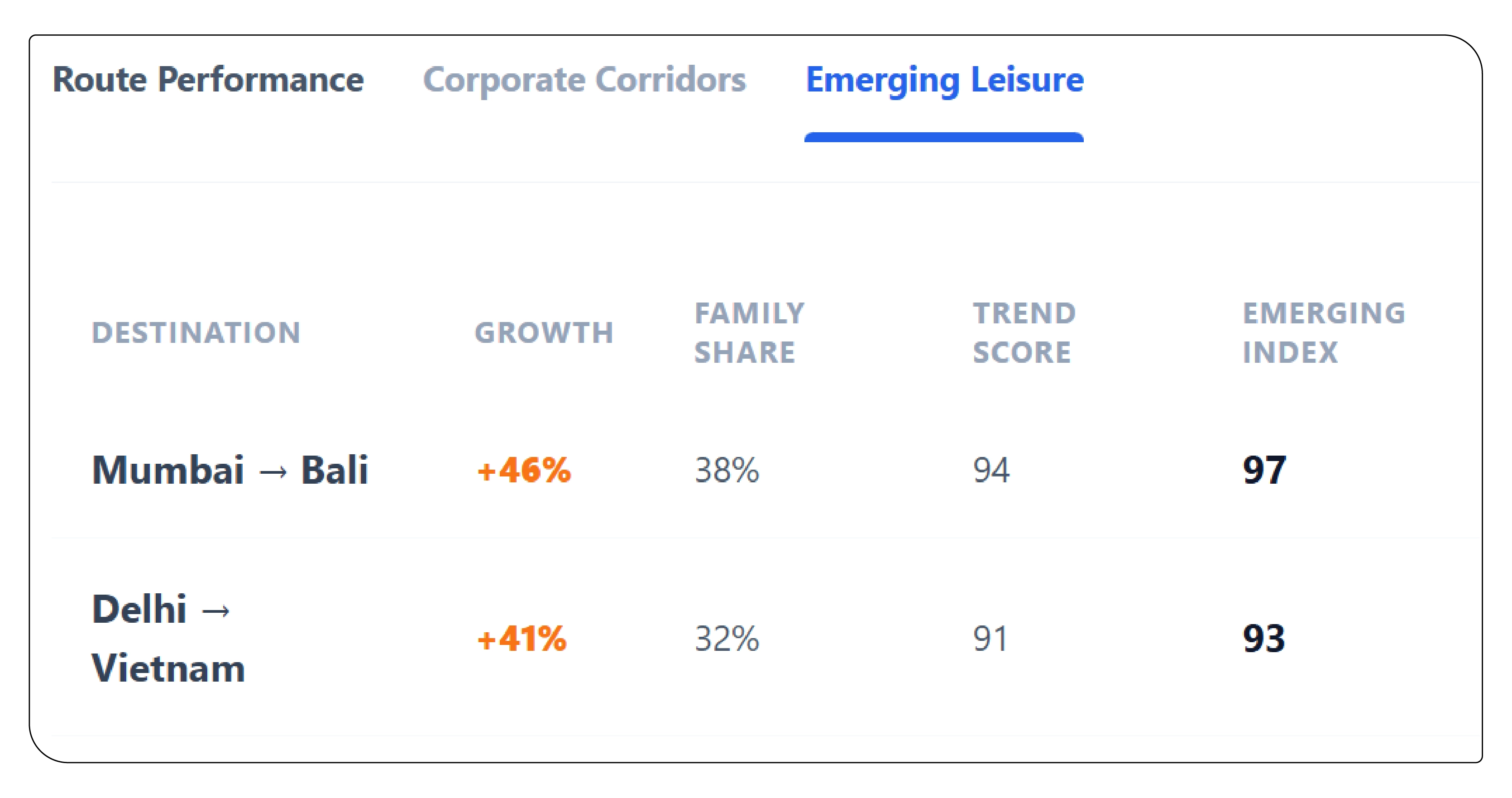
Route-level search frequency measures how often users search for specific origin-destination pairs such as “Delhi → London” or “New York → Dubai.” This metric directly reflects intent demand, even before bookings occur.
High-frequency search routes often indicate:
- Seasonal travel demand spikes
- Visa-driven travel patterns
- Corporate travel corridors
- Emerging leisure destinations
Scrape flight seat availability trends by route and date allows analysts to correlate search volume with actual inventory pressure, helping airlines adjust seat allocation dynamically.
Seat Availability Trends and Capacity Pressure
Seat availability is one of the strongest indicators of supply-side constraints in airline operations. When availability drops while search volume rises, it signals potential fare inflation.
Flight Seat Availability insights help airlines understand how quickly inventory is being consumed across fare classes.
The real-time flight route demand tracking enables monitoring of how quickly seats are sold after release, especially on high-demand international corridors.
Airline Pricing Changes and Fare Volatility
Airline pricing is highly dynamic, influenced by demand spikes, competitor pricing, fuel costs, and seat occupancy rates. Fare adjustments often occur multiple times per day on competitive routes.
The strategy to extract airline pricing trends by route and booking window helps identify optimal booking periods for travelers while enabling airlines to maximize revenue per seat.
Pricing behavior typically follows:
- Early booking discounts (low demand phase)
- Mid-cycle price stabilization
- Last-minute surge pricing (high demand phase)
Platforms Driving Flight Intelligence
Platforms like Expedia and Kayak provide massive datasets that power:
- Fare comparison engines
- Route-level demand heatmaps
- Price prediction algorithms
These platforms act as data aggregation layers between airlines and consumers, making them critical for airline market intelligence systems.
Use Case Applications
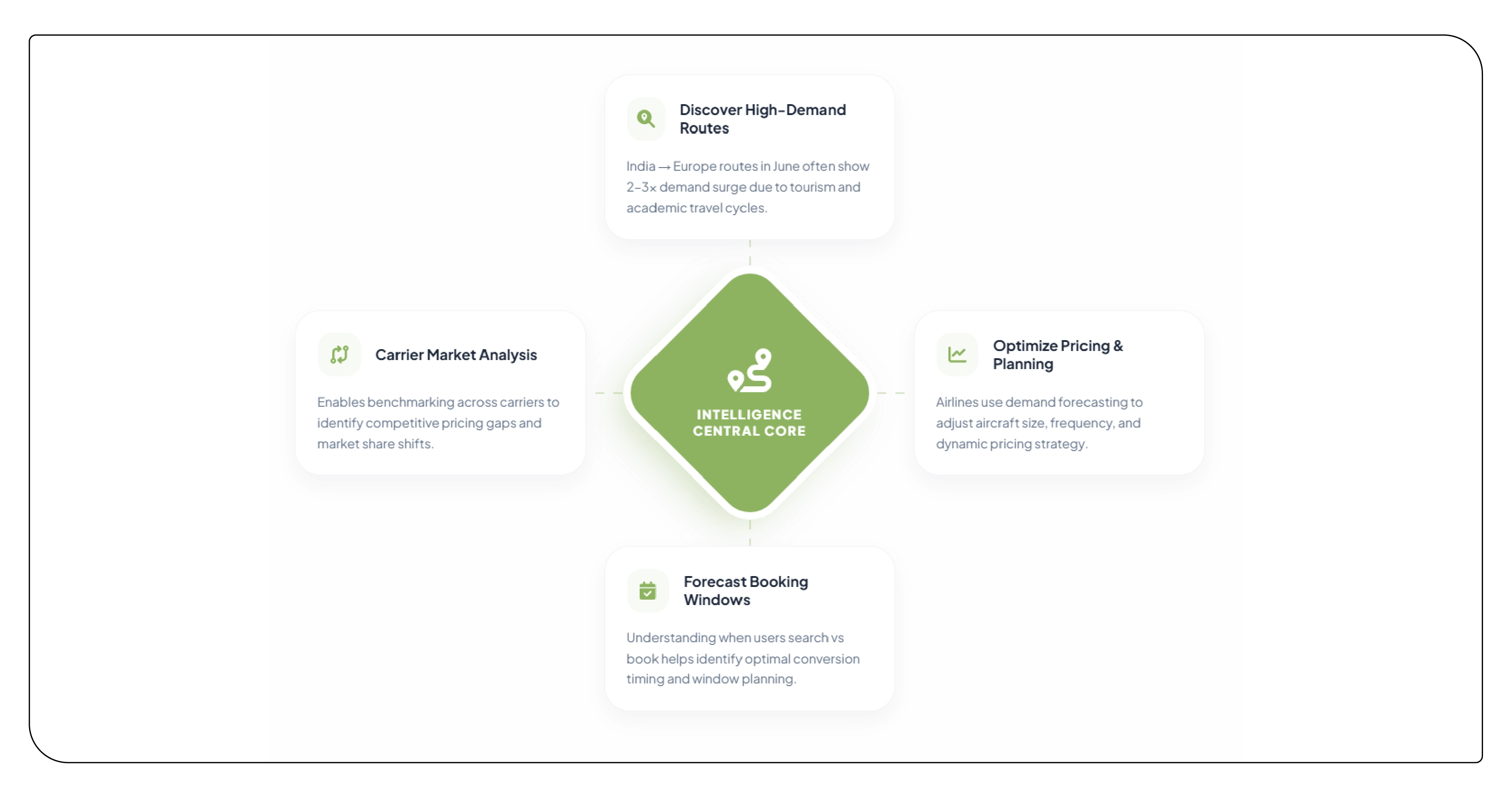
Flight route demand intelligence is widely used across aviation and travel sectors:
- Discover High-Demand Routes: Example: India → Europe routes in June often show 2–3x demand surge due to tourism and academic travel cycles.
- Optimize Airline Pricing & Route Planning: Airlines use demand forecasting to adjust aircraft size, frequency, and pricing strategy.
- Forecast Peak Booking Windows: Understanding when users search vs when they book helps identify optimal conversion timing.
Compare Airline Market Analysis enables benchmarking across carriers to identify competitive pricing gaps.
Route-Level Search Demand Intelligence (Sample Dataset)
| Route | Monthly Vol. | Peak Month | Trend | Sensitivity | Competition |
|---|---|---|---|---|---|
| London → New York | 1,600,000 | August | Consistent High | High | Very High |
| Delhi → London | 1,250,000 | June | High Surge | High | Very High |
| New York → Dubai | 980,000 | December | Seasonal Peak | Medium | High |
| Mumbai → Singapore | 870,000 | July | Stable Growth | Medium | Medium |
| Dubai → Bangkok | 720,000 | November | Moderate Surge | Low | Medium |
| San Francisco → Tokyo | 640,000 | April | Tech Travel | Medium | High |
| Toronto → London | 590,000 | July | Stable Peak | Medium | Medium |
This dataset shows how route popularity is heavily influenced by seasonal and economic cycles, with transatlantic routes dominating global search volumes.
Seat Availability & Pricing Trends by Booking Window
| Route | Window | Availability | Avg Fare ($) | Volatility | Pressure |
|---|---|---|---|---|---|
| Delhi → London | 60–90 days | Low | 720 | High | Very High |
| London → New York | 45–75 days | Low | 980 | High | Very High |
| San Francisco → Tokyo | 50–80 days | Low | 1050 | High | High |
| New York → Dubai | 30–60 days | Medium | 890 | Medium | High |
| Toronto → London | 40–70 days | Medium | 860 | Medium | Medium |
| Dubai → Bangkok | 20–40 days | High | 410 | Medium | Medium |
| Mumbai → Singapore | 15–45 days | Medium-High | 320 | Low | Medium |
This table highlights how seat availability directly impacts fare volatility, especially on long-haul international routes.
Key Analytical Insights
- High search routes do not always translate to immediate bookings, indicating latent demand.
- Seat scarcity is a strong predictor of fare escalation within 7–14 days before departure.
- Business-heavy routes (e.g., London–New York) show stable but high-value demand cycles.
- Emerging leisure routes (e.g., Dubai–Bangkok) show seasonal spikes with low price sensitivity.
- Pricing algorithms are increasingly reactive to search-to-booking conversion ratios.
Conclusion
Flight route intelligence is evolving into a predictive system that combines search behavior, availability data, and pricing signals to optimize airline operations and travel marketplace performance. Airlines and OTAs now depend on structured data pipelines to stay competitive in a volatile pricing environment.
However, the airfare and seat availability API for demand insights is becoming essential for integrating real-time intelligence into airline revenue management systems.
The OTA search optimization using route-level data analytics enables travel platforms to improve conversion rates by aligning search results with demand trends. The Fare Fluctuation Alerts provide proactive notifications for price spikes and drops, helping both travelers and airlines make data-driven decisions in real time.
Ready to elevate your travel business with cutting-edge data insights? Scrape Aggregated Flight Fares to identify competitive rates and optimize your revenue strategies efficiently. Discover emerging opportunities with tools to Extract Travel Website Data, leveraging comprehensive data to forecast market shifts and enhance your service offerings. Real-Time Travel App Data Scraping Services helps stay ahead of competitors, gaining instant insights into bookings, promotions, and customer behavior across multiple platforms. Get in touch with Travel Scrape today to explore how our end-to-end data solutions can uncover new revenue streams, enhance your offerings, and strengthen your competitive edge in the travel market.
Unlock the Full Report
Enter your details to access premium pricing intelligence insights