How Does Egypt Hotel Data Scraping API Help Analyze Hotel Pricing, Hidden Costs, and Occupancy Trends Across Cairo and Red Sea Regions?
Introduction
Egypt’s hospitality sector is evolving rapidly due to rising international tourism, expanding domestic travel, and increasing reliance on digital booking platforms. Cities such as Cairo, Giza, Hurghada, and Sharm El Sheikh show highly dynamic hotel pricing behavior influenced by seasonality, demand spikes, and regional tourism patterns. In this environment, structured hotel data has become essential for forecasting revenue, optimizing pricing, and understanding market competition.
Modern travel intelligence systems increasingly depend on Egypt hotel Data Scraping API to extract real-time hotel pricing, availability, and demand signals across multiple booking platforms. This enables a continuous view of market movements instead of static snapshots.
At the same time, Egypt hospitality data API pricing and occupancy analytics provides deeper insights into seasonal demand fluctuations, average daily rate changes, and occupancy trends across luxury, midscale, and budget hotel segments.
Platforms that enable scrape hotel listings pricing availability occupancy Egypt API allow businesses to consolidate fragmented hotel data into unified datasets, making it easier to compare pricing strategies across Cairo and Red Sea regions.
Hotel Pricing Behavior in Egypt
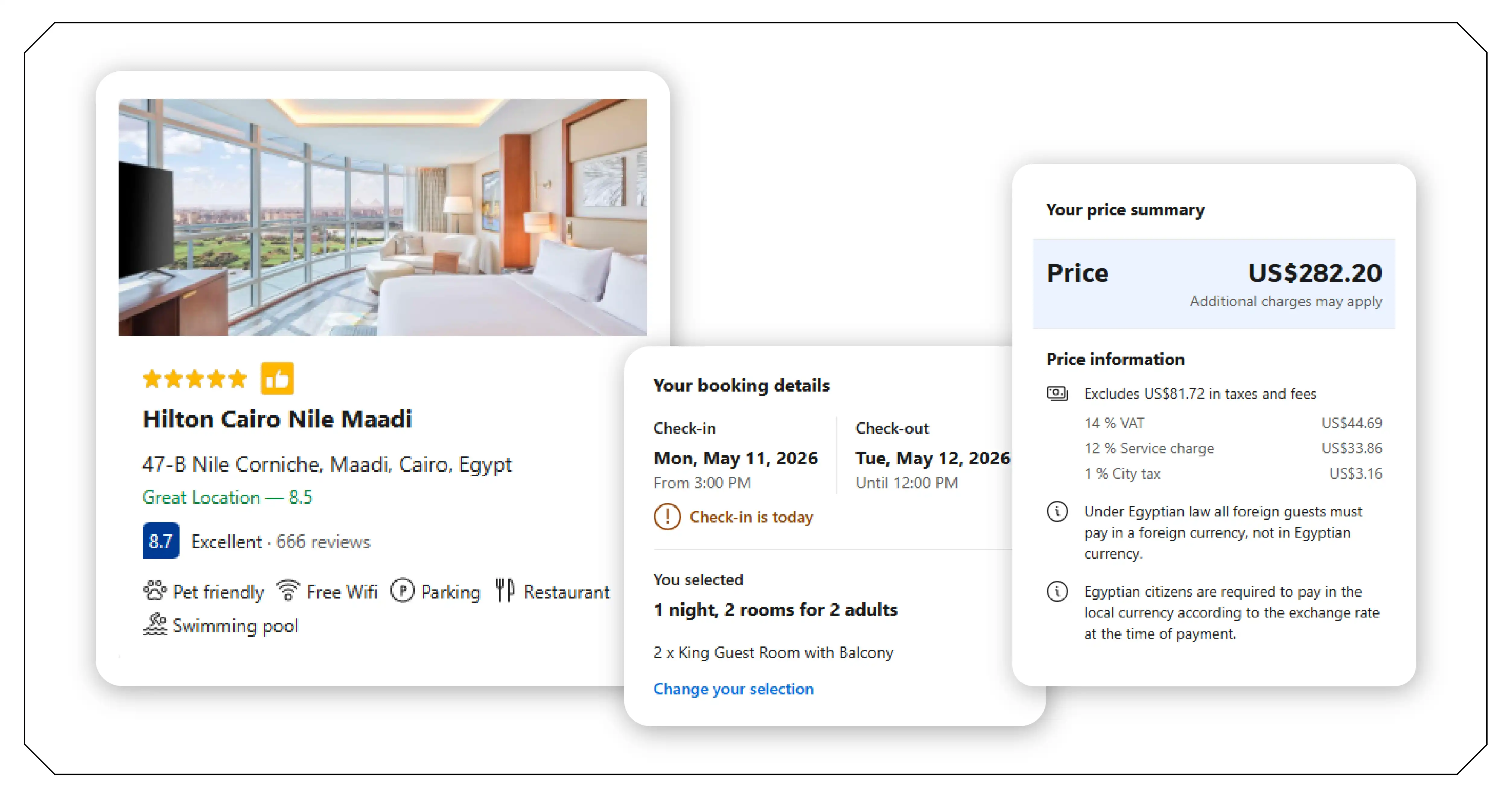
Hotel pricing in Egypt is not uniform; it varies significantly based on geography, season, and traveler profile. Cairo, being a business and cultural hub, shows relatively stable pricing throughout the year. In contrast, Red Sea destinations are highly seasonal, driven by international leisure tourism.
Luxury hotels near the Nile or historical landmarks often follow aggressive dynamic pricing strategies. Rates can change multiple times within a day based on occupancy thresholds and competitor movements. Budget hotels, especially in Cairo, maintain more stable pricing but still adjust rates during weekends, holidays, and event seasons.
Resort destinations such as Hurghada and Sharm El Sheikh operate on demand-heavy cycles where winter months experience sharp price increases due to European tourist inflow. This seasonal dependency creates highly elastic pricing models that require continuous monitoring for accurate forecasting.
Hidden Costs and True Price Visibility
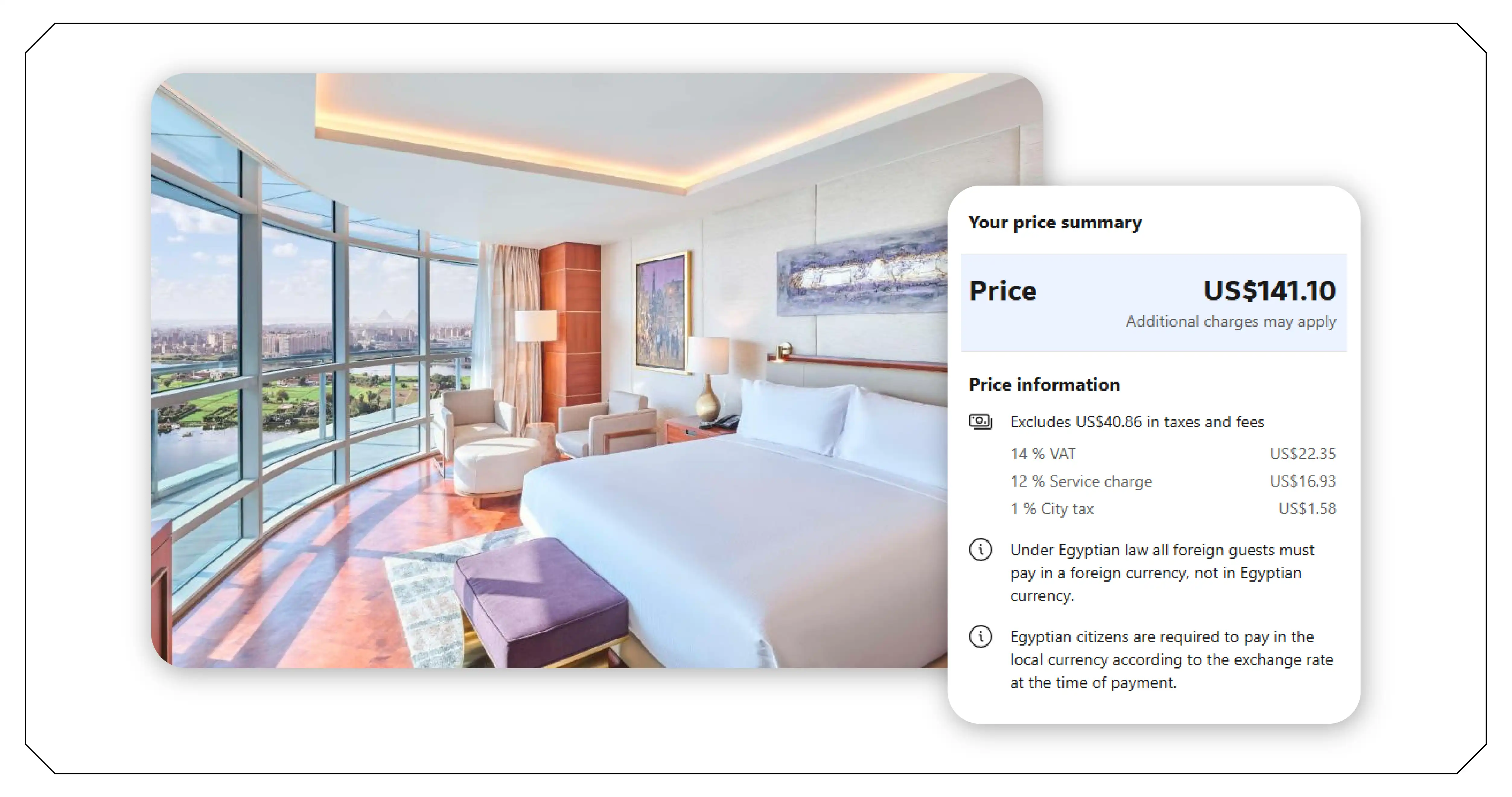
One of the biggest challenges in Egyptian hotel pricing is the presence of hidden charges that are not always visible at the initial search stage. These include service fees, tourism taxes, resort charges, and government levies.
To ensure accurate pricing analysis, it is essential to scrape hotel total price including taxes and fees Egypt, because base room rates alone do not reflect the actual customer cost. Final booking prices can differ significantly depending on property category and location.
Hotels in resort regions often bundle services such as meals, airport transfers, and activities into package pricing. While this improves perceived value for travelers, it reduces transparency for analysts attempting to evaluate true room-level pricing.
These hidden cost structures make Egypt a complex market for pricing intelligence and require normalization techniques for accurate benchmarking.
Demand Signals and Booking Behavior
Hotel demand in Egypt is highly reactive and often shifts quickly based on seasonality, global travel trends, and event-driven tourism.
Tracking hotel booking pressure signals Egypt analytics allows analysts to detect early demand surges before visible price increases occur. These signals include rapid search growth, reduced availability windows, and increased booking velocity across platforms.
Inventory movement is another key indicator of demand pressure. The strategy to scrape hotel listings inventory and availability Egypt helps identify how quickly rooms are being booked in specific regions or hotel categories.
Cairo typically shows steady booking patterns driven by business travel, while Red Sea destinations experience sharp demand spikes during winter months and holiday seasons. These variations make real-time monitoring essential for revenue optimization.
Occupancy Trends Across Regions
Occupancy patterns in Egypt vary widely between urban and coastal markets. Cairo maintains relatively stable occupancy levels due to consistent business travel, government activity, and cultural tourism. Even during off-peak seasons, occupancy rarely drops drastically.
In contrast, Red Sea destinations operate on strong seasonal cycles. Winter months often reach near full occupancy due to European tourism, while summer months see noticeable declines due to weather conditions.
Domestic tourism is also becoming increasingly important, especially for midscale hotels in Cairo and nearby cities. This segment helps stabilize occupancy during international travel slowdowns.
Understanding Cairo and Red Sea hotel pricing and occupancy analytics is essential for identifying regional performance differences and aligning pricing strategies with demand behavior.
Market Competition and Pricing Strategy
The Egyptian hotel market is highly competitive, especially in tourist-heavy regions. International chains, local hotel groups, and independent properties continuously adjust pricing strategies to maintain occupancy levels.
Market Share Analysis plays a critical role in understanding how different hotel categories perform across regions. Luxury hotels tend to dominate Red Sea resorts, while midscale and budget hotels are more competitive in Cairo’s urban landscape.
Hotels increasingly rely on real-time pricing systems to respond to competitor movements. This includes adjusting rates based on occupancy levels, competitor discounts, and seasonal demand shifts.
Revenue Optimization in a Dynamic Market
Revenue management has become a central focus for hotels operating in Egypt. With fluctuating demand and high seasonality, optimizing room rates is critical for profitability.
Hotel Price Optimization strategies are widely used to balance occupancy and revenue per available room (RevPAR). These systems analyze historical booking trends, competitor pricing, and real-time demand signals to adjust pricing dynamically.
Hotels that fail to adopt data-driven pricing strategies often lose revenue during high-demand periods or experience low occupancy during off-peak seasons.
How Travel Scrape Can Help You?
1. Real-Time Pricing Intelligence
Our data scraping services capture live hotel pricing changes instantly, helping you track market fluctuations and adjust competitive pricing strategies effectively.
2. Hidden Cost Transparency
We extract complete hotel pricing including taxes, service charges, and fees, ensuring accurate total cost visibility for better decision-making.
3. Occupancy Trend Analysis
Our services monitor occupancy patterns across regions, enabling you to predict demand shifts and optimize room availability strategies efficiently.
4. Competitor Benchmarking Insights
We provide structured competitor data from multiple platforms, allowing you to compare pricing, occupancy, and performance across hotel segments easily.
5. Market Demand Forecasting
Our scraping solutions identify booking trends and demand signals, helping you forecast seasonal demand and improve revenue management accuracy.
Conclusion: The Role of Data in Egypt’s Hotel Industry
Egypt’s hospitality market is increasingly driven by real-time data intelligence rather than traditional pricing models. From Cairo’s business-driven hotels to Red Sea’s seasonal resorts, understanding pricing, occupancy, and demand behavior requires continuous data monitoring.
Hotel Data Scraping plays a foundational role in capturing structured hotel information across platforms, enabling accurate market tracking and competitive analysis.
Advanced Hotel Data Intelligence systems convert raw hotel datasets into actionable insights that support pricing decisions, revenue forecasting, and market expansion strategies.
A well-structured Hotel Availability Forecast Dataset further enhances predictive capabilities by allowing stakeholders to anticipate occupancy shifts and optimize inventory distribution across Egypt’s dynamic hospitality landscape.
Ready to elevate your travel business with cutting-edge data insights? Scrape Aggregated Flight Fares to identify competitive rates and optimize your revenue strategies efficiently. Discover emerging opportunities with tools to Extract Travel Website Data, leveraging comprehensive data to forecast market shifts and enhance your service offerings. Real-Time Travel App Data Scraping Services helps stay ahead of competitors, gaining instant insights into bookings, promotions, and customer behavior across multiple platforms. Get in touch with Travel Scrape today to explore how our end-to-end data solutions can uncover new revenue streams, enhance your offerings, and strengthen your competitive edge in the travel market.
Unlock the Full Report
Enter your details to access premium pricing intelligence insights