Dubai Luxury Hotel Pricing Intelligence 2026: How 5-Star Properties Use Real-Time OTA Data During GITEX, ATM, and Dubai Shopping Festival
Introduction
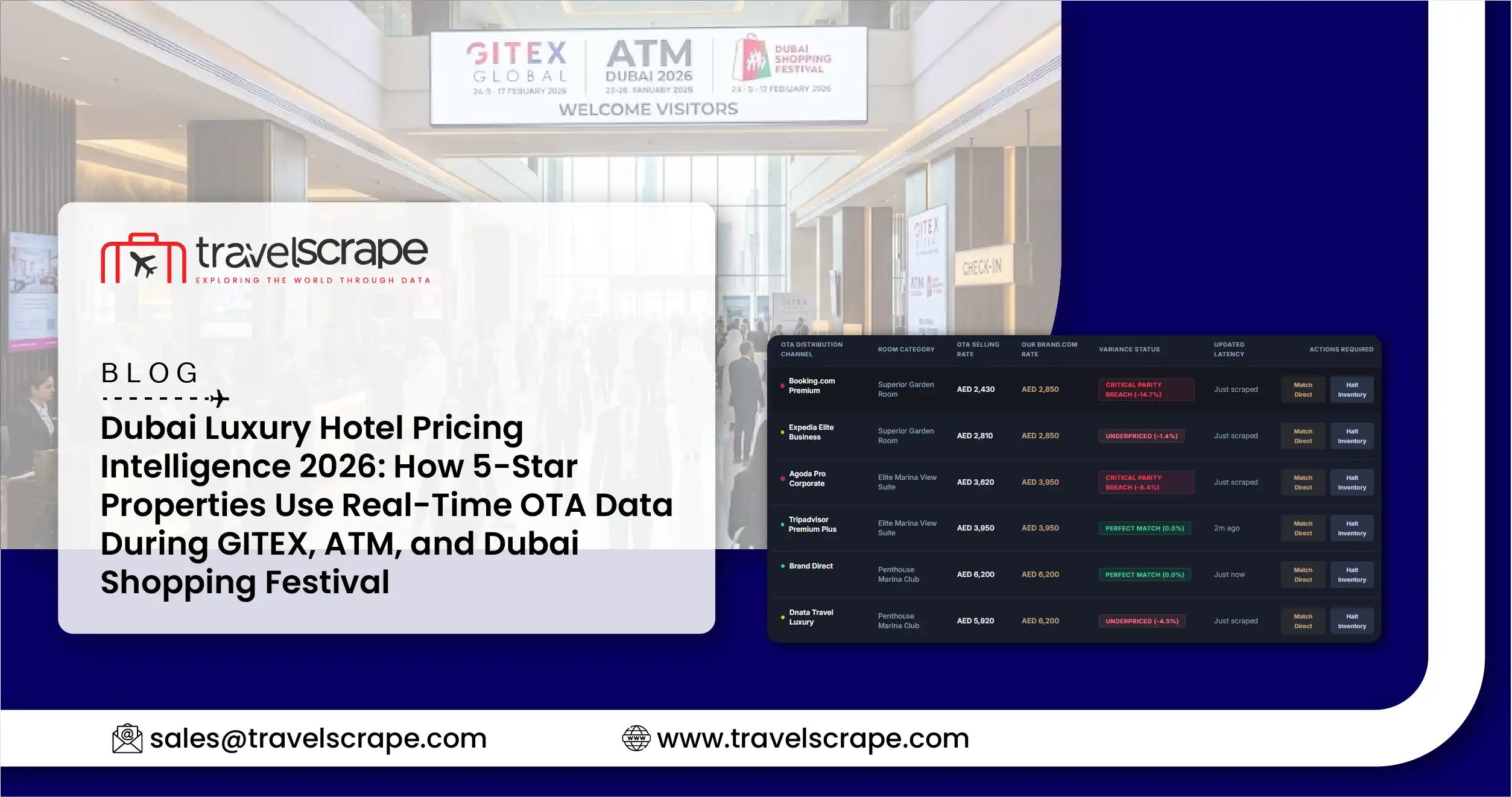
Dubai continues to strengthen its position as one of the world's most influential luxury travel destinations. Major global events such as GITEX Global, Arabian Travel Market (ATM), and the Dubai Shopping Festival attract millions of business travelers, tourists, exhibitors, investors, and high-net-worth individuals annually. These events create dramatic fluctuations in hotel demand, forcing luxury hospitality brands to continuously optimize room pricing strategies.
In 2026, Dubai Luxury Hotel Pricing Intelligence 2026 has become a critical focus area for revenue managers seeking to maximize occupancy and profitability. The availability of advanced Hotel Data Intelligence, large-scale OTA monitoring systems, and sophisticated analytics platforms allows luxury properties to track market conditions in real time. Through Dubai Luxury 5-Star Hotel rate data Scraping, hotels can monitor competitors, identify demand shifts, and respond instantly to changing booking patterns.
The increasing reliance on OTA platforms such as Booking.com, Expedia, Agoda, Hotels.com, and Trip.com has transformed pricing decisions from periodic reviews into continuous optimization processes. Luxury hotels are now leveraging real-time market intelligence to stay competitive during Dubai's most important events and tourism seasons.
The Growing Importance of OTA Data in Dubai's Luxury Hospitality Sector
Five-star hotels in Dubai operate within one of the most competitive hospitality ecosystems in the world. International hotel groups, premium resorts, luxury business hotels, and iconic destination properties compete for the same pool of high-value guests.
Traditional pricing methods based on historical occupancy data are no longer sufficient. Modern travelers compare dozens of hotel options across multiple channels before making reservations. As a result, luxury properties continuously analyze OTA listings to understand competitor positioning, room availability, promotional campaigns, cancellation policies, and package offerings.
Revenue teams increasingly depend on market intelligence gathered from OTA ecosystems to make informed pricing decisions. Every change in competitor rates, room inventory, or promotional activity can influence booking behavior and ultimately impact revenue performance.
How GITEX Creates Luxury Hotel Demand Surges?
GITEX remains one of the largest technology events globally, attracting thousands of international companies, startups, investors, and technology professionals to Dubai every year.
During the weeks leading up to GITEX, luxury hotel demand rises significantly, particularly in areas surrounding the Dubai World Trade Centre. Hotels experience accelerated booking velocity, shorter inventory availability windows, and increased demand for premium room categories.
Many revenue management teams actively Scrape luxury hotel demand spikes during GITEX to identify booking patterns before occupancy peaks occur. By analyzing OTA pricing changes, room sellout rates, and competitor inventory levels, hotels can adjust rates proactively rather than reactively.
This strategy enables properties to maximize revenue opportunities while maintaining competitive positioning throughout the event period.
Arabian Travel Market and Hospitality Pricing Competition
The Arabian Travel Market serves as one of the most influential tourism trade exhibitions in the Middle East. Hospitality companies, travel agencies, tourism boards, airlines, and technology providers converge in Dubai, generating substantial demand for upscale accommodations.
Leading hotels increasingly invest in Dubai Arabian Travel Market hotel pricing intelligence to understand how competitors adjust rates before and during the exhibition.
The event creates unique demand dynamics because it attracts both corporate and leisure travelers. Consequently, luxury properties often implement multiple pricing strategies simultaneously, targeting exhibitors, business executives, international buyers, and extended-stay guests.
Real-time OTA monitoring allows revenue managers to detect competitor promotions immediately and adapt their pricing strategies to maintain booking momentum without sacrificing profitability.
Dynamic Pricing Becomes the Industry Standard
The hospitality industry has witnessed a major transition toward Dynamic Pricing Intelligence. Rather than setting fixed seasonal rates, luxury hotels now adjust prices continuously based on demand signals, market conditions, and competitor behavior.
Advanced pricing engines integrate OTA data, booking pace indicators, occupancy forecasts, airline arrivals, event schedules, and consumer search activity into a unified decision-making framework.
When demand accelerates, room rates increase accordingly. Conversely, when bookings slow unexpectedly, targeted promotional campaigns can be deployed immediately. This real-time responsiveness allows luxury hotels to optimize both occupancy and average daily rate (ADR).
Dynamic pricing has become particularly important in Dubai due to the city's event-driven tourism economy and rapidly changing demand environment.
Understanding Competitor Behavior Through OTA Analytics
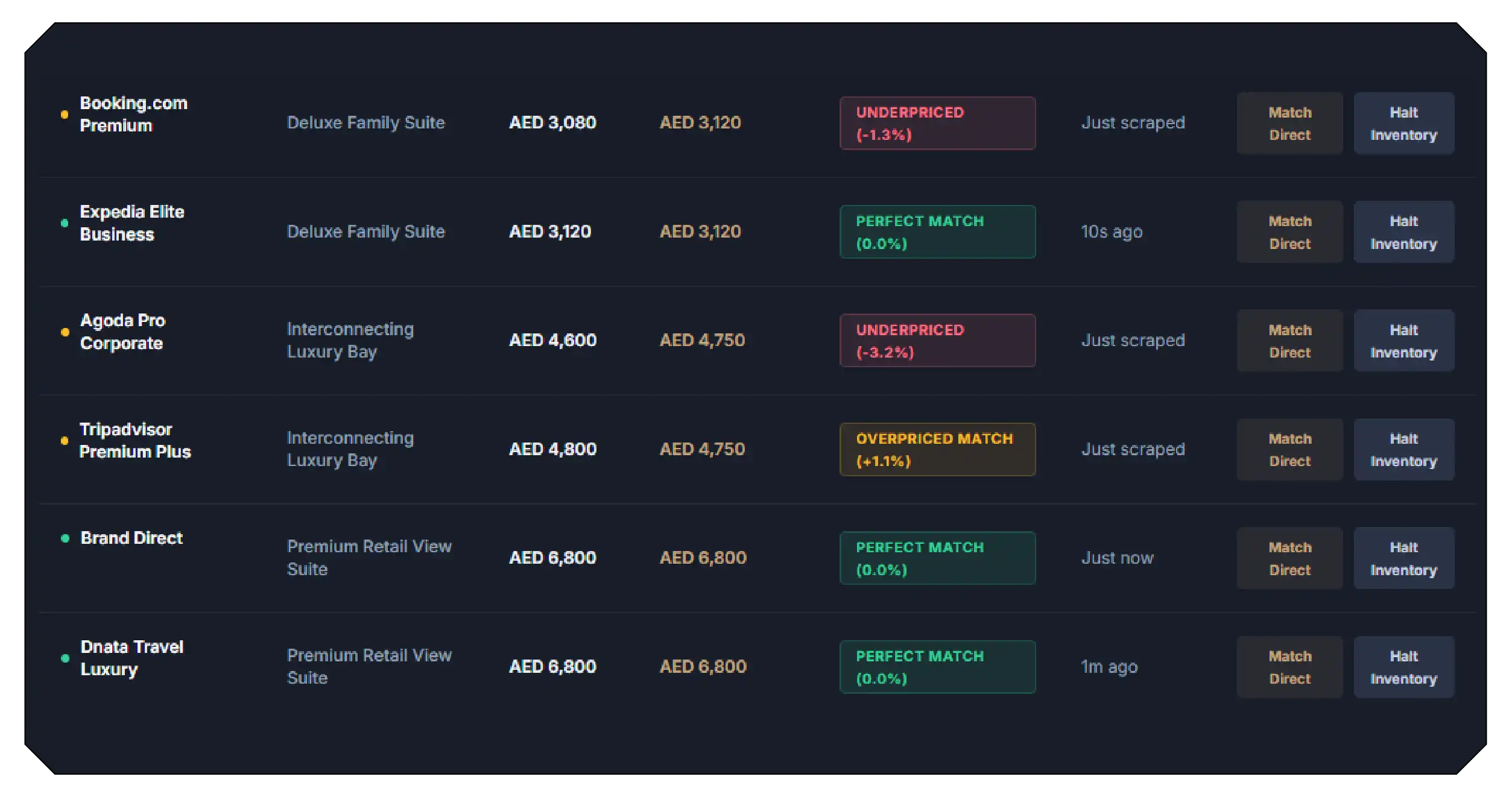
Modern revenue management depends heavily on OTA luxury hotel competitor pricing analytics. Hotels no longer monitor only a handful of competitors. Instead, they track dozens or even hundreds of properties across multiple booking platforms.
Competitor intelligence systems capture:
- Daily room rate changes
- Availability fluctuations
- Package inclusions
- Discount campaigns
- Loyalty program offers
- Last-minute promotions
- Length-of-stay restrictions
These insights help hotels understand market movements and identify opportunities to gain competitive advantages.
For example, if several luxury competitors increase rates due to strong demand signals, a property can confidently adjust pricing without risking significant booking losses. Conversely, if competitors introduce aggressive discounts, revenue managers can evaluate whether matching or alternative strategies are more appropriate.
The Role of Historical Price Intelligence
Historical data remains essential for forecasting future performance. Revenue teams increasingly rely on a comprehensive Hotel Room Price Trends Dataset to evaluate previous event cycles and identify recurring market patterns.
Historical analysis enables hotels to answer critical questions such as:
- How quickly did rooms sell during previous GITEX events?
- What ADR levels were achieved during ATM?
- Which room categories generated the highest revenue?
- When did competitors begin raising prices?
- How far in advance were premium suites booked?
By combining historical datasets with current OTA intelligence, hotels create highly accurate forecasting models that support strategic pricing decisions.
Real-Time APIs Transform Revenue Management
The rise of automated data collection technologies has significantly improved hotel decision-making capabilities. Modern revenue management platforms increasingly rely on Real-Time Data API integrations to gather information from multiple sources simultaneously.
These APIs provide continuous updates regarding:
- OTA pricing changes
- Market demand indicators
- Room availability status
- Competitor inventory levels
- Booking pace trends
- Consumer search behavior
Instead of waiting for manual reports, hotel managers receive immediate insights that support faster and more effective pricing adjustments.
This automation reduces operational inefficiencies while improving revenue optimization outcomes across multiple market segments.
Technology-Driven Revenue Optimization
Artificial intelligence and predictive analytics are reshaping hotel pricing strategies throughout Dubai's luxury hospitality sector.
Machine learning models can evaluate thousands of market variables simultaneously, identifying patterns that would be impossible to detect manually. These systems predict demand surges, estimate competitor reactions, and recommend optimal pricing actions.
As a result, luxury hotels can maintain stronger market positions during major events while maximizing both occupancy and revenue performance.
The integration of OTA intelligence with AI-driven forecasting tools is expected to become even more sophisticated throughout 2026 and beyond.
How Travel Scrape Can Help You?
Comprehensive OTA Competitor Monitoring
Our data scraping solutions continuously track luxury hotel pricing, room availability, promotions, and inventory changes across major OTA platforms. This enables hospitality brands to identify competitor movements instantly and make informed pricing decisions based on real-time market intelligence.
Event-Based Demand Intelligence
We collect and analyze hotel pricing data during major Dubai events such as GITEX, ATM, exhibitions, conferences, and seasonal tourism periods. These insights help hotels forecast occupancy patterns, understand demand fluctuations, and optimize revenue strategies effectively.
Automated Market Trend Collection
Our systems gather large-scale hospitality datasets covering pricing trends, booking behavior, room inventory movements, and promotional activities. This automated approach eliminates manual monitoring while providing continuously updated intelligence for strategic planning and forecasting.
Advanced Revenue Management Support
We deliver structured datasets that integrate seamlessly into revenue management platforms, business intelligence tools, and forecasting systems. Hotels can use these insights to enhance dynamic pricing models and improve profitability throughout high-demand periods.
Custom Hospitality Intelligence Solutions
Our tailored data extraction services support hotel groups, consultants, investors, OTAs, and revenue managers. We develop customized intelligence solutions that align with specific business objectives, helping stakeholders gain deeper visibility into competitive hospitality markets.
Conclusion
As Dubai continues to host globally significant events and attract luxury travelers from around the world, data-driven pricing strategies are becoming increasingly essential. Hotels that leverage advanced OTA intelligence gain greater visibility into market movements, competitor behavior, and evolving demand conditions.
The use of Dubai Shopping Festival hotel pricing analytics enables hospitality brands to maximize performance during one of the city's busiest tourism periods. Similarly, organizations that Scrape Dubai luxury hotel revenue management using OTA data can identify profitable opportunities faster and respond to market changes more effectively.
In 2026, successful revenue optimization depends on combining predictive analytics, dynamic pricing frameworks, and large-scale Hotel Data Scraping capabilities. Luxury hotels that embrace these technologies will be best positioned to increase occupancy, improve ADR, strengthen competitive positioning, and achieve sustainable revenue growth in Dubai's rapidly evolving hospitality landscape.
Ready to elevate your travel business with cutting-edge data insights? Scrape Aggregated Flight Fares to identify competitive rates and optimize your revenue strategies efficiently. Discover emerging opportunities with tools to Extract Travel Website Data, leveraging comprehensive data to forecast market shifts and enhance your service offerings. Real-Time Travel App Data Scraping Services helps stay ahead of competitors, gaining instant insights into bookings, promotions, and customer behavior across multiple platforms. Get in touch with Travel Scrape today to explore how our end-to-end data solutions can uncover new revenue streams, enhance your offerings, and strengthen your competitive edge in the travel market.
Unlock the Full Report
Enter your details to access premium pricing intelligence insights