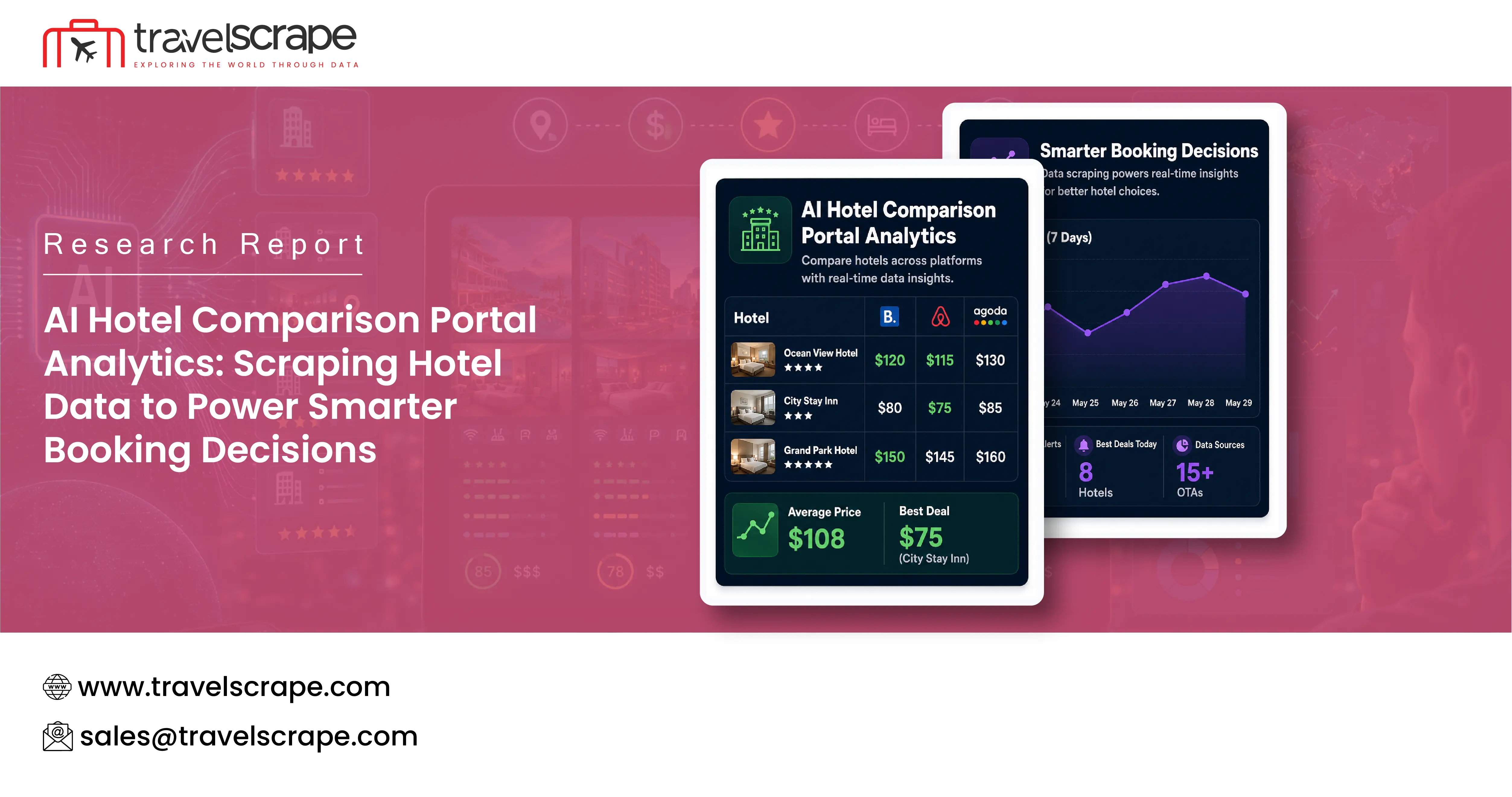
AI Hotel Comparison Portal Analytics: Scraping Hotel Data to Power Smarter Booking Decisions
Introduction
The hospitality industry is rapidly transforming as travelers increasingly depend on digital platforms to compare hotels, evaluate pricing, and select accommodations that match their preferences. Instead of visiting individual hotel websites, customers now expect intelligent platforms that analyze thousands of properties and provide the most relevant options instantly. This evolution has increased the importance of AI hotel comparison portal analytics in modern travel technology.
The availability of massive hotel datasets has created opportunities for businesses to understand customer behavior, monitor competitor pricing, and optimize booking experiences. Through automated data collection techniques, Hotel Data Scraping helps travel companies gather information from multiple online sources, including hotel details, room availability, prices, customer reviews, and promotional offers.
Artificial intelligence has further improved hotel comparison systems by transforming collected information into personalized suggestions. Using machine learning models and behavioral analysis, platforms can deliver AI-powered hotel recommendation analytics that identify the best accommodation choices based on traveler preferences, budgets, location requirements, and previous booking patterns.
AI-powered hotel portals are not only improving customer convenience but are also helping hotels understand market movements. By analyzing real-time changes in pricing, demand, and availability, hospitality businesses can make better revenue decisions and create more competitive strategies.
Importance of Hotel Data Scraping in Modern Booking Platforms
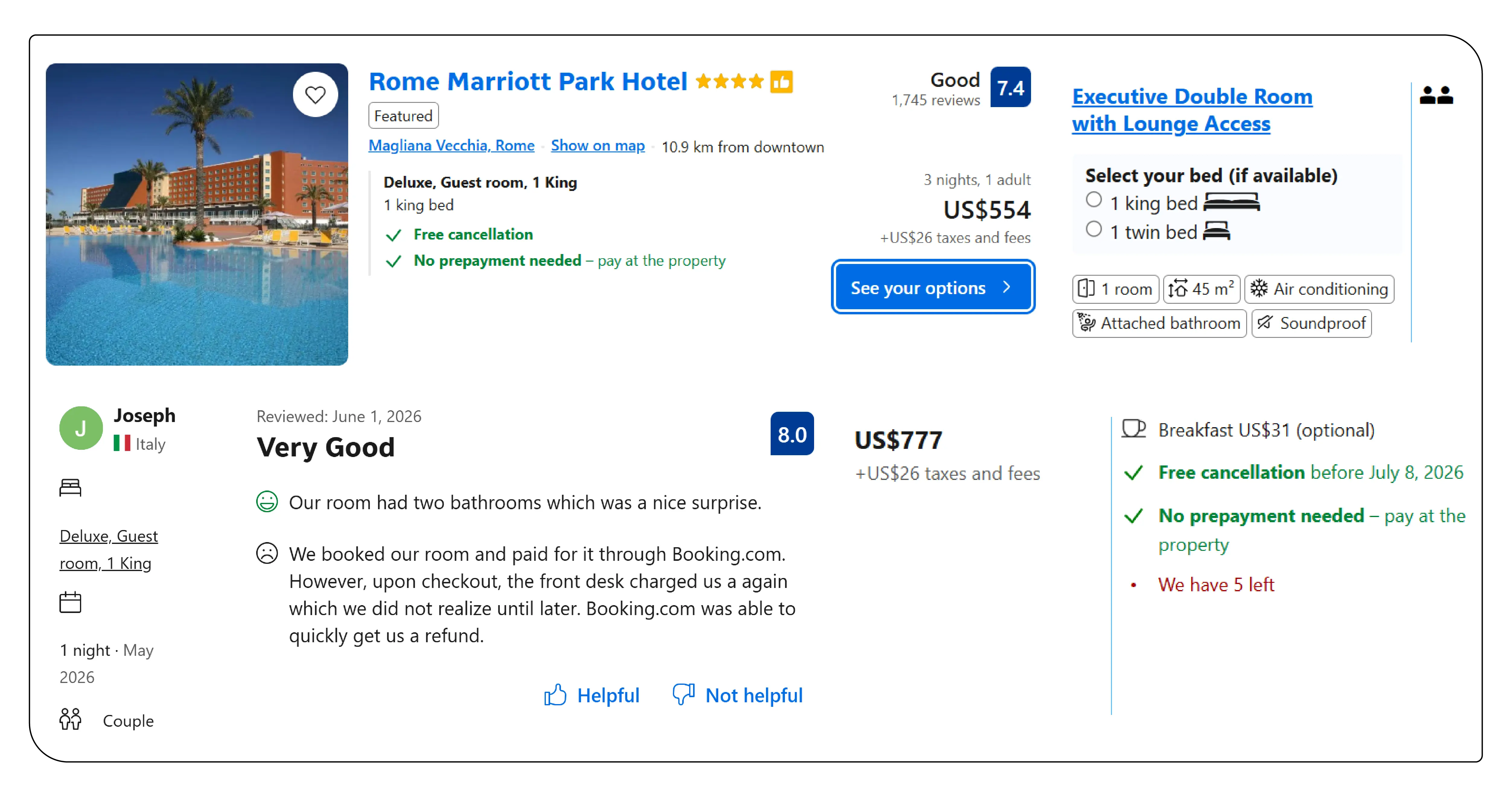
Hotel comparison platforms depend on continuous access to fresh and accurate information. Hotel rates, room availability, discounts, and customer reviews change frequently. Without automated data collection, maintaining updated information across thousands of hotels becomes extremely challenging.
Through smart hotel booking data scraping, companies can extract structured hotel information from multiple platforms and organize it into analytics-ready datasets. These datasets allow AI systems to identify booking trends, compare prices, predict demand, and improve customer recommendations.
The major information collected through hotel data extraction includes:
- Hotel names and locations
- Room categories and facilities
- Daily pricing updates
- Availability status
- Guest ratings and reviews
- Discount offers
- Cancellation policies
- Seasonal promotions
- Competitor pricing information
This collected information forms the foundation for intelligent hotel comparison and decision-making systems.
Hotel Analytics Data Collection Overview
A successful AI-based hotel comparison portal requires accurate and structured datasets. The quality of extracted information directly impacts recommendation accuracy and forecasting performance.
Hotel Comparison Portal Data Analytics Dataset
| Hotel Name | Destination | Category | Average Price ($/Night) | Available Rooms | Rating (Out of 5) | Discount (%) | Booking Rate (%) |
|---|---|---|---|---|---|---|---|
| Grand Horizon Hotel | New York | Luxury | 320 | 18 | 4.8 | 15 | 94 |
| Ocean Pearl Resort | Miami | Resort | 245 | 32 | 4.5 | 10 | 81 |
| Royal Stay Inn | London | Business | 210 | 25 | 4.3 | 12 | 76 |
| Alpine View Hotel | Zurich | Luxury | 410 | 12 | 4.9 | 8 | 92 |
| City Comfort Suites | Singapore | Budget | 145 | 45 | 4.1 | 18 | 68 |
| Desert Bloom Resort | Dubai | Premium | 380 | 20 | 4.7 | 14 | 89 |
| Maple Leaf Residency | Toronto | Business | 230 | 28 | 4.4 | 11 | 79 |
| Green Valley Hotel | Bangkok | Budget | 120 | 60 | 4.0 | 20 | 62 |
The above dataset demonstrates how hotel comparison platforms organize extracted information for analytics. AI systems can evaluate pricing, popularity, customer ratings, and availability to rank hotels more effectively.
Booking Behavior and Market Trend Analysis
Customer booking behavior changes according to seasons, holidays, economic conditions, and travel purposes. AI analytics systems analyze historical and real-time booking information to identify demand patterns.
Booking Trend Insights allow businesses to understand customer preferences, destination popularity, and price sensitivity. These insights help travel companies improve search ranking, optimize promotions, and predict future demand.
For example, luxury hotels may experience higher demand during holiday seasons, while business hotels may receive more bookings during weekdays. AI models identify these patterns by analyzing millions of booking records.
Personalized Hotel Recommendation Intelligence
Traditional hotel search systems usually display results based on basic filters such as location and price. However, AI-powered systems go beyond simple filtering by understanding individual traveler behavior.
Personalized hotel recommendation analysis uses customer preferences, previous searches, booking history, preferred amenities, and spending patterns to generate customized suggestions.
AI recommendation engines consider:
- Preferred room type
- Travel purpose
- Budget range
- Preferred destinations
- Guest review patterns
- Frequently selected facilities
This creates a more efficient booking experience where customers receive suitable hotel options without manually comparing hundreds of properties.
Room Availability and Pricing Optimization
Hotel inventory changes continuously due to cancellations, bookings, and seasonal demand. Accurate availability monitoring is essential for both customers and hotel operators.
Room Type Availability analysis helps platforms track available rooms, identify limited inventory, and predict when specific room categories may become unavailable.
Pricing intelligence is another major component of hotel analytics. Hotels frequently adjust prices based on demand, competitor rates, and market conditions.
Dynamic hotel pricing insights help businesses monitor rate fluctuations and enable customers to identify suitable booking opportunities.
Hotel Price Trend and Forecasting Analytics
Historical pricing data allows AI systems to recognize patterns and predict future hotel rates. These insights help travelers choose the right booking time and help hotels optimize revenue.
A structured Hotel Room Price Trends Dataset supports analysis of:
- Average room prices
- Seasonal pricing changes
- Competitor movements
- Discount performance
- Demand-based pricing
AI Hotel Demand and Availability Forecast Dataset
| Month | Destination | Average Room Price ($) | Room Availability (%) | Search Volume | Demand Forecast (%) | Price Change (%) | Expected Booking Growth (%) |
|---|---|---|---|---|---|---|---|
| January 2026 | Paris | 275 | 82 | 45000 | 76 | +6 | 8 |
| February 2026 | Dubai | 350 | 68 | 72000 | 88 | +14 | 16 |
| March 2026 | Singapore | 220 | 74 | 38000 | 70 | +5 | 7 |
| April 2026 | London | 290 | 61 | 80000 | 91 | +18 | 21 |
| May 2026 | Bangkok | 150 | 85 | 52000 | 79 | -4 | 10 |
| June 2026 | New York | 330 | 58 | 95000 | 94 | +22 | 25 |
| July 2026 | Rome | 260 | 64 | 67000 | 86 | +12 | 15 |
| August 2026 | Tokyo | 310 | 70 | 76000 | 89 | +10 | 18 |
This forecasting dataset helps AI systems identify future booking demand and pricing movements. Businesses can use these insights to improve inventory planning and revenue management.
Business Advantages of AI Hotel Comparison Analytics
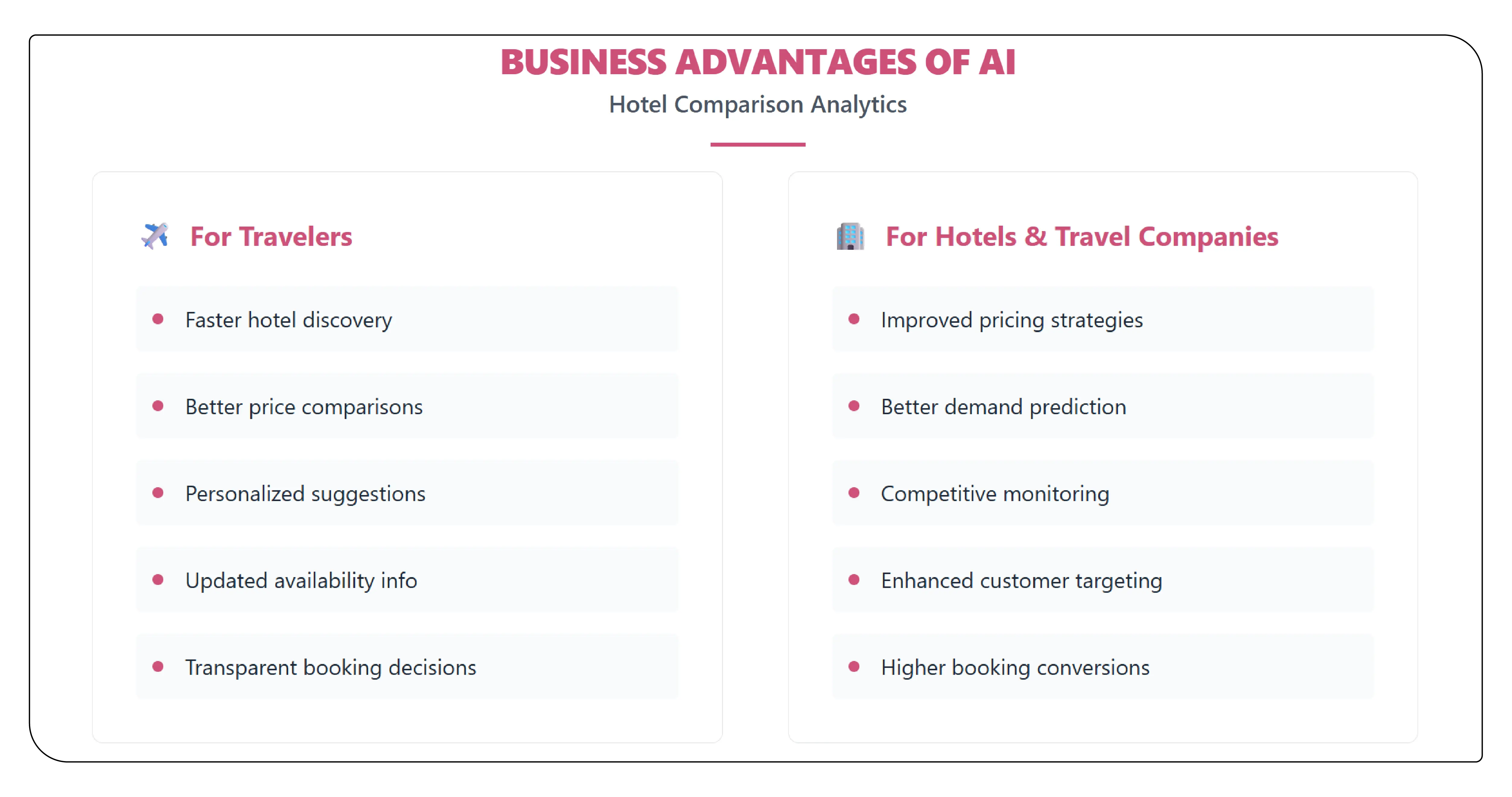
AI-based hotel analytics creates value for multiple stakeholders.
For travelers, these platforms provide:
- Faster hotel discovery
- Better price comparisons
- Personalized suggestions
- Updated availability information
- More transparent booking decisions
For hotels and travel companies, benefits include:
- Improved pricing strategies
- Better demand prediction
- Competitive monitoring
- Enhanced customer targeting
- Higher booking conversions
The combination of AI and extracted hotel data allows companies to move from traditional booking systems toward intelligent travel solutions.
Future Scope of AI Hotel Intelligence
The future of hotel comparison platforms will depend heavily on artificial intelligence, automation, and predictive analytics. As more travel data becomes available, AI systems will continue improving recommendation accuracy and forecasting capabilities.
Future developments may include:
- AI travel assistants
- Automated price alerts
- Voice-based hotel searches
- Predictive booking suggestions
- Real-time market monitoring
- Personalized travel planning
These innovations will make hotel booking faster, smarter, and more customer-focused.
Conclusion
AI-driven hotel comparison platforms are changing the hospitality industry by combining large-scale data extraction with advanced analytics. By collecting information from multiple sources, businesses can provide accurate comparisons, personalized recommendations, and improved booking experiences.
The adoption of AI-powered hotel demand forecasting enables hotels and travel platforms to predict customer demand, optimize pricing, and manage inventory more efficiently. Advanced hotel rate comparison data extraction methods help companies monitor competitive pricing and provide users with transparent accommodation choices.
The development of reliable Hotel Availability Forecast Dataset solutions will further improve future booking intelligence by helping businesses anticipate demand changes and deliver better services.
As digital travelers continue searching for convenience, affordability, and personalization, AI-powered hotel analytics will become an essential technology for creating smarter and more efficient booking ecosystems.
Ready to elevate your travel business with cutting-edge data insights? Scrape Aggregated Flight Fares to identify competitive rates and optimize your revenue strategies efficiently. Discover emerging opportunities with tools to Extract Travel Website Data, leveraging comprehensive data to forecast market shifts and enhance your service offerings. Real-Time Travel App Data Scraping Services helps stay ahead of competitors, gaining instant insights into bookings, promotions, and customer behavior across multiple platforms. Get in touch with Travel Scrape today to explore how our end-to-end data solutions can uncover new revenue streams, enhance your offerings, and strengthen your competitive edge in the travel market.
Unlock the Full Report
Enter your details to access premium pricing intelligence insights