Trivago Direct Revenue Intelligence for Maximizing Hotel Direct Booking Performance
Introduction
A leading hotel brand sought to reduce dependency on online travel agencies and strengthen its direct booking performance across multiple destinations. By leveraging Trivago direct revenue intelligence, the company gained visibility into competitor pricing, ranking positions, promotional activity, and market demand trends. This enabled revenue managers to identify pricing gaps and optimize direct booking strategies in real time.
Using Trivago hotel revenue analytics, the brand monitored rate parity, occupancy fluctuations, and seasonal demand patterns across competing properties. These insights helped refine pricing decisions, improve campaign targeting, and maximize revenue opportunities during high-demand periods.
Through Web Scraping Trivago Hotels Data, the hotel collected large-scale competitive intelligence, including room rates, availability, discounts, guest ratings, and visibility metrics. The resulting data-driven approach improved pricing accuracy, enhanced market positioning, and increased direct booking conversions. Within months, the hotel brand achieved a 38% increase in direct revenue while reducing customer acquisition costs and strengthening overall profitability.
The Client
The client is a fast-growing hotel brand operating across multiple leisure and business travel destinations. Despite strong occupancy levels, the company faced challenges in maximizing direct bookings and reducing reliance on third-party travel platforms. Their revenue management team required accurate competitive intelligence, dynamic pricing visibility, and market benchmarking to improve profitability and direct channel performance.
By leveraging Scrape Trivago hotel booking data, the client gained access to comprehensive information on competitor rates, room availability, promotions, and booking trends across key markets. These insights enabled more effective pricing and inventory decisions.
Using Trivago hotels revenue management insights, the hotel brand identified revenue opportunities, optimized promotional campaigns, and improved rate parity across distribution channels.
Additionally, Hotel Data Scraping provided continuous access to market intelligence, helping the client monitor competitor movements and traveler demand patterns. This data-driven strategy strengthened direct booking performance, enhanced revenue optimization, and supported sustainable business growth in a highly competitive hospitality landscape.
Challenges in the Hotel Industry
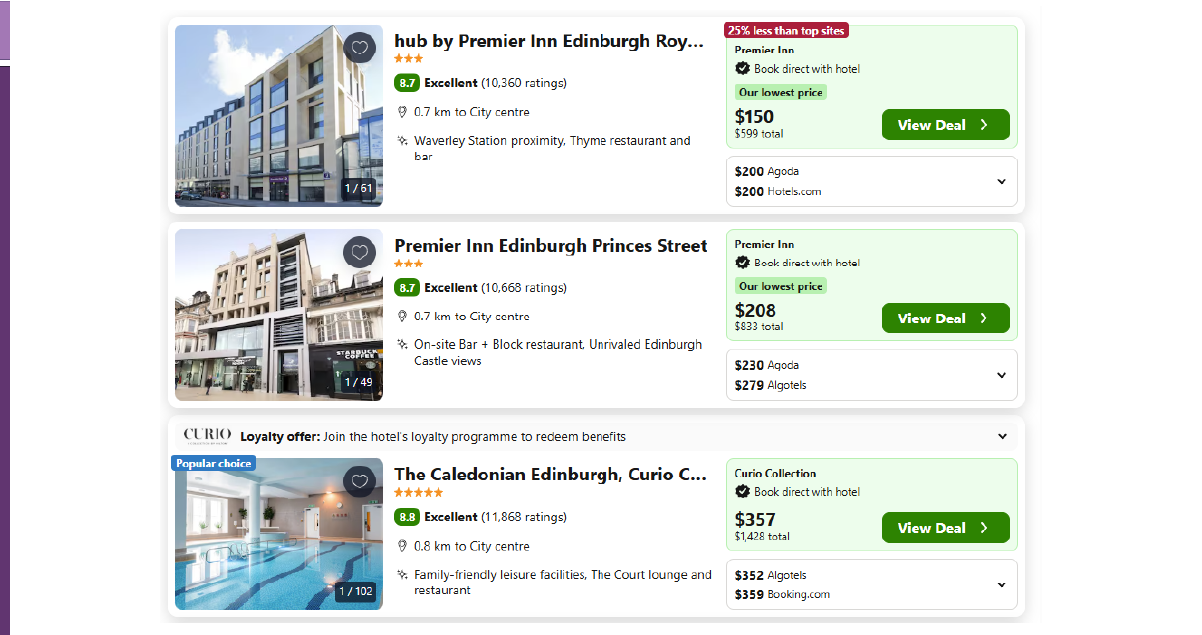
The hotel brand faced increasing pressure to maximize direct bookings, maintain competitive pricing, and improve revenue performance. Limited visibility into market demand, competitor rates, and booking trends created operational challenges, making it difficult to optimize pricing strategies and accurately forecast future direct revenue growth.
Limited Visibility into Market Demand
The client struggled to understand changing traveler behavior and booking trends across destinations. Without reliable Trivago hotel demand monitoring, revenue teams lacked real-time insights into seasonal demand fluctuations, competitor occupancy patterns, and emerging market opportunities, resulting in missed revenue potential.
Difficulty Tracking Competitor Pricing
Hotel managers faced challenges comparing room rates across competing properties and booking channels. The absence of a comprehensive Trivago hotel rate comparision dataset made it difficult to identify pricing gaps, maintain rate parity, and respond effectively to aggressive competitor promotions.
Inconsistent Revenue Optimization Strategies
The client lacked detailed Trivago hospitality pricing analysis needed to evaluate pricing effectiveness across markets. As a result, room rates were often adjusted based on assumptions rather than data, reducing competitiveness and limiting the ability to maximize revenue opportunities.
Challenges with Dynamic Pricing Decisions
Implementing effective Price Optimization strategies was difficult due to fragmented market intelligence. Revenue managers struggled to balance occupancy goals with profitability, often leading to underpriced inventory during peak demand periods or overpriced rooms during slower seasons.
Uncertain Direct Revenue Planning
The hotel brand lacked accurate Trivago Direct Booking Revenue Forecasting capabilities. Without predictive insights into booking trends and future demand, budgeting, marketing allocation, and direct booking growth initiatives were harder to plan and execute successfully.
Our Approach
Comprehensive Data Collection
We built an automated framework to collect hotel pricing, availability, rankings, promotions, and booking-related information from Trivago. This provided a centralized view of market conditions and competitor activities, enabling the client to make informed decisions based on accurate and continuously updated data.
Competitor Benchmarking
Our team analyzed competing properties across target markets to benchmark rates, visibility, guest ratings, and promotional strategies. This helped identify pricing gaps, uncover market opportunities, and establish a stronger competitive position in highly dynamic hospitality environments.
Real-Time Market Monitoring
We implemented continuous monitoring systems to track fluctuations in demand, occupancy trends, and competitor pricing. These real-time insights enabled the client to react quickly to market changes and maintain optimal pricing strategies throughout different booking cycles.
Revenue Optimization Framework
Using Hotel Data Intelligence, we developed data-driven revenue models that aligned pricing decisions with market demand. This approach helped maximize direct bookings, improve occupancy levels, and increase profitability while reducing dependence on third-party booking channels.
Forecasting and Performance Analytics
We delivered advanced dashboards and forecasting tools that transformed raw data into actionable insights. Revenue teams gained visibility into future booking trends, campaign performance, and market opportunities, allowing them to plan budgets and strategies with greater confidence.
Results Achieved
Our intelligence-driven strategy transformed hotel revenue performance, delivering measurable growth in direct bookings, pricing efficiency, forecasting accuracy, and profitability.
Direct Revenue Growth
The client achieved a 38% increase in direct booking revenue by optimizing pricing, promotions, and channel strategies. Enhanced visibility into competitor activities enabled better decision-making, helping the hotel attract more direct customers while reducing dependency on third-party booking platforms.
Improved Pricing Competitiveness
Real-time competitor benchmarking allowed revenue managers to maintain optimal room rates across markets. The hotel responded faster to pricing changes, improved rate parity compliance, and captured additional booking opportunities that were previously lost due to uncompetitive pricing.
Higher Occupancy Performance
By aligning pricing with market demand trends, the hotel improved occupancy levels throughout seasonal fluctuations. Better inventory management and demand forecasting ensured rooms were priced appropriately, resulting in stronger booking performance during both peak and off-peak periods.
Enhanced Forecasting Accuracy
Access to continuous market intelligence significantly improved forecasting capabilities. Revenue teams gained greater confidence in budgeting, marketing allocation, and promotional planning, enabling more strategic decisions that supported sustainable growth and long-term revenue optimization objectives.
Faster Decision-Making
Automated data collection and analytics dashboards reduced manual reporting efforts. Revenue managers gained immediate access to actionable insights, accelerating decision-making processes and allowing the business to react quickly to changing market conditions and competitor strategies.
Sample Scraped Data Intelligence Table
| Hotel Name | City | Room Type | Competitor Rate ($) | Direct Rate ($) | Occupancy % | Rating | Ranking Position | Promotion Offered | Demand Index | Forecasted Revenue ($) |
|---|---|---|---|---|---|---|---|---|---|---|
| Grand Plaza Hotel | New York | Deluxe Room | 245 | 232 | 88 | 4.5 | 3 | 10% Off | 91 | 125,400 |
| City View Suites | Chicago | Executive Room | 198 | 189 | 82 | 4.3 | 5 | Free Breakfast | 85 | 98,250 |
| Ocean Breeze Resort | Miami | Sea View Suite | 315 | 299 | 93 | 4.7 | 2 | Resort Credit | 96 | 176,800 |
| Royal Business Hotel | Dallas | Standard Room | 175 | 168 | 79 | 4.2 | 7 | Early Check-in | 81 | 84,600 |
| Skyline Residency | Seattle | Premium Room | 228 | 219 | 87 | 4.4 | 4 | Weekend Offer | 89 | 118,900 |
| Harbor Grand Hotel | Boston | Deluxe Suite | 289 | 274 | 91 | 4.6 | 3 | Free Upgrade | 94 | 163,750 |
| Mountain Peak Resort | Denver | Resort Suite | 265 | 251 | 86 | 4.5 | 5 | Spa Package | 88 | 137,400 |
| Elite Downtown Hotel | Atlanta | Executive Suite | 210 | 199 | 84 | 4.3 | 6 | Loyalty Discount | 83 | 106,300 |
| Luxury Central Inn | San Francisco | Premium Suite | 348 | 329 | 95 | 4.8 | 1 | Free Night Offer | 98 | 214,500 |
| Riverside Hotel & Spa | Austin | Deluxe Room | 220 | 208 | 85 | 4.4 | 4 | Dining Credit | 87 | 112,750 |
Client’s Testimonial
“The insights delivered through this project completely transformed our revenue management strategy. We gained unprecedented visibility into competitor pricing, demand trends, and direct booking opportunities across our markets. The data was accurate, timely, and highly actionable, allowing our team to make faster and more confident decisions. Within a short period, we achieved a significant increase in direct revenue while improving occupancy and pricing efficiency. The analytics dashboards and forecasting capabilities became essential tools for our daily operations. This partnership helped us strengthen our competitive position and drive measurable business growth.”
Conclusion
This case study demonstrates how data-driven revenue intelligence can significantly improve hotel performance, direct bookings, and overall profitability. By leveraging competitive benchmarking, demand monitoring, pricing analytics, and forecasting insights, the hotel brand achieved a 38% increase in direct revenue while enhancing operational efficiency and market responsiveness.
The ability to Scrape Aggregated Travel Deals provided valuable visibility into competitor promotions, discount strategies, and traveler purchasing behavior, enabling more informed revenue management decisions. Furthermore, the capability to Scrape Travel Website Data helped the client monitor market fluctuations, optimize pricing strategies, and improve occupancy performance across multiple destinations.
By integrating a robust Travel Mobile App Scraping Service with advanced analytics and forecasting models, the hotel brand gained actionable insights that accelerated decision-making, strengthened direct booking channels, reduced acquisition costs, and established a sustainable competitive advantage in an increasingly competitive hospitality market.
FAQs
Unlock the Full Report
Enter your details to access premium pricing intelligence insights