What Role Does OTA Rate Parity Monitoring and Pricing Analytics Play in Revenue Optimization?
Introduction
In the rapidly evolving digital travel ecosystem, pricing consistency across distribution channels has become a critical factor for success. Hotels, Online Travel Agencies (OTAs), and travel aggregators must ensure that room rates remain uniform across platforms to maintain brand trust and maximize bookings. This is where OTA rate parity monitoring and pricing analytics plays a pivotal role in helping businesses maintain control over their pricing strategies.
At the same time, OTAs & Metasearch Data Scraping empowers businesses to collect large-scale pricing data from multiple booking platforms and comparison engines. This data becomes the backbone of actionable insights that drive smarter decisions. Additionally, OTA pricing parity consistency analytics enables travel companies to identify discrepancies, track pricing trends, and ensure alignment across channels.
Understanding OTA Rate Parity
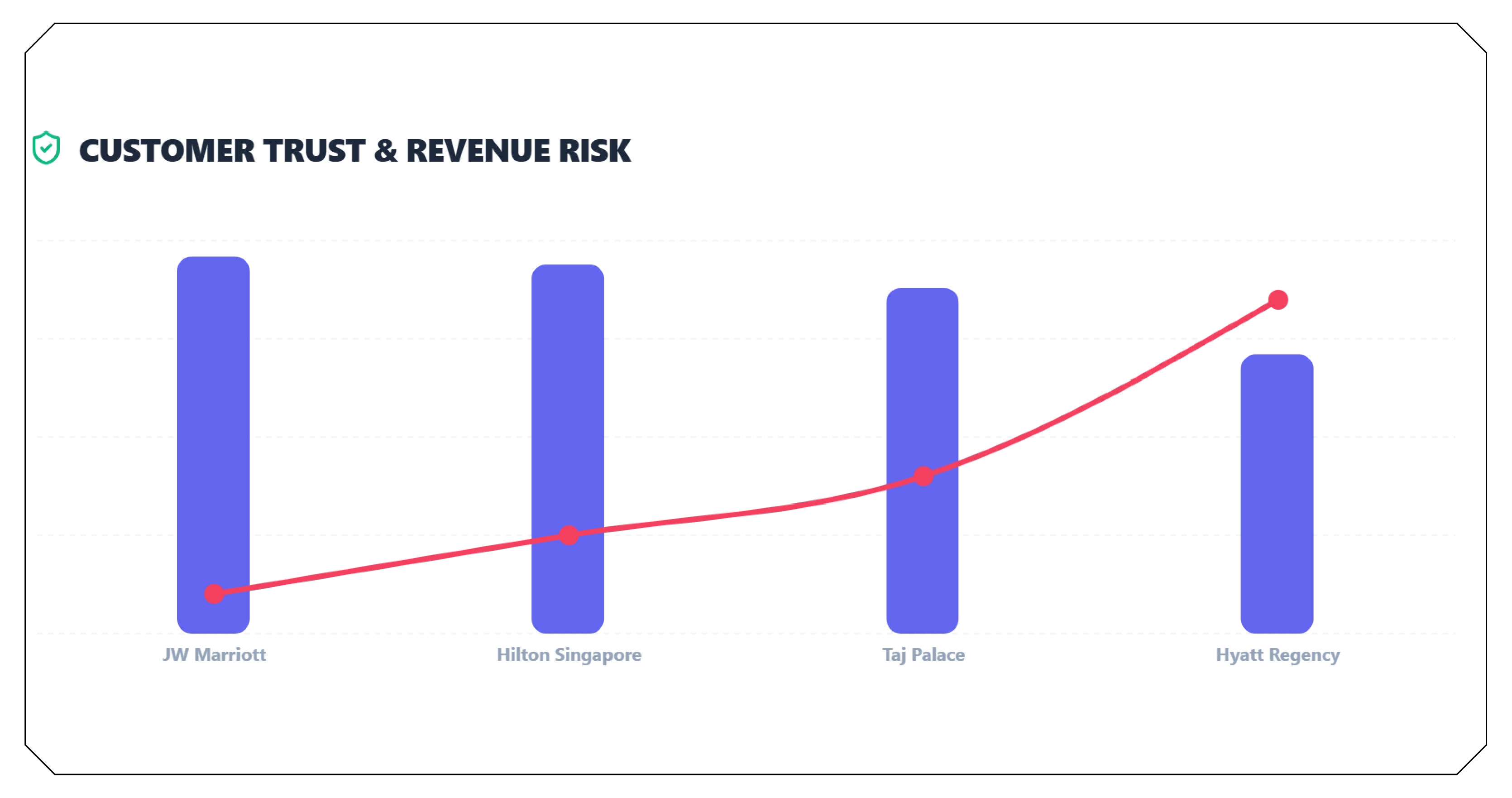
Rate parity refers to the practice of maintaining consistent pricing for the same room or service across all distribution channels, including OTAs, direct booking websites, and metasearch platforms. When rate parity is maintained, customers see the same price regardless of where they book, which builds trust and avoids confusion.
However, maintaining parity is not always straightforward. With multiple OTAs, dynamic pricing models, and regional variations, discrepancies can easily occur. This is why continuous Price Monitoring becomes essential. By tracking pricing across platforms in real time, businesses can quickly identify and resolve inconsistencies before they impact revenue or customer perception.
Why Rate Parity Matters in the Travel Industry?
Rate parity is not just a pricing strategy—it is a cornerstone of brand integrity and customer experience. When customers find different prices for the same room on different platforms, it can lead to mistrust and lost bookings.
Using OTA price parity comparison and parity analysis, businesses can evaluate how their pricing aligns across various channels and identify areas where discrepancies occur. This ensures that customers receive a consistent experience, regardless of where they choose to book.
Moreover, maintaining parity helps hotels strengthen their relationships with OTAs. Many OTAs have strict policies regarding pricing consistency, and violations can lead to penalties or reduced visibility. By leveraging OTA Price Intelligence, businesses can stay compliant while optimizing their pricing strategies.
Key Components of OTA Pricing Analytics
OTA pricing analytics involves several interconnected components that work together to provide a comprehensive view of the market.
1. Data Collection Across Channels
The first step is gathering pricing data from multiple OTAs, hotel websites, and metasearch platforms. This data includes room rates, discounts, availability, and promotional offers.
2. Real-Time Monitoring
With dynamic pricing models, rates can change multiple times a day. Continuous monitoring ensures that businesses stay updated with the latest pricing trends and competitor strategies.
3. Data Normalization and Comparison
Collected data must be standardized to ensure accurate comparisons. This involves aligning room types, amenities, and booking conditions across platforms.
4. Insights and Reporting
Advanced analytics tools process the data to generate insights on pricing trends, competitor behavior, and market dynamics.
Benefits of OTA Rate Parity Monitoring
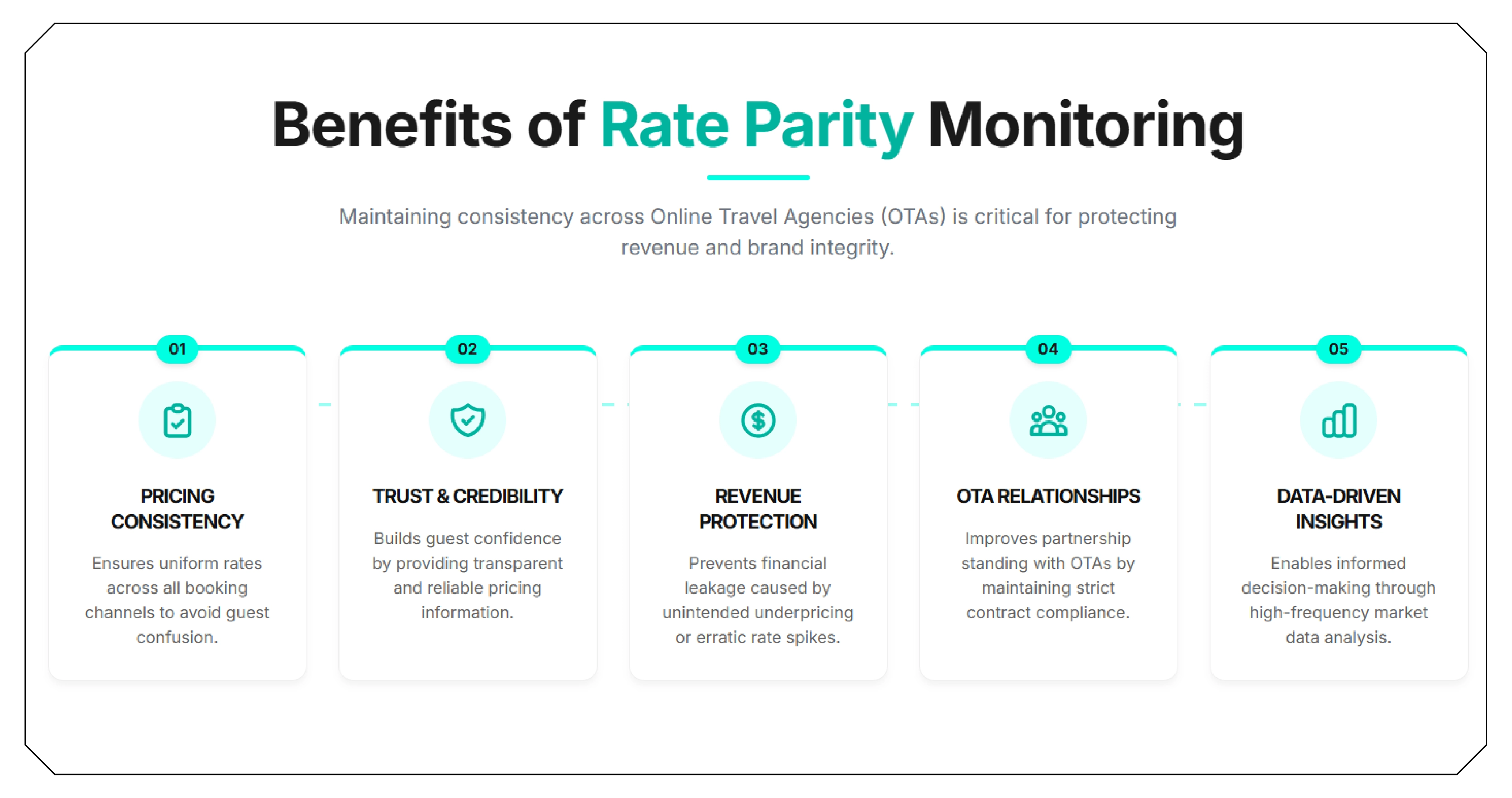
Adopting a robust rate parity monitoring system offers numerous benefits for travel businesses.
- Ensures pricing consistency across all booking channels
- Enhances customer trust and brand credibility
- Prevents revenue loss caused by underpricing or overpricing
- Improves relationships with OTAs by maintaining compliance
- Enables data-driven decision-making through actionable insights
These advantages highlight the importance of integrating rate parity monitoring across OTAs pricing strategy into overall business operations.
Role of Rate Parity Monitoring in Competitive Pricing
In a highly competitive market, pricing can make or break a booking decision. Travelers often compare multiple platforms before finalizing their reservations, making it essential for businesses to remain competitive.
Rate Parity Monitoring allows hotels and travel companies to track competitor pricing in real time and adjust their strategies accordingly. By understanding market trends and competitor behavior, businesses can implement dynamic pricing strategies that maximize revenue while staying competitive.
Additionally, parity monitoring helps identify unauthorized discounting by third-party sellers, which can disrupt pricing consistency. Addressing these issues promptly ensures that businesses maintain control over their pricing and brand image.
Leveraging Data for Better Pricing Decisions
Data is at the heart of effective pricing analytics. By analyzing large datasets, businesses can uncover patterns and trends that inform their strategies.
For instance, an OTA Rate Parity price comparison dataset provides a comprehensive view of pricing across platforms, enabling businesses to identify discrepancies and optimize their pricing models. This data can also be used to forecast demand, plan promotions, and allocate resources more effectively.
Furthermore, integrating pricing data with other business metrics, such as occupancy rates and customer demographics, allows for more holistic decision-making. This ensures that pricing strategies align with overall business objectives.
Challenges in Maintaining Rate Parity
Despite its importance, maintaining rate parity comes with several challenges.
One of the primary challenges is the complexity of managing multiple distribution channels. Each OTA may have different pricing rules, commission structures, and promotional strategies, making it difficult to maintain consistency.
Another challenge is the dynamic nature of pricing. Frequent changes in demand, seasonality, and competitor activity require constant monitoring and adjustments.
Additionally, data accuracy is crucial. Inaccurate or outdated data can lead to incorrect insights and poor decision-making. Businesses must invest in reliable data collection and analytics tools to overcome these challenges.
Best Practices for Effective Rate Parity Monitoring
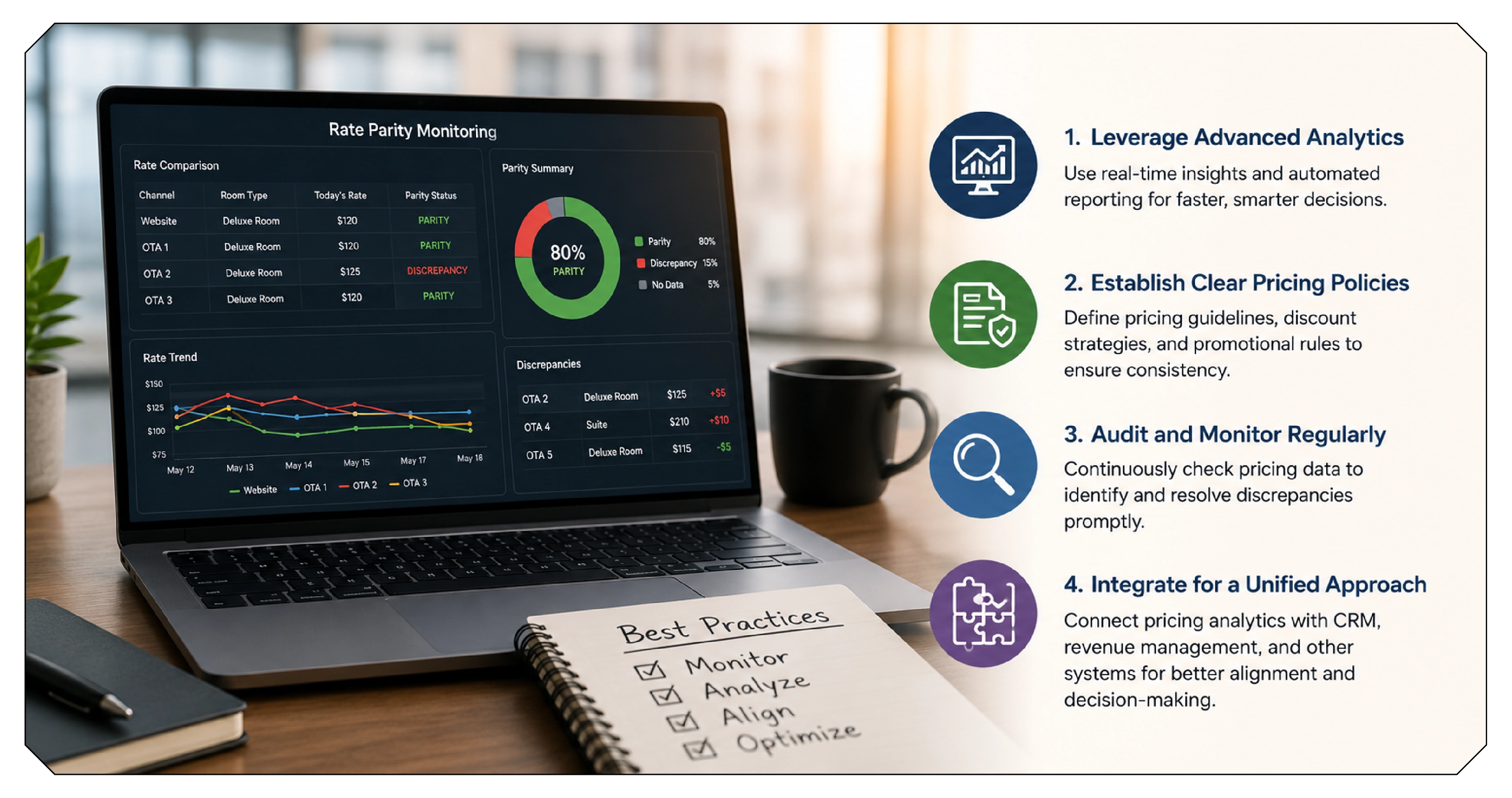
To successfully implement rate parity monitoring, businesses should follow a set of best practices.
First, invest in advanced analytics tools that provide real-time insights and automated reporting. This reduces manual effort and ensures timely decision-making.
Second, establish clear pricing policies and guidelines to maintain consistency across channels. This includes defining discount strategies and promotional rules.
Third, regularly audit pricing data to identify and resolve discrepancies. Continuous monitoring ensures that issues are addressed promptly.
Finally, integrate pricing analytics with other business systems, such as CRM and revenue management tools, to create a unified approach to decision-making.
The Future of OTA Pricing Analytics
As technology continues to advance, the future of OTA pricing analytics is set to become more sophisticated.
Artificial intelligence and machine learning will play a significant role in analyzing complex datasets and predicting market trends. These technologies will enable businesses to implement proactive pricing strategies that anticipate customer behavior and market dynamics.
Automation will further streamline data collection and analysis processes, making it easier for businesses to manage large volumes of data. Real-time insights will become the norm, allowing businesses to respond instantly to changes in the market.
Additionally, personalization will become more advanced, with tailored pricing strategies based on customer preferences and behavior.
How Travel Scrape Can Help You?
Automated Data Collection
Our solutions eliminate manual processes, saving time, reducing errors, and allowing your team to focus on strategic initiatives and innovation.
Scalable Infrastructure
We provide systems that handle large data volumes efficiently, ensuring your operations remain reliable and capable of supporting rapid business growth.
Real-Time Data Updates
With continuous updates, we ensure your platform reflects the latest information, improving accuracy, reducing discrepancies, and enhancing operational performance.
Workflow Optimization
Our services streamline data workflows, enabling faster processing, seamless integration, and efficient management of complex datasets across platforms.
Cost & Productivity Efficiency
By automating extraction and processing, we help reduce costs, improve productivity, and maintain high-quality standards across all data-driven business operations.
Conclusion
In an increasingly competitive travel landscape, maintaining pricing consistency and leveraging data-driven insights are essential for success. OTA rate parity monitoring and pricing analytics provide the tools needed to achieve these goals, enabling businesses to optimize their strategies and maximize revenue.
By implementing OTA pricing parity consistency data scraping, companies can gather accurate and comprehensive data from multiple sources. This supports Real-time OTA rate parity monitoring, ensuring that pricing discrepancies are identified and resolved तimmediately. Additionally, focusing on OTA Ranking & Visibility helps businesses improve their position on booking platforms, driving more traffic and conversions.
Ultimately, a strong focus on rate parity and pricing analytics empowers travel businesses to stay competitive, build customer trust, and achieve long-term growth in a dynamic and ever-changing industry.
Ready to elevate your travel business with cutting-edge data insights? Scrape Aggregated Flight Fares to identify competitive rates and optimize your revenue strategies efficiently. Discover emerging opportunities with tools to Extract Travel Website Data, leveraging comprehensive data to forecast market shifts and enhance your service offerings. Real-Time Travel App Data Scraping Services helps stay ahead of competitors, gaining instant insights into bookings, promotions, and customer behavior across multiple platforms. Get in touch with Travel Scrape today to explore how our end-to-end data solutions can uncover new revenue streams, enhance your offerings, and strengthen your competitive edge in the travel market.
Unlock the Full Report
Enter your details to access premium pricing intelligence insights