Web Scraping OTA Rate Comparison and Price Data for Smarter Hotel Pricing Strategy
Introduction
This Case study demonstrates how travel platforms optimize pricing strategy using real time data extraction and competitive benchmarking across markets globally.
The system leverages Web Scraping OTA rate comparison and price data to monitor hotel pricing fluctuations across global OTA platforms.
It enables structured aggregation of competitor rates helping travel companies identify gaps and improve revenue management decisions efficiently at scale.
Advanced analytics supports OTA Rate Comparison & Price data Tracking continuous benchmarking across airlines hotels and OTAs ensuring accuracy optimization.
The case study also highlights improvements in conversion rates through dynamic pricing models and real time market intelligence usage framework.
Data fusion techniques enhance Metasearch and OTA Price Intelligence visibility across booking engines enabling smarter forecasting and strategy planning systems.
Overall the study proves that real time data scraping strengthens pricing intelligence improves competitiveness and supports strategic decision making globally.
It ultimately empowers travel businesses to optimize revenue increase market share and deliver better customer value across platforms efficiently now.
The Client
The client is a leading travel technology enterprise focused on improving profitability and competitiveness in the hospitality sector through advanced data-driven strategies. They specialize in leveraging large-scale data extraction to gain actionable insights into hotel pricing trends, demand fluctuations, and competitor benchmarking across global OTA platforms.
Their core objective is to enhance hotel revenue optimization using pricing intelligence by identifying dynamic pricing opportunities and enabling smarter decision-making for hotel partners and aggregators. Through continuous analytics, they strengthen revenue management efficiency and market positioning.
The organization also relies heavily on real-time OTA hotel price monitoring to track live pricing changes across multiple booking channels, ensuring that hotels remain competitive in fast-changing travel markets.
Additionally, they implement advanced analytics frameworks for Hotel Price Optimization, allowing them to adjust rates dynamically based on demand, seasonality, and competitor activity. This enables improved occupancy rates, higher revenue per available room (RevPAR), and stronger long-term growth in the hospitality ecosystem.
Challenges in the Hotel Industry
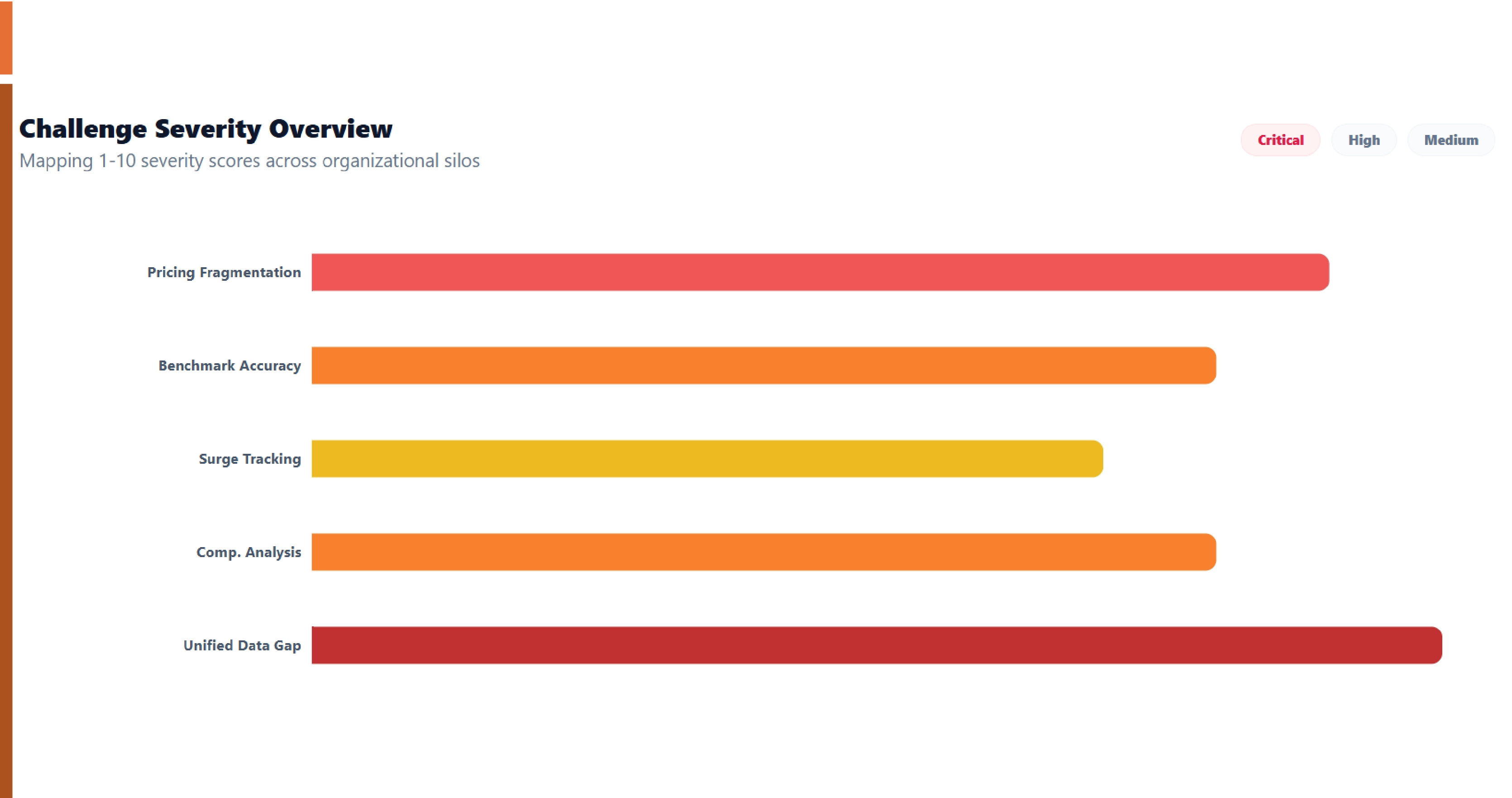
The client operates in a highly competitive hospitality analytics ecosystem where dynamic pricing and OTA intelligence are critical. They aim to improve revenue decisions using scalable data pipelines, but face challenges in accuracy, real-time visibility, and fragmented hotel pricing ecosystems.
1. Fragmented Pricing Across Platforms
One major challenge is inconsistent hotel pricing across multiple OTAs and direct booking systems. Lack of unified visibility makes it difficult to maintain accurate room-level pricing intelligence across OTAs hotels in real time, leading to revenue leakage and inefficiencies.
2. Limited Competitive Benchmark Accuracy
The client struggles with inconsistent datasets when performing hotel competitor rate benchmarking using OTA data. Variations in update frequency and hidden discounts make it difficult to build reliable comparisons, impacting strategic pricing decisions and weakening market positioning.
3. Difficulty Tracking Dynamic Price Surges
Sudden fluctuations in demand create unpredictable pricing behavior. Monitoring price surge tracking hotels OTA data becomes complex due to rapid updates, causing delays in identifying peak pricing opportunities and reducing potential revenue optimization during high-demand periods.
4. Inefficient Competitor Analysis Frameworks
The client faces challenges in scaling Competitor Benchmarking across multiple regions and hotel categories. Manual or semi-automated systems fail to provide consistent insights, slowing down decision-making and reducing agility in responding to competitor pricing changes.
5. Lack of Unified Data Intelligence System
Another key issue is the absence of a centralized Hotel Data Intelligence platform. Disconnected data sources lead to incomplete insights, making it difficult to generate actionable strategies for pricing, forecasting, and revenue management across global hotel networks.
Our Approach
Unified Data Acquisition Framework
We implement a unified data acquisition framework that gathers structured and unstructured pricing information from multiple travel sources. The system ensures consistency, reduces duplication, and enables scalable ingestion pipelines that support high-volume hotel pricing environments efficiently and reliably at scale.
Real-Time Monitoring Architecture
We deploy real-time monitoring systems that continuously track pricing movements across multiple digital travel channels and booking environments. This enables faster updates, improved accuracy, and actionable insights for strategic decision-making in competitive hospitality markets with scalable infrastructure support globally deployed.
Advanced Competitive Analysis Layer
We design advanced analytical layers compare hotel pricing patterns across competitors, enabling deeper market understanding and improved decision-making for revenue teams operating in fast-changing hospitality ecosystems. Structured approach enhances clarity reduces uncertainty supports consistent performance evaluation across different market segments.
Scalable Data Engineering Workflow
We build scalable data engineering workflows that process large volumes of travel pricing data with high reliability and minimal latency. The architecture ensures stability, supports rapid updates, and enables efficient transformation of raw data into structured insights for business use.
Insight Delivery & Decision Support
We focus on delivering actionable insights that help hospitality businesses make informed pricing and revenue optimization decisions quickly. Dashboards and reporting systems are designed to simplify complex datasets, ensuring stakeholders can easily interpret trends and respond effectively to market changes.
Results Achieved
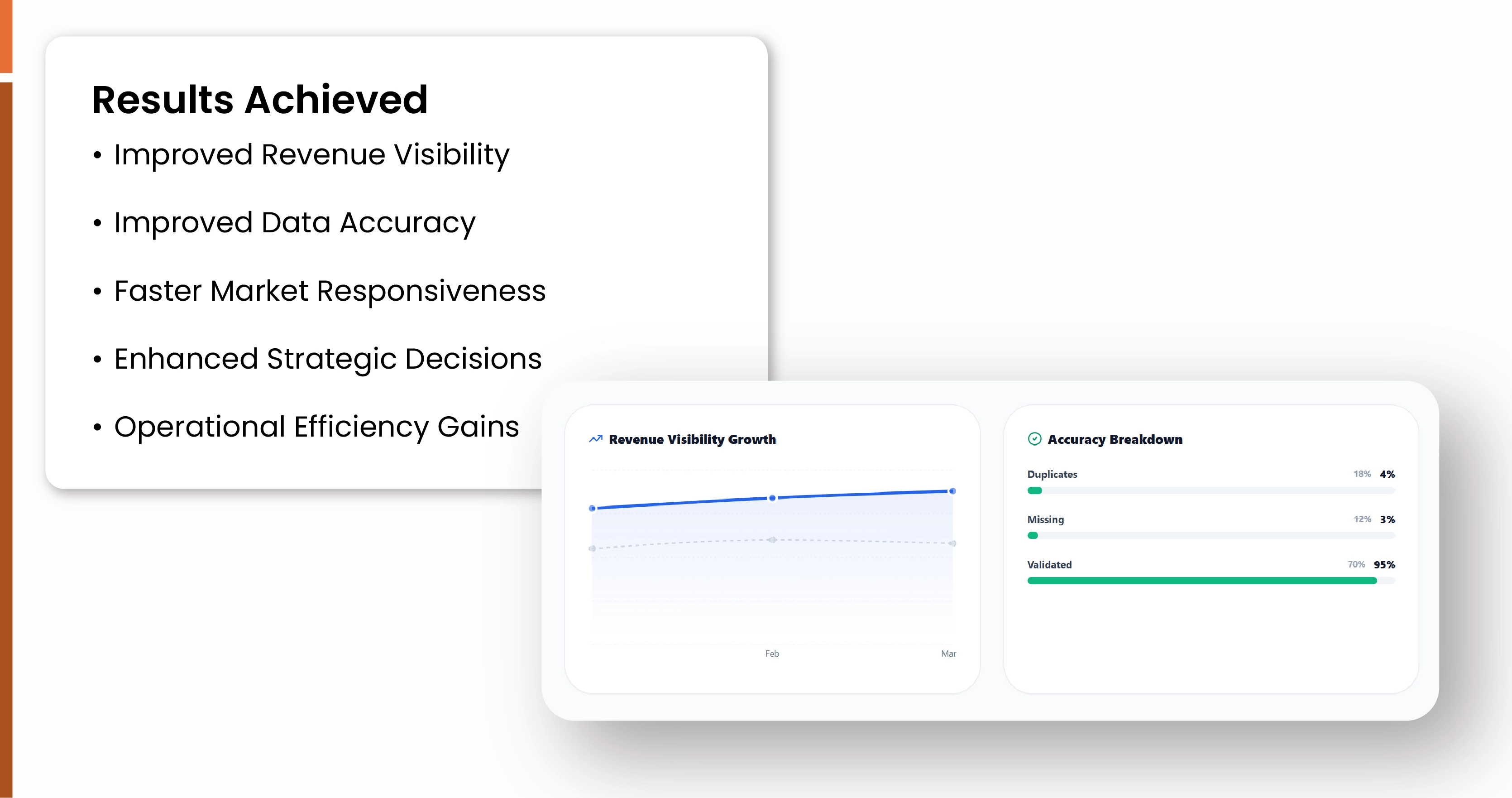
The project delivered significant improvements in pricing visibility, operational efficiency, and decision-making accuracy for the client across competitive hospitality markets.
1. Improved Revenue Visibility
Enhanced pricing visibility allowed the client to understand market movements more clearly across multiple booking channels, resulting in stronger pricing decisions, reduced uncertainty, and improved alignment between demand patterns and strategic revenue goals across regions and hotel categories effectively implemented
2. Improved Data Accuracy
Standardized data validation improved accuracy of pricing information collected from multiple sources. This reduced inconsistencies, eliminated duplicates, and ensured reliable datasets for analysis, enabling better forecasting, improved decision-making speed, and stronger confidence in competitive market evaluation processes overall significantly achieved
3. Faster Market Responsiveness
Real-time processing capabilities enabled faster identification of pricing changes across competitive listings. The client could react quickly to market fluctuations, optimize rates efficiently, and improve responsiveness to demand shifts in highly dynamic hospitality environments globally with measurable impact achieved today
4. Enhanced Strategic Decisions
Improved analytical insights supported stronger strategic decision-making for pricing teams. The client gained clearer visibility into competitor behavior, enabling more informed choices, optimized revenue strategies, and improved alignment with business objectives across diverse hospitality markets driving consistent growth outcomes successfully
5. Operational Efficiency Gains
Streamlined workflows reduced manual effort and improved operational efficiency across data handling systems. The client experienced faster processing cycles, reduced workload dependency, and improved scalability for handling large volumes of competitive market information effectively with continuous improvement achieved globally successfully
Sample Scraped Data Table
| Hotel Name | City | OTA Platform | Room Type | Base Price (USD) | Discount Price (USD) | Availability | Last Updated |
|---|---|---|---|---|---|---|---|
| Grand Plaza | New York | Booking.com | Deluxe Room | 220 | 185 | Available | 2026-04-14 10:15 |
| Ocean View Inn | Miami | Expedia | Sea View Room | 180 | 155 | Limited | 2026-04-14 10:12 |
| Royal Stay | London | Agoda | Suite | 300 | 270 | Available | 2026-04-14 10:18 |
| City Comfort | Dubai | Booking.com | Standard Room | 140 | 120 | Available | 2026-04-14 10:10 |
| Sunset Palace | Bangkok | Expedia | Executive Room | 200 | 175 | Sold Out | 2026-04-14 10:20 |
| Alpine Lodge | Zurich | Agoda | Mountain View | 260 | 230 | Available | 2026-04-14 10:16 |
| Palm Resort | Bali | Booking.com | Villa | 350 | 310 | Available | 2026-04-14 10:14 |
Client’s Testimonial
“Working with the team has significantly transformed our pricing strategy and market intelligence capabilities. Their data-driven approach helped us gain clearer visibility into competitor movements and demand trends across multiple channels. We now make faster and more accurate revenue decisions, improving both occupancy and profitability. The implementation was seamless, and the insights delivered are consistently reliable and actionable. Their expertise in handling large-scale hospitality data has been invaluable to our organization. We highly recommend their services for any business looking to enhance pricing efficiency and strategic decision-making in a competitive environment.”
Conclusion
In conclusion, the project successfully demonstrated how advanced data-driven systems can transform pricing intelligence and operational efficiency in the hospitality sector. The solution enabled faster decision-making, improved visibility, and stronger revenue outcomes for the client across multiple markets.
Real-Time Availability Tracking played a crucial role in ensuring up-to-date insights, helping the client respond quickly to changing demand patterns and market conditions with improved accuracy and speed.
Travel Aggregators Data Scraping Services strengthened data collection from multiple sources, ensuring broader coverage and better competitive understanding across platforms.
Travel Industry Web Scraping Services enhanced scalability and consistency in extracting structured pricing insights from diverse online channels, improving analytical depth and reliability.
Finally, Travel Mobile App Scraping Service enabled access to dynamic mobile-first pricing data, ensuring the client remained competitive in a rapidly evolving digital travel ecosystem.
FAQs
Unlock the Full Report
Enter your details to access premium pricing intelligence insights