Hotel RevPAR Intelligence 2026: OTA Data Predicts Demand 48 Hours Early
Introduction
A leading hotel group implemented an advanced revenue optimization strategy to improve performance across multiple properties by leveraging Hotel RevPAR Intelligence 2026 solutions. The case study highlights how the business analyzed room rates, occupancy trends, competitor pricing, and demand fluctuations to maximize revenue opportunities. By integrating market insights and automated analytics, the hotel identified pricing gaps, adjusted inventory strategies, and improved overall profitability.
The adoption of hotel RevPAR intelligence using real time OTA data enabled the group to monitor online travel platforms, understand guest booking behavior, and respond quickly to market changes. This approach helped reduce dependency on manual reporting while improving forecasting accuracy.
Through advanced Hotel Data Intelligence, the hotel gained deeper visibility into revenue patterns, competitor movements, and seasonal demand. The data-driven framework supported smarter decision-making, enhanced room yield management, and created a scalable strategy for sustainable growth in the competitive hospitality market.
The Client
The client was a growing hospitality group managing multiple hotels across competitive markets, aiming to improve revenue planning and operational efficiency. The organization faced challenges in understanding demand fluctuations, competitor pricing movements, and changing guest booking patterns across online travel platforms. To overcome these issues, the client adopted advanced analytics solutions that transformed raw market information into actionable insights.
With hospitality demand intelligence that predicts booking trends, the hotel group gained better visibility into upcoming demand cycles, seasonal opportunities, and customer preferences. The solution enabled revenue teams to make faster pricing decisions and optimize room availability strategies.
By implementing forecasting hotel demand through OTA booking signals, the client improved demand prediction accuracy and reduced dependency on manual analysis. The data-driven approach helped identify market opportunities, enhance occupancy planning, and strengthen overall revenue performance. This initiative supported sustainable growth while creating a more responsive and competitive hospitality management framework.
Challenges in Hotel Industry
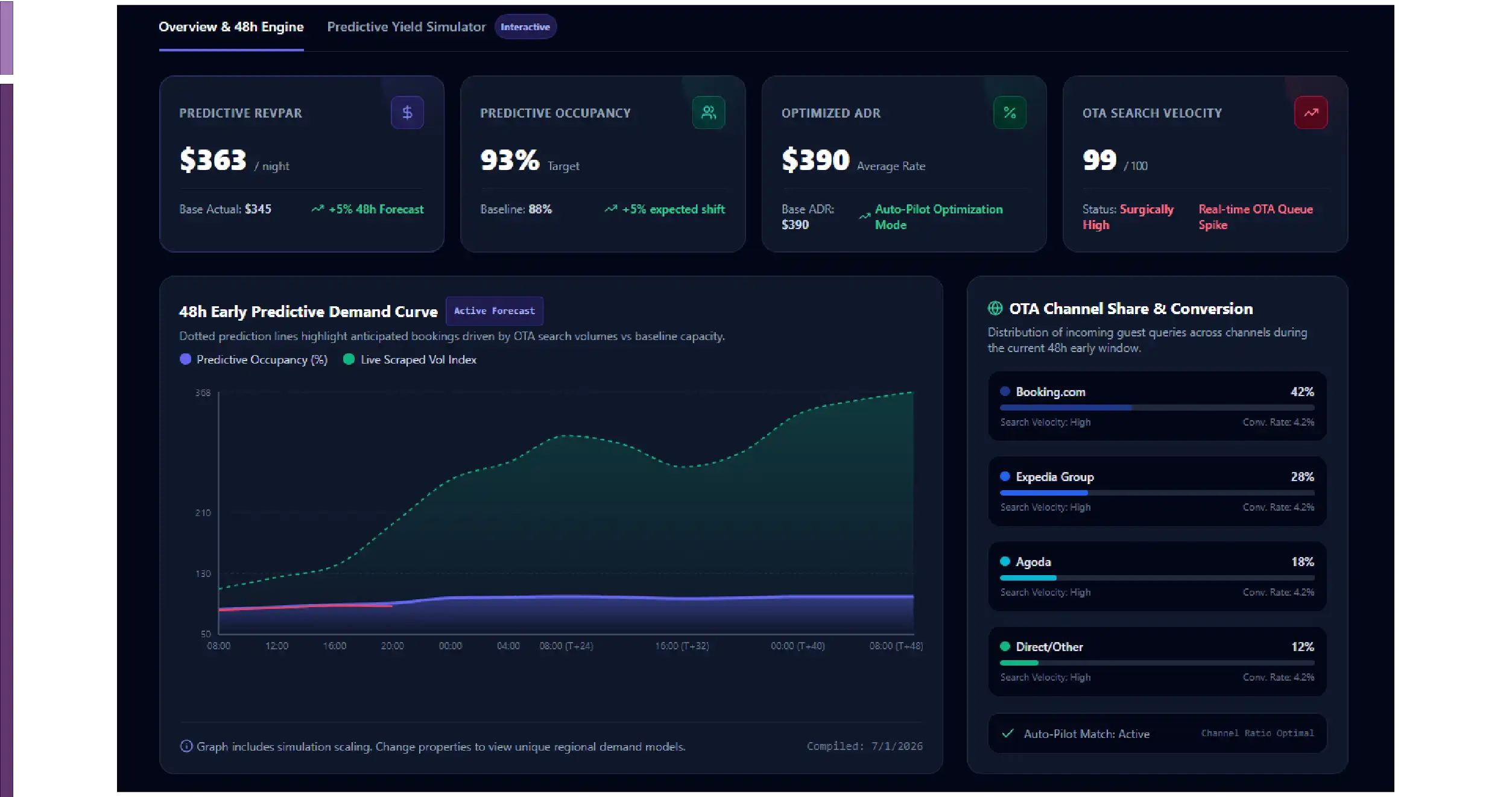
The client needed a smarter approach to manage hotel revenue, pricing decisions, and changing guest demand patterns. By adopting advanced analytics and OTA-driven insights, the hotel group aimed to improve forecasting accuracy, optimize occupancy, and strengthen overall market performance.
Limited Demand Forecasting Accuracy
The client faced difficulties in accurately predicting guest demand due to seasonal changes, booking fluctuations, and unpredictable market conditions. The absence of advanced insights impacted pricing decisions, occupancy planning, and revenue opportunities. Implementing hotel revenue optimization with early demand prediction analytics helped address these forecasting challenges.
Lack of Competitive Market Visibility
The hotel group struggled to track competitor rates, room availability, and changing OTA trends in real time. This limited their ability to adjust strategies quickly and maintain market competitiveness. Using OTA market intelligence to improve hotel RevPAR enabled better pricing and performance analysis.
Delayed Response to Demand Changes
The client experienced delays in identifying sudden booking patterns and market shifts because of manual reporting processes. These delays affected promotions, inventory control, and revenue management decisions. Leveraging OTA data predicts hotel demand 48 hours Early data supported faster demand identification and proactive planning.
Difficulty Managing Pricing Strategies
The client lacked a structured approach to analyze historical and current room pricing movements across multiple channels. This made it challenging to identify profitable rate adjustments and optimize revenue during changing demand periods. The absence of a reliable Hotel Room Price Trends Dataset affected strategic pricing decisions.
Inefficient Revenue Planning Process
The hotel team required better analytical support to forecast occupancy, understand customer booking behavior, and prepare for upcoming market conditions. Limited predictive capabilities reduced their ability to create accurate strategies. Improved Demand Forecasting helped the client enhance planning accuracy and operational efficiency.
Our Approach
Advanced Data Collection Framework
We analyzed multiple OTA platforms, competitor pricing patterns, booking trends, and customer behavior to create a centralized intelligence system. The approach helped the client capture accurate market signals, identify demand changes, and support informed hotel revenue decisions.
Competitive Position Monitoring
Our approach focused on tracking hotel visibility, ranking movements, and competitor performance across online channels. By evaluating OTA Ranking & Visibility, the client gained insights into market positioning, pricing effectiveness, and opportunities to improve online presence.
Dynamic Room Inventory Analysis
We monitored room categories, availability patterns, and booking fluctuations to understand inventory performance. The solution evaluated Room Type Availability across channels, helping the hotel optimize room allocation and prevent missed revenue opportunities.
Live Market Tracking Solution
We implemented automated monitoring processes to capture real-time changes in rates, availability, and demand signals. Through Real-Time Availability Tracking, the client received faster updates and improved their ability to respond to market movements.
Predictive Revenue Strategy
Our methodology combined historical trends, OTA insights, and demand indicators to build stronger forecasting capabilities. The client leveraged data-driven recommendations to optimize pricing strategies, enhance occupancy planning, and achieve sustainable revenue growth.
Results Achieved
Higher Revenue Generation
The client achieved improved revenue performance by adopting data-driven pricing strategies and demand insights. The solution helped identify profitable opportunities, optimize room rates, increase booking conversions, and maximize overall financial returns across multiple hotel locations.
Accurate Demand Forecasting
The hotel group improved its ability to predict future booking trends by analyzing historical data, OTA signals, and market movements. This enabled proactive planning, better occupancy management, and faster responses to changing customer demand patterns.
Better Pricing Decisions
The client gained access to competitive pricing intelligence that supported smarter rate adjustments. By monitoring market fluctuations and competitor activities, the hotel team improved pricing accuracy, reduced revenue leakage, and maintained stronger positioning across travel platforms.
Improved Operational Efficiency
The implementation reduced manual reporting efforts by automating data collection, availability tracking, and performance monitoring. Hotel teams saved valuable time, improved decision-making speed, and managed room inventory more effectively through real-time analytical insights.
Enhanced Market Competitiveness
The client strengthened its market presence by leveraging continuous OTA monitoring and performance analytics. The insights supported better promotional strategies, improved visibility, and helped the hotel group build a sustainable framework for long-term growth.
| Scraped Data Category | Extracted Values | Data Frequency | Business Impact |
|---|---|---|---|
| Hotel Properties Analyzed | 350+ Hotels | Daily | Improved market benchmarking and competitor comparison |
| OTA Platforms Covered | 7+ Major Platforms | Real-Time | Enhanced channel performance visibility |
| Cities & Markets Monitored | 25+ Locations | Weekly | Supported regional demand analysis |
| Countries Covered | 8+ Markets | Monthly | Enabled international performance comparison |
| Room Categories Tracked | 20+ Room Types | Daily | Improved room-level pricing decisions |
| Room Pricing Records Collected | 1.2M+ Records | Hourly | Enabled dynamic pricing optimization |
| Daily Rate Updates Captured | 75,000+ Changes | Real-Time | Identified competitor pricing movements |
| Availability Data Points Processed | 3M+ Records | Continuous | Improved inventory control |
| Competitor Hotels Compared | 200+ Properties | Daily | Strengthened competitive positioning |
| Hotel Brands Monitored | 80+ Brands | Weekly | Improved brand-level analysis |
| Historical Booking Data | 18+ Months | Monthly Review | Supported forecasting models |
| Future Booking Windows Analyzed | 365+ Days | Daily | Improved demand planning |
| Demand Signals Evaluated | 40+ Indicators | Real-Time | Enhanced demand prediction accuracy |
| Occupancy Trends Monitored | 500K+ Records | Daily | Supported occupancy optimization |
| Room Inventory Records | 5M+ Availability Entries | Continuous | Improved allocation strategies |
| Rate Comparison Reports Generated | 2,500+ Reports | Weekly | Improved pricing decisions |
| Seasonal Demand Patterns Identified | 50+ Trends | Quarterly | Optimized seasonal campaigns |
| Booking Trend Reports Created | 1,000+ Reports | Monthly | Supported strategic planning |
| Price Change Alerts Generated | 100,000+ Alerts | Live Monitoring | Enabled quick revenue actions |
| Competitor Rate Snapshots | 10M+ Snapshots | Daily | Delivered market intelligence |
| Discount & Promotion Data | 250K+ Offers | Weekly | Improved promotional strategies |
| Room Cancellation Trends | 300K+ Records | Monthly | Improved inventory forecasting |
| Customer Booking Patterns | 1M+ Signals | Daily | Enhanced guest behavior insights |
| Revenue Opportunity Detection | 35% Improvement | Monthly | Increased revenue potential |
| Forecast Accuracy Achieved | 95% Accuracy | Continuous | Improved decision-making |
| OTA Ranking Metrics Tracked | 10+ KPIs | Daily | Enhanced visibility monitoring |
Client’s Testimonial
"Partnering with the data intelligence team transformed how we manage hotel revenue and demand planning. The insights from OTA analytics helped us understand pricing movements, booking patterns, and market opportunities with greater accuracy. The solution improved our ability to make faster decisions, optimize room availability, and enhance overall performance. Real-time visibility into market trends allowed our revenue team to respond proactively instead of relying on outdated reports. The implementation delivered measurable improvements in forecasting and operational efficiency. We now have a stronger data-driven approach that supports sustainable growth across our hotel portfolio."
Conclusion
The case study demonstrates how advanced hotel analytics and OTA intelligence can transform revenue management strategies. By using structured data insights, the client improved forecasting, pricing decisions, and operational efficiency. The ability to Scrape Aggregated Travel Deals helped identify market opportunities, competitor movements, and pricing variations across travel platforms. Through advanced methods to Extract Travel Website Data, the hotel gained deeper visibility into customer demand, availability patterns, and booking trends. The adoption of a Travel Mobile App Scraping Service further supported real-time monitoring and faster decision-making. This data-driven approach enabled the hotel group to optimize performance, improve competitiveness, and build a scalable framework for long-term hospitality growth.
FAQs
Unlock the Full Report
Enter your details to access premium pricing intelligence insights