How Can Delta Air Lines Fare Trend Analysis Improve Seat Inventory, Pricing Patterns & Demand Forecasting?
Introduction
The airline industry is one of the most dynamic and competitive sectors in global transportation. Understanding how fares fluctuate, how passengers book seats, and how demand changes over time is critical for maintaining profitability and operational efficiency. Delta Air Lines Fare Trend Analysis provides a foundation for studying historical and current pricing patterns, enabling airlines and travel agencies to anticipate customer behavior, optimize revenue, and implement strategic marketing initiatives.
To access this data efficiently, Delta Flight Data Scraping Services are increasingly used to automate the extraction of structured flight information. These services collect details on availability, schedules, and pricing from multiple sources in real-time, helping stakeholders maintain a competitive edge by relying on accurate, up-to-date data instead of manual research or static reports.
Understanding the nuances of pricing requires continuous analysis. Through Delta Air Lines pricing trend analysis, businesses can track fluctuations in fare classes, route-specific variations, and seasonal trends. This analysis helps revenue teams design effective pricing strategies, adapt to competitor moves, and respond to market events such as holidays, conferences, or regional tourism spikes.
Comprehensive Fare Data Across Routes
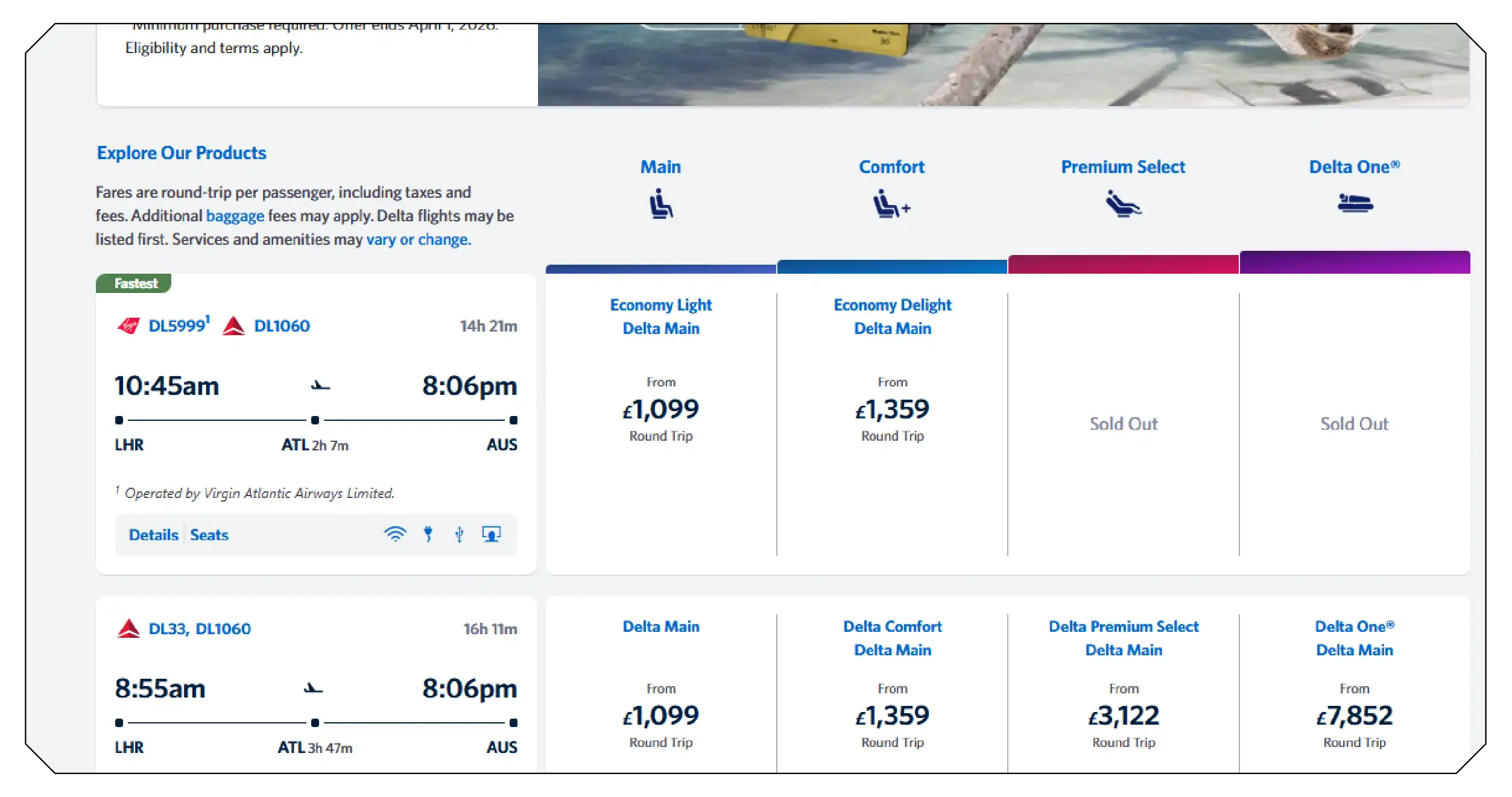
The Delta Global Flight Prices Dataset provides a holistic view of airfare trends across multiple routes, flight classes, and geographical regions. By examining historical and current pricing, analysts can:
- Compare fares for different cabin classes across major domestic and international routes.
- Track seasonal and regional demand variations.
- Evaluate the effectiveness of discount campaigns and promotions.
- Identify opportunities to implement dynamic pricing models.
Integrating this dataset with predictive analytics allows airlines to anticipate market changes and make informed operational decisions.
Monitoring Seat Availability in Real-Time
Keeping track of seat inventory is vital for maximizing revenue. Delta real-time seat availability tracking allows airlines and travel agencies to monitor how occupancy levels fluctuate across flights, fare classes, and routes. Real-time seat insights enable businesses to:
- Adjust prices proactively for high-demand flights.
- Efficiently allocate seats across booking channels.
- Minimize revenue loss due to empty seats.
- Make operational decisions regarding overbooking or aircraft adjustments.
By combining seat availability monitoring with pricing data, airlines can improve revenue capture and optimize overall load factors.
Flight Schedules and Operational Planning
Accurate scheduling is essential to maintain customer satisfaction and operational efficiency. The Delta Flight Schedules Dataset includes details about departure and arrival times, flight durations, layovers, and seasonal variations. Leveraging this information allows airlines to:
- Identify peak travel periods and adjust flight frequencies accordingly.
- Plan connecting flights efficiently to reduce delays.
- Analyze the impact of schedule adjustments on demand and revenue.
- Optimize crew allocation and aircraft utilization.
Having structured schedule data ensures a proactive approach to operations while enhancing passenger experience.
Understanding Route Demand
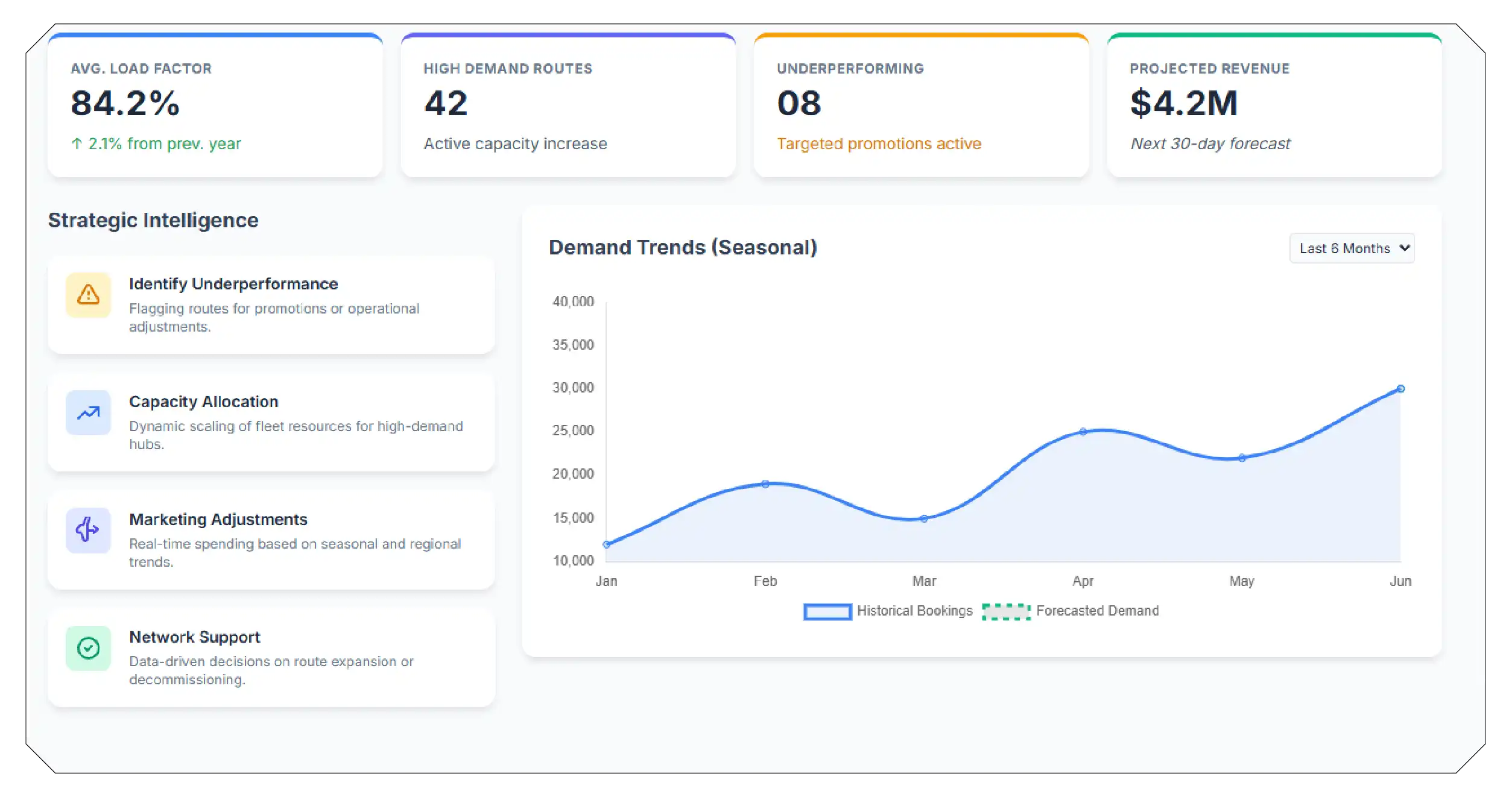
Demand analysis at the route level helps airlines make strategic decisions about capacity and pricing. Delta Airlines Route Demand Analytics uses historical booking patterns, seat occupancy, and external market factors to forecast demand. This enables airlines to:
- Identify underperforming routes for targeted promotions or operational changes.
- Allocate additional capacity to high-demand routes.
- Adjust marketing efforts based on seasonal or regional trends.
- Support decisions on opening or discontinuing specific routes.
Accurate route demand insights are essential for balancing profitability with customer satisfaction.
Tracking Pricing Trends
Dynamic pricing strategies depend on a clear understanding of fare patterns. The Delta Price Trends Dataset consolidates historical and live fare data, allowing airlines to:
- Monitor fare fluctuations and detect emerging pricing patterns.
- Understand competitor pricing strategies.
- Develop targeted promotions to influence booking behavior.
- Forecast revenue impacts from price changes.
Coupling pricing trends with real-time seat availability allows airlines to adopt a data-driven approach to revenue management.
Leveraging Dynamic Pricing Intelligence
Modern revenue management relies on sophisticated, responsive pricing strategies. Delta Air Dynamic Pricing Intelligence applies historical data, real-time booking behavior, and predictive modeling to adjust fares dynamically. Airlines can:
- Maximize revenue by aligning fares with fluctuating demand.
- Respond rapidly to competitor pricing changes.
- Encourage early bookings with targeted discounts.
- Optimize seat class distribution for maximum profitability.
Dynamic pricing ensures that airlines can adapt quickly to market conditions while maintaining strong revenue performance.
Combining Multiple Data Sources
Integrating seat availability, pricing trends, flight schedules, and demand analytics provides a comprehensive view of operations. By combining these datasets, airlines can:
- Forecast future demand accurately and adjust flight frequencies.
- Optimize aircraft deployment and fleet management.
- Enhance customer satisfaction with better availability and transparency.
- Inform strategic decisions regarding new routes or seasonal adjustments.
Advanced analytics and machine learning models can further enhance predictive insights, supporting decisions across marketing, operations, and finance.
Insights for Travel Agencies and Analysts

Data from Delta flight analytics is also valuable for travel agencies and market analysts. With access to structured datasets, they can:
- Identify the best times to book or promote flights.
- Understand competitor pricing and route performance.
- Build predictive models for future travel trends.
- Offer personalized travel recommendations based on booking behavior insights.
This empowers travel partners to provide informed advice to customers while optimizing revenue opportunities.
The Future of Airline Analytics
As airlines face increasing competition, data-driven decision-making will be central to success. Real-time monitoring, predictive modeling, and automated extraction tools will continue to enhance operational efficiency and profitability. Integrating scheduling, seat availability, and pricing datasets allows airlines to anticipate demand changes, optimize dynamic pricing, and make operational decisions proactively.
Emerging technologies such as AI-based demand forecasting, predictive pricing algorithms, and automated inventory management will further strengthen Delta’s competitive advantage. By continuously analyzing the Delta Global Flight Prices Dataset and Delta Flight Schedules Dataset, Delta Air Lines can maintain operational efficiency while delivering a superior passenger experience.
How Travel Scrape Can Help You?
1. Gain Real-Time Market Visibility
Our services provide live access to seat availability, fares, and schedule updates across multiple routes. This allows airlines to monitor competitor movements, detect emerging trends, and respond immediately to changing market conditions.
2. Optimize Pricing Strategies
By collecting structured historical and live pricing data, airlines can identify fare patterns, seasonal fluctuations, and demand-driven price opportunities. This supports dynamic pricing models and revenue maximization across different classes and routes.
3. Enhance Operational Efficiency
We track flight schedules, route performance, and seat occupancy data in real-time, enabling airlines to adjust aircraft allocation, manage overbooking risks, and optimize crew and resource planning.
4. Support Predictive Demand Forecasting
Our data scraping services provide insights into booking behavior, route popularity, and historical demand trends. Airlines can use this intelligence to forecast passenger demand, plan capacities, and launch targeted marketing campaigns.
5. Deliver Scalable, Analytics-Ready Data
All collected data is structured, clean, and compatible with BI dashboards or forecasting models. Airlines and travel agencies can scale data collection across regions or globally, supporting comprehensive market analysis and strategic decision-making.
Conclusion
For modern airlines, leveraging technology to monitor seats, pricing, and demand is essential. The Delta Air seat inventory monitoring API allows real-time tracking of seat availability across routes and classes. Combined with Delta Air Lines Demand Forecasting, airlines can make proactive decisions to optimize capacity, pricing, and marketing. Finally, the method to Extract Delta Flight API Data ensures that Delta maintains access to structured, analytics-ready datasets that support operational excellence, revenue growth, and customer satisfaction.
By integrating flight schedules, seat monitoring, pricing trends, and demand insights, Delta Air Lines can stay ahead in an increasingly competitive industry while providing travelers with reliable, efficient, and cost-effective flight options.
Ready to elevate your travel business with cutting-edge data insights? Scrape Aggregated Flight Fares to identify competitive rates and optimize your revenue strategies efficiently. Discover emerging opportunities with tools to Extract Travel Website Data, leveraging comprehensive data to forecast market shifts and enhance your service offerings. Real-Time Travel App Data Scraping Services helps stay ahead of competitors, gaining instant insights into bookings, promotions, and customer behavior across multiple platforms. Get in touch with Travel Scrape today to explore how our end-to-end data solutions can uncover new revenue streams, enhance your offerings, and strengthen your competitive edge in the travel market.
Unlock the Full Report
Enter your details to access premium pricing intelligence insights