Airport & Aviation Intelligence Through Google Map for Next-Gen Air Traffic Optimization
Introduction
The aviation industry is rapidly evolving into a data-driven ecosystem where geospatial intelligence, pricing signals, and passenger behavior analytics play a central role in operational efficiency. Modern aviation stakeholders increasingly rely on Airport & Aviation Intelligence through google map to understand airport connectivity, infrastructure strength, and regional air traffic dynamics. This intelligence layer is further enhanced by Flight Price Data Intelligence, which helps airlines and travel platforms optimize pricing strategies based on real-time demand and competitor movements.
A critical component of this ecosystem is aviation data extraction from Google Maps, which enables structured collection of airport attributes, reviews, traffic density, and nearby infrastructure data. These insights help aviation authorities, airlines, and travel aggregators build predictive models for route optimization, passenger flow forecasting, and airport performance benchmarking.
Role of Google Maps in Aviation Intelligence
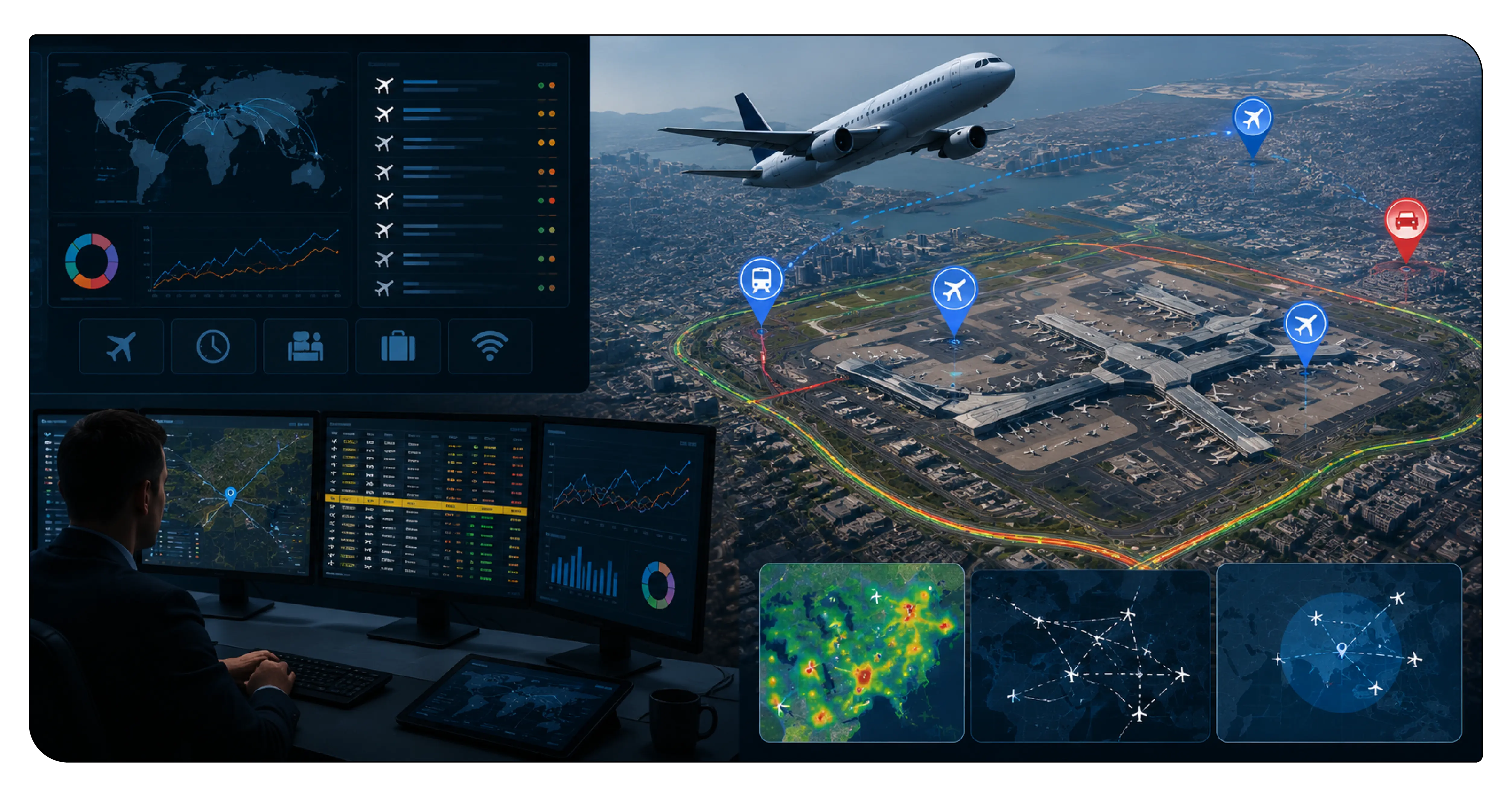
Google Maps has become a powerful geospatial intelligence source for aviation analytics. It provides real-time updates on airport layouts, terminal structures, congestion levels, and surrounding transportation networks.
Advanced systems powered by Real-Time Flight Data Scraping API integrate aviation scheduling and pricing data with geospatial insights, allowing stakeholders to track delays, flight frequency, and airline competition in a unified dashboard.
Additionally, airport location intelligence using Google Maps data supports strategic airport expansion planning, helping governments and private operators identify high-demand regions and underserved air routes.
Airport Infrastructure and Operational Analytics
Aviation infrastructure analysis focuses on terminal capacity, runway availability, connectivity, and passenger handling efficiency. Google Maps data allows analysts to evaluate infrastructure performance using visual and metadata-driven insights.
Aviation infrastructure analytics Google Maps helps in assessing airport scalability, identifying congestion bottlenecks, and understanding accessibility patterns through road and rail connectivity surrounding airports.
Sample Global Airport Infrastructure Dataset
| Airport Name | Country | Runways | Annual Passenger Traffic (M) | Terminal Count | Avg Delay (Min) | Connectivity Score |
|---|---|---|---|---|---|---|
| Hartsfield–Jackson Atlanta | USA | 5 | 104.5 | 2 | 12 | 95 |
| Dubai International Airport | UAE | 2 | 86.4 | 3 | 18 | 92 |
| Heathrow Airport | UK | 2 | 79.2 | 4 | 20 | 94 |
| Indira Gandhi International | India | 3 | 74.3 | 3 | 22 | 90 |
| Singapore Changi Airport | Singapore | 3 | 68.3 | 4 | 10 | 98 |
| Tokyo Haneda Airport | Japan | 4 | 85.1 | 3 | 11 | 96 |
Airport Traffic, Passenger Flow, and Demand Signals
Air traffic analysis is essential for predicting peak congestion periods and optimizing airline schedules. Google Maps contributes significantly by providing location-based crowd density signals, route congestion, and nearby transportation trends. Arport traffic and travel insights from Google Maps help aviation authorities optimize airport staffing, gate allocation, and passenger flow management.
These insights also support airlines in reducing turnaround times and improving on-time performance metrics.
Flight Pricing Intelligence and Market Dynamics
Pricing volatility is a core challenge in aviation markets. Airlines frequently adjust fares based on demand, seasonality, and competition. Airline Price Change Dataset helps track historical fare fluctuations across routes, enabling predictive modeling for optimal ticket pricing strategies.
Sample Airline Pricing & Route Intelligence Dataset
| Route | Airline | Base Fare (USD) | Peak Fare (USD) | Demand Index | Seasonal Factor | Avg Load Factor (%) |
|---|---|---|---|---|---|---|
| Delhi–Dubai | Emirates | 280 | 450 | 88 | High | 91 |
| London–New York | British Airways | 520 | 820 | 95 | Very High | 93 |
| Singapore–Tokyo | Singapore Airlines | 400 | 600 | 84 | Medium | 89 |
| Mumbai–Singapore | Air India | 220 | 350 | 78 | Medium | 85 |
| Paris–Dubai | Air France | 310 | 500 | 82 | High | 88 |
| Sydney–Singapore | Qantas | 350 | 580 | 80 | Medium | 87 |
Global Airport Ecosystem and Ancillary Services
Airports are no longer just transit hubs; they are integrated commercial ecosystems offering retail, lounges, hotels, and entertainment services. Global Airport Lounge Data Dataset enables analysis of lounge availability, passenger satisfaction, amenities, and pricing structures across global airports. These datasets help airlines and credit card companies design premium travel experiences and loyalty programs.
Aviation Intelligence for Strategic Planning
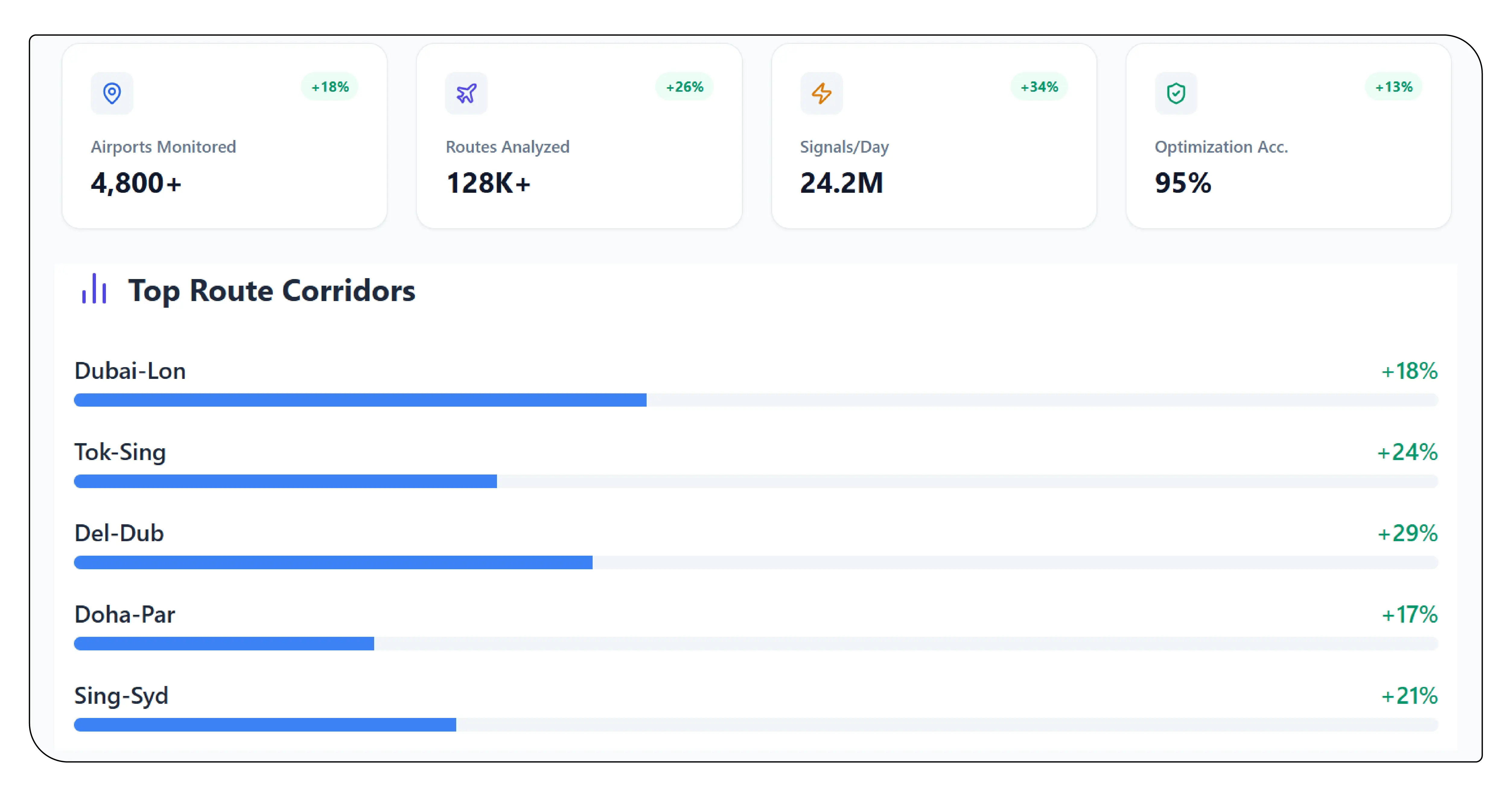
Aviation intelligence is widely used for route planning, airport expansion, and airline network optimization. By combining geospatial and operational datasets, stakeholders can make data-backed decisions. Airport location intelligence using Google Maps data is particularly valuable for identifying potential new airport sites, optimizing hub-and-spoke models, and improving regional connectivity.
This intelligence also supports tourism boards and governments in improving accessibility to high-demand destinations.
Digital Transformation in Aviation Analytics
The aviation industry is undergoing rapid digital transformation, with AI and big data playing a central role. Automated systems now integrate mapping data, pricing intelligence, and passenger behavior analytics. Cloud-based systems powered by Real-Time Flight Data Scraping API allow continuous monitoring of global air traffic, enabling real-time decision-making for airlines and aviation regulators. Alongside this, Airline Data Scraping further enhances operational intelligence by extracting structured flight schedules, fare trends, and route performance metrics for predictive analytics and strategic planning.
Future of Google Maps-Based Aviation Intelligence
The future of aviation analytics lies in hyper-localized and predictive intelligence systems. These systems will combine Google Maps geospatial data with machine learning to forecast congestion, pricing trends, and passenger demand.
Automation will enable real-time adjustments in flight scheduling, airport operations, and customer service delivery.
Conclusion
The integration of geospatial data with aviation analytics is transforming the global air transport ecosystem. Advanced tools powered by airport traffic and travel insights from Google Maps are enabling more efficient airport management, improved passenger experiences, and optimized airline operations.
At the same time, airport review and rating scraping using Google Maps provides valuable sentiment-based insights into passenger satisfaction, helping airports improve service quality and infrastructure planning.
Ultimately, the combination of geospatial intelligence and aviation datasets such as airport facility analytics through google map is shaping the future of smart airports, predictive aviation systems, and global travel optimization.
Ready to elevate your travel business with cutting-edge data insights? Scrape Aggregated Flight Fares to identify competitive rates and optimize your revenue strategies efficiently. Discover emerging opportunities with tools to Extract Travel Website Data, leveraging comprehensive data to forecast market shifts and enhance your service offerings. Real-Time Travel App Data Scraping Services helps stay ahead of competitors, gaining instant insights into bookings, promotions, and customer behavior across multiple platforms. Get in touch with Travel Scrape today to explore how our end-to-end data solutions can uncover new revenue streams, enhance your offerings, and strengthen your competitive edge in the travel market.
Unlock the Full Report
Enter your details to access premium pricing intelligence insights