How Can the USA Daily Airfare & Hotel Price Dataset Improve Travel Cost Planning?
Introduction: Why Daily Travel Price Data Matters
The travel and hospitality sector in the United States is highly dynamic, with airfare and hotel room rates changing almost every day. For airlines, hotels, travel agencies, and analysts, understanding these fluctuations is critical. A structured USA Daily Airfare & Hotel Price Dataset provides stakeholders with the data needed to make informed decisions about pricing, promotions, and customer strategies.
Along with airfare information, Airfare Fluctuation Data Scraping enables continuous monitoring of price movements across multiple routes, airlines, and booking windows. Similarly, a comprehensive Airline fare Price dataset in USA allows businesses to track pricing trends and anticipate market behavior, ensuring they stay competitive in a fast-moving environment.
In today’s market, having access to daily travel pricing data is no longer a luxury—it’s a necessity for anyone involved in travel cost tracking and market intelligence.
Understanding the Airfare Dataset: What It Includes and Why It’s Useful
A robust airfare dataset contains more than just ticket prices. It often includes:
- Departure and arrival airports
- Travel and booking dates
- Airline name and flight number
- Cabin classes (Economy, Business, First)
- Base fare, taxes, and additional fees
- Refund and cancellation policies
- Baggage allowances
By analyzing this data, businesses can conduct Daily flight fare tracking USA and identify key trends. For example, flights from New York to Los Angeles can see a 15–30% fare difference within a week due to demand surges or airline promotions. By tracking fares daily, travel agencies can advise customers on the best times to book and airlines can optimize seat allocation for maximum revenue.
Additionally, Flight Price Data Intelligence allows predictive modeling, where historical price trends are analyzed to forecast future fares. This is particularly useful for seasonal travel, holiday bookings, or corporate travel planning.
The Hotel Pricing Dataset: What Businesses Need to Know
Airfare is only half of the travel cost equation. Hotels, resorts, and vacation rentals also experience daily rate changes. A Hotel room price dataset in USA typically includes:
- Hotel name, star rating, and location
- Room type and category
- Daily room rate
- Occupancy status
- Amenities offered
- Check-in and check-out dates
- Cancellation policies
By analyzing this dataset, businesses can track fluctuations in hotel rates, identify high-demand periods, and optimize pricing. For instance, hotel rooms in Las Vegas or Orlando can double in price during conventions, sports events, or holiday seasons. Using this data, OTAs (Online Travel Agencies) can adjust displayed rates in real time to remain competitive.
A structured Hotel Guest Review Dataset further enhances intelligence by incorporating ratings, review counts, and sentiment analysis. Hotels with higher customer ratings often maintain higher room rates, even during low-demand periods, indicating that customer perception directly impacts pricing decisions.
How Real-Time Data Collection Enhances Accuracy?
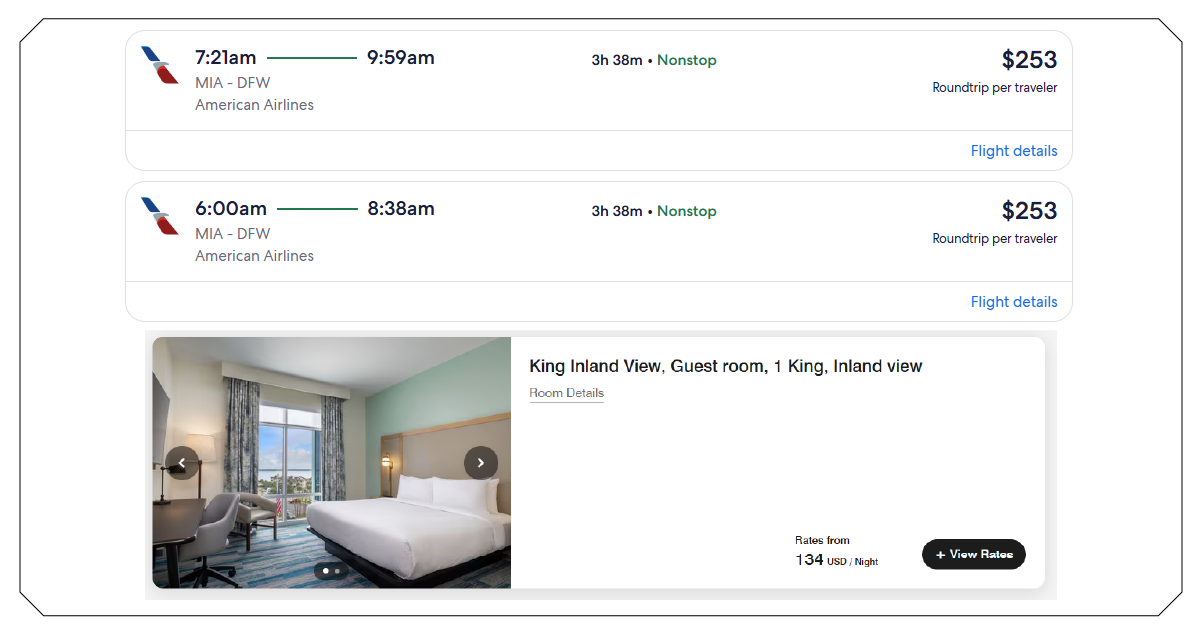
Manual tracking of airfare and hotel rates is time-consuming and prone to errors. Automated scraping and API solutions are essential to capture high-frequency pricing data.
A Real-Time Flight Data Scraping API can continuously extract fares from multiple airlines, capturing variations by route, cabin class, and travel date. Similarly, a Real-Time Hotel Data Scraping API ensures up-to-date room rates, occupancy, and promotional offers across thousands of properties.
Automation provides several benefits:
- High-frequency updates: Captures hourly or daily changes
- Data accuracy: Reduces human errors
- Scalability: Covers thousands of flights and hotels across the USA
- Structured output: Easily integrates with dashboards, predictive models, and analytics tools
By using these technologies, travel businesses can create reliable datasets for Airfare & hotel price intelligence USA, providing a competitive edge.
How Travel Price Datasets Support Market Intelligence?
Daily airfare and hotel pricing data provides actionable insights across multiple areas:
1. Travel Cost Optimization
Businesses can identify trends in booking behavior and seasonal price spikes. For example, a sudden airfare drop to Miami may trigger increased hotel bookings. Monitoring these dynamics allows better cost management for both corporate and leisure travelers.
2. Revenue Management
Airlines and hotels can optimize pricing strategies using predictive analytics. Historical pricing patterns in a Airline fare Price dataset in USA can inform discount strategies, seat allocation, and promotional campaigns.
3. Competitive Benchmarking
Travel companies can compare competitors’ pricing and room rates across cities, enabling dynamic pricing decisions. For instance, a mid-week fare reduction by one airline may prompt others to adjust rates to stay competitive.
4. Strategic Forecasting
Flight Price Data Intelligence allows companies to anticipate fare and hotel rate trends months in advance. This improves decision-making for corporate travel, OTAs, and investor analysis.
Integrating Airfare and Hotel Data for a Holistic View
By combining airfare and hotel datasets, businesses gain a comprehensive understanding of travel costs. Integrated datasets allow for:
- Analyzing total travel expenses: Not just flights or hotels individually
- Identifying correlated trends: High airfare periods often coincide with hotel rate increases
- Optimizing bundles and offers: Travel packages can be priced accurately
- Enhancing customer recommendations: Suggesting the cheapest and most convenient options
For example, during a large conference in Chicago, flight prices rise due to increased demand. Hotels in the city may also increase rates simultaneously. A combined dataset allows travel agencies to create optimized packages and price alerts for clients.
The Role of Predictive Analytics and AI
AI and machine learning models depend heavily on daily datasets. Predictive algorithms can analyze:
- Past airfare trends
- Seasonal travel patterns
- Hotel occupancy trends
- Competitor pricing strategies
- Event-driven surges
With access to a structured Airline fare Price dataset in USA and hotel pricing data, businesses can forecast fare increases, optimize dynamic pricing, and advise clients on the best booking times. This predictive intelligence is a game-changer for OTAs, corporate travel managers, and airline revenue teams.
Benefits for Different Stakeholders
1. Travel Agencies and OTAs
- Monitor competitor fares and hotel rates
- Provide dynamic pricing options to customers
- Enhance user experience through predictive recommendations
2. Corporate Travel Teams
- Reduce business travel expenses
- Identify optimal booking windows
- Forecast travel budgets accurately
3. Hospitality and Airline Revenue Managers
- Optimize pricing based on demand
- Track competitor offers
- Adjust strategies in real-time
4. Investors and Market Analysts
- Analyze airline revenue trends
- Evaluate hotel market performance
- Forecast seasonal demand patterns
Through consistent monitoring of Airfare Fluctuation Data Scraping and hotel datasets, each stakeholder gains actionable intelligence.
How Travel Scrape Can Help You?
1. Monitor Price Changes in Real Time
We provide solutions that track changes in airfares and hotel rates daily. This allows businesses to identify trends, anticipate fluctuations, and make timely decisions to stay competitive.
2. Optimize Hospitality and Travel Costs
By collecting daily data from hotels and airlines, our services help companies adjust their pricing strategies, plan promotions, and manage costs effectively during high-demand periods.
3. Improve Forecasting and Planning
With structured historical and current datasets, businesses can predict future pricing trends, identify the best booking times, and reduce financial risks associated with sudden price shifts.
4. Consolidate Travel Data for Better Insights
We integrate multiple sources into a single dataset, providing a complete view of travel and accommodation trends. This helps travel agencies, corporate planners, and service providers make informed decisions.
5. Automate Large-Scale Data Collection
Our automated systems capture thousands of records daily with minimal manual effort. This ensures accuracy, scalability, and up-to-date information for companies that rely on timely market intelligence.
Conclusion
In today’s fast-paced travel ecosystem, daily tracking of airfare and hotel prices is essential. With a Daily flight fare tracking USA dataset and real-time hotel data, businesses can transform raw numbers into actionable insights.
Tracking Flight and Hotel Price Data In USA allows companies to forecast trends, optimize pricing strategies, and stay ahead of competitors. By leveraging advanced Hotel Data Intelligence, hospitality and airline businesses can anticipate demand surges and adjust offerings proactively.
Finally, Daily hotel room rate analysis USA ensures that both pricing and service strategies are data-driven, resulting in better revenue management, customer satisfaction, and overall market competitiveness.
In essence, a structured approach to airfare and hotel price tracking enables businesses in the U.S. travel sector to achieve operational efficiency, predictive insights, and strategic growth.
Ready to elevate your travel business with cutting-edge data insights? Scrape Aggregated Flight Fares to identify competitive rates and optimize your revenue strategies efficiently. Discover emerging opportunities with tools to Extract Travel Website Data, leveraging comprehensive data to forecast market shifts and enhance your service offerings. Real-Time Travel App Data Scraping Services helps stay ahead of competitors, gaining instant insights into bookings, promotions, and customer behavior across multiple platforms. Get in touch with Travel Scrape today to explore how our end-to-end data solutions can uncover new revenue streams, enhance your offerings, and strengthen your competitive edge in the travel market.
Unlock the Full Report
Enter your details to access premium pricing intelligence insights