How Does Travelocity Hourly Car Rental Price Analysis Reveal Hidden Pricing Patterns?

Introduction
The car rental industry has evolved into a highly dynamic, data-driven marketplace where prices fluctuate not only daily but also on an hourly basis. Travel platforms like Travelocity rely on advanced algorithms that continuously adjust rental rates according to demand signals, vehicle availability, pickup location, and booking time. Conducting a Travelocity hourly car rental price analysis helps travel businesses, pricing analysts, and mobility platforms uncover hidden intraday pricing patterns that are often missed by traditional daily monitoring methods. By leveraging modern Car Rental Data Scraping Services, organizations can accurately track frequent price updates across multiple locations and vehicle categories. This makes it possible to Extract Travelocity hourly car rental prices data in real time and convert rapid pricing fluctuations into meaningful, structured insights. Such granular intelligence supports better demand forecasting, smarter booking strategies, and stronger competitive positioning, while also enhancing pricing transparency and improving the overall customer experience in an increasingly competitive car rental landscape.
Understanding Hourly Pricing Dynamics in the Car Rental Market
Hourly pricing analysis focuses on tracking rental rate changes at frequent intervals throughout the day. Unlike static pricing models, Travelocity’s system reacts to user behavior, inventory pressure, and external travel signals almost instantly. This means a rental car booked at 8 AM can cost significantly more or less than the same vehicle booked at 2 PM.
Analyzing historical hourly data allows businesses to build a Car Rental Price Trends Dataset that captures how rates move across different time slots, days of the week, and seasonal periods. This dataset becomes the foundation for identifying volatility cycles, optimal booking hours, and demand-driven price surges.
Hourly Price Volatility: What the Data Reveals
Hourly price volatility refers to the frequency and magnitude of price changes within a single day. Travelocity exhibits noticeable volatility during high-intent booking periods, especially when supply tightens or demand spikes unexpectedly. By continuously monitoring and attempting to scrape Travelocity hourly car rental price volatility, analysts can identify recurring patterns that explain when and why prices jump.
Common volatility insights include sharp increases during early morning planning hours, temporary price stabilization in early afternoons, and sudden spikes during evening leisure search peaks. Last-minute bookings often experience the highest volatility due to limited vehicle availability, especially at airports and tourist-heavy locations.
Best Booking Windows Based on Hourly Trends
One of the most practical applications of hourly pricing analysis is identifying the best booking windows. When historical hourly data is analyzed over weeks or months, clear patterns begin to emerge. Businesses using Hourly car rental price tracking Travelocity can pinpoint timeframes where prices consistently dip before rising again.
Late-night hours typically show reduced competition and lower demand, resulting in more favorable pricing. Early afternoon windows often reflect algorithmic price corrections, while weekends tend to have fewer low-price windows due to sustained demand. These insights empower platforms to guide users toward smarter booking decisions and help businesses optimize promotional timing.
Demand Spikes by Time: How They Influence Pricing
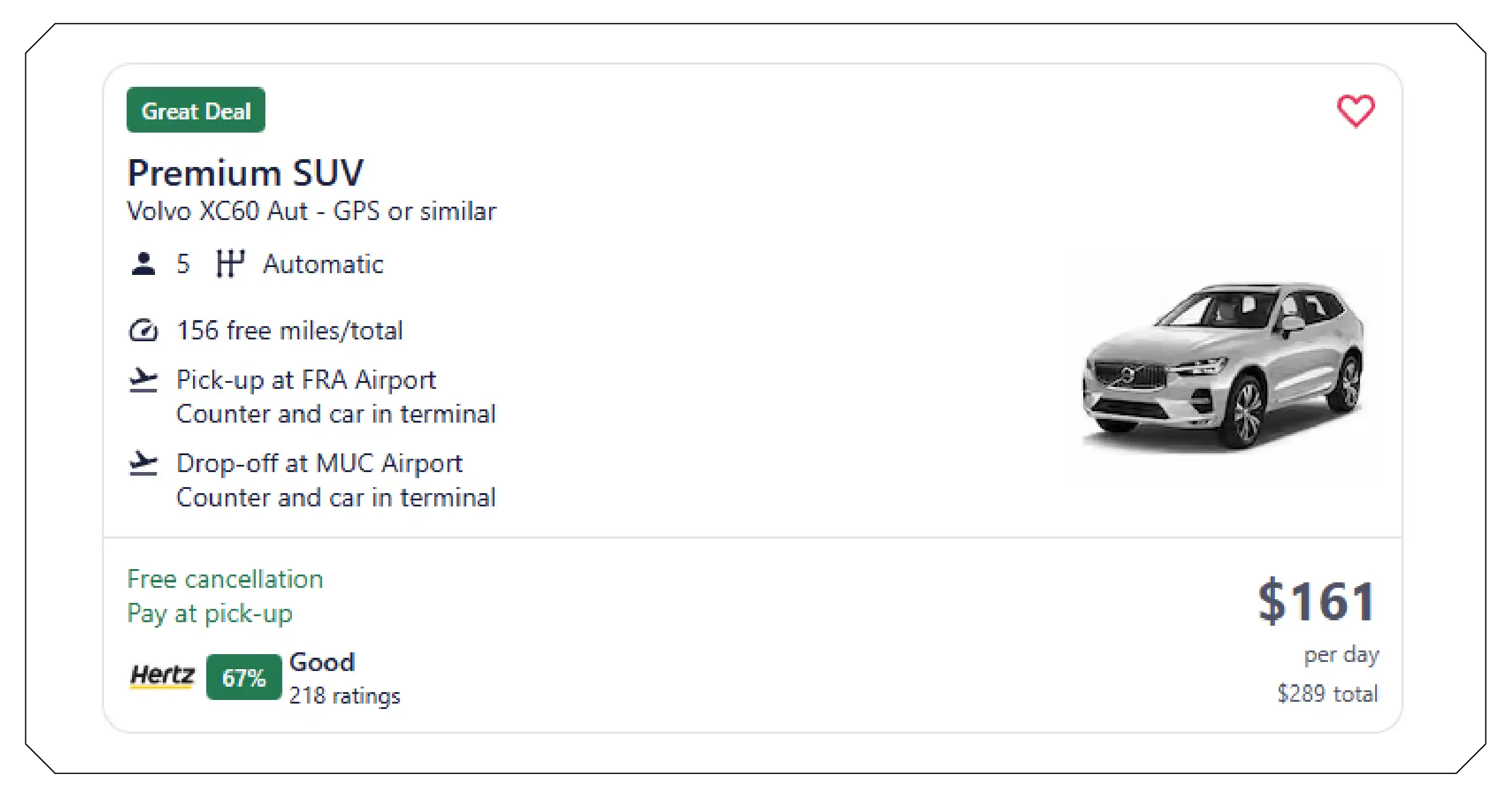
Demand spikes are sudden increases in search and booking activity that directly influence pricing algorithms. Travelocity adjusts rates in near real time when it detects heightened interest for specific locations or time slots. Using Travelocity Hourly rental car pricing intelligence, businesses can correlate demand surges with price escalations to understand causality rather than coincidence.
Morning demand spikes often come from corporate travelers planning day trips, while evening spikes are driven by leisure travelers preparing for upcoming travel. Seasonal events, flight delays, and regional holidays further intensify these spikes. Hourly analysis allows companies to anticipate these moments and adjust strategies proactively.
Location-Based Hourly Price Variations
Hourly price behavior differs significantly based on pickup and drop-off locations. Airport rentals are particularly volatile due to flight schedules and unpredictable demand waves, while downtown and suburban locations tend to follow more stable intraday patterns. Integrating hourly pricing data with a Car Rental Location Dataset helps businesses understand how geography amplifies or dampens price movements.
For example, airport locations often see price surges aligned with flight arrival peaks, whereas tourist hotspots experience evening spikes when travelers finalize plans. Smaller cities and non-tourist areas show lower volatility, making them easier to predict and optimize.
The Role of Data Scraping in Hourly Price Intelligence
Manual price tracking is impractical when prices change multiple times a day across hundreds of locations and vehicle categories. Automated scraping systems enable continuous data collection at scale, capturing every meaningful price shift. When structured and analyzed correctly, this data fuels comprehensive Car Rental Data Intelligence initiatives.
Key data points typically collected include vehicle class, rental duration, pickup time, base price, taxes, availability, and promotional adjustments. Over time, this data forms a high-resolution view of Travelocity’s pricing behavior, supporting advanced analytics and forecasting models.
Business Applications of Hourly Pricing Analysis
Hourly car rental pricing insights offer tangible value across multiple business functions. Travel aggregators use this data to enhance recommendation engines and improve conversion rates. Car rental companies monitor competitor pricing to adjust their own strategies in real time. Investors and analysts rely on intraday pricing data to assess demand elasticity and platform performance.
Marketing teams also benefit by aligning campaigns with low-price windows, while revenue managers use volatility insights to optimize fleet utilization and yield management. Hourly intelligence transforms pricing from reactive adjustments into proactive strategy.
Turning Hourly Data into Actionable Insights
Raw scraped data becomes powerful when paired with analytics and visualization. Businesses often deploy dashboards that display hourly heatmaps, price movement timelines, and demand correlation charts. These tools make complex datasets easy to interpret and support faster decision-making across teams.
Predictive models built on historical hourly data can even forecast likely price movements, helping users decide whether to book immediately or wait. This level of sophistication is only possible with consistent, high-frequency data collection.
Challenges in Tracking Hourly Car Rental Prices
Despite its benefits, hourly pricing analysis comes with technical and operational challenges. Data volume increases rapidly with hourly collection, requiring scalable storage and processing systems. Pricing logic can vary by location, vehicle type, and rental duration, adding complexity to normalization and analysis.
Additionally, maintaining data accuracy during frequent price refresh cycles requires robust scraping infrastructure and validation mechanisms. Overcoming these challenges is essential for delivering reliable insights.
The Future of Hourly Car Rental Pricing Intelligence
As travel platforms continue adopting AI-driven pricing models, hourly volatility will increase further. Personalized pricing, predictive demand algorithms, and real-time inventory optimization will make static analysis obsolete. Businesses that invest in granular hourly monitoring today will be best positioned to adapt tomorrow.
How Travel Scrape Can Help You?
1. Real-Time Data Collection
Our data scraping services capture live pricing, availability, and market changes, enabling accurate tracking of hourly and daily trends.
2. Automated & Scalable Extraction
We automate large-scale data collection, eliminating manual effort while ensuring consistent, reliable, and structured datasets.
3. Competitive Price Monitoring
Track competitor pricing and availability shifts to optimize your pricing strategies and stay ahead in the market.
4. Clean & Actionable Insights
Raw data is processed, validated, and formatted into analytics-ready outputs for faster and smarter decision-making.
5. Continuous Market Intelligence
Our scalable pipelines support ongoing monitoring, helping you build long-term insights and predictive pricing models.
Conclusion
Hourly pricing intelligence has become a critical asset in the modern travel ecosystem. Through Dynamic Travelocity car rental pricing analysis, businesses can uncover intraday patterns that directly impact revenue, customer satisfaction, and market positioning. Continuous Travelocity car rental price monitoring ensures timely responses to demand shifts, while scalable Travelocity Car Rental Data Scraping turns fleeting price changes into long-term strategic advantage.
In an industry where timing defines value, mastering hourly price analysis is no longer optional—it is essential for sustained growth and competitive leadership.
Ready to elevate your travel business with cutting-edge data insights? Scrape Aggregated Flight Fares to identify competitive rates and optimize your revenue strategies efficiently. Discover emerging opportunities with tools to Extract Travel Website Data, leveraging comprehensive data to forecast market shifts and enhance your service offerings. Real-Time Travel App Data Scraping Services helps stay ahead of competitors, gaining instant insights into bookings, promotions, and customer behavior across multiple platforms. Get in touch with Travel Scrape today to explore how our end-to-end data solutions can uncover new revenue streams, enhance your offerings, and strengthen your competitive edge in the travel market.
Unlock the Full Report
Enter your details to access premium pricing intelligence insights