How Can Top 10 Hotel Chains Data Scraping Transform Your Hospitality Strategy?
Introduction
In an era where data drives every strategic decision, Top 10 hotel chains data scraping has become a core practice for analytics teams, travel tech startups, pricing strategists, and hospitality consultants. Whether it’s to track occupancy, pricing trends, guest reviews, or competitive positioning, extracting structured information from a massive ecosystem of hotel websites, OTAs, and booking engines is indispensable.
Today’s hospitality industry thrives on comprehensive, real-time insights derived from technologies like Real-Time Hotel Data Scraping API, which helps businesses monitor changes as they happen. These tools enable automated harvesting of pricing, availability, and ratings across hotel networks — making sense of the vast digital footprint left by travelers, brands, and travel planners. The practice of World hotel chains data extraction ensures that analysts and decision-makers have access to accurate and timely data to optimize their operations.
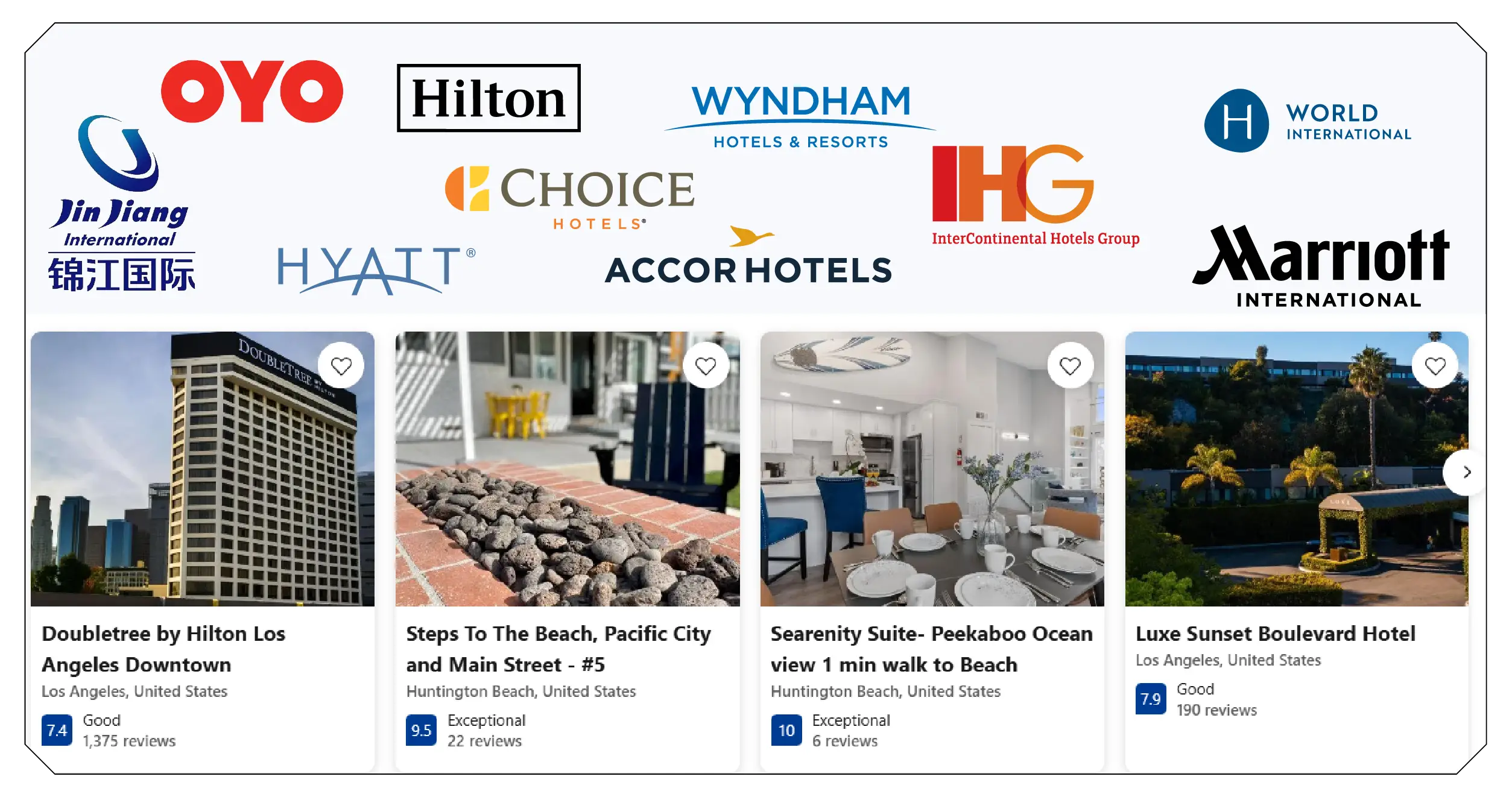
1. Marriott International
Marriott International continues to lead the global hotel industry as the largest hotel company by property count, rooms, and multi-brand strategy. With well over 9,000 properties spanning luxury (Ritz-Carlton, St. Regis) to mid-scale and economy segments, Marriott’s depth makes it critical for data scraping initiatives.
Why it matters: Marriott’s vast portfolio means every shift in pricing, availability, and occupancy radiates through global travel demand signals. Analysts use scraped rate and inventory data to forecast trends across regions and segments, making Hotel Data Scraping Services essential for actionable insights.
2. Jin Jiang International
Jin Jiang has grown into one of the world’s largest hotel conglomerates, particularly strong in China and Asia-Pacific markets. Its portfolio includes big names like Metropolo, Campanile, and Radisson through acquisitions.
Why it matters: Extracting data from Jin Jiang brands provides rich insights into regional tourism dynamics. Companies focusing on Global Hotel chain pricing intelligence can predict market shifts and plan promotions based on real-time pricing and occupancy trends.
3. Hilton Worldwide
Hilton remains a marquee global hotel brand with a diversified portfolio ranging from luxury properties (Waldorf Astoria, Conrad) to business-oriented hotels (Hilton Garden Inn).
Why it matters: Hilton’s digital booking innovations and loyalty program updates make scraped data invaluable for anticipating corporate travel trends. Integrating these insights supports Hotel Data Intelligence for smarter revenue management.
4. H World Group
Previously known as Huazhu Group, H World has rapidly expanded across China and internationally, focusing on both economy and boutique-level brands.
Why it matters: H World’s fast growth — particularly in domestic travel markets — provides signals for mid-market demand and pricing dynamics, which are essential for real-time competitive monitoring.
5. InterContinental Hotels Group (IHG)
IHG’s portfolio includes iconic brands such as InterContinental, Holiday Inn, and Kimpton, spanning business, leisure, and lifestyle segments.
Why it matters: IHG’s blend of legacy brands and boutique experiences offers a varied dataset for analysts to evaluate segment performance, loyalty impacts, and pricing elasticity across global markets. Scraping data from IHG properties allows insights into scraping hotel chain rankings data for competitive benchmarking.
6. Wyndham Hotels & Resorts
Wyndham continues its global expansion through franchise models, with recognized brands like Days Inn, Ramada, and Super 8.
Why it matters: Wyndham’s high-volume properties make it valuable for benchmarking mass-market travel destinations, enabling precise pricing strategy modeling.
7. Accor Group
Accor stands out as Europe’s premier hotel group, housing brands like ibis, Novotel, Sofitel, and Fairmont.
Why it matters: European travel flows, Riviera ROI optimization, and promotional pricing patterns make Accor an essential subject for Hotel chain review & rating scraping, supporting competitive analysis and performance monitoring.
8. Choice Hotels International
Choice operates value brands like Comfort Inn, Quality Inn, and Ascend Collection — particularly in North America.
Why it matters: Choice’s segmented pricing structure across regional markets offers granular insights for mid-scale lodging trends, essential for demand forecasting and occupancy analysis.
9. OYO Hotels & Homes
OYO’s aggressive expansion in India, Southeast Asia, and Europe makes it a standout for room count and distribution growth.
Why it matters: As a tech-forward chain, OYO’s real-time inventory and demand responses provide insights for dynamic pricing models and operational strategy.
10. Hyatt Group
Hyatt’s global network of luxury and lifestyle brands, combined with a strong loyalty program, ensures its relevance among top hotel chains.
Why it matters: Hyatt’s pricing and occupancy trends, especially in resort and luxury markets, serve as indicators for high-end travel demand. Tracking these through Hotel Availability Forecast Dataset allows better predictive modeling for luxury and business travel markets.
Why Data Scraping Matters in Hotel Intelligence?
1. Price Optimization and Competitive Pricing Intelligence
Scraping room rates across thousands of properties enables travel companies to build Global Hotel chain pricing intelligence models that inform dynamic pricing and bundled offerings.
2. Demand Forecasting and Revenue Management
Availability snapshots allow analysts to predict peak and off-peak seasons, helping revenue managers adjust pricing and launch promotions ahead of demand shifts.
3. Guest Feedback Insights
Collecting guest reviews from multiple platforms — then performing NLP analysis — feeds Hotel Data Intelligence, revealing service quality, amenity popularity, and overall guest sentiment.
4. Operational Benchmarking
Data scraping supports performance comparisons across brands, markets, and segments, helping hotels understand their position relative to competitors.
5. Strategic Business Decisions
Whether evaluating new markets or adjusting loyalty programs, scraped datasets allow for decisions backed by real-time insights into occupancy, rates, and demand patterns.
Tools and Techniques for Hotel Chains Data Extraction
- Real-Time Hotel Data Scraping API: Connects to websites (OTAs or direct booking) to retrieve pricing, availability, and ratings instantly.
- Distributed Scraping Architectures: Efficiently handles thousands of properties, enabling global-scale monitoring.
- Data Cleaning and Normalization: Standardizes pricing, amenities, and ratings for consistent analytics.
- Machine Learning Enrichment: Categorizes reviews, detects anomalies, and predicts trends for strategic insights.
How Travel Scrape Can Help You?
1. Competitive Pricing Insights
Our data scraping services gather real-time pricing from multiple platforms, allowing businesses to monitor competitors, optimize rates, and make strategic pricing decisions that maximize revenue and market positioning.
2. Inventory & Availability Monitoring
We track product or room availability across platforms, helping companies identify stock shortages, forecast demand, and improve operational efficiency with actionable, timely insights.
3. Market Trend Analysis
Our services collect structured data on customer behavior, sales, and reviews, enabling detailed trend analysis to understand shifting preferences and develop data-driven business strategies.
4. Customer Sentiment & Feedback
By scraping reviews and ratings, our service provides insights into customer satisfaction, highlighting areas for improvement and helping enhance service quality and brand reputation.
5. Business Intelligence & Forecasting
Our data scraping services provide accurate, structured datasets for predictive modeling, helping businesses make informed decisions, anticipate market trends, and plan future growth effectively.
Conclusion
By the end of 2026, the top ten hotel chains — including Marriott, Hilton, Jin Jiang, IHG, and Accor — continue to dominate the global hospitality landscape. Businesses and analysts increasingly rely on Scraping hotel chain availability data to track inventory and occupancy trends efficiently. They also build actionable Hotel chain market intelligence to understand competitor performance and market positioning. Additionally, monitoring trends through Hotel Room Price Trends Dataset helps optimize pricing strategies across regions and hotel segments. These tools and datasets empower smarter operational decisions and enhance competitive positioning in a rapidly evolving hospitality industry.
Ready to elevate your travel business with cutting-edge data insights? Scrape Aggregated Flight Fares to identify competitive rates and optimize your revenue strategies efficiently. Discover emerging opportunities with tools to Extract Travel Website Data, leveraging comprehensive data to forecast market shifts and enhance your service offerings. Real-Time Travel App Data Scraping Services helps stay ahead of competitors, gaining instant insights into bookings, promotions, and customer behavior across multiple platforms. Get in touch with Travel Scrape today to explore how our end-to-end data solutions can uncover new revenue streams, enhance your offerings, and strengthen your competitive edge in the travel market.
Unlock the Full Report
Enter your details to access premium pricing intelligence insights