Scrape Destination Package Review Data from Google & TripAdvisor for Travel Intelligence
Introduction
In today’s competitive tourism ecosystem, data-driven insights are transforming how travel agencies, OTAs, and destination marketers design and promote vacation packages. Businesses that Scrape Destination Package Review Data gain measurable advantages by understanding traveler opinions at scale. Reviews from Google and TripAdvisor provide a rich source of structured and unstructured feedback about tour experiences, accommodation quality, pricing transparency, itinerary planning, and customer service.
A well-structured Top Travel Destinations Dataset enables tourism stakeholders to compare destinations across regions and analyze traveler satisfaction trends. By conducting a reliable Google destination package reviews data scrape, companies can capture star ratings, review text, reviewer demographics, timestamps, and engagement metrics.
Leveraging Multi-Platform Review Data for Regional Sentiment and Market Intelligence
Meanwhile, Tour & Travel Package Data Scraping helps consolidate review intelligence from multiple travel portals into a unified database. When businesses extract TripAdvisor destination package review Data, they unlock actionable insights into sentiment distribution, recurring complaints, and frequently praised features.
For regional market research, datasets like the Top Travel Destinations Dataset in UAE allow brands to evaluate tourism growth and traveler preferences within emerging markets. Similarly, techniques involving web scraping tourism reviews for sentiment data enable NLP-driven classification of traveler feedback.
Global tourism brands benefit from curated datasets, offering comparative insights across Europe. Ultimately, structured review collection supports comprehensive volume analysis, empowering smarter pricing, marketing, and operational decisions.
Why Scraping Destination Package Reviews Matters?
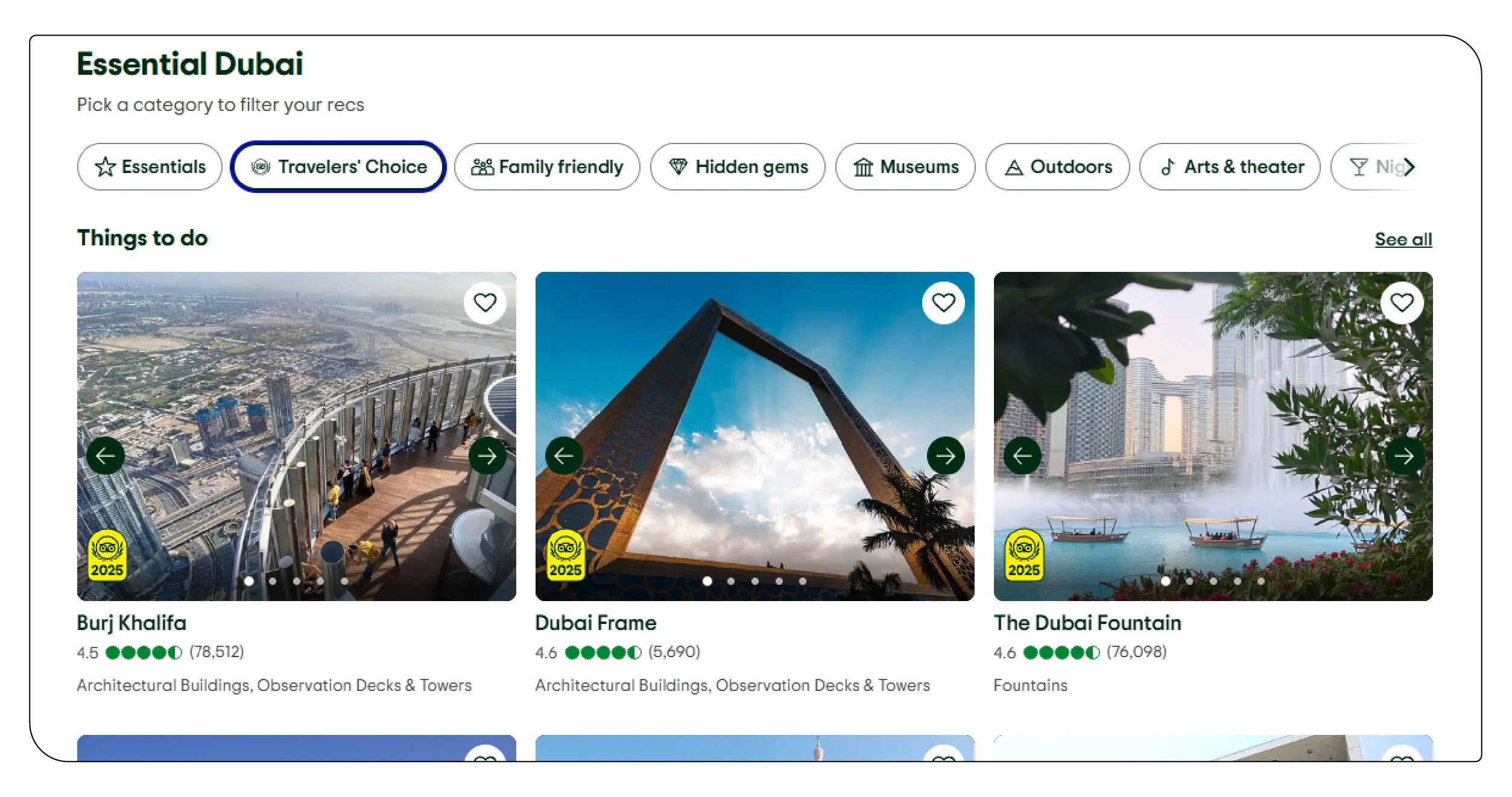
Travelers rely heavily on reviews before booking destination packages. Google and TripAdvisor reviews directly influence conversion rates and brand perception. By scraping reviews systematically, companies can:
- Identify service quality gaps
- Monitor brand reputation
- Detect seasonal demand shifts
- Compare competitors
- Improve itinerary planning
Unlike manual research, automated scraping ensures real-time data updates and large-scale sentiment tracking.
Key Data Points Collected from Google & TripAdvisor
| Data Field | Description | Business Value |
|---|---|---|
| Package Name | Tour or destination package title | Identifies popular offerings |
| Star Rating | 1–5 rating scale | Measures satisfaction levels |
| Review Text | User-generated feedback | Enables sentiment analysis |
| Review Date | Timestamp of submission | Tracks seasonal patterns |
| Reviewer Location | User geographic origin | Supports market segmentation |
| Helpful Votes | Engagement metric | Identifies impactful reviews |
| Tour Operator | Travel agency name | Competitor benchmarking |
These attributes form the foundation for deeper sentiment and volume analysis.
Sentiment Analysis of Destination Package Reviews
Sentiment analysis applies Natural Language Processing (NLP) to classify reviews into positive, neutral, or negative categories. Advanced techniques include:
- Lexicon-based analysis
- Machine learning classifiers
- Deep learning sentiment modeling
- Emotion detection (joy, disappointment, excitement)
Example Sentiment Distribution (Sample Dataset)
| Sentiment Category | Percentage | Key Insights |
|---|---|---|
| Positive | 68% | Strong satisfaction with itinerary and guides |
| Neutral | 18% | Mixed feedback on pricing |
| Negative | 14% | Complaints about hotel quality or delays |
Positive sentiment often correlates with:
- Experienced tour guides
- Transparent pricing
- Smooth itinerary coordination
Negative sentiment frequently highlights:
- Hidden charges
- Poor accommodation standards
- Last-minute cancellations
Review Volume Analysis
Review volume analysis measures the number of reviews posted over time. This helps brands identify:
- Peak booking seasons
- Viral growth moments
- Reputation crises
- Campaign effectiveness
Monthly Review Volume Example
| Month | Google Reviews | TripAdvisor Reviews | Growth Rate (%) |
|---|---|---|---|
| January | 820 | 640 | +12% |
| February | 910 | 700 | +8% |
| March | 1,250 | 980 | +25% |
| April | 1,600 | 1,240 | +28% |
| May | 1,300 | 1,050 | -18% |
Higher review volume typically reflects peak travel seasons or promotional campaigns.
Comparative Insights: Google vs TripAdvisor Reviews
Google reviews generally attract broader user participation due to mobile accessibility. TripAdvisor reviews, however, often contain more detailed feedback from travel-focused audiences.
| Metric | TripAdvisor | |
|---|---|---|
| Average Review Length | 80–120 words | 150–300 words |
| User Engagement | High | Moderate |
| Verified Travelers | Limited | Strong presence |
| Review Frequency | Higher | Slightly lower |
| Sentiment Depth | Moderate | High detail |
TripAdvisor reviews are more descriptive, while Google reviews provide larger sample sizes for trend analysis.
Regional Insights from Destination Datasets
UAE Destination Packages
Analysis of desert safari, luxury Dubai tours, and Abu Dhabi cultural packages shows:
- 75% positive sentiment for premium desert experiences
- Pricing sensitivity among mid-tier travelers
- High praise for tour guides
UK Destination Packages
UK-based tour packages (London heritage tours, Scottish Highlands trips) demonstrate:
- Strong sentiment for historical tours
- Negative feedback regarding weather-dependent experiences
- Positive mentions of guided storytelling
Use Cases for Travel Businesses
1. Pricing Optimization
Leverage structured review insights and perform detailed Destination package sentiment & review volume analysis to evaluate pricing fairness perceptions, adjust package costs strategically, and improve overall booking conversions.
2. Competitor Benchmarking
Compare average ratings, review frequency trends, and customer satisfaction indicators across competing tour operators using multi-platform datasets to strengthen positioning and identify competitive service advantages.
3. Campaign Effectiveness Tracking
Monitor increases in review submissions, engagement metrics, and traveler sentiment shifts following digital marketing campaigns to evaluate promotional performance and refine future destination marketing strategies.
4. Experience Enhancement
Analyze recurring traveler complaints about accommodations, transport coordination, or itinerary scheduling to optimize service delivery, enhance customer satisfaction, and strengthen long-term brand loyalty.
5. Market Expansion Strategy
Utilize insights from the Top Travel Destinations Dataset in UK alongside regional demand analytics to identify high-growth markets, traveler preferences, and strategic international expansion opportunities.
Advanced Analytics Techniques
Topic Modeling
Identifies frequently discussed aspects such as “hotel cleanliness,” “local cuisine,” or “transport comfort.”
Emotion Detection
Measures excitement, trust, disappointment, or anger.
Aspect-Based Sentiment Analysis
Breaks down sentiment by category:
| Aspect | Positive (%) | Negative (%) |
|---|---|---|
| Accommodation | 72% | 15% |
| Tour Guide | 88% | 5% |
| Pricing | 60% | 25% |
| Transport | 70% | 18% |
Aspect-level insights enable precise service improvements.
Challenges in Scraping Travel Reviews
- Dynamic website structures
- Anti-bot protection systems
- Data normalization complexities
- Handling multilingual reviews
- Ensuring compliance with platform policies
Advanced scraping frameworks and proxy management tools help overcome these technical barriers.
Strategic Benefits of Sentiment & Volume Analysis
- Improved traveler experience design
- Enhanced online reputation management
- Data-backed destination marketing
- Competitive positioning
- Increased booking conversions
Businesses leveraging structured tourism review intelligence outperform competitors relying solely on manual feedback analysis.
Conclusion
Scraping and analyzing destination package reviews from Google and TripAdvisor offers powerful competitive advantages in the travel industry. By conducting comprehensive Google and TripAdvisor travel review trend comparison, brands can uncover differences in traveler behavior, review depth, and sentiment patterns across platforms.
Through structured analytics and machine learning, companies can focus on Analyzing traveler destination packages feedback data to identify operational gaps and growth opportunities. Regional datasets such as the USA Travel Destinations Dataset further enable global market comparisons and strategic expansion planning.
Ultimately, review scraping combined with sentiment and volume analysis empowers travel businesses to make data-driven decisions, improve customer satisfaction, and enhance brand trust. In an industry driven by digital influence, structured review intelligence is no longer optional—it is a strategic necessity.
Ready to elevate your travel business with cutting-edge data insights? Scrape Aggregated Flight Fares to identify competitive rates and optimize your revenue strategies efficiently. Discover emerging opportunities with tools to Extract Travel Website Data, leveraging comprehensive data to forecast market shifts and enhance your service offerings. Real-Time Travel App Data Scraping Services helps stay ahead of competitors, gaining instant insights into bookings, promotions, and customer behavior across multiple platforms. Get in touch with Travel Scrape today to explore how our end-to-end data solutions can uncover new revenue streams, enhance your offerings, and strengthen your competitive edge in the travel market.
Unlock the Full Report
Enter your details to access premium pricing intelligence insights